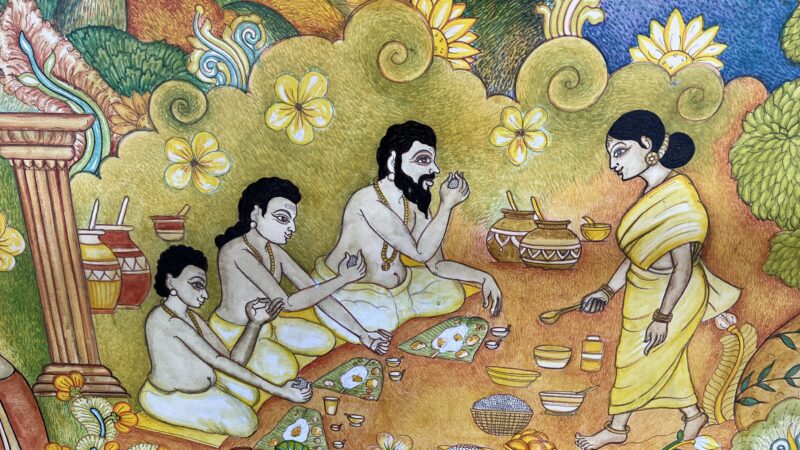
Yoga has always been transmitted from one human being to another.
Beyond the postures, teaching yoga means understanding a method, accompanying a student in their development and transmitting a tradition with accuracy, humility and discernment.
We invite you to take part in this Ashtanga Yoga teacher training in South India, in an atmosphere that encourages the encounter with oneself and the in-depth study of the method transmitted by Sri K. Pattabhi Jois.
For nearly a month, you will alternate daily practice, theoretical teaching, pedagogical observation and immersion in Indian culture, in order to develop the knowledge needed for an authentic transmission of Ashtanga Yoga.
“Yoga is very difficult, but the method is very fine.” — Sri K. Pattabhi Jois
The spirit of the training
Learning to transmit a living art
While a regular personal practice is naturally the foundation of any teacher training, it is not the only essential element.
The real question is often: « Why do we wish to transmit? »
This training is designed to accompany those who wish to deepen their understanding of yoga so that they can, in turn, accompany other practitioners on this path.
The aim is not only to acquire technical knowledge.
It is also to develop the quality of listening, the capacity for observation and the discernment needed for teaching.
“For a yoga practice to be fruitful, it cannot be separated from philosophy.” — Gregor Maehle
The meaning of the journey
Studying transmission at the heart of the tradition
Taking part in a training in India helps place the teaching of yoga back into its cultural and historical context.
The cradle of yoga for several millennia, India remains today a place where spirituality, philosophy and daily life are still deeply connected.
It is in this context that we will study the teachings transmitted by Sri K. Pattabhi Jois and the foundations of the Ashtanga Yoga method.
Immersion in Indian culture enriches the understanding of the practice and its transmission.

The venue
Mahābalipuram, Yellow House – Tamil Nadu
The training takes place in Mahābalipuram, on the coast of Tamil Nadu.
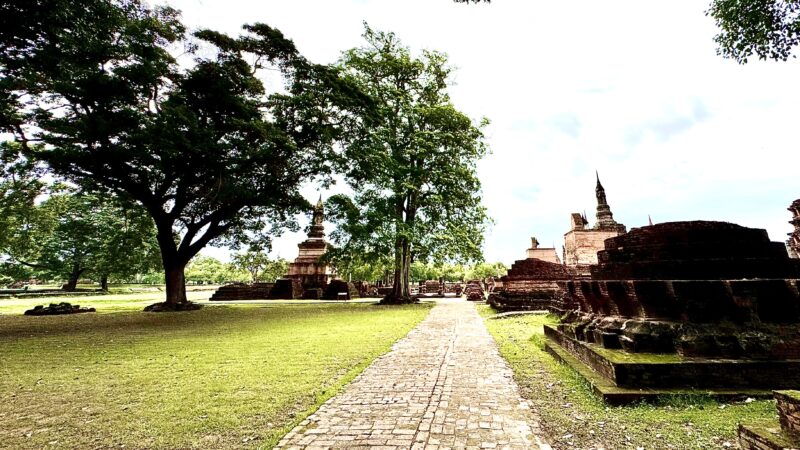
This region of South India is renowned for the richness of its cultural heritage, its stone-carved temples and the vitality of its traditions.
The special atmosphere of this place fosters study, practice and introspection alike.
The shala
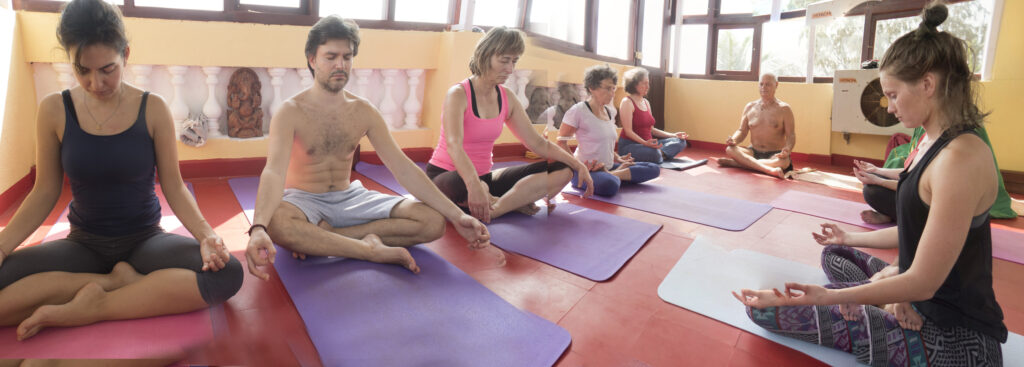
Classes take place in a space suited to the practice of Ashtanga Yoga.
All the necessary material is available on site:
- mats;
- straps;
- blocks;
- teaching supports.
Participants can of course use their own material if they wish.
The surroundings
Mahābalipuram offers a setting particularly conducive to a prolonged immersion.
Between ocean, temples, markets and local traditions, the region lets you discover an authentic and deeply living India.
The practice of Ashtanga Yoga
Atha yogānushasānam (अथ योगानुशासनम्) — Y.S. I.1. “Now, yoga will be taught to us, in the continuity of an uninterrupted transmission.” — commentary by Françoise Mazet, Yoga-Sūtra
Deepening your practice to teach better
The mornings are devoted to the daily practice:
- 1st — Yoga Cikitsā (Primary Series): realigning the body.
- 2nd — Nāḍī Śodhana (Intermediate Series): « purification of the energy channels ».
- 3rd — Sthira Bhāga (Advanced Series A): this series requires mastery of the first two.
Classes take place:
- Monday;
- Tuesday;
- Wednesday;
- Thursday;
- Friday;
from 8:00 to 10:00.
Each participant practises according to their level.
The aim is not only to perfect the execution of the āsana (postures) but to develop a deeper understanding of the breath, the rhythm, the Bandha and the Vinyāsa.
A better understanding of one’s own practice is the foundation of any future transmission.
The theoretical training
The theoretical training teaches the fundamental concepts of yoga and takes place alongside the practical training.
« To unite » and « to connect »: this is the literal meaning of the word Yoga.
Even if it may seem obvious, giving a yoga class requires blending theory and practice. You will not have students practise a given āsana without knowing its physical, emotional and spiritual impact, nor teach a sequence of postures without knowing anatomy and physiology, psychology and the pedagogical foundations of teaching.
It is important to combine theoretical and practical knowledge. This is the awakening of the different intelligences, or multiple intelligence, which brings to light varied capacities — logical, verbal, spatial, emotional or kinaesthetic — allowing a better understanding of everyone’s unique talents.
Understanding in order to transmit
The theoretical classes take place from 1:00 to 3:00 pm, Monday to Thursday.
Each session begins with a traditional chant, followed by a time devoted to questions, exchanges and the sharing of experiences.
The teachings gradually address the different aspects needed for the transmission of yoga.
Among the subjects studied:
- the different currents of yoga;
- the history of yoga;
- philosophical and religious aspects;
- the anatomy of the human body;
- the psychology of the soul;
- the pedagogical foundations of teaching.
At the end of each session, a PDF document summarising the content of the teachings is given to the participants.
A pedagogy based on observation
Learning to accompany students
The teaching of yoga does not rest on theoretical knowledge alone.
It is also learned through observation.
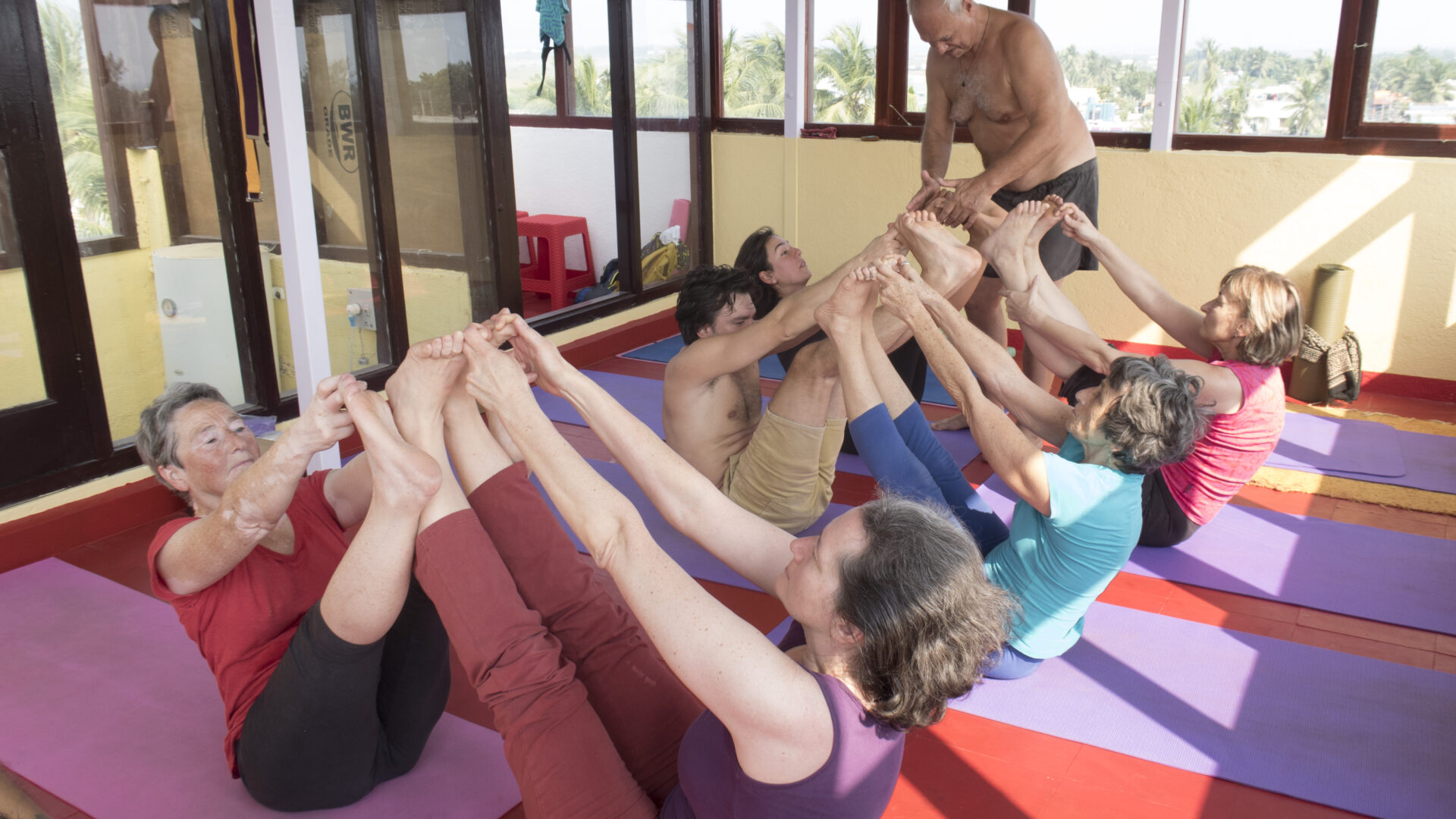
Throughout the training, participants are invited to observe the way students are accompanied in their practice:
- adjustments;
- progressions;
- adaptations;
- communication;
- managing difficulties.
This observation is an essential part of the transmission process.
“It is by digging into what lies behind the obviousness of a practice that we touch the essential to transmit.” — Magali Carlier
A seminar means moving your practice.
Away from the everyday, the practice deepens: Mysore in the morning, study and transmission the rest of the time, in the heart of a living culture — at the source of Ashtanga in India or in the light of Greece. You don't go as a tourist: you let yourself be transformed, one breath after another, guided. Ready to try the experience? We'll help you prepare your departure.
An experience of sharing and transmission
Studying within a community of practitioners
The training brings together committed practitioners at different stages of their path.
Some wish to deepen their personal development.
Others are preparing to teach.
Others still are continuing a course begun several years ago.
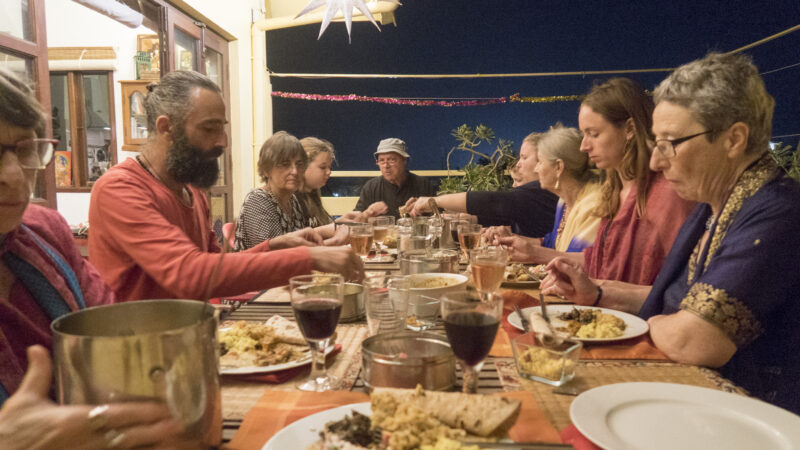
This diversity creates a particularly rich learning environment where the exchanges, observations and experiences of each person nourish the progress of the group.
Travel and cultural immersion
Visiting places of spiritual retreat
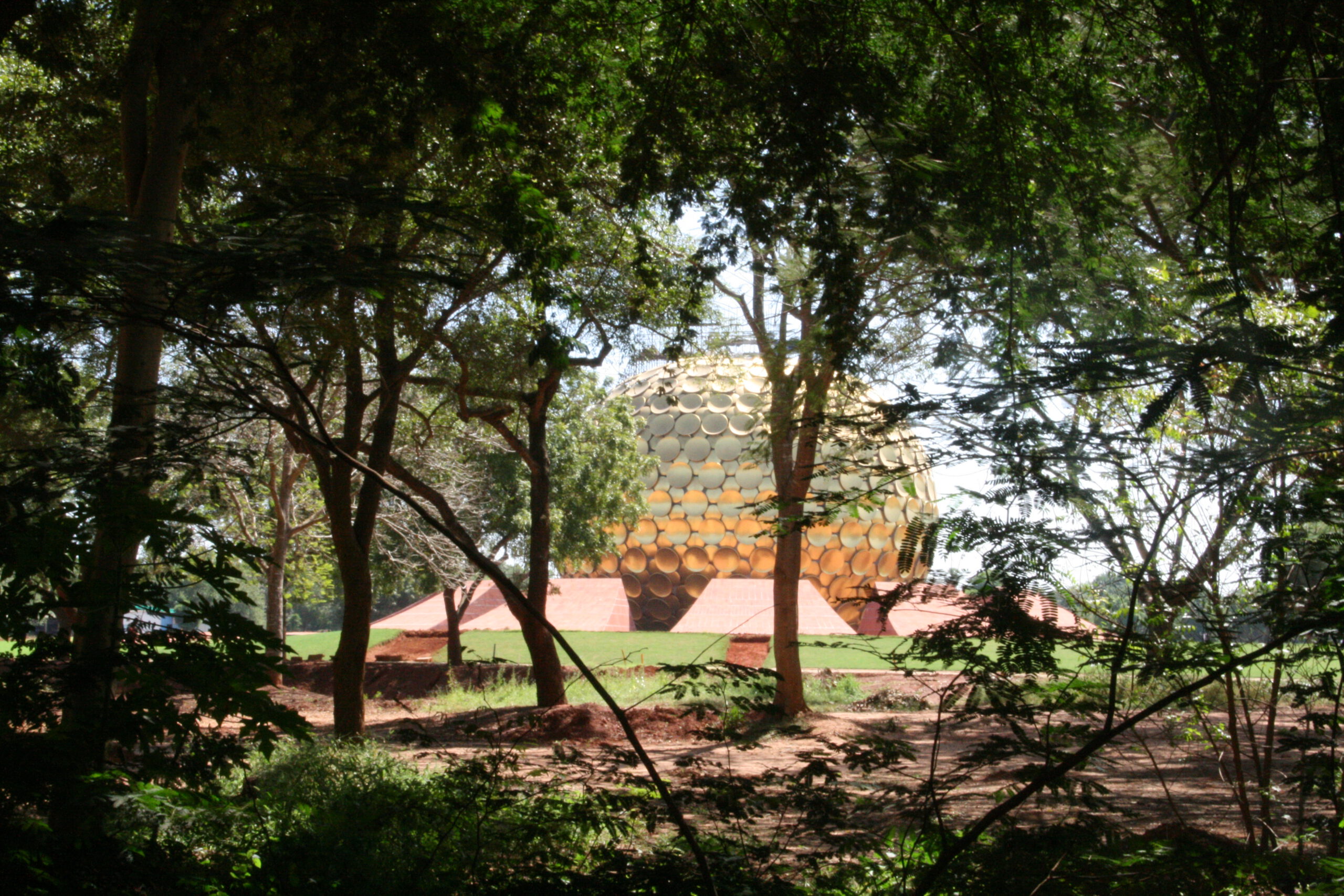
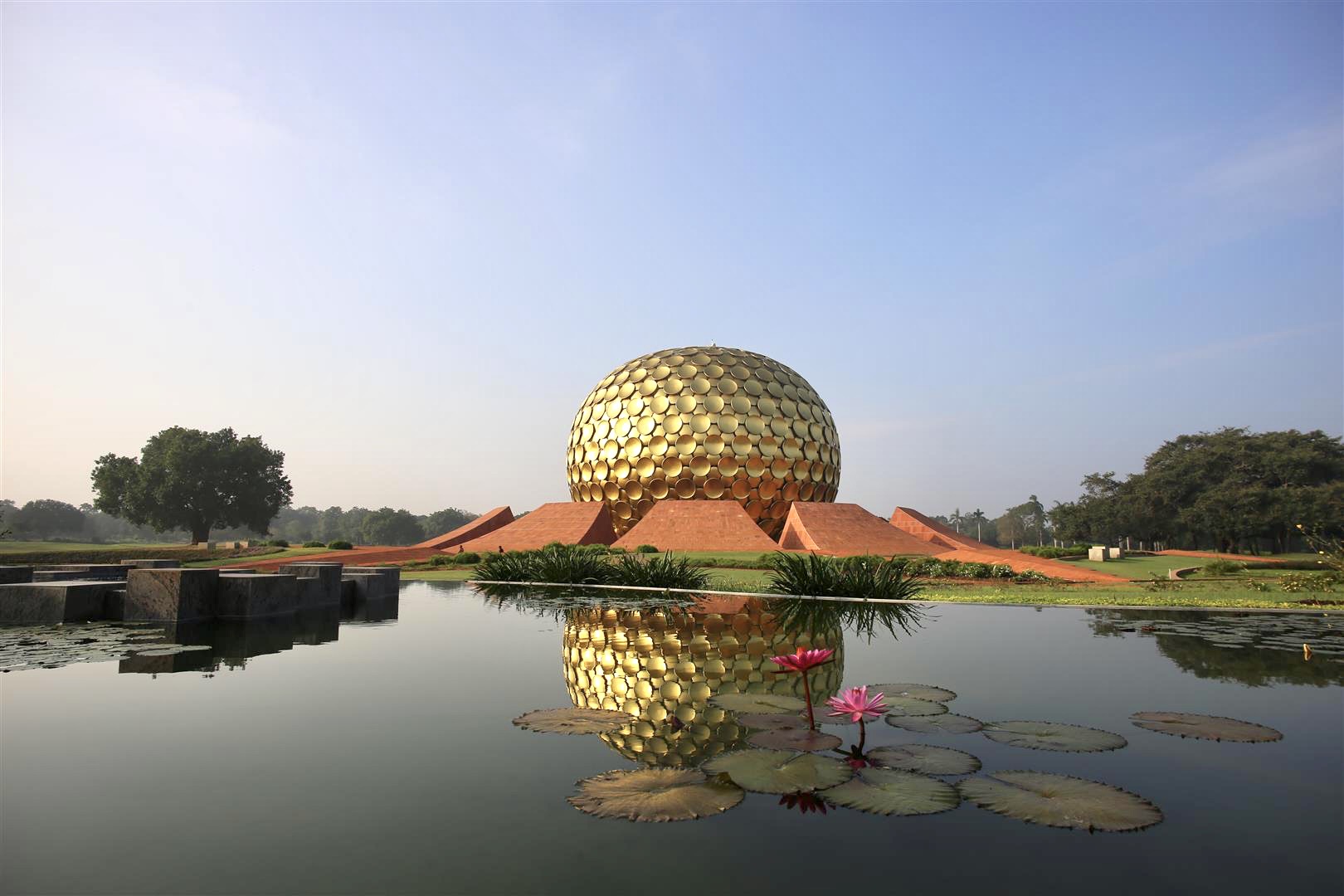
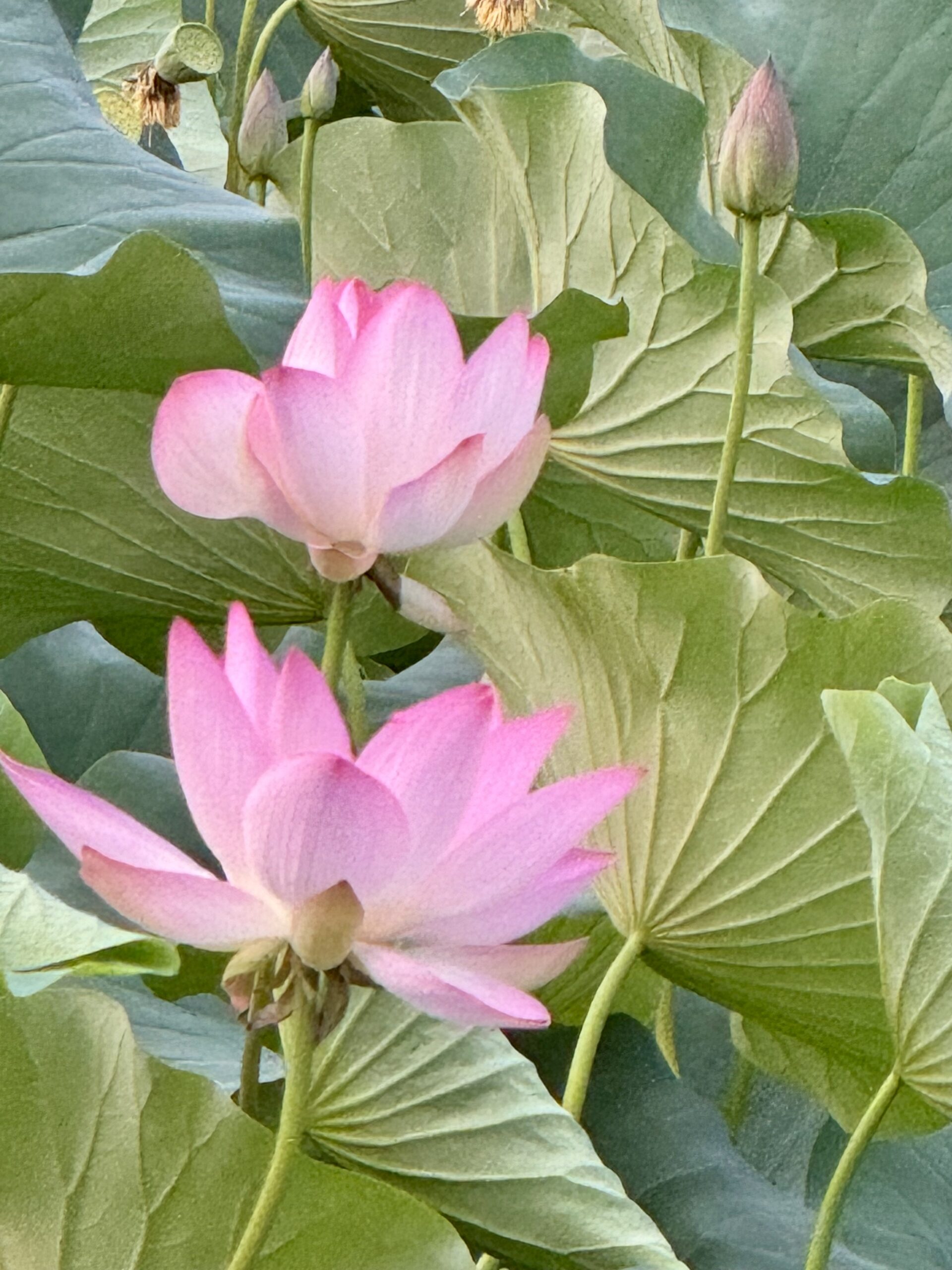
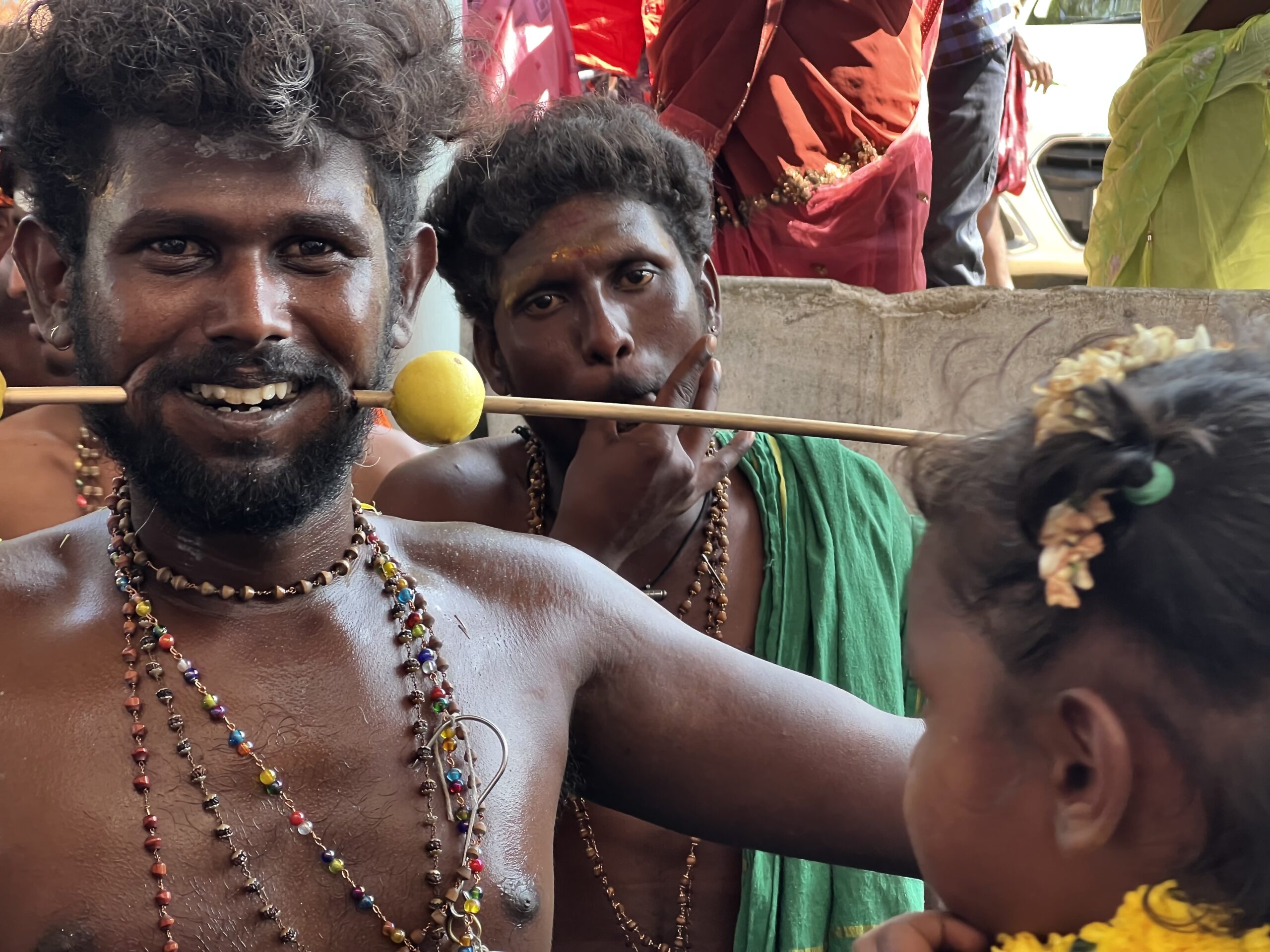
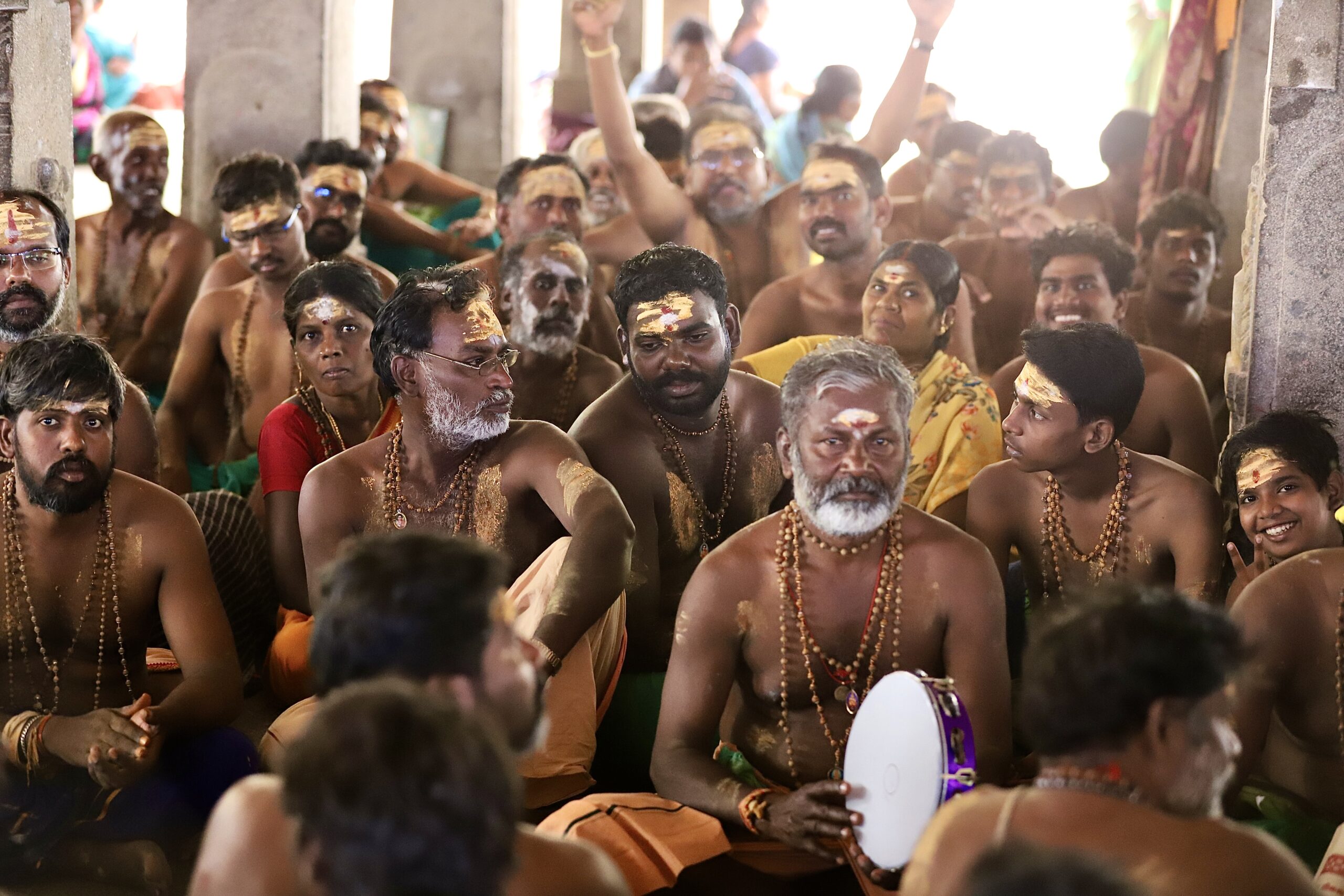
During the training, two outings are organised to ashrams and sacred sites: the Ashram of Sri Aurobindo in Pondicherry; Auroville, this unique international experimental town that advocates human unity and offers many spaces of silence and spiritual development; and participation in the Thaipusam festival in Palani.
Thaipusam in Palani (Tamil Nadu)
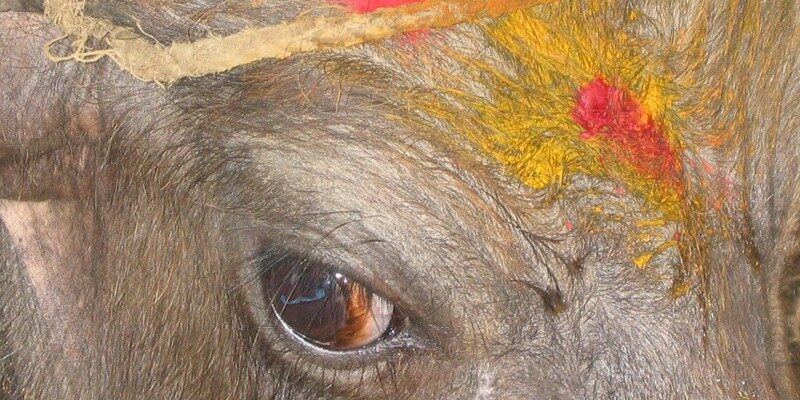
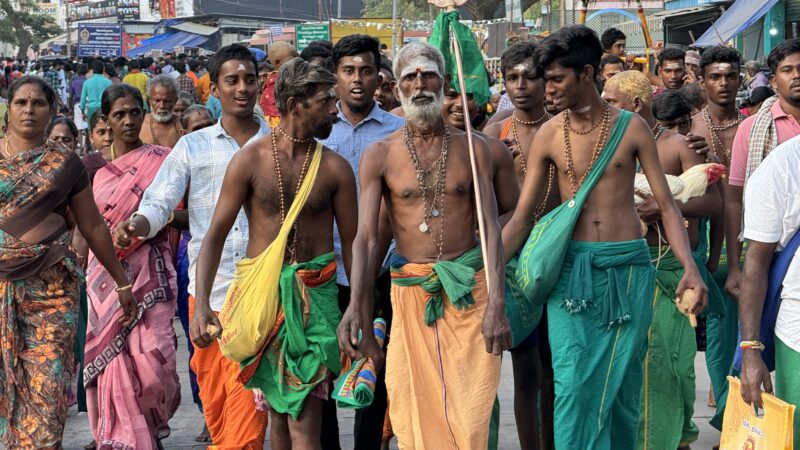
Thaipusam in Palani (Tamil Nadu) is a major Hindu pilgrimage celebrating the god Murugan, son of Śiva. On the full moon of the Tamil month of Thai (January–February), hundreds of thousands of devotees converge on the temple of Arulmigu Dhandayuthapani, some performing impressive penances such as carrying the kavadi or piercing the body.
This festival is an intense spiritual immersion at the heart of Tamil devotion.
- Pilgrimage on foot: crowds of devotees walk for kilometres barefoot, often singing hymns.
- The Kavadi: a ritual offering ranging from a simple pot of milk to richly decorated wooden structures carried on the shoulders, or even hooks attached to the skin.
Traditionally set apart from the bustle of the world, ashrams and sacred places embody this quest for interiority and let you discover another dimension of Indian spiritual culture.
These visits are a natural extension of the teachings received during the training.
What you will develop
During this training, you will be able to:
- deepen your personal practice;
- develop your understanding of Yoga Korunta and Yoga Mālā;
- better understand the pedagogy of Ashtanga Yoga;
- enrich your historical and philosophical knowledge;
- deepen the study of anatomy;
- learn to observe and accompany students;
- develop the qualities needed for transmission;
- prepare your path as a yoga teacher.
Who is this training for?
This training is for:
- practitioners wishing to deepen their self-knowledge;
- future yoga teachers;
- already-qualified teachers wishing to continue their course;
- teachers wishing to reach a higher grade.
For particular situations, a preliminary interview may be offered.
Certification and course
A progressive path of transmission
To take part in a training module, a certificate attesting to a regular practice of at least two years with your yoga teacher is required.
At the end of each module, a certificate of participation is issued.
Obtaining the teacher’s diploma requires:
- participation in a minimum of five modules;
- the writing of a dissertation on an aspect of yoga;
- the gradual validation of the different grades of the course.
The training modules are also offered in Belgium throughout the year.
Practical information
- Level
- Advanced
- Start
- 04 January 2027
- End
- 29 January 2027
- Duration
- 26 days
Travel, accommodation, meals and personal expenses not included
The teacher who leads this seminar
Where this seminar takes place
Yellow House – Mahābalipuram, South India
1/1 A. Gandhi Street, Mahābalipuram, Tamil Nadu – South India
View on Google MapsOur rates
Seminar, class and training rates, on a single page.
See all rates →Prepare your journey
Where to stay
Come practice with us
Un séminaire est souvent le début d'une aventure plus large. Écrivez-nous : nous serons heureux d'échanger avec vous et de vous aider à préparer ce voyage.
Here, signing up always begins with a conversation. You write, we reply, and the dates, the amount and the deposit are settled then.
I'm interested in this seminar →Frequently asked questions
Does this seminar train you to teach?
It explores the art of transmitting Ashtanga within the tradition. It is aimed at advanced practitioners and future teachers.
What level of practice is required?
A solid, regular practice is essential to approach the teaching dimension with confidence.
How do I take part?
Through the “I'm interested in this seminar” button on the page: your request goes straight to the organiser.