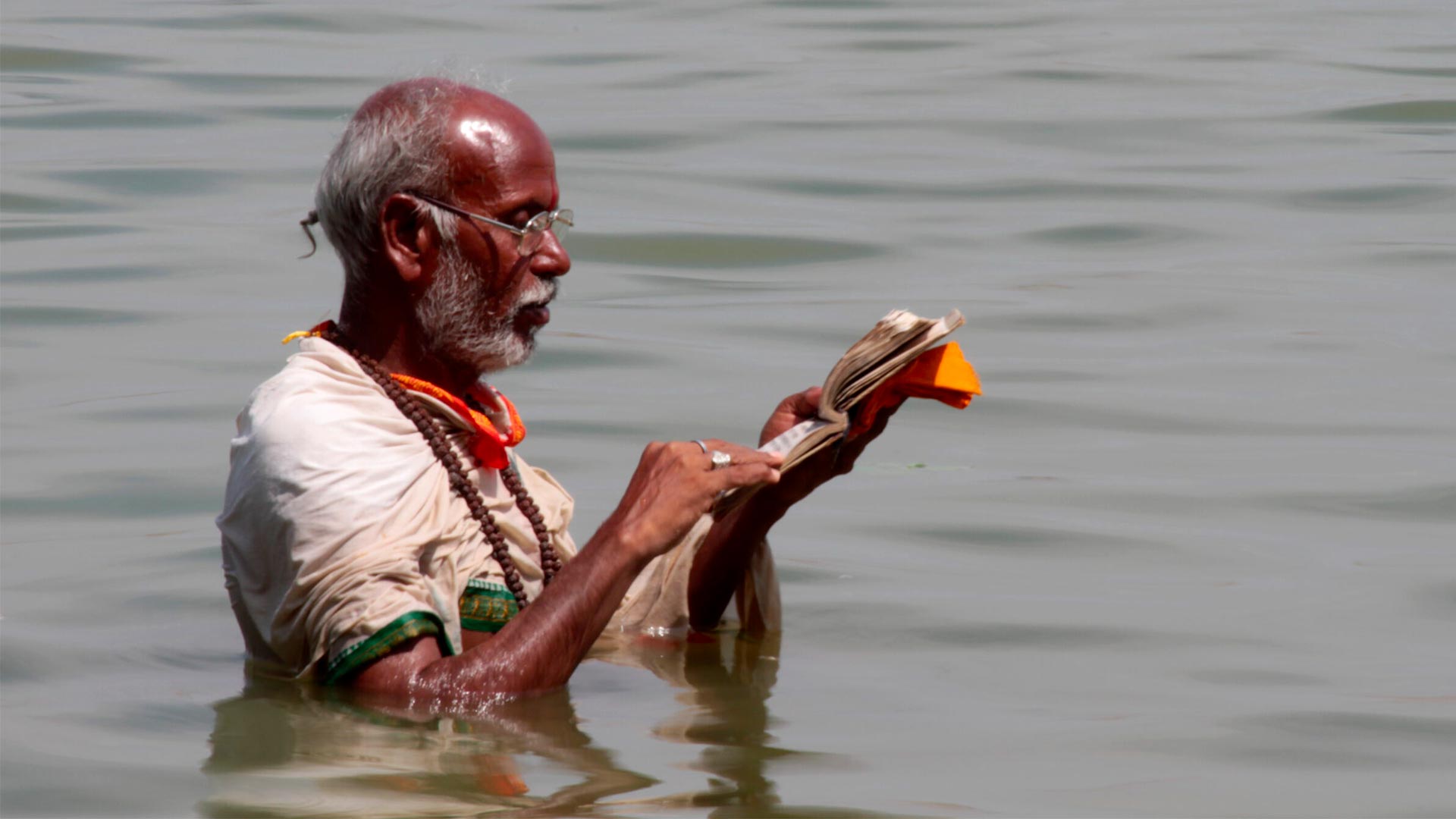
India is the cradle of four of the world’s great religious traditions. At the 1991 census the population was roughly: Hinduism 82.4%, Sikhism 2.0% (a majority in Punjab), Buddhism 0.8%, Jainism 0.4%. To these can be added four other traditions with a long history in India: Zoroastrianism (the Parsis — 80% of them in Maharashtra), Judaism, Christianity (2.3%) and Islam (11.7%, a majority in Kashmir), and — to be complete — the Baháʼí Faith, along with several tribal religious minorities (Kukis, Nagas, Bodos, Chakmas, Hajongs).
Religion in daily life
Religion still holds great importance in India. In the daily life of our Indian friends it plays an essential role, shaping social and cultural life. Each religion has influenced architecture, sculpture, painting, music and even medicine. Almost all the world’s major religions are represented — though a decline in religious values is noticeable today among young city-dwellers. India is very proud of its religious diversity; nevertheless, inter-religious marriages are rare, and tensions between communities — notably between Hindus and Muslims — continue to trouble some states.
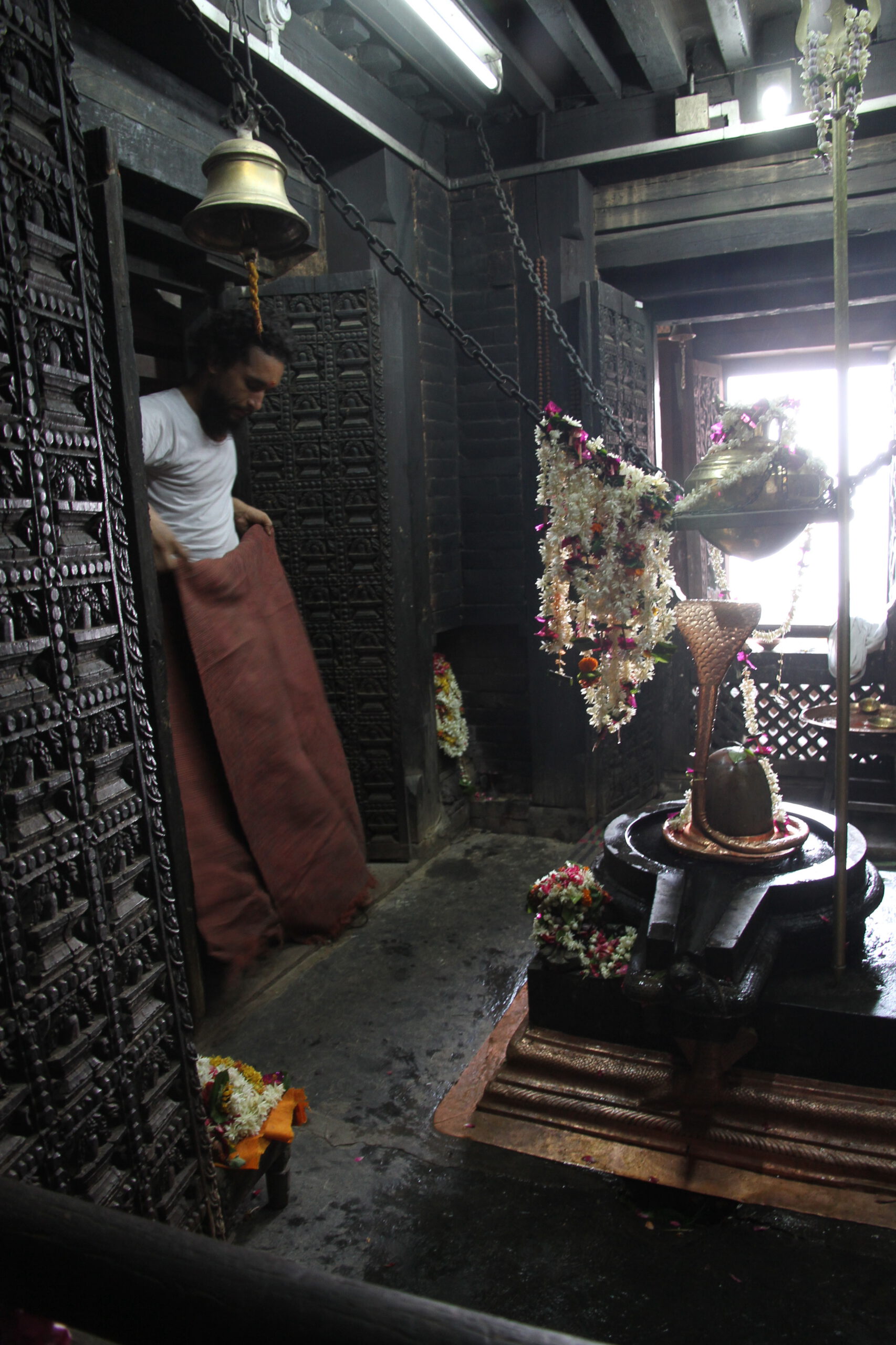
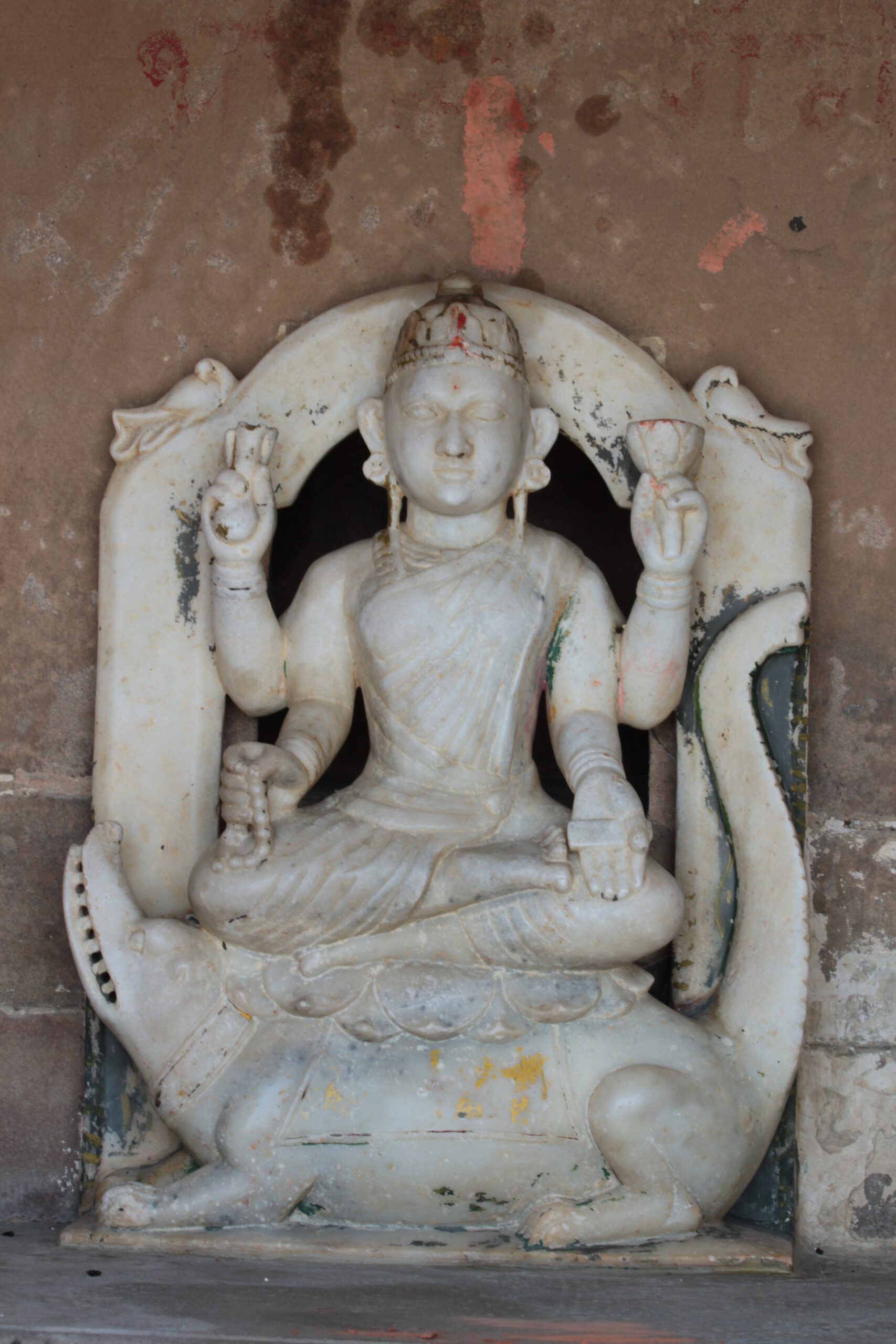
Hinduism
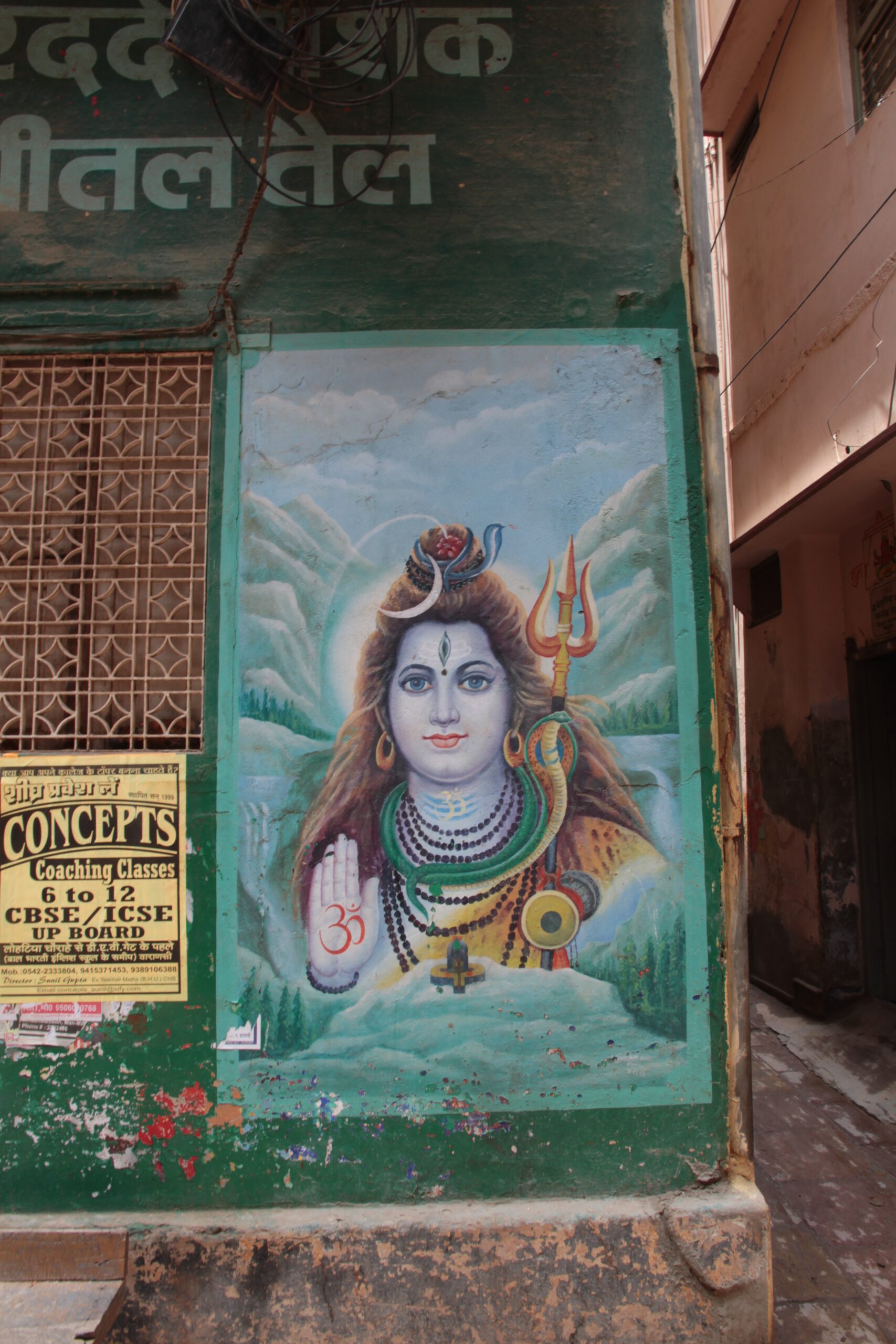
The main religion — nearly 84% of the population — and one of the world’s oldest. The Sanātana Dharma is, in truth, more a way of living and thinking than an organised religion. In 1966 India’s Supreme Court defined the framework of “the Hindu faith”, notably as: respectful acceptance of the Veda as the highest authority; a spirit of tolerance recognising that truth has many faces; acceptance of the cosmic rhythm of creation, preservation and destruction (the Yuga); belief in rebirth and the pre-existence of beings; the recognition that the paths to salvation are many; and the understanding that one may be Hindu without worshipping idols.
A Hindu, then, is one who believes in the philosophy set out in the Veda (the Knowledge) — the world’s oldest religious scriptures. Their core teaching is that the true nature of the human being is divine: God, or the Brahman, exists in every living being. This tradition is thus an exploration of self-knowledge, a search for the divine present in each individual. For the Veda, no one needs “to be saved”, since no one is ever lost: we merely live in ignorance of our deep, divine nature.
The religion rests on the fundamental texts explaining saṃsāra, karma, dharma and caste. Human life is cyclical: after death the soul reincarnates (saṃsāra) in a new body — human, animal or vegetal — according to its acts. The karma of the present life determines the quality of the next; to reach mokṣa, liberation from the cycle of rebirths, one must free oneself from the grip of suffering, attachment and ignorance. Today Hindu belief rests on faith, on philosophy, or a mix of both — recognising that there are many valid approaches to the Divine, whatever the spiritual practice, provided it leads to the same self-realisation. The sacred books are the four Veda, the Upaniṣad, the Mahābhārata, the Rāmāyaṇa and the Bhagavad Gītā.
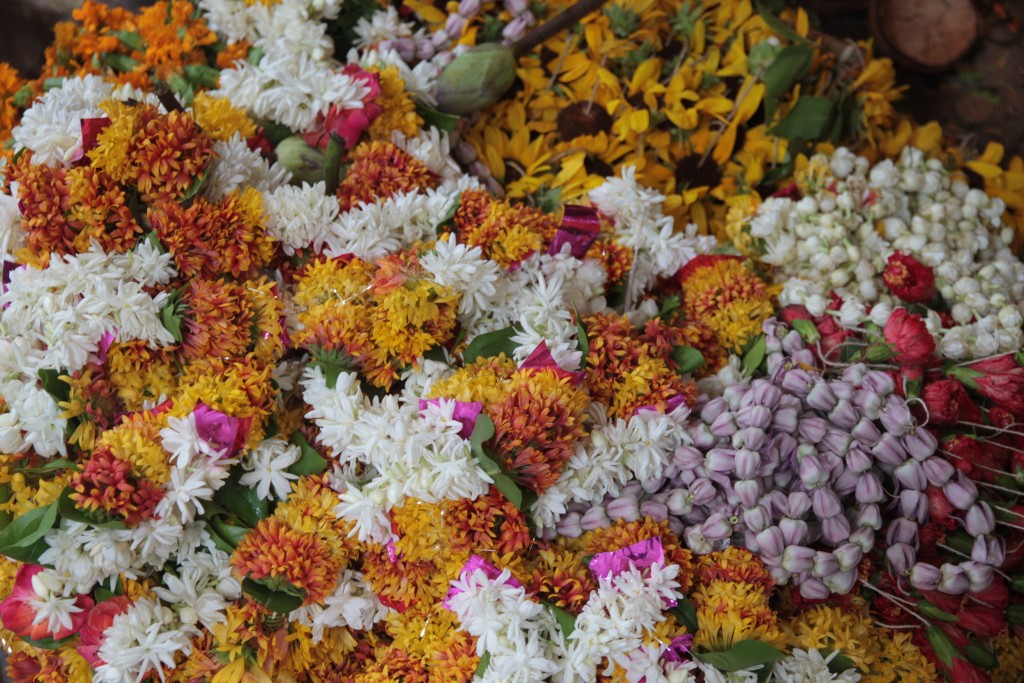
The Hindu Trinity: Brahmā, Śiva, Viṣṇu
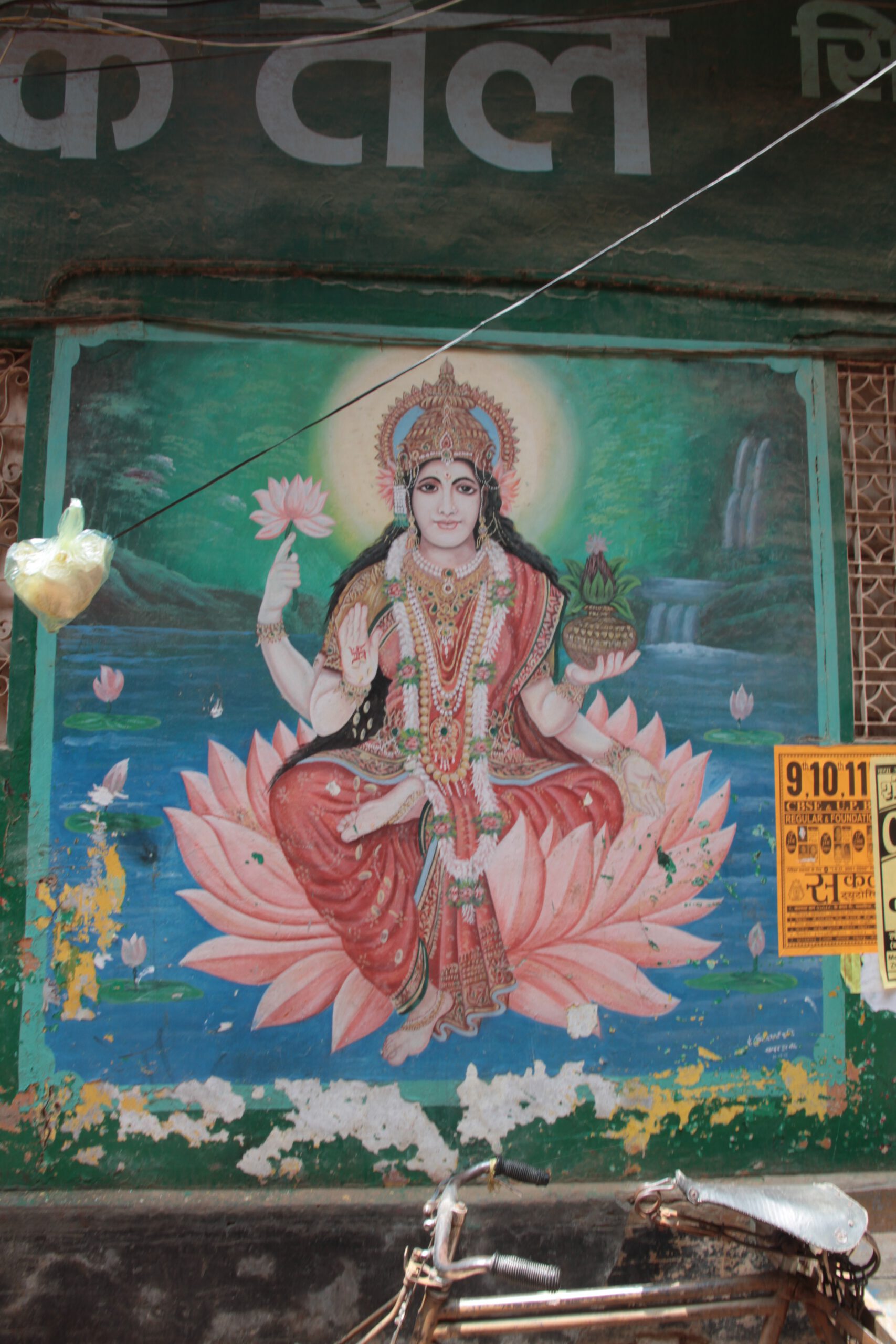
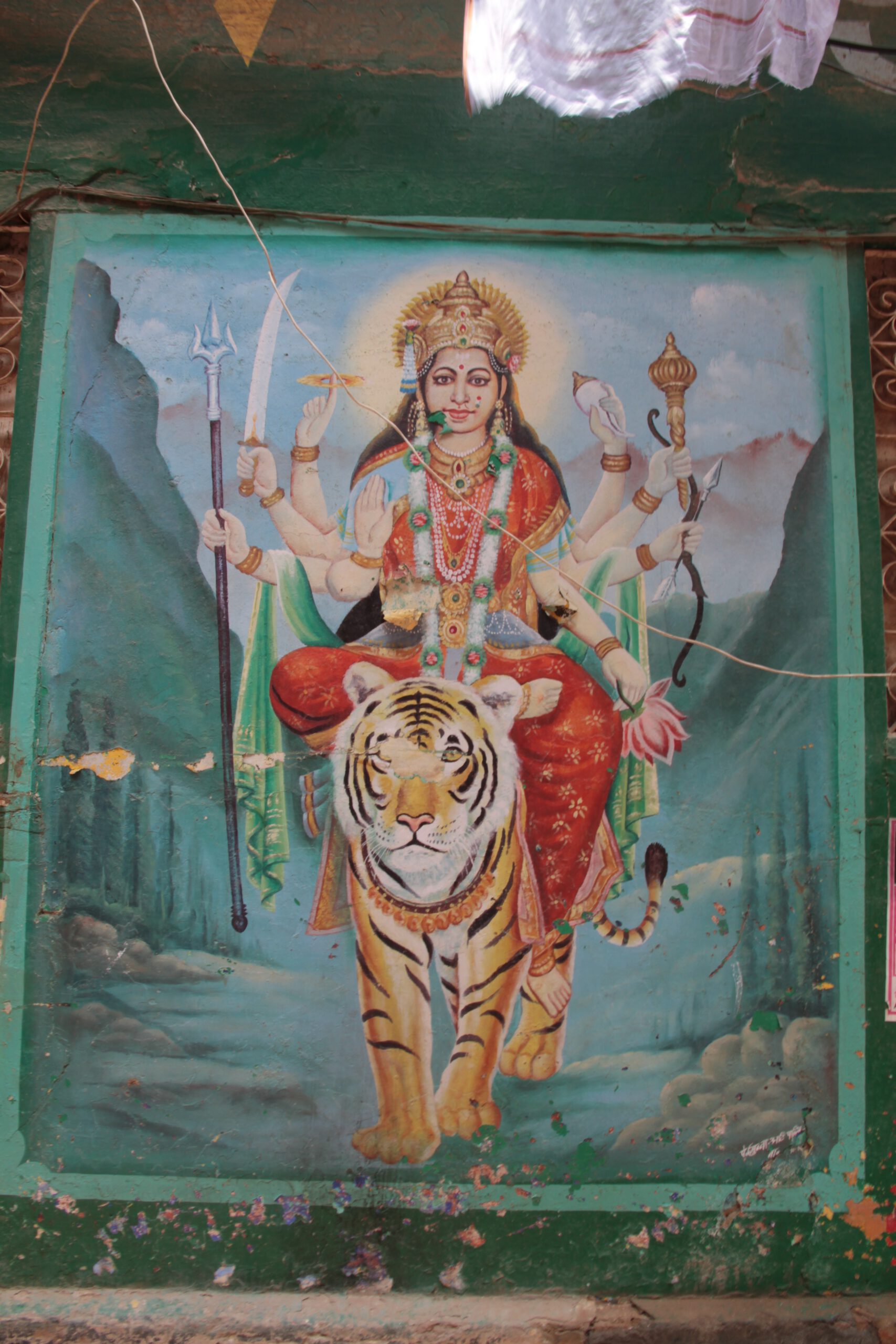
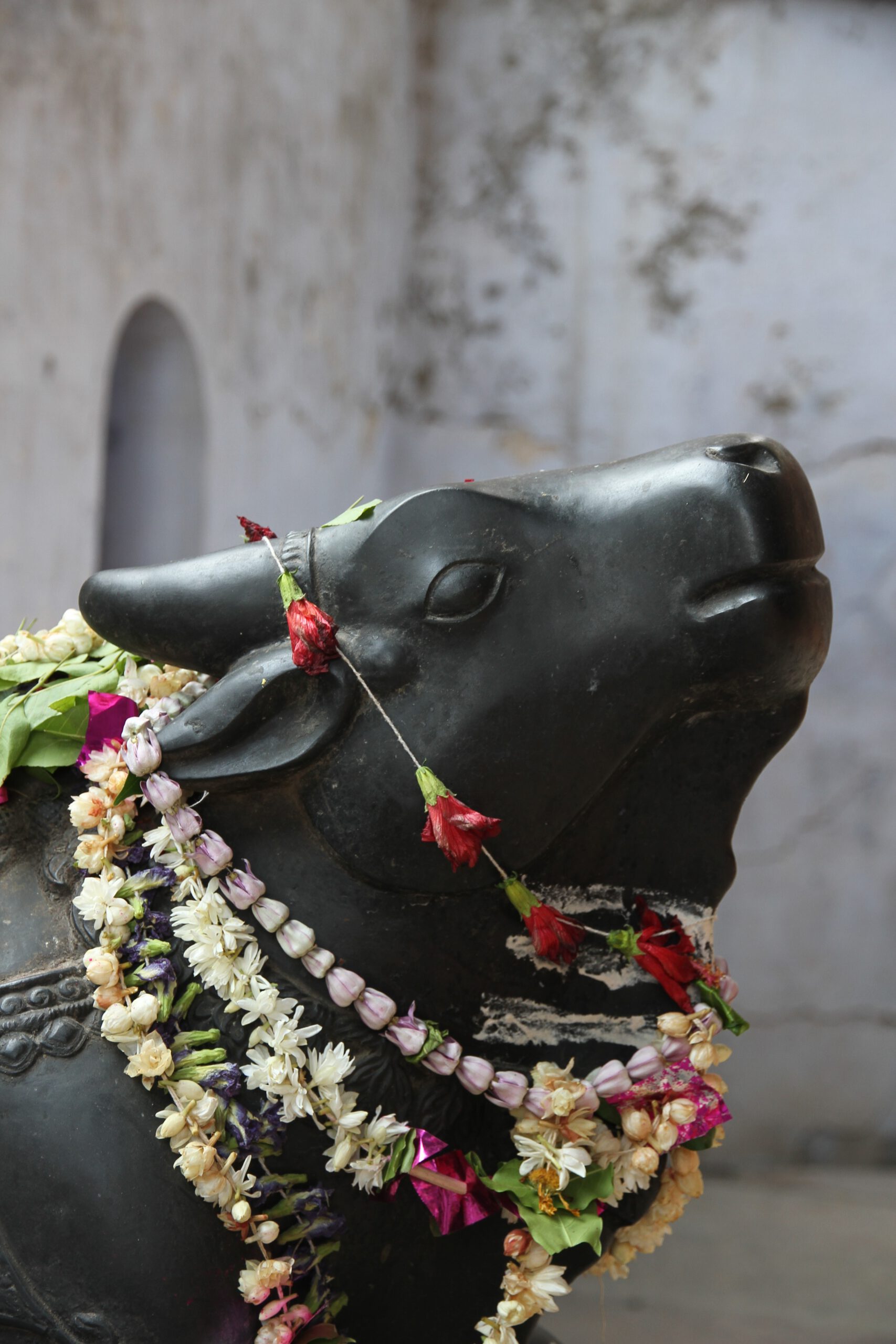
Brahmā, the creator god, symbolises Supreme Reality; his consort is the goddess of knowledge, music and the arts (Sarasvatī). Śiva, destroyer of evil and ignorance and also the regenerator, is often shown as a naked ascetic with a serpent at his waist and a trident, riding a white bull, Nandi; his consort is Pārvatī, and their children are Gaṇeśa, the elephant-headed god, and Kārttikeya (Skanda or Murugan in the South). Gaṇeśa is the most invoked of the gods, renowned for removing obstacles and bringing wisdom. Viṣṇu, the preserver, is said to be eternal, associated with the primordial waters and omnipresent before creation; his consort is Lakṣmī, goddess of beauty and wealth. Later came the conception of Viṣṇu as saviour of the world, incarnating in his various avatāra whenever the world’s balance is threatened.

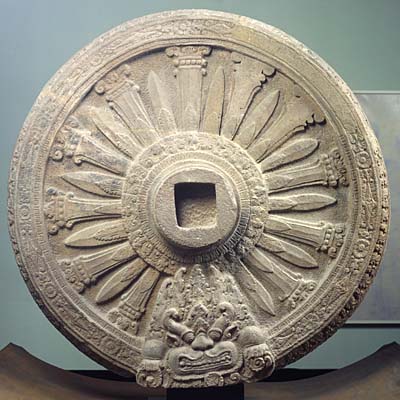

Buddhism
Buddhism is the world’s third-largest religion after Christianity and Islam. Only about 7 million people practise it in India today, including our Tibetan refugee friends. It was founded around 500 BCE, when Prince Siddhārtha Gautama (the future Buddha) set out in search of enlightenment and reached nirvana. Buddhism reached its golden age in India under the Maurya empire, during the reign of Ashoka, who converted to it; at the empire’s end it declined and was supplanted by Hinduism.
According to the Buddha, life rests on four noble truths: Duḥkha (suffering — “asking of life what it cannot give”), Samudaya (suffering has causes), Nirodha (the cessation of suffering) and Mārga (the path leading to that cessation). Suffering is caused by desire; to be free of it, one follows the path towards understanding, letting go of desire and hatred and realising inner peace by reaching Nirvāṇa — the end of the cycle of rebirths. Buddhism is less a religion than a philosophy, with two “vehicles” or schools (Hīnayāna, Theravāda). For Hinduism, the Buddha is considered the ninth incarnation of Viṣṇu.
Jainism
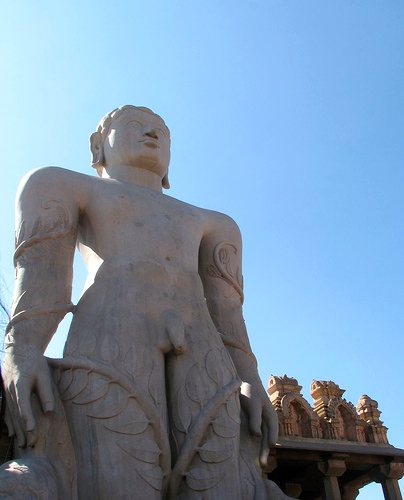
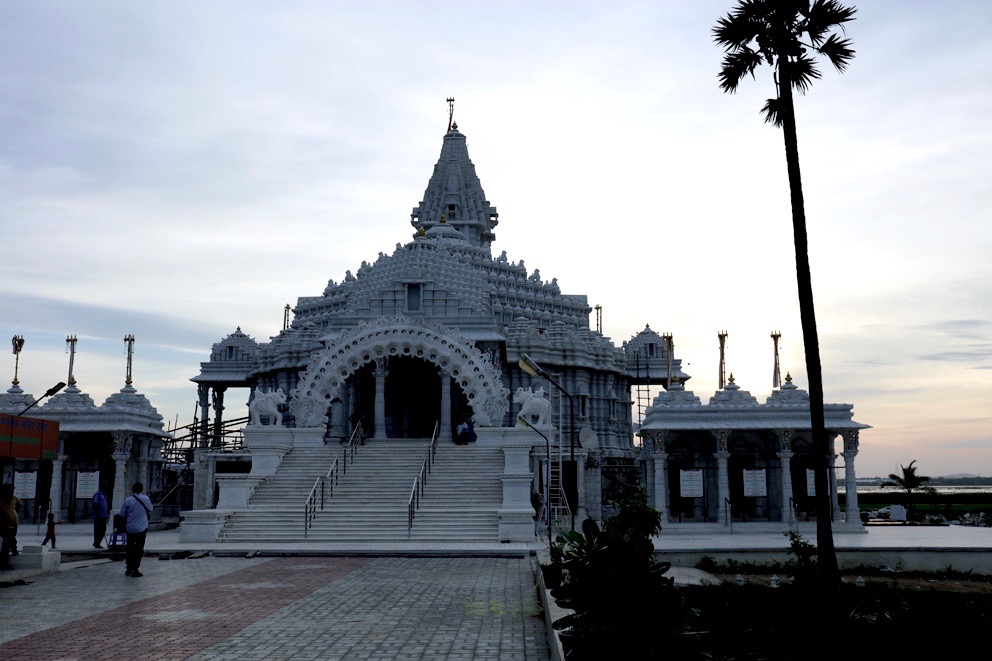
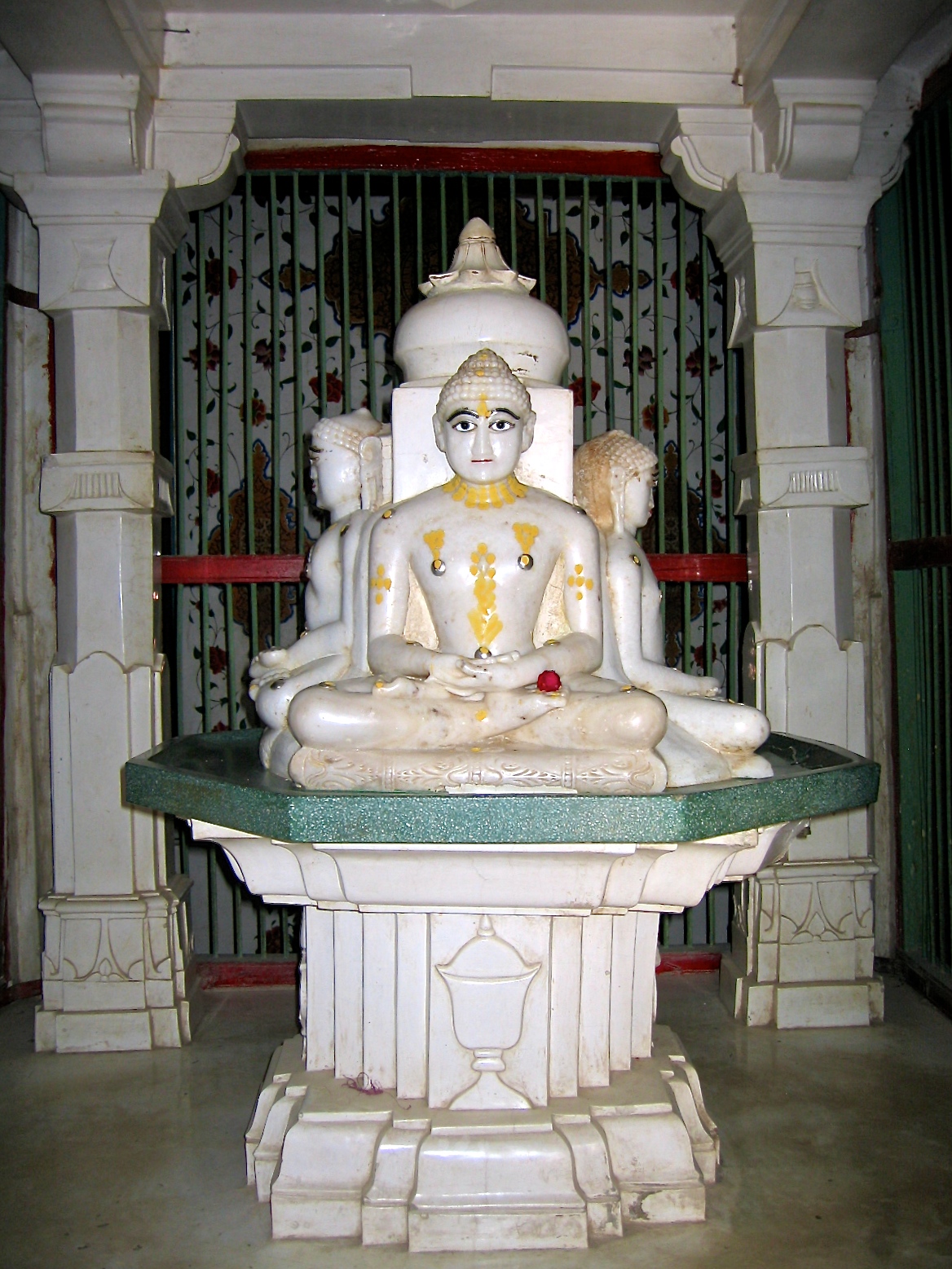
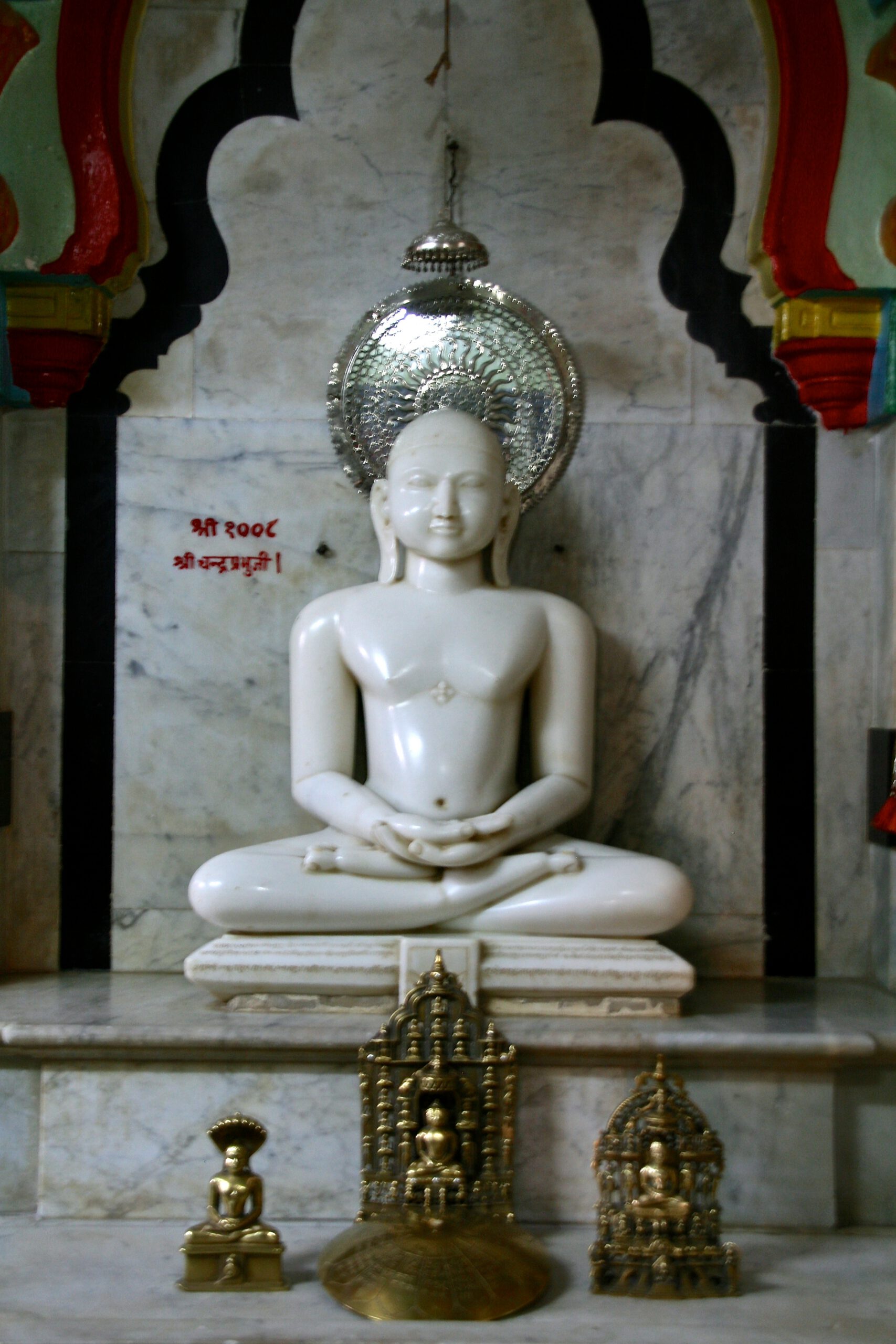
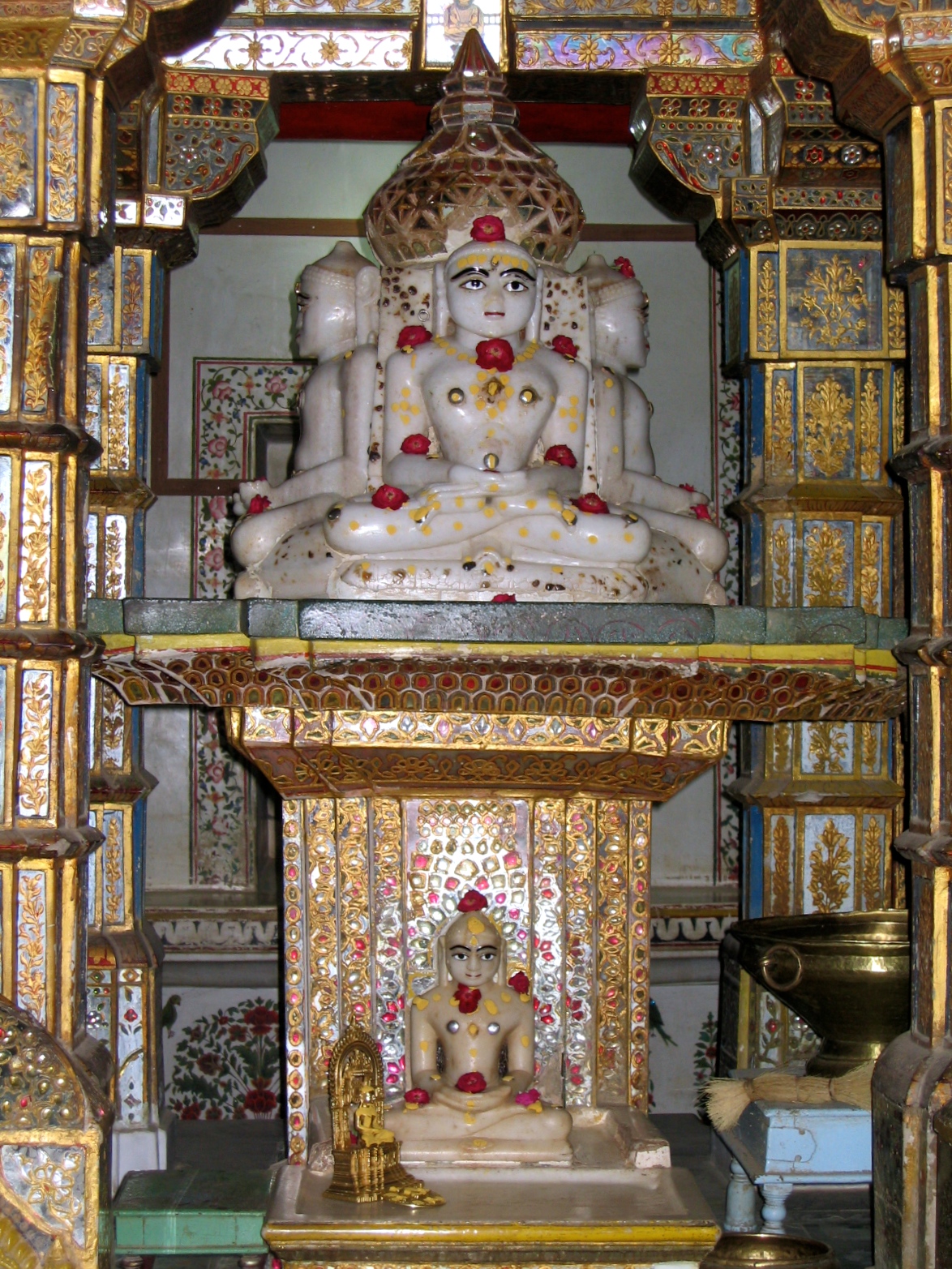
About 4 million people in India today. Founded in the 6th century BCE by Mahāvīra, a contemporary of the Buddha who also preached the absence of a creator god — Jainism is thus a religion without God. Mahāvīra is the last of the 24 Tīrthaṅkara (“ford-makers”). Jains hold that only a wholly pure soul can attain deliverance; to purify it, one must shed one’s karma through fasting, meditation and yoga. Jains strive to harm no living being: an ascetic may cover their mouth so as not to swallow insects, and sweep the ground before their feet so as not to crush any. Ascetic and non-harming, the Jains deeply influenced Hinduism and yoga, which borrowed the principle of ahiṃsā (non-violence) from them.
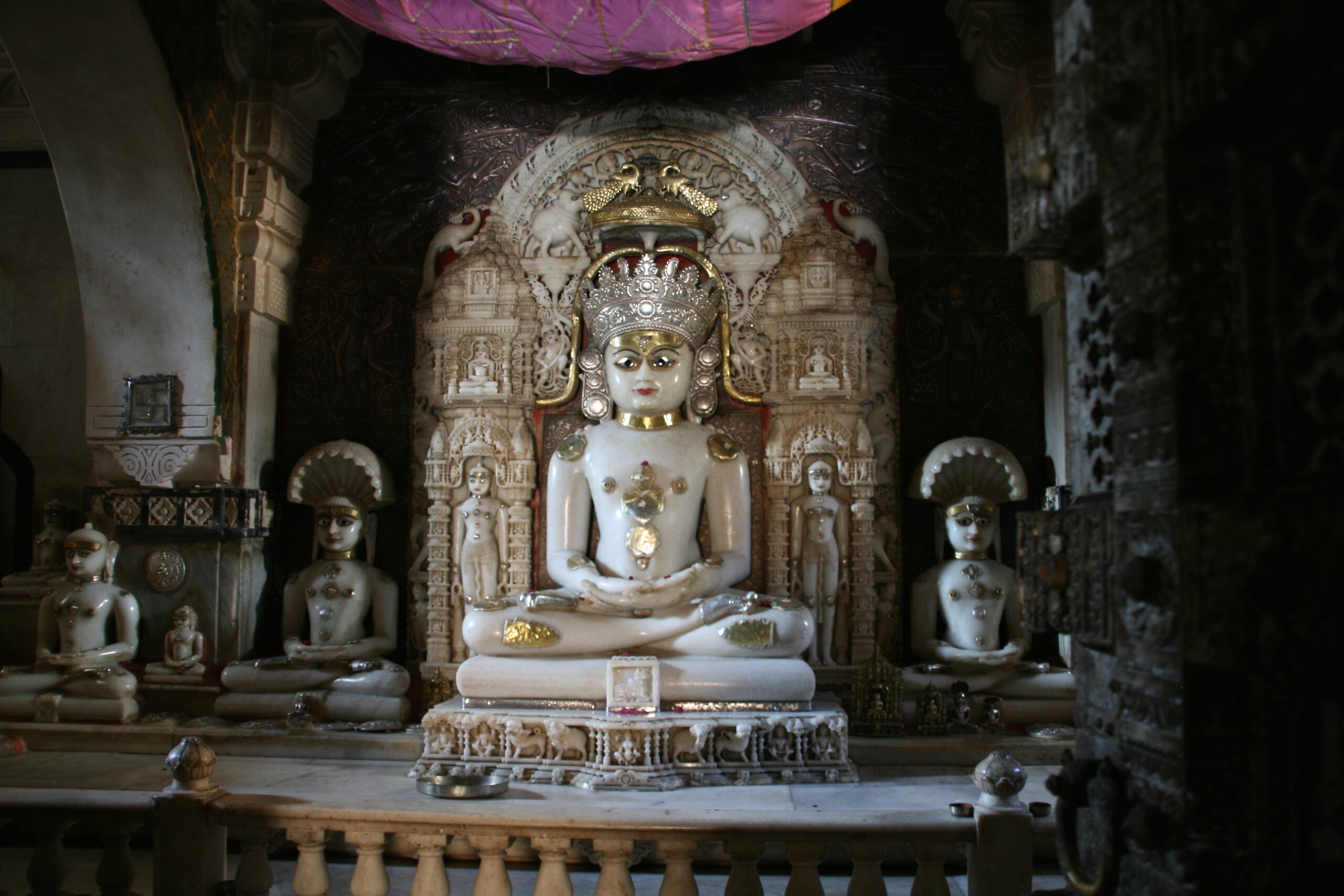
Mahāvīra set out five ways to escape endless rebirth: not to destroy life, to tell the truth, to be celibate, to own nothing, and to accept nothing that is not freely given. The Jain community is strictly vegetarian, wears no leather and no perfume, and observes many other rules.
Sikhism
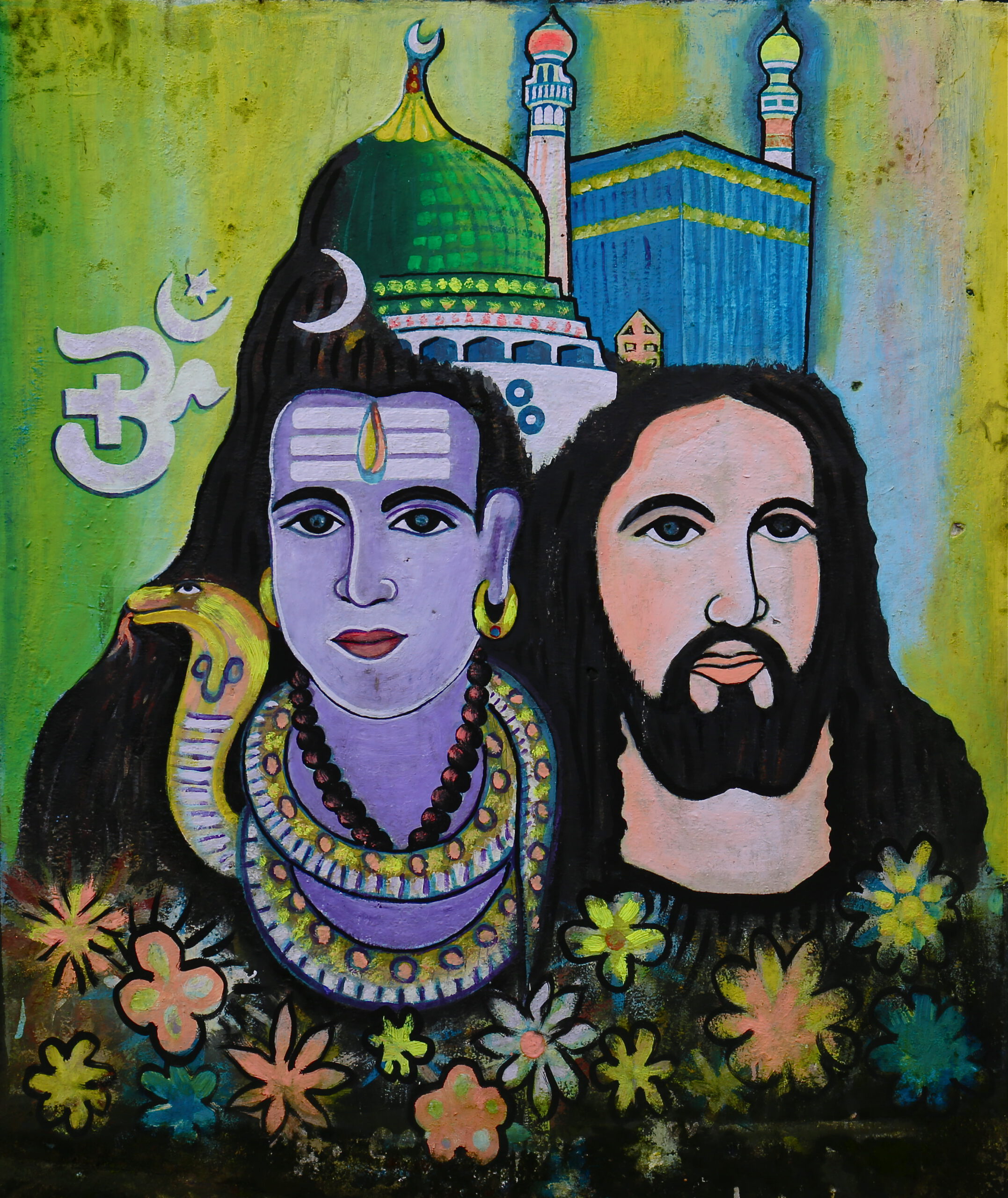
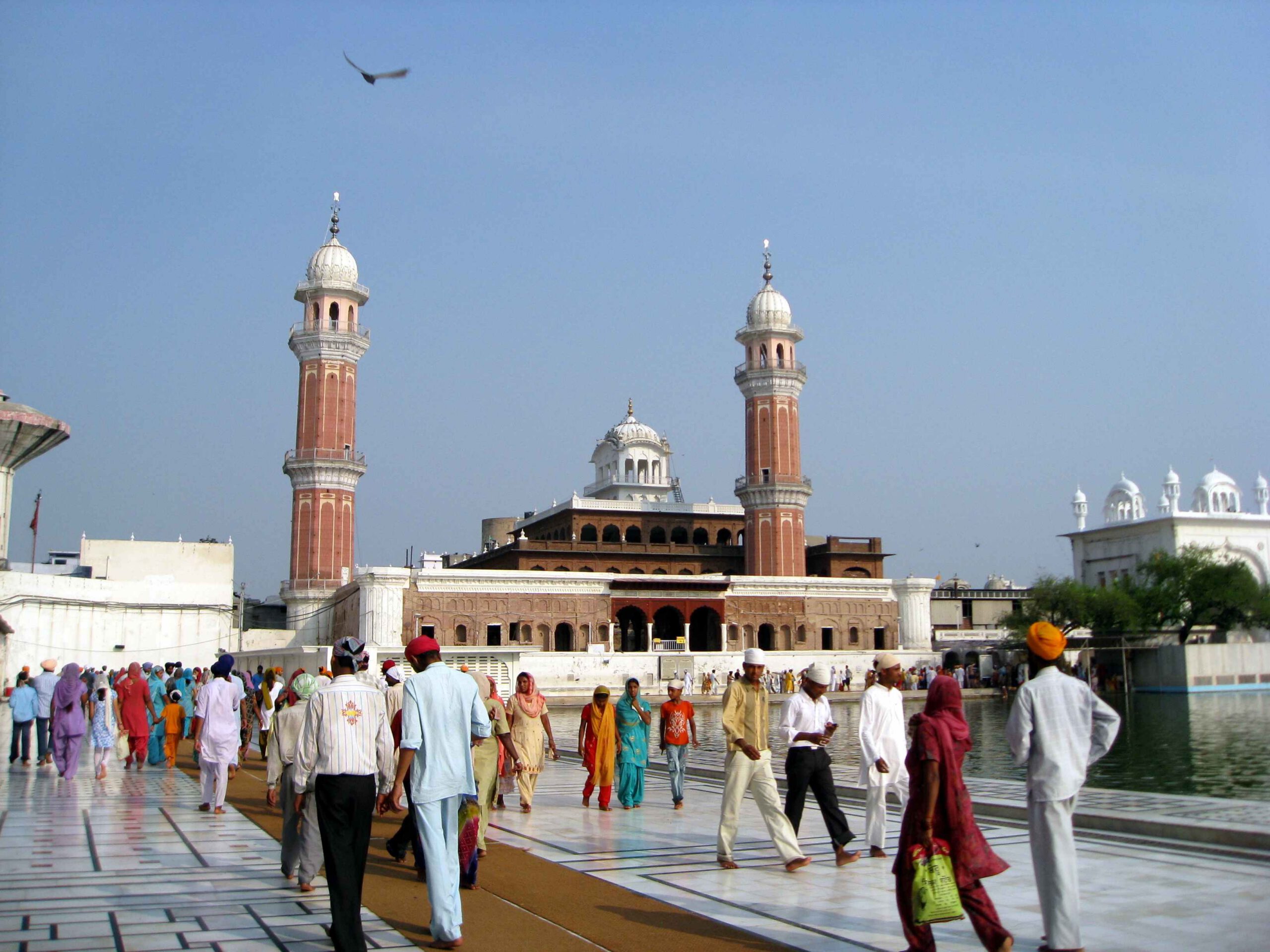
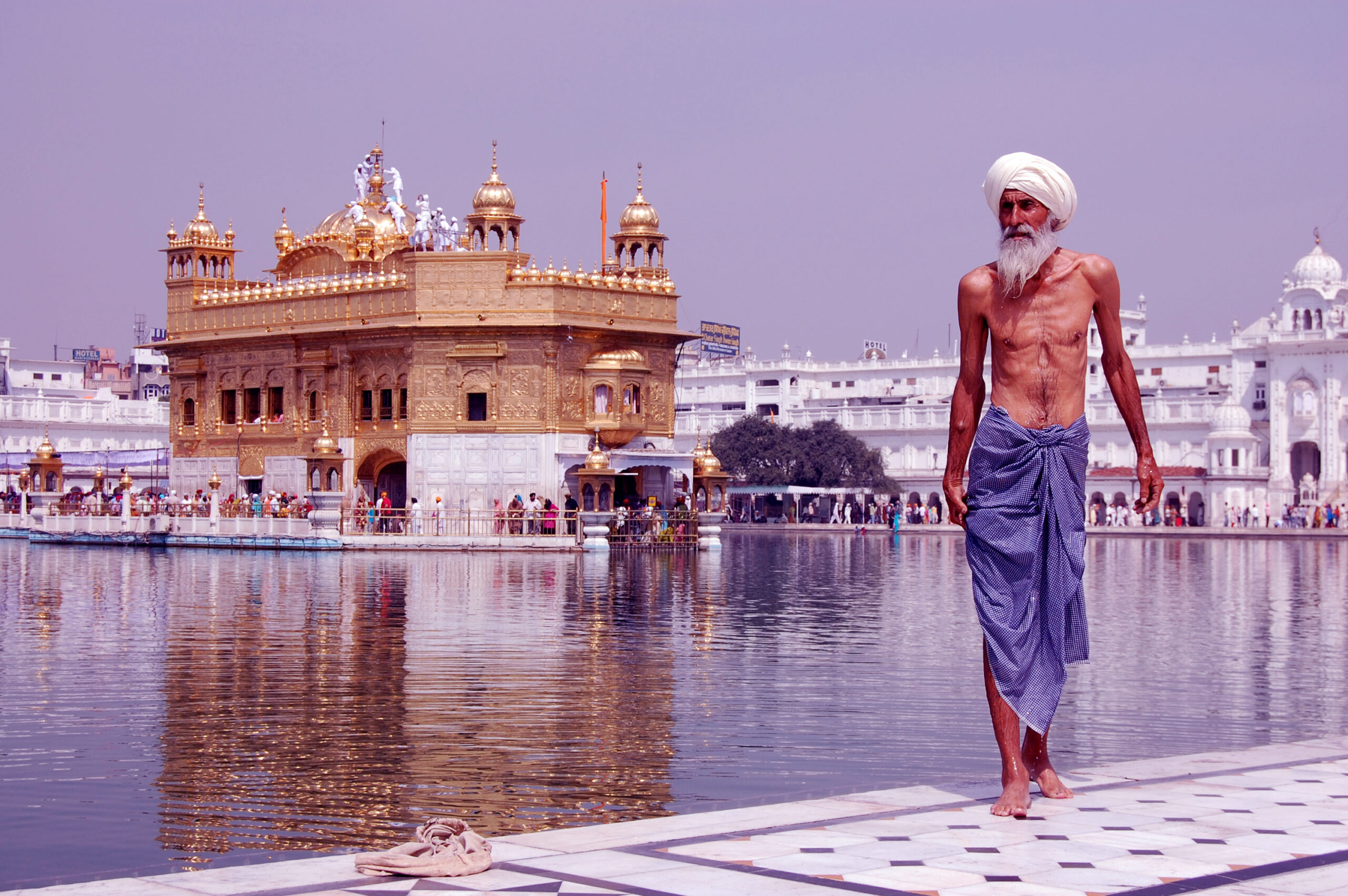
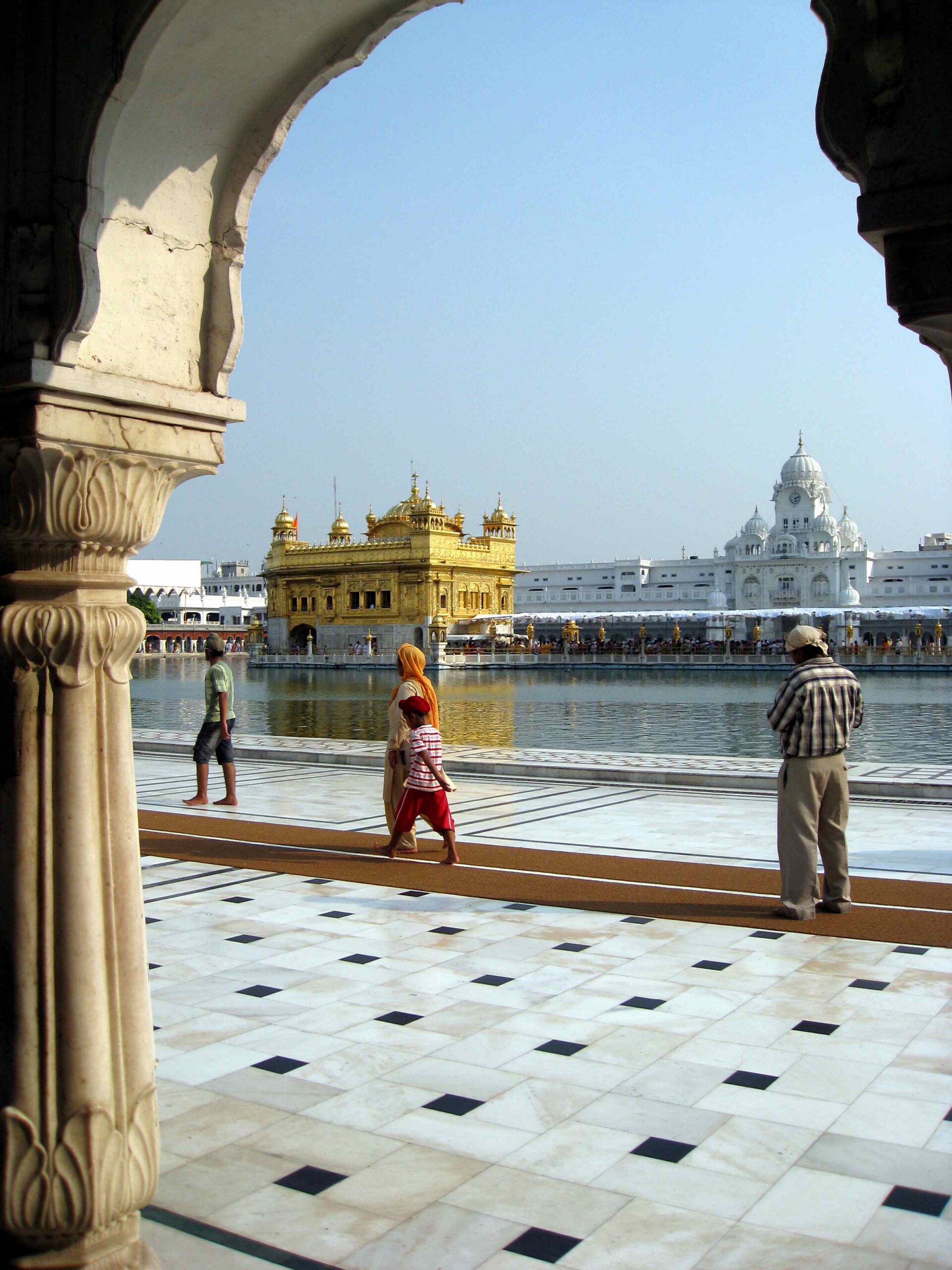
The Sikhs (literally “those who learn”) are one of India’s main religious minorities — about 18 million people. The religion was founded by Guru Nanak in the 15th century in Punjab (North India). Born a Hindu, in childhood he was drawn as much to Muslim as to Hindu saints; his preaching was for all, whatever their religion, sex or caste. Sikhism is originally a syncretism of Hinduism and Islam. Sikhs believe in one God, oppose idol worship and reject the caste system; with the Hindu tradition they share belief in karma and reincarnation. Their sacred book, the Guru Granth Sahib, blends Hindu and Muslim texts, the sayings of Guru Nanak and of the five Gurus who followed.

Islam
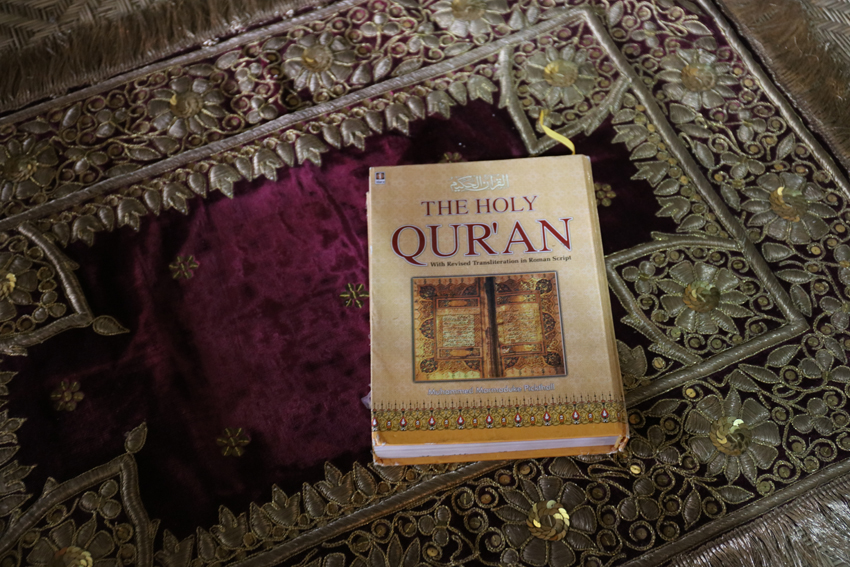
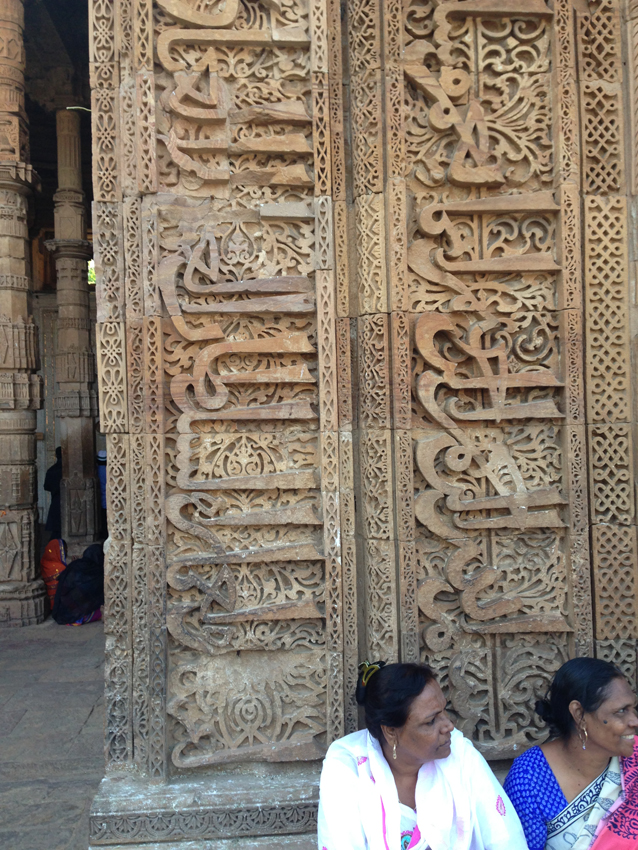
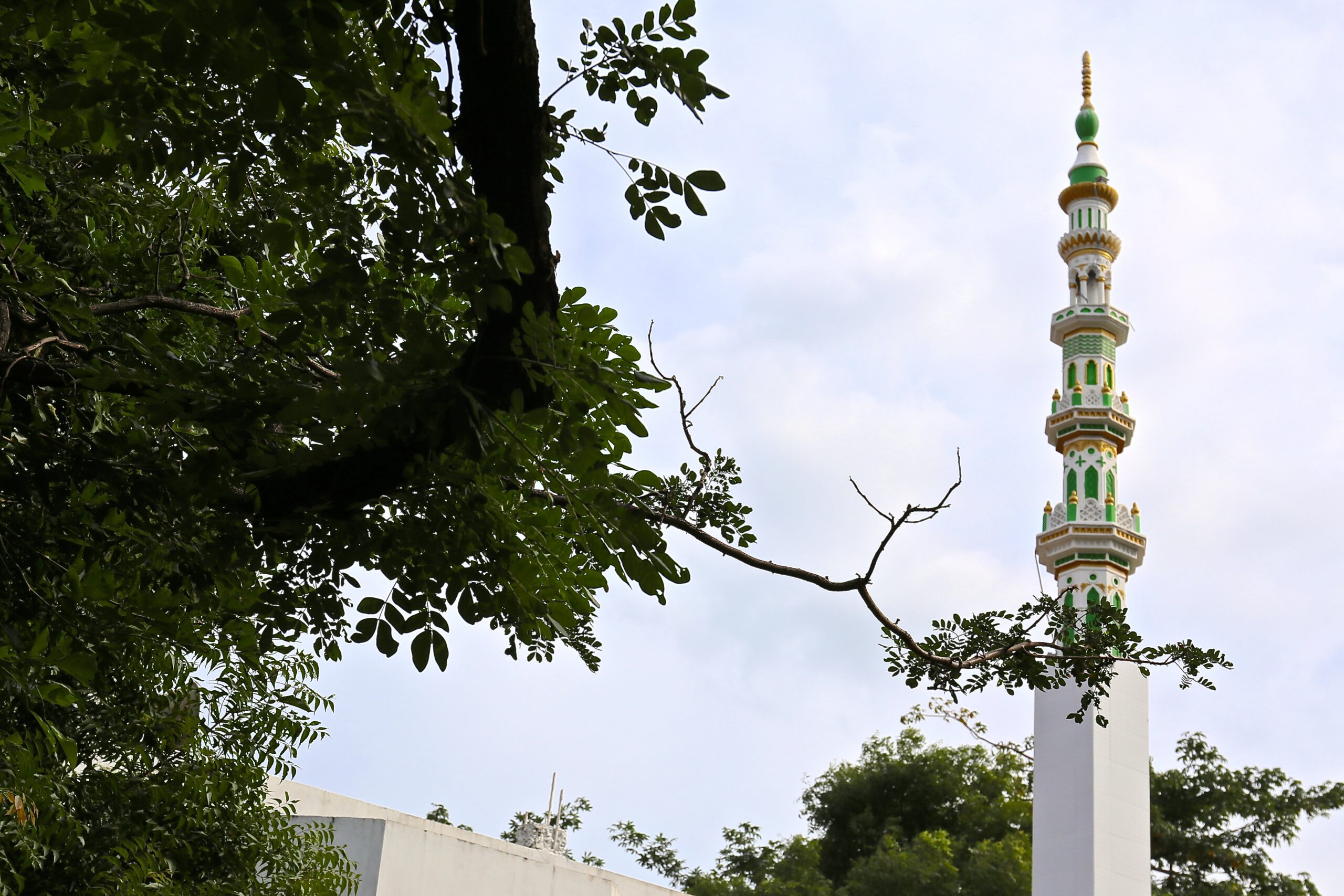
Arab traders brought their faith to India in the 8th century. Muslims form India’s largest religious minority — almost 12% of the population, mostly Sunni. The prophet Muhammad, founder of Islam, was born in 570 CE in Mecca. Islam is a strictly monotheistic religion: “Allah is God and Muhammad is his prophet.” The Qur’an, the sacred book, preaches universal brotherhood and submission to Allah. The believer’s religious life rests on the five “pillars”: the profession of faith, prayer five times a day, the fast of Ramadan, alms, and the pilgrimage to Mecca once in a lifetime.
Christianity
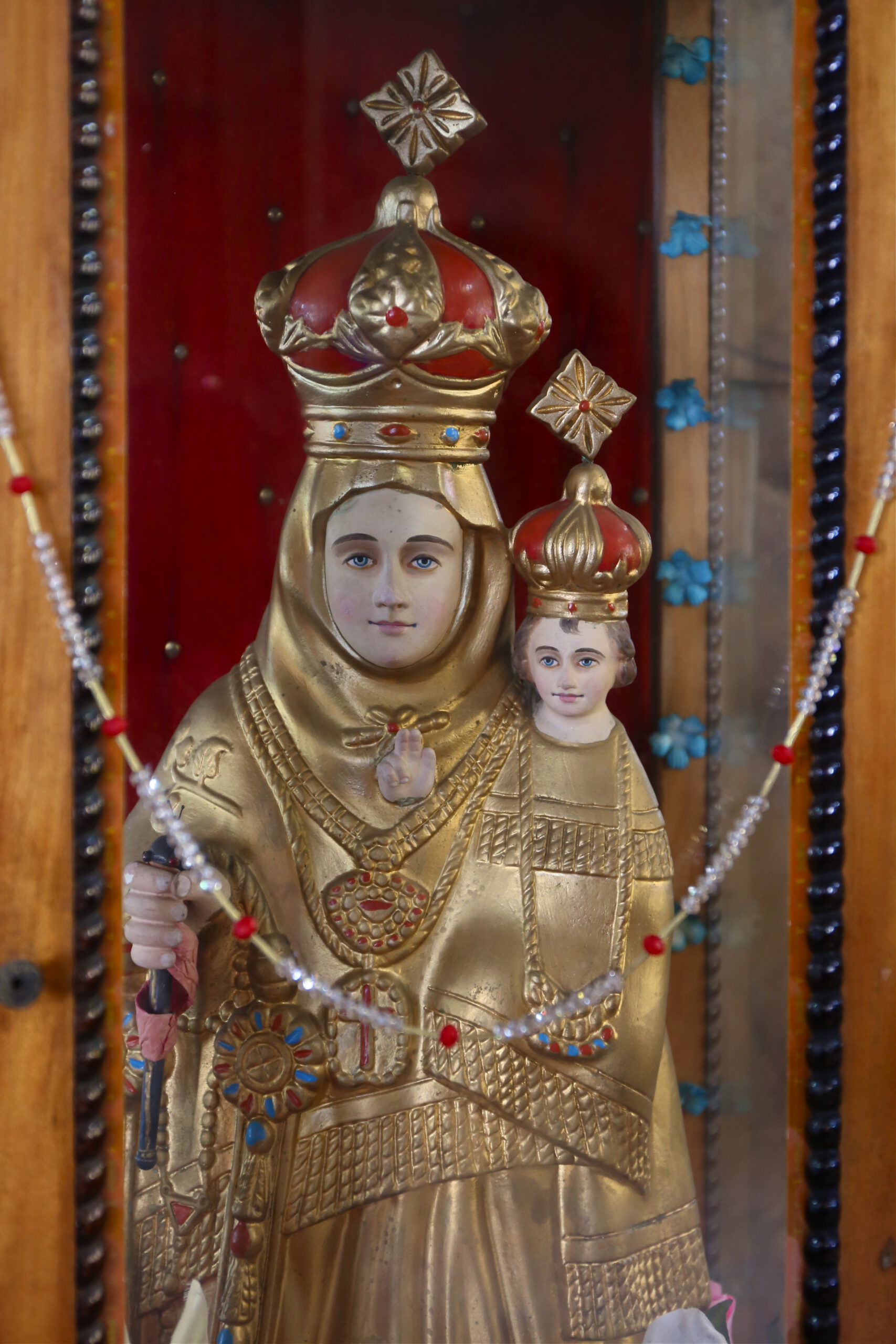
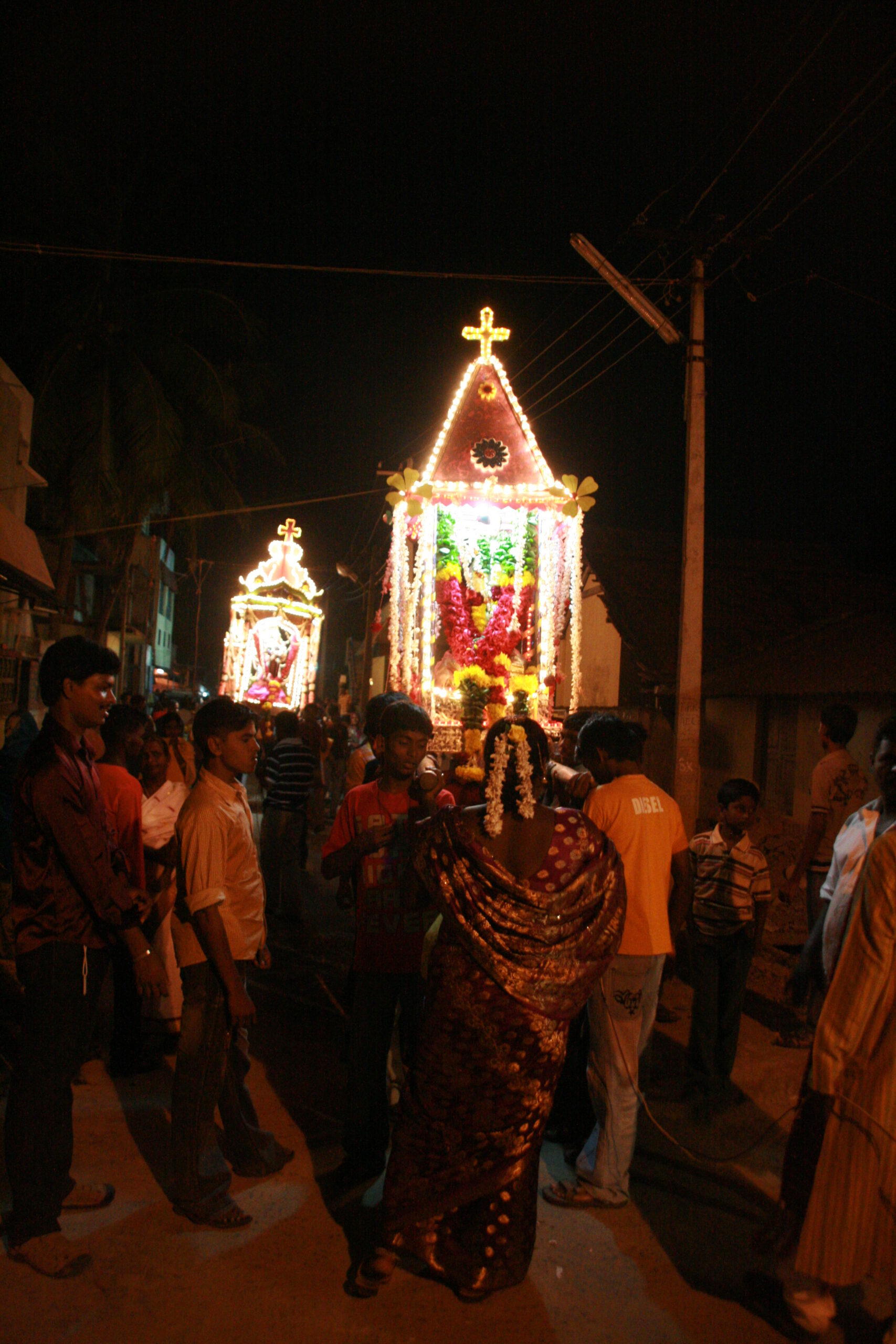
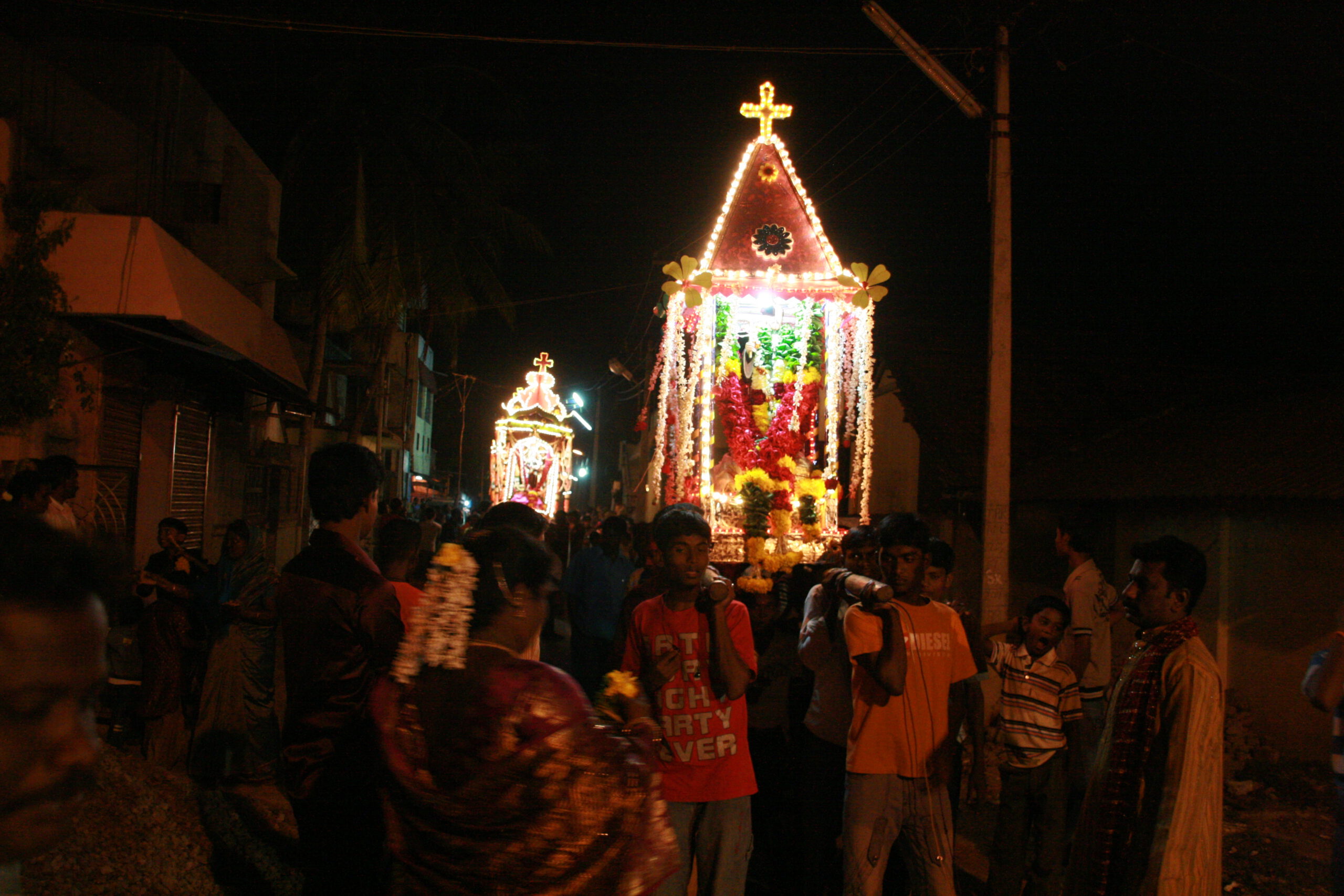
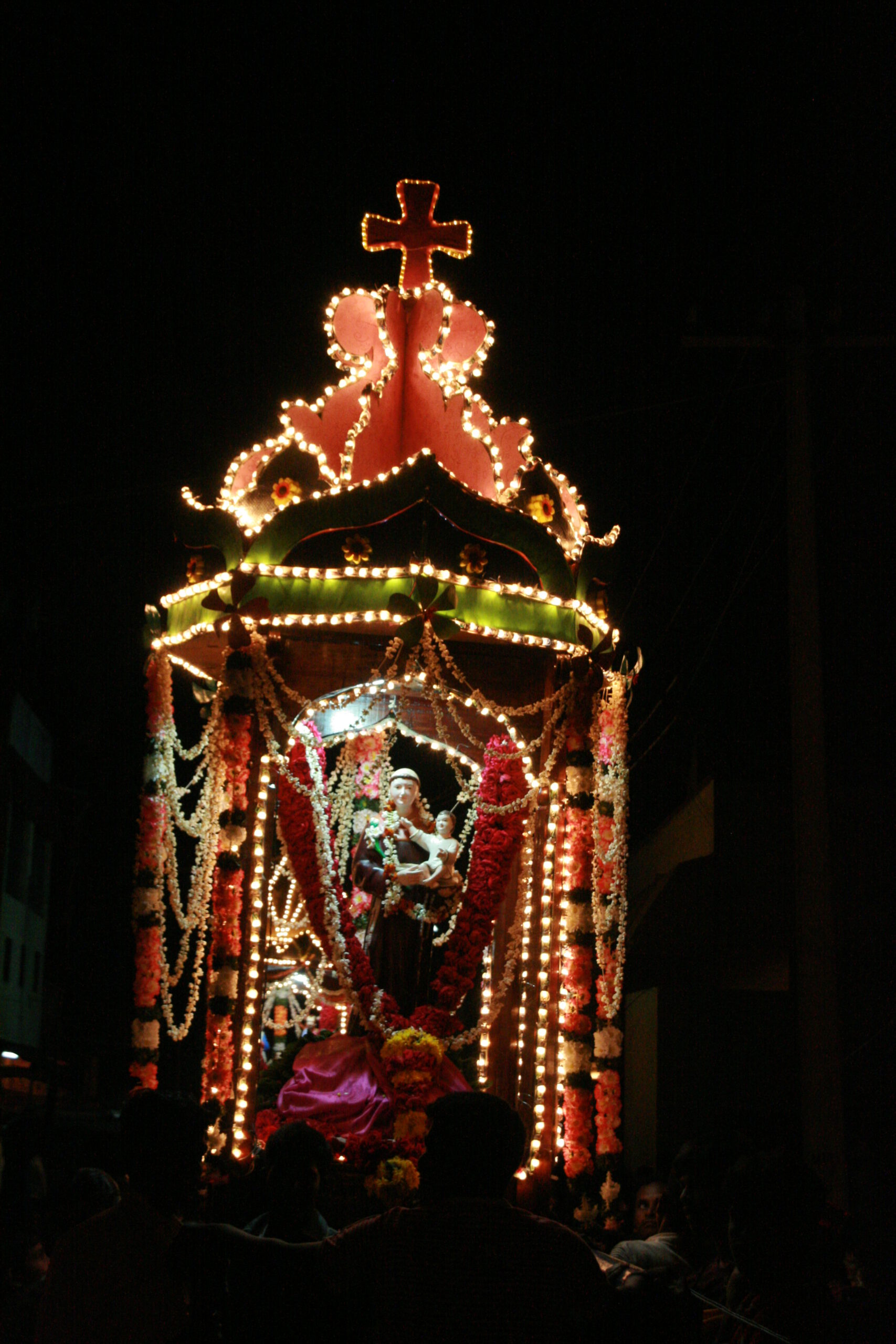
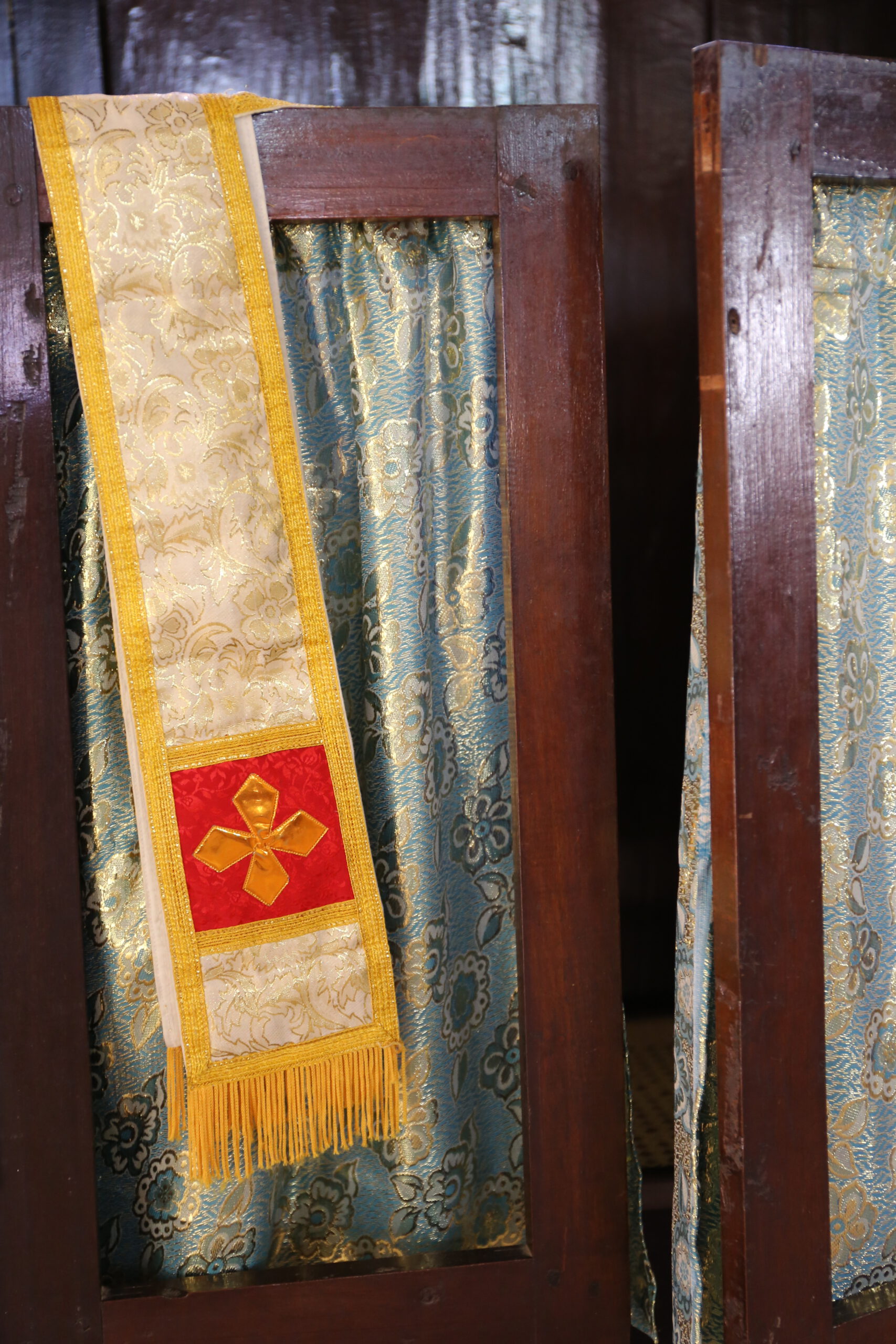
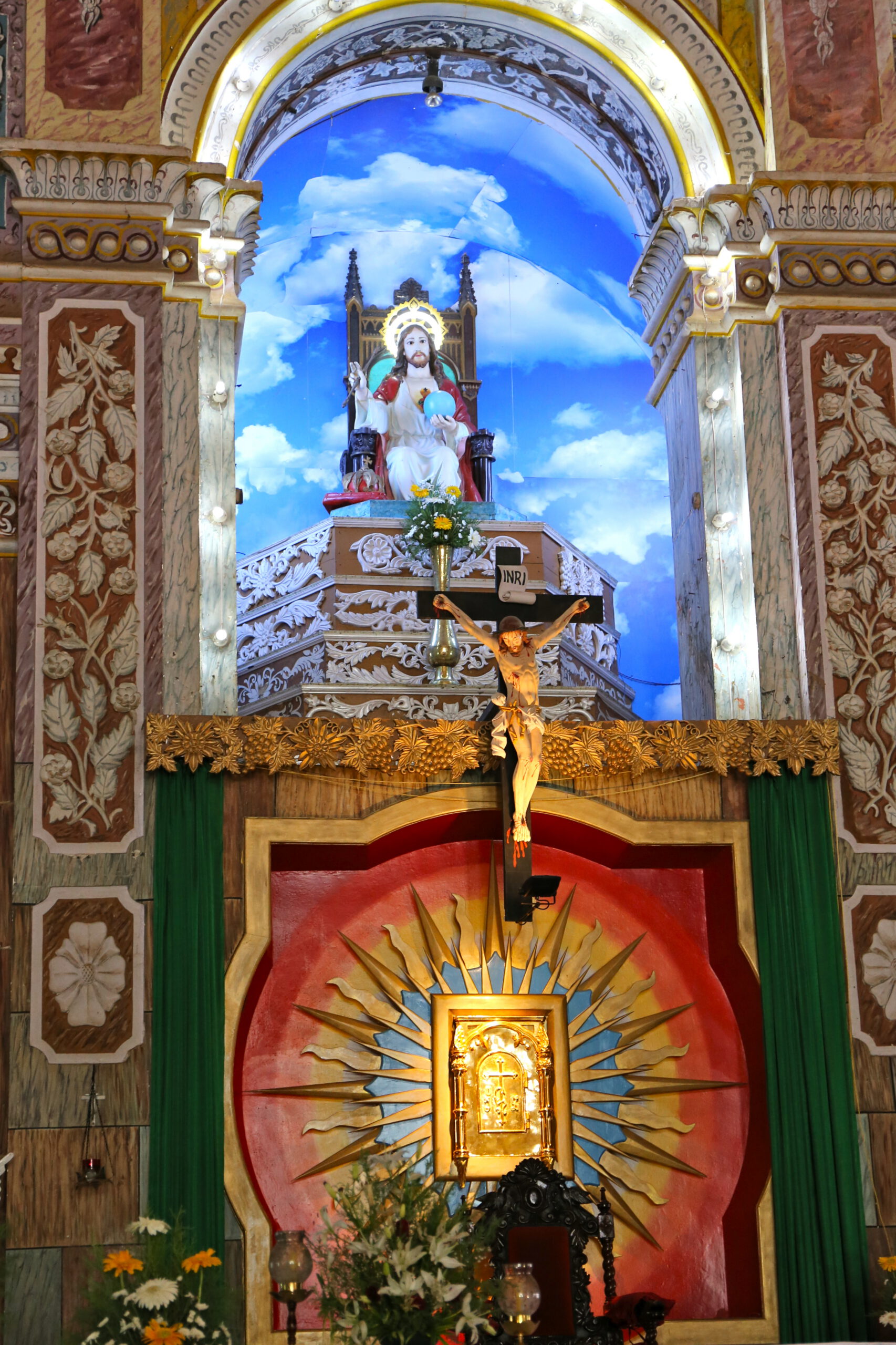
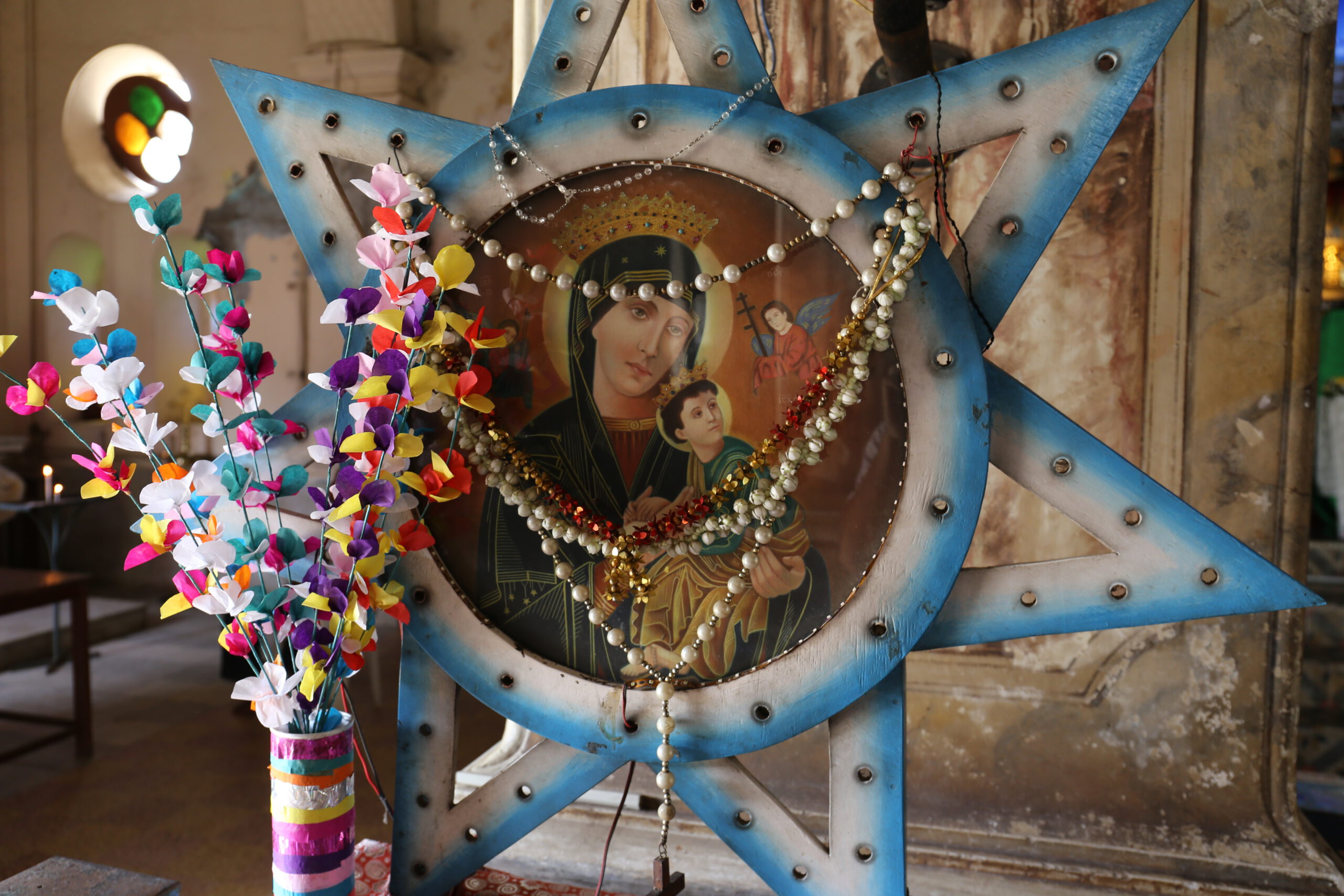
Tradition holds that Christianity reached India with the Apostle Saint Thomas, who is said to have evangelised Kerala and Tamil Nadu, to have died a martyr in Madras and to be buried at the site of St Thomas Cathedral. A second wave came with the Syriac Church around the 4th century, when Syrian merchants settled in Kerala with their families; a third came in the 15th century with the Portuguese — the miraculously intact body of Saint Francis Xavier can still be seen at the Basilica of Bom Jesus in Goa. India today counts about 19 million Christians, most in the South (Tamil Nadu and Kerala). Christianity and its teachings influenced a number of ascetics such as Ramakrishna, as well as intellectuals and Mahatma Gandhi.



Judaism
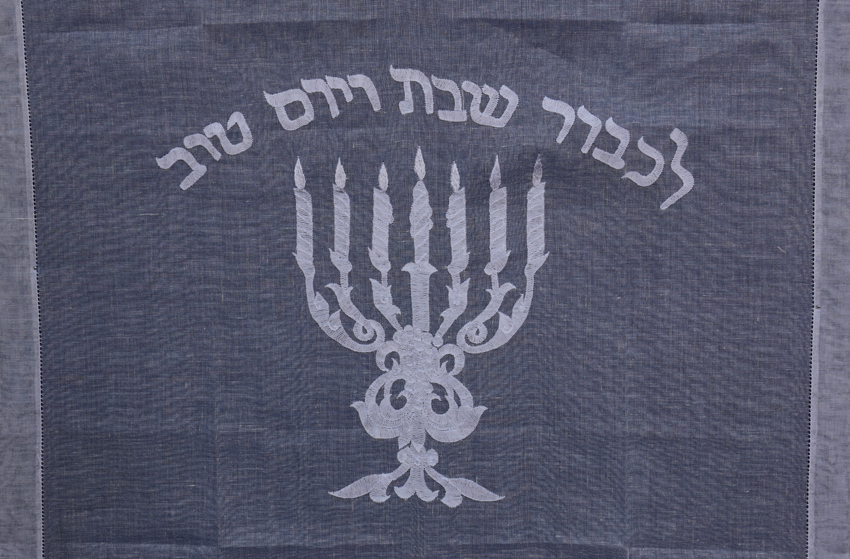
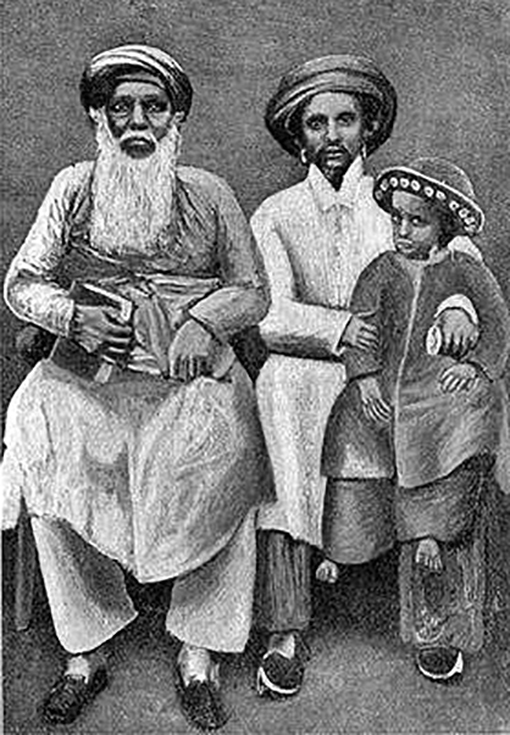
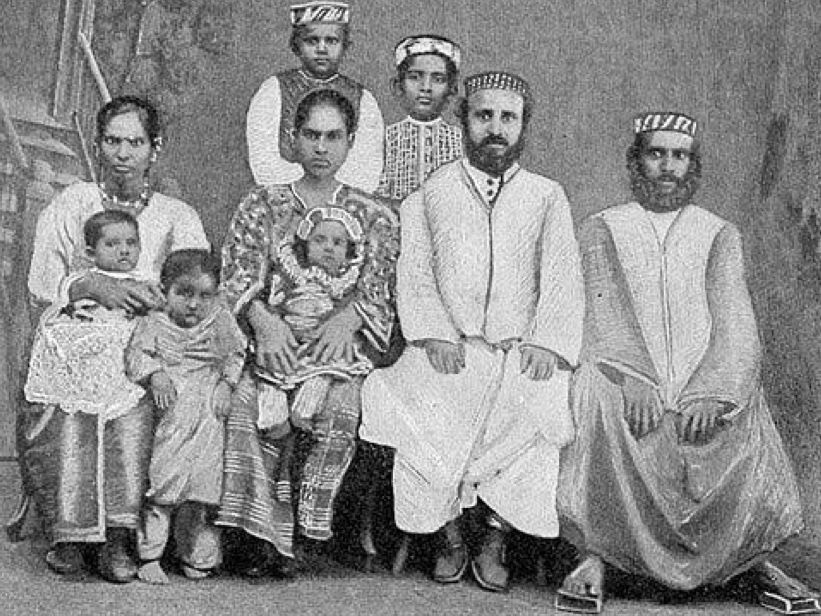
Jews arrived in Kochi (Cochin) in the 6th century BCE. The Jewish tradition traces itself to Abraham, father of believers, and to Moses, lawgiver of Israel; the holy book is the Torah. India has three distinct, all-Sephardic communities: one in Goa, the Bene Israel in Maharashtra, and the Baghdadi, who came from Iraq, Iran and Syria two centuries ago fleeing persecution and who follow the Sephardic rite without a rabbi — found mainly in Mumbai and Kolkata. The Jewish community today numbers about 5000, most having emigrated to Israel, the UK, the USA, Canada and Australia.

Zoroastrianism
A monotheistic religion whose faithful are called the Parsis; their god, Ahura Mazda, is invisible and omnipotent. Founded by Zoroaster, a priest of eastern Persia, it came to India with immigrants who fled Muslim persecution in the 10th century. Their sacred book, the Zend-Avesta, describes the conflict between good and evil. Zoroastrian practice rests on each person’s responsibility to choose between good and evil, and rejects fasting and celibacy.
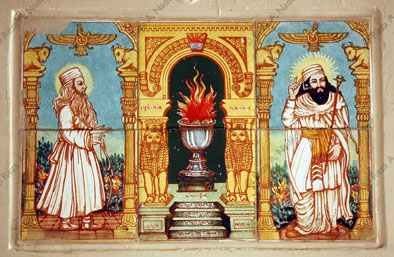

Most Zoroastrians in India live in Mumbai and are the most urban and wealthy religious group of the nation (industry, finance, high technology). There are about 250,000 Parsis worldwide, mostly in India. The Parsis neither bury nor cremate their dead: in Mumbai stand the famous Towers of Silence, open to the sky. As the elements are sacred, they cannot defile the earth by burial nor the fire by cremation, so they lay their dead atop the high towers, where vultures and crows dispose of the remains within the hour.
The Baháʼí Faith
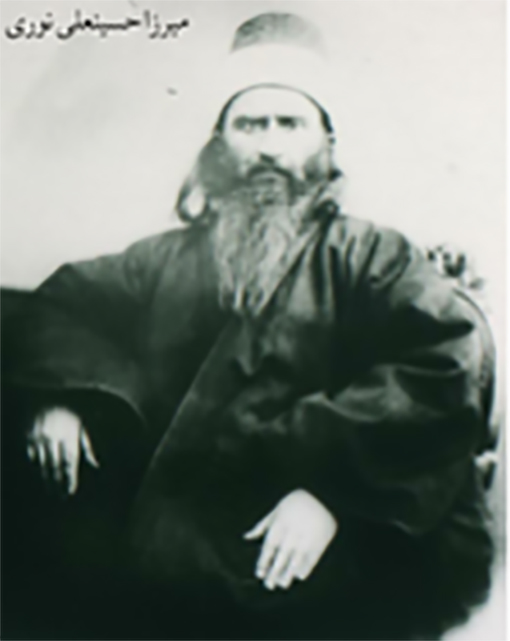
Present mainly in the USA, Europe, India and the Near East, the Baháʼís were harshly persecuted in Iran. The Baháʼí Faith is a religious syncretism whose ritual assemblies include readings from the Bible, the Gospels and the Qur’an; it presents itself as an “independent world religion”. It was founded by the Persian Baháʼu’lláh (Mīrzā Ḥusayn-ʿAlī Nūrī), a former disciple of the Báb. Baháʼís regard the writings of the Báb and of Baháʼu’lláh as divinely revealed.
“True religion and science are not in contradiction. When a religion is opposed to science it becomes mere superstition… Religion and science are the two wings upon which the human intelligence can soar to the heights, and the human soul progress. It is not possible to fly with one wing alone.”
‘Abdu’l-Bahá, Paris Talks
Tribal religious minorities
Half of the tribal peoples of north-east India are Buddhist or animist, others partly converted to Christianity in recent times.
The Kukis
One of India’s recognised Mongoloid tribal peoples, found mainly in north-east India, Myanmar and Bangladesh. Traditionally animist, many were converted by various missionaries (Christian, Protestant, Baptist).
The Nagas
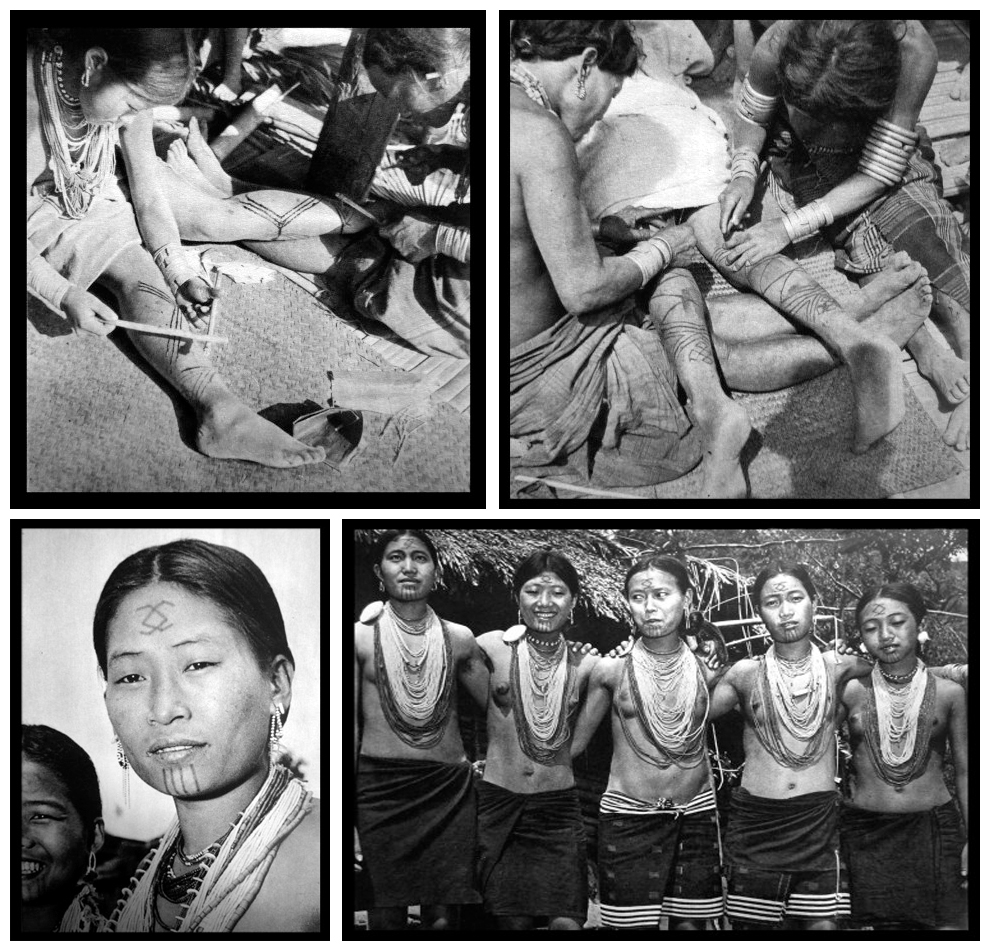
Also of the north-east, about two and a half million people divided into some 30 tribes across Nagaland, Manipur, Assam, Arunachal Pradesh and Myanmar. Each clan lived self-sufficiently with its own cultural markers, little changed before the arrival of missionaries (mainly Baptist, in the 20th century). Hunter-gatherers, they practised frequent tribal wars and were head-hunters until the 1960s (the custom was banned in 1991). Today the Nagas are more than 80% evangelised. Traditional tattooing has declined but still matters: girls of marriageable age had their legs and forehead tattooed, the geometric leg designs meant to protect the body from the bite of Hla, the legendary vampire. Naga villages were ringed by defensive palisades, with two distinctive buildings — the morung (the men’s dormitory) and the women’s dormitory.
The Bodos (Boros)
The first and authentic inhabitants of Assam, recognised in the Indian Constitution; they speak Bodo, of Tibeto-Burman origin — 1.2 million people (5.3% of the state) at the 1991 census. At India’s independence in 1947 they were 49% of Assam’s population, but successive migrations and settlements reduced them to a minority, dispossessing them of land and identity. Their favourite traditional drink is rice beer (Zu Mai); weaving is integral to their culture, and they are fine bamboo craftsmen. Their religion, Bathouism, blends animism, Hinduism and Christianity: it rests on belief in an infinite, eternal God, Obonglaoree. Despite Hindu influence, caste and dowry are not practised, and they are non-vegetarian.
The Chakmas
Living under the authority of a king, with an original social system of gutthi (the first Chakma clans). They call themselves Changma; their language, Changma Kodha, belongs to the Bengali-Assamese group and has its own script, now endangered. Originally from north-east India (Arunachal Pradesh) and Bangladesh, in the hills above the Ganges delta, they have suffered decades of persecution and massacres in Bangladesh, forcing many into exile in India and worldwide. The Chakmas are Buddhist — “Ajha”, in the Chakma language, means “hope”.
The Hajongs
Of Tibeto-Burman origin, the Hajongs live on the southern foothills of Meghalaya (whose name means “the abode of the clouds” in Sanskrit). At the 1951 census some thirty thousand were settled in what was then East Pakistan. They are mostly Hinduised or Christianised through the action of missionaries.