
When everything goes wrong, yoga can become a simple, concrete and deeply human inner support. This letter offers no magic recipe: rather, a way to change your outlook, regain a little energy and move step by step towards more light.
A letter for hard times
This News Letter n° 9 was written in December 2011 in Mahābalipuram, South India. From darkness towards Light, the path of Yoga — by Jean-Claude Garnier.

Here are a few things that personally help me navigate troubled waters. First, I try to think from a belief that is not necessarily true but very useful: “Whatever situation arises, it is to my advantage.” It is not always easy, but simply reflecting on this idea lets us, for a moment, change our point of view and regain our energy. Another question you can ask: “What life lesson am I to draw from this?”
The present moment and our emotions
When everything goes wrong, we lose our bearings and sometimes fall into a vicious circle — what I call the negative moment. The best way out is to remember this truth: our two bearings are the present moment and our emotions. Ask yourself: right now, what can I do to feel a little better? Not to leap from despair to absolute confidence, but to find the concrete gesture that helps, now. Keep your energies balanced too — by any means: walking, massage, singing, playing an instrument, painting…
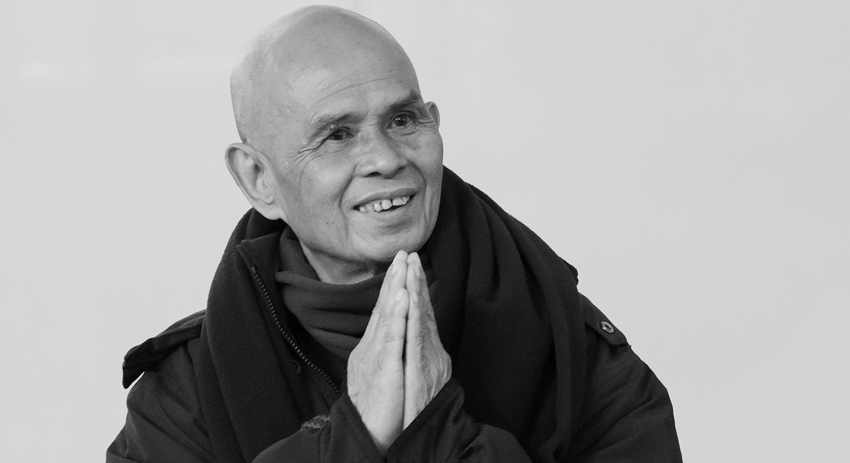
As Thich Nhât Hanh says in his book on Anger: do not let it destroy you; use this marvellous force to go further. Yoga, like many disciplines, requires finding your second wind: when you are lucky enough to touch your limit — the limit of the first wind — you find the second by surrendering to the divine law, Īśvara praṇidhāna (YS II, 1).
“When one approaches pain and accepts it, pain leads to LOVE.”
Mother Teresa
Discipline, a space of freedom
It is an illusion to think we can advance only in gentleness. Incorrect practice is dangerous — for the body and the mind. As the Haṭhayogapradīpikā warns (II, 15): the breath, like a lion or a tiger, must be tamed slowly and gradually, or it will harm the student. We do not reach Sthira sukham āsanam (“the posture must be steady and comfortable”, YS II-46) without effort or discomfort. The start is hard: it means accepting what we ARE — our asymmetries, imbalances, unconscious tensions. Yoga disciplines the human “vehicle”; and a discipline is a space of freedom: it alone builds the endurance that lets us, when difficulty comes, continue our path.
“It is only with the heart that one can see rightly; what is essential is invisible to the eye.”
Antoine de Saint-Exupéry
Om Shanti — peace, strength and deep joy,
Jean-Claude Garnier
In short
When everything goes wrong, yoga does not erase the difficulty: it offers a foothold — the present moment, the breath, and a discipline that, patiently, turns pain into gentleness.