The Transmission Path

Take an Ashtanga Yoga Teacher Training Programme in Brussels

A demanding three-year programme structured as a progressive deepening of your practice: each year, you return to the same foundations to understand them more fully, experience them more deeply and learn how to pass them on.

Request a conversation Come to an intensive morning

  1. Year 1
    Laying the foundations

    Settling into the First series (Yoga Cikitsā), the Ujjāyī breath, the bandhas and the dṛṣṭi. First landmarks in anatomy, history of yoga and methodology.

  2. Year 2
    Deepening & connecting

    The spiral comes round again: following series, study of the texts, anatomy applied to adjustments, supportive listening. Your own practice changes.

  3. Year 3
    Integrating & passing on

    Pedagogy, observation and assisting in class. Writing the final dissertation, presented to the teachers — then shared with the community.

Who is this path for?

Two roads, one same demand

Becoming a teacher

You wish to teach. The training prepares you to pass on in turn: pedagogy, adjustments, anatomy, supportive listening — and the experience of assisting classes in the final year. It leads to a certificate based on each person's own progress.
Deepening your own path

You do not have to want to teach. The course is open to anyone wishing to deepen their personal journey — practice, philosophy, self-knowledge.

Prerequisite: practising Ashtanga Yoga for at least two years — here or elsewhere — and a preliminary conversation with the teachers. Open to all, watered down for no one: what is asked is the sincerity of the intention, not the starting level.

See the next dates →

At the Institute we let the rigour of the body, the intelligence of the mind and the depth of traditional Ashtanga speak to one another, to guide each person into a practice that is accurate, sustainable, and passed on for over fifty years.
In what spirit?

We do not sell a diploma. We pass on what we received.

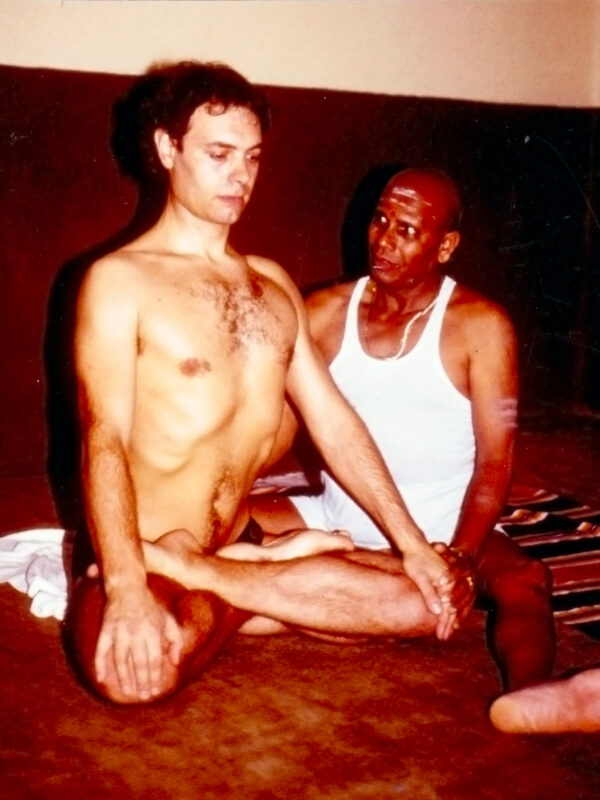
This is a transmission of yoga, not a linear course where the syllabus matters more than the substance. What is passed on over these three years is what Jean-Claude Garnier himself received — the method faithful to the Yoga Korunta, transmitted by Sri K. Pattabhi Jois in Mysore — enriched by fifty years of teaching.

Embodied heritage

A living lineage, taught without interruption for fifty years — you do not learn "a style", you enter a transmission.

The whole person

Yoga, osteopathy, Chinese medicine, psychology: a rare marriage of anatomical precision and philosophical depth.

Precise adjustment

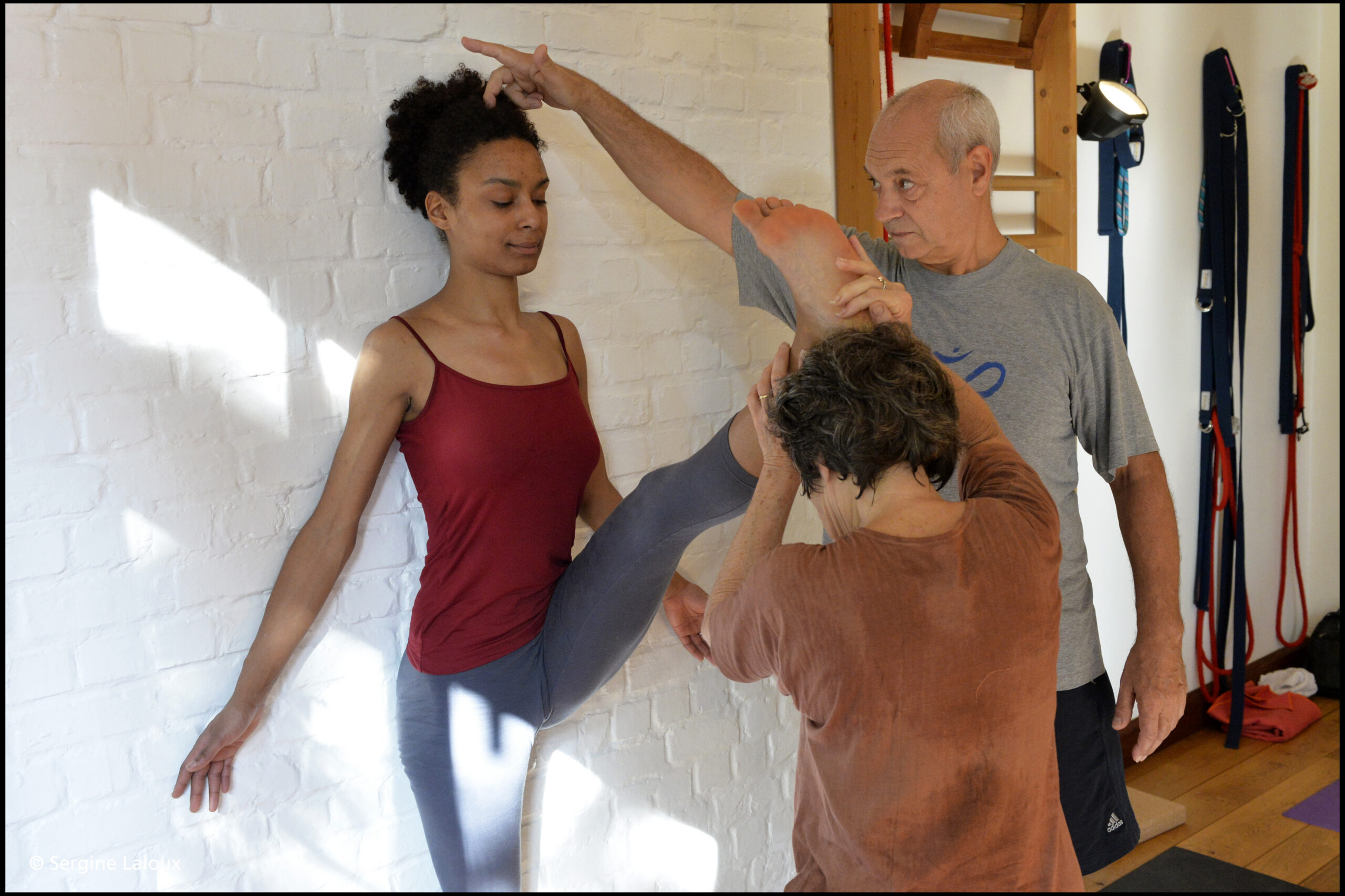
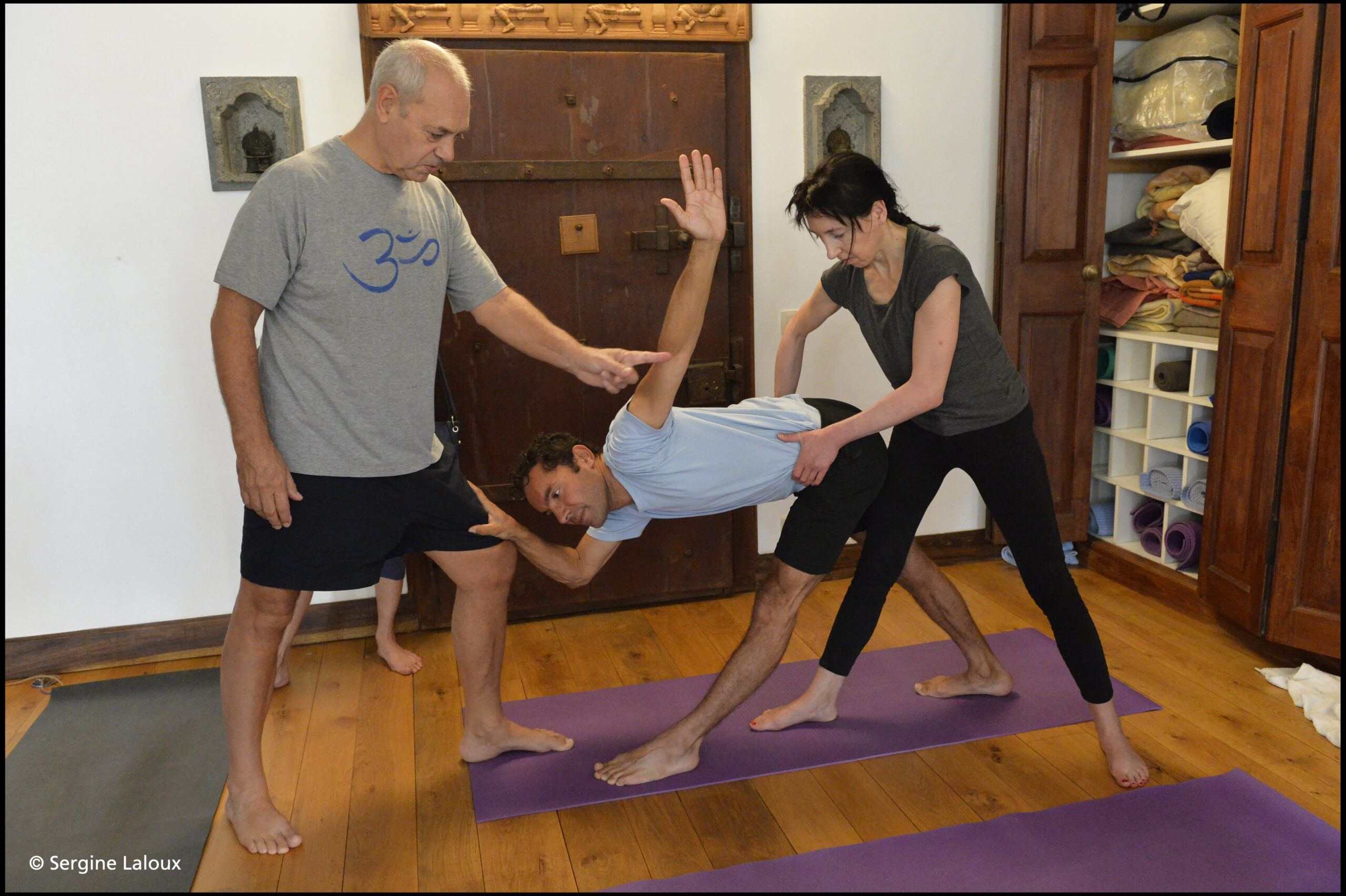
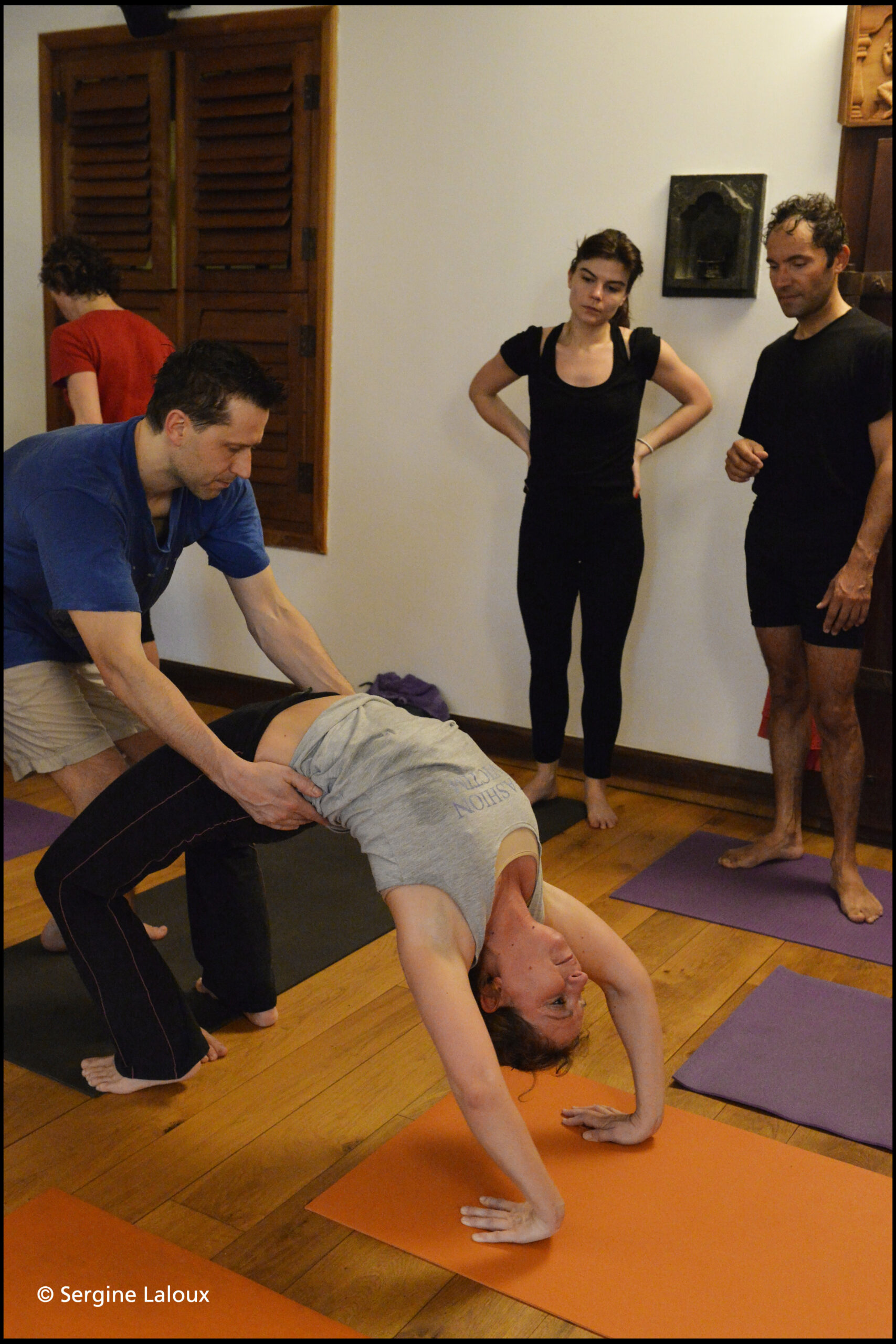
Individual, physical corrections, even in a group. You learn to adjust because you are adjusted yourself, for three years.

Among the practitioners

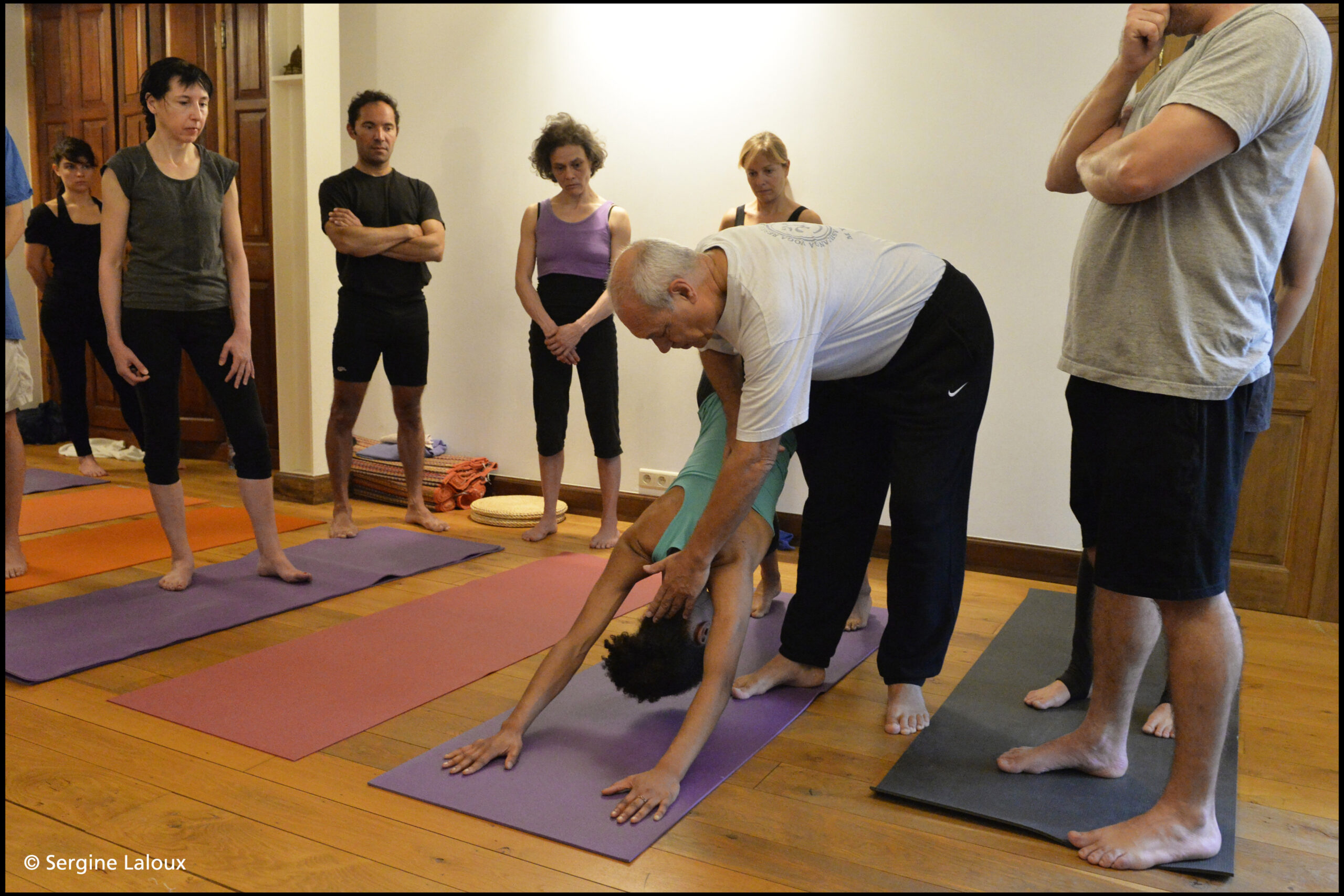
The practice mornings are shared with every practitioner of the Institute: you train inside a real community, not in a bubble.

The training leads to a certificate based on each person's own progress — practice, attendance and the final dissertation. A certificate of regular attendance is available on request. Read former students' dissertations
Who with?

A teaching lineage, not a succession

What is passed on here comes through people, not through a syllabus — voices of former students and teachers telling, in their own words, what this path gave them.

Jean Claude Garnier

See his path →

What will I learn?

The gesture, the texts, the relationship.

Fields revisited in a spiral, year after year — and a dissertation to close.

The series & the gesture

First, second and third series — āsana, vinyāsa, ujjāyī breath, bandha, dṛṣṭi.

Anatomy & physiology

Anatomy, movement, basic traumatology applied to yoga. Care of the major systems, diet.

History & philosophy

Sources and texts — Patañjali's Yoga Sūtra, comparative philosophies, the great Indian masters.

Supportive listening

Empathy, authenticity, active listening, transference and distance — how to help, and when.

Psychology & pedagogy

Group work, temperaments, yoga and modern psychology. Observation, self-assessment, the teacher's stance.

Sanskrit & symbolism

The names of the āsana, their symbolism, the great religious currents of India — connecting gesture to source.

our articles on teaching → dissertations from previous years → The syllabus, year by year →

When?

One weekend a month, Saturday to Monday

Provisional dates — the start of the next intake is yet to be confirmed.

What does it ask of me?

A commitment made consciously

Three years is not a box to tick — it is a rhythm of life. Better to know beforehand: here is what the path asks, in time, personal work and means.

Time

34 days a year: 9 three-day weekends (Sat → Mon) plus one residential week in summer. Add personal work — reading, research, practice — and, in the final year, the dissertation.

Fee

€10,200 for the whole Transmission path, over three years — instalments possible. That is, each year, 9 three-day weekends and one 7-day week. Accommodation, meals and books not included.

Enrolment

A preliminary conversation, then the enrolment form and a deposit of half the annual fee — the balance before the first September session. Withdrawal: €200 retained; less than a month before, the deposit is lost.

See all rates →

Frequently asked questions

Before you decide.

Straight answers to the questions that come up most — including the ones people do not always dare to ask.

Do I have to want to teach in order to enrol?

No. The course is open to anyone who wishes to deepen their personal journey. Some participants will never teach — and that is perfectly fine.

What level of practice is expected?

A regular practice of Ashtanga Yoga for at least two years — at the Institute or elsewhere. What is asked is the sincerity of the intention, not the starting level: the posture adapts to the body, everyone moves at their own pace.

I don't know the Institute — can I get a feel for it first?

Yes — that is even the recommended path. The Saturday and Sunday intensive mornings are open to everyone: come and practise once or twice, meet the teachers, then ask for a preliminary conversation.

What happens if I miss a weekend?

The training lives on regularity, but life happens. The teaching material for each session is provided digitally, and the spiral structure brings the foundations back around from year to year. Simply talk it over with the teachers.

Is the certificate recognised?

The content follows the European minimum syllabus for yoga teacher training (2,500 hours of formative work plus personal study over the cycle). The certificate attests to a path walked and assessed — we do not sell a diploma, we pass on a practice.

I live far away — how do I organise myself?

Many participants come from France or further afield. Sessions are grouped over three days to limit travel, and it is possible to arrive the evening before.

How do I know if I'm ready?

Come and find out on the mat

There is no entrance exam: there is a meeting. Two years of regular practice, a sincere intention — the rest is checked by practising an intensive morning among the others, then talking it over with the teachers during the preliminary conversation. That is exactly what it is for.

  1. 01

    Come and practise

    The best first step: an intensive morning, open to everyone, to meet the teachers on the mat.

    The intensive mornings →
  2. 02

    The preliminary conversation

    A conversation about your practice and your intention. We write, we talk, we meet.

    Request a conversation →
  3. 03

    The enrolment file

    Enrolment form and a deposit of half the annual fee — the balance before the September start.

  4. 04

    The start

    First weekend in September, in Uccle. The three-year path begins.

Join us

Transmission is a path. It begins with a meeting.

Three years is a commitment — you do not make it on a whim, and neither do we. Come and practise a morning first, ask your questions, then request a preliminary conversation.