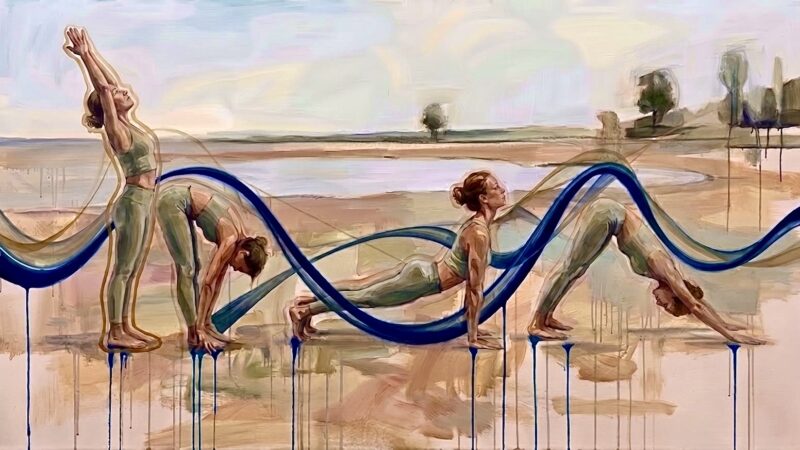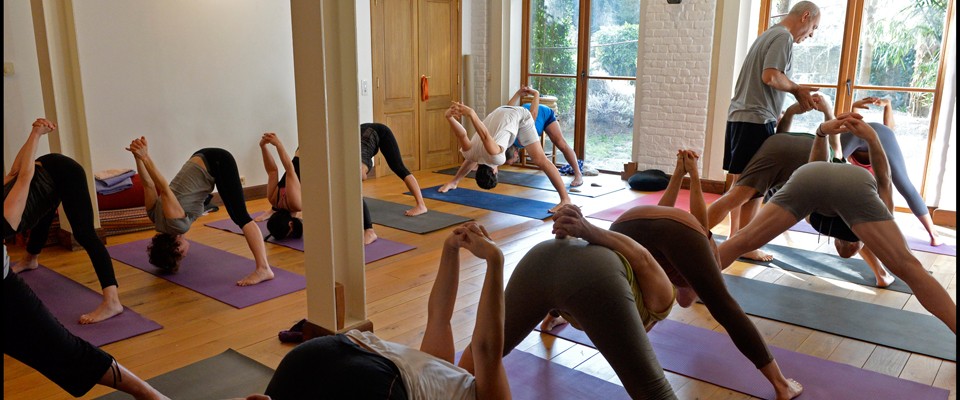
The Primary Series of Ashtanga Yoga, called Yoga Cikitsā (योग चिकित्सा), is traditionally regarded as a practice of rebalancing and purifying the body.
In this class, you will gradually deepen your study of the Primary Series in its continuity. Posture, breath, gaze and rhythm coordinate little by little to form a coherent practice in which each element supports the others.
Through regular practice, you will develop stability, endurance and confidence, while deepening your understanding of the method transmitted by Sri K. Pattabhi Jois.
This class requires a good knowledge of the foundations of « Tristhāna » (Ujjāyī breathing, Mūla Bandha — the pelvic and abdominal control — and dṛṣṭi, the direction of the gaze) in order to progress in the alignment of the postural structure through muscular release, which brings more power and dynamism, and to understand the Aṣṭāṅga Yoga method more finely. The series evolves with the practitioner: for example, bakāsana as an exit from a posture is only introduced when the practitioner is ready for the second series, as is hanumānāsana when the student is ready for the third series. This gradually stimulates the internal energy and purifies the whole body. The same applies to the vinyāsa — half-vinyāsa, full-vinyāsa, and, for very advanced practitioners, a vinyāsa with Adho Mukha Vṛkṣāsana, the handstand… for an excellent awareness of vertical stability.
The spirit of the class
The Primary Series is the heart of the traditional teaching of Ashtanga Yoga.
Having acquired the foundations of the method, the practitioner gradually learns to link the postures into a continuous flow in which breath, movement and concentration become one.
The aim is not only to perform the postures, but to gradually integrate the rhythm of the practice and discover its depth.
This series supports the practitioner in developing a more balanced body, a steadier breath and a more focused mind.
The fundamental pillars of deepening the Primary Series
The essential element that transforms a physical practice into a true meditation in movement is « Tristhāna », together with the Vinyāsa:
- The bandhas: the activation of the energetic locks (Mūla Bandha and Uḍḍiyāna — not to be confused with « uḍḍiyāna bandha »).
- Ujjāyī Prāṇāyāma: the victorious breath, or ocean breath, which brings awareness of the present. It consists of breathing only through the nose while slightly relaxing the back of the throat, producing a soft, steady sound like ocean waves. The inhalation is an active phase, the exhalation a passive one.
- Dṛṣṭi: means « sight » or « gaze » in Sanskrit. Contrary to what is often read, it is above all not a point of focus. Dṛṣṭi means looking and seeing in a direction while de-focusing the gaze to perceive the whole. It becomes part of the posture, because dṛṣṭi « drives the body » and corrects small postural errors — much like driving a car or a motorcycle: you look towards where you are going; a fixed focus creates contraction, and contraction leads to accident. This de-focusing of the eyes is learned gradually. There is a dṛṣṭi for each posture: your brain guides your body wherever you look.
- Vinyāsa: the fluid, precise synchronisation of movement with the breath.
The structure of the Primary Series of Aṣṭāṅga Yoga
The session always unfolds in the same precise order. This is what is called the « frame » (duration, frequency, schedule). A frame creates a safe and constant space that allows the practitioner to lower their defences and let the unconscious express itself within a secure space of trust.
It begins with the invocation, then the warm-ups with « sūryanamaskāra », followed by the standing postures, then the Primary Series sequence, ending with the finishing postures (recovery / integration):
The postures of the class
- Prārthanā: the opening chant to the light.
- Sun Salutations: Surya Namaskara A & Surya Namaskara B (5 × each).
- Standing Postures: a sequence of forward and backward bends and extensions, twists and balancing postures.
- Seated Postures: twenty-six āsana. An intense sequence targeting the release of the hips (femoral heads) and the deep stretch of the hamstrings, with its forward and backward bends, twists and first balances.
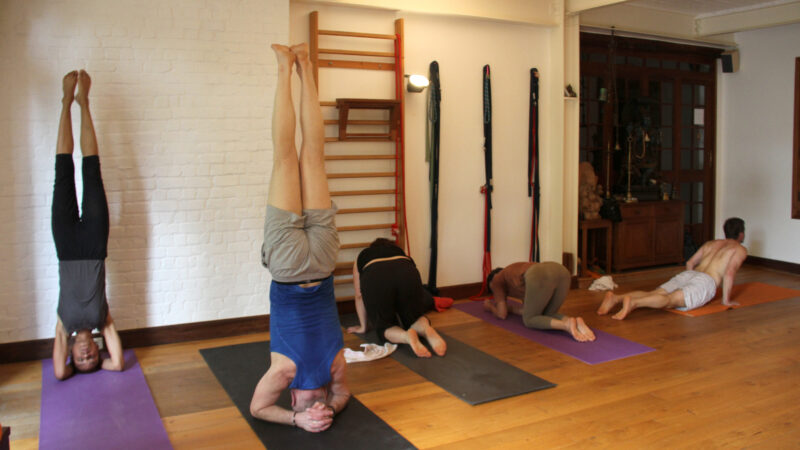
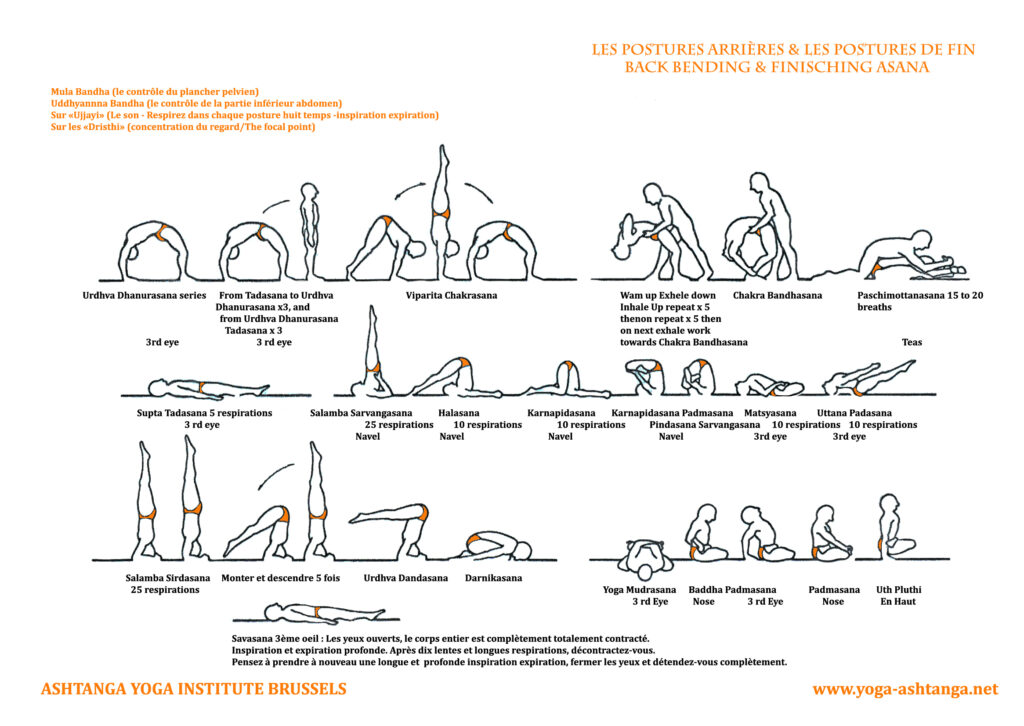
- Finishing Sequence: inversions (Sālamba Śīrṣāsana — headstand — and Sālamba Sarvāṅgāsana — shoulderstand) and back bends (Urdhva Dhanurāsana); none of these postures should be approached without a qualified teacher.
- Integration: the most important holistic phase of the session — not a moment of relaxation, but an essential psyche/soma integration in Savāsana.
Each posture prepares the next and contributes to a coherent progression of the whole practice.
Sun Salutations: Surya Namaskara A & Surya Namaskara B
The Sun Salutations are flowing sequences that synchronise movement and breath. Both versions are ideal for releasing the tensions of the spine and the legs (calves, hamstrings). Version B may seem more dynamic, but it requires the release of the femoral heads and abdominal relaxation, allowing a correct positioning of the pelvic muscles (Mūla Bandha with Uḍḍiyāna).
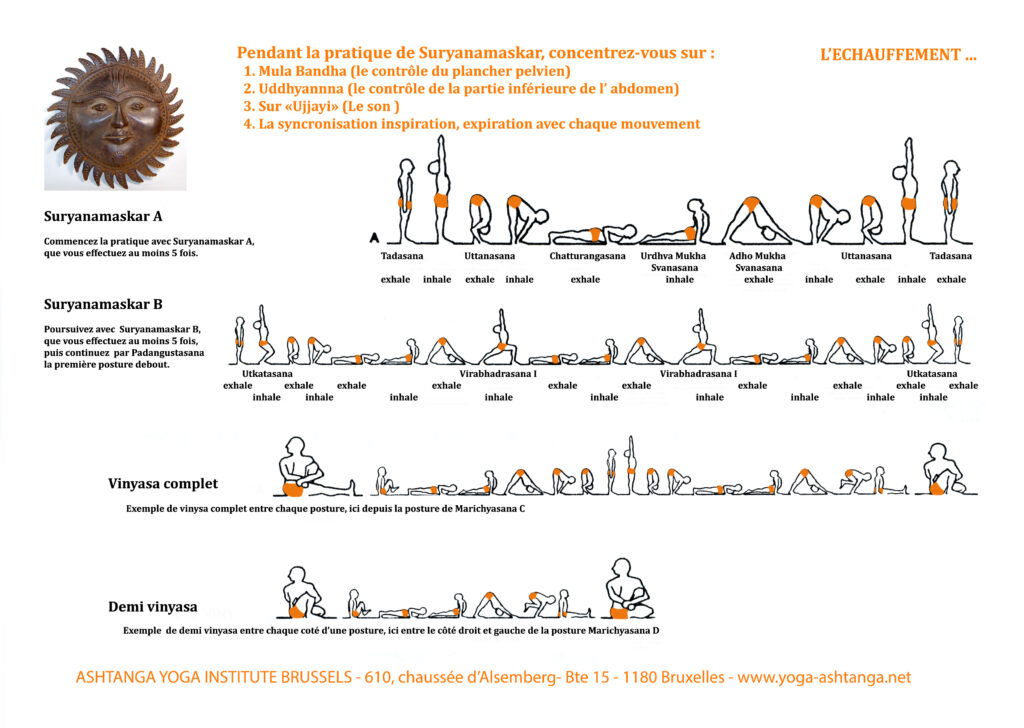
Diagram of the standing postures
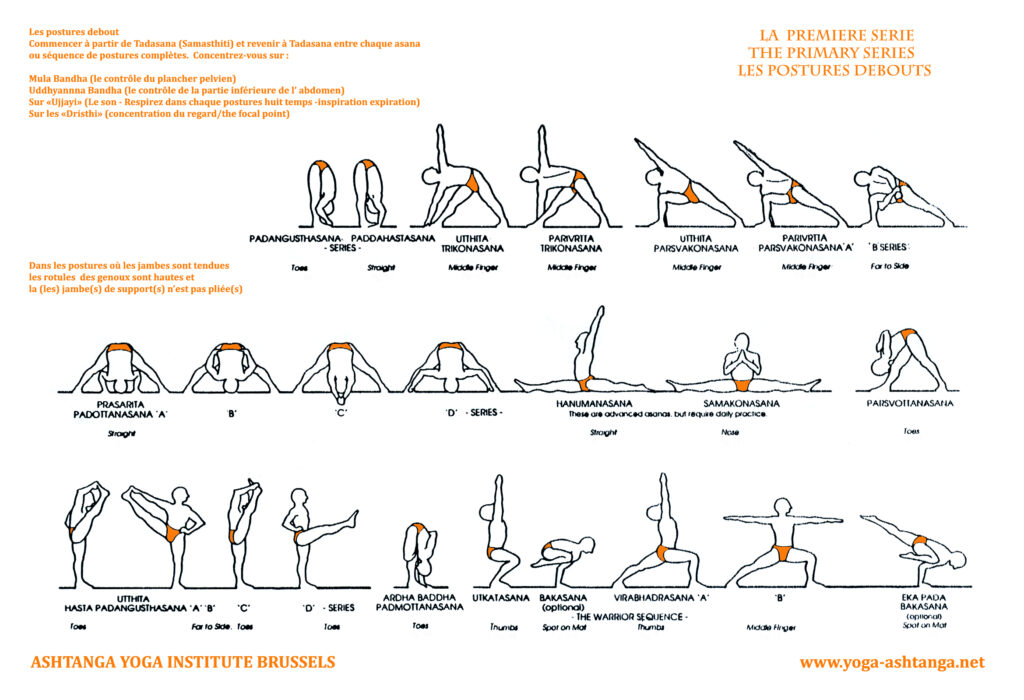
Diagram of the seated postures
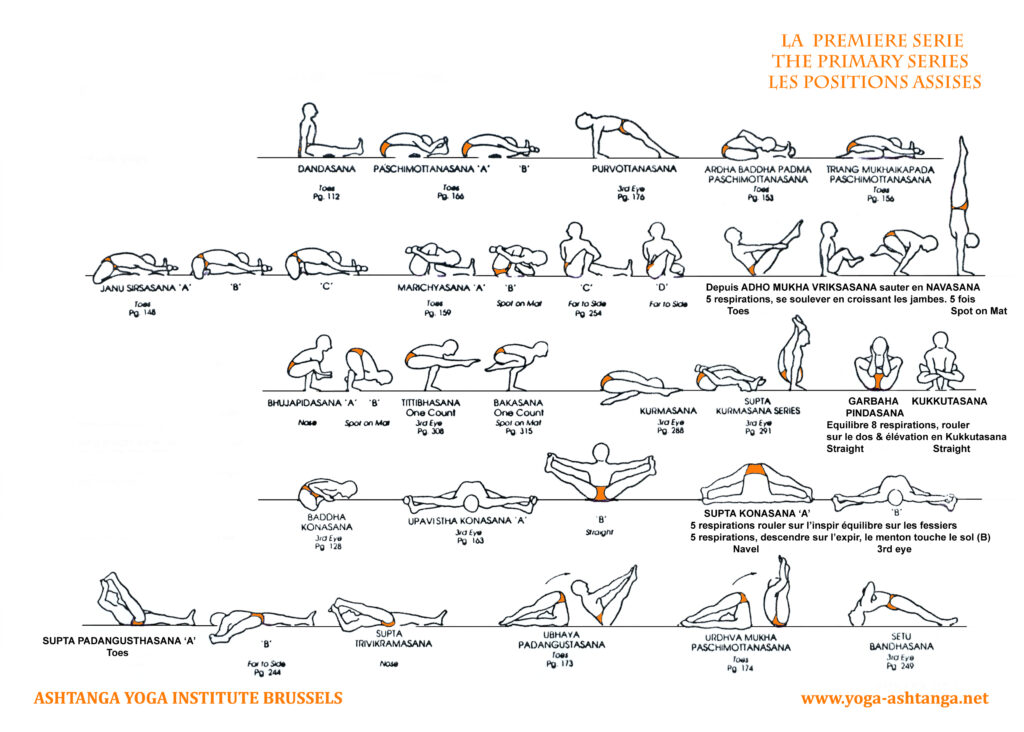
Diagram of the finishing postures
This sequence, which unfolds in an unchanging traditional order at the end of the session, is a series of inverted postures, stretches and integration. It regulates the accumulated energy, soothes the sympathetic nervous system and integrates the benefits of the practice.
The breath (Ujjāyī)
The Ujjāyī breath accompanies every movement of the practice.
It helps maintain a steady rhythm, support the effort and gradually develop inner stability.
The attention given to the breath gradually becomes as important as the execution of the postures themselves.
The energetic locks (Bandha)
Work with the Bandha becomes more precise and more conscious.
You will gradually deepen:
- Mūla Bandha;
- Uḍḍiyāna;
- their integration into the transitions and the postures.
Mastering them develops stability, lightness and continuity in the practice.
The gaze (Dṛṣṭi)
Each posture has a specific dṛṣṭi: a settled, soft and relaxed gaze.
The first Śloka of the Yoga Korunta names the nine dṛṣṭi:
- Nāsāgra: the tip of the nose.
- Bhrūmadhya (Ajña chakra): the third eye, between the eyebrows.
- Nābhi chakra: the navel.
- Hastāgra: the hand (the fingers).
- Pādayoragra (or Pādhāgra): the toes or the feet.
- Pārśva: towards the infinite, to the right or the left in twists (right: Dakṣiṇa Dṛṣṭi — left: Vāma Dṛṣṭi).
- Aṅguṣṭhamadhya: the tips of the thumbs (for example in the sun salutation).
- Ūrdhva: towards the sky / upwards.
The Dṛṣṭi helps develop attention, mental stability and the quality of presence. The gaze gradually becomes a genuine support for meditation.
The movement (Vinyāsa)
The Vinyāsa links the postures in a continuous rhythm.
The practice gradually becomes more fluid and more alive.
As breath, movement and attention harmonise, the series becomes a unified experience in which each posture naturally prepares the next.
Practice is built day after day.
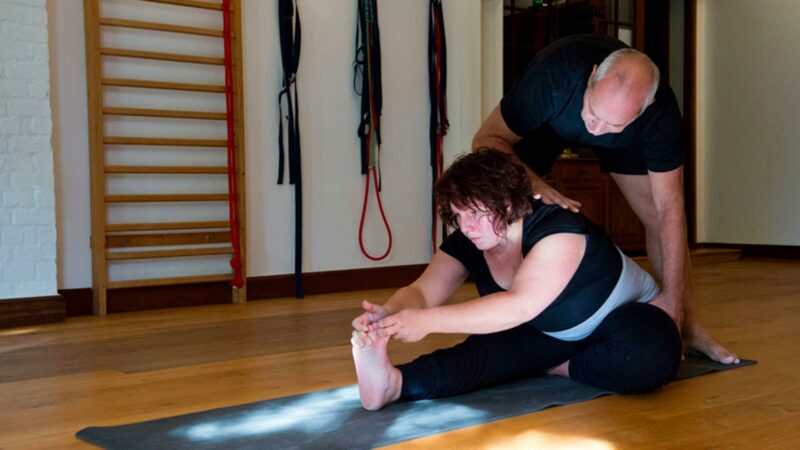
Ashtanga is transmitted through regularity: you come, roll out your mat, progress at your own pace, each posture adjusted individually — even in a group class. Beginner or experienced, there is a place for you.
The Institute’s approach
At the Ashtanga Yoga Institute of Brussels, we pay particular attention to:
- the quality of the breath;
- the precision of the placements;
- understanding the rhythm;
- individual progression;
- the in-depth study of the method’s foundations.
The pace of the practice is adapted to the level of the participants.
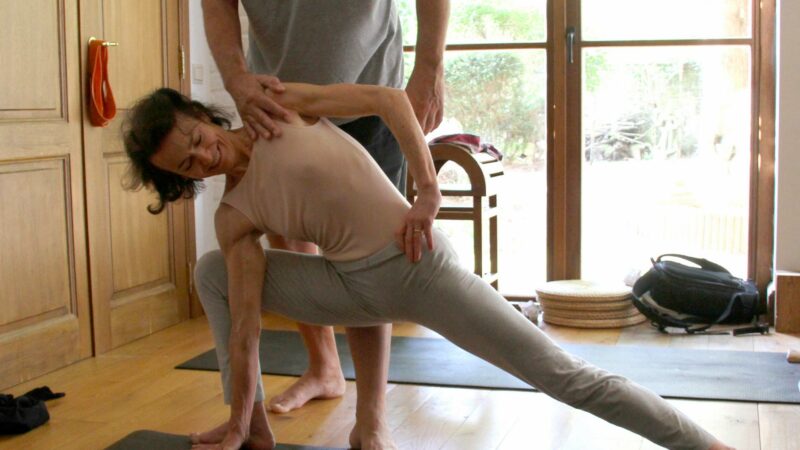
The teacher supports each practitioner with detailed instructions and adjustments suited to their development.
What you will develop
Regular practice of the Primary Series gradually develops:
- greater endurance;
- better coordination between breath and movement;
- more physical and mental stability;
- a deeper breath;
- better concentration;
- greater confidence in your practice;
- a finer understanding of Tristana.
The challenges of the Primary Series
The intermediate level often involves approaching the more demanding postures in the second half of the Primary Series. You will learn to:
- Link the postures with the half-vinyasa: integrating the jump back and the jump through between each posture.
- Deepen complex postures: Marīchyāsana, Kurmāsana, Supta Kurmāsana, Bhujapīdāsana, and others.
- Stay in observation of the rhythm: maintaining sustained attention both in the rhythm of the Vinyāsa and in the rhythm of the postural placement (āsana) throughout the sequence.
You will receive plenty of personalised advice on how to breathe well, how to place your bone structure, relax your muscles and adopt the right rhythm.
In this class you can follow the practice in a led form (guided by the teacher’s voice) or, once you know the postural order, practise at the rhythm of your own breath (Mysore practice). The aim of the teaching is the practitioner’s autonomy.
Towards a meditation in movement
Gradually, the practitioner learns to practise with more autonomy and presence.
When the breath (Ujjāyī), the Bandha and the gaze (Dṛṣṭi) are harmonised, the practitioner gradually reaches the state of Tristana.
This synchronisation is the foundation of the traditional practice of Ashtanga Yoga.
Little by little, the movements become more fluid, the attention more stable and the breath more regular. The practice then becomes a true meditation in movement (Dhyāna), and the practitioner gradually discovers a state of inner calm, presence and self-knowledge.
“The yogi who, fixing his gaze between the eyebrows and equalising the inward and outward breaths that move within the nostrils, master of his senses, mind and intellect…”
Bhagavad Gītā, V, 27–28
Who is this class for?
This class is for:
- practitioners who have acquired the foundations of Ashtanga Yoga;
- students wishing to deepen the Primary Series;
- those who practise regularly;
- practitioners wishing to develop more autonomy in their practice.
A prior knowledge of the sun salutations and of the main principles of the method is recommended.
Practical information
When to join this class
-
Lundi 10h45 → 12h15
- Level
- Intermediate
- Duration
- 1h30
Teachers who lead this class
Where this class takes place
Ashtanga Yoga Institute – Brussels studio
610, Chaussée d'Alsemberg – 1180 Uccle, Brussels
View on Google MapsOur rates
Your first class costs 30 €, with no commitment. The membership card (30 €), which is your insurance while practising, is only needed if you decide to continue.
See all rates →Come practice with us
There is nothing to book. You pick a time slot, walk in, and meet your teacher.
Prepare my first visit →Frequently asked questions
Who is this intermediate class for?
For practitioners who already know the basics and want to deepen the first series (Yoga Chikitsa): finer alignment, transitions and a steadier breath.
Do I need to master the whole first series?
No, but regular practice and ease with the foundations are recommended. Postures are deepened gradually, never forced.
Can I join if I already practise elsewhere?
Yes. What matters is your consistency: the teacher tailors the corrections to your practice and your body.