Adho, in Sanskrit, means « downward » or « below ». The word opens the names of postures (āsana) in which the head goes towards the floor, where it serves as a descriptive prefix — notably in:
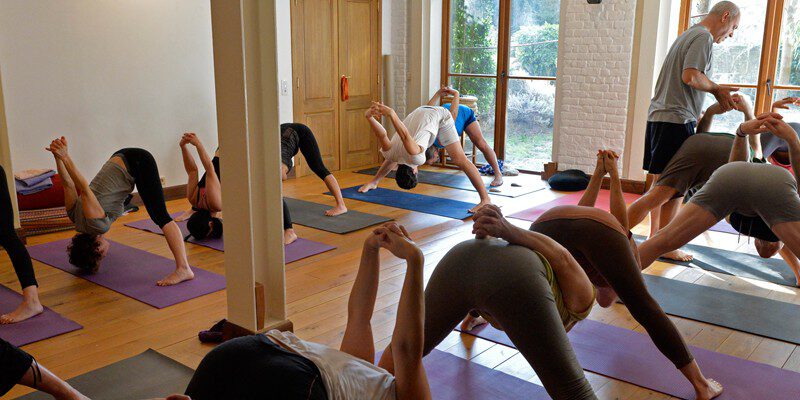
- Adho Mukha Śvānāsana अधोमुखश्वानासन, the well-known Haṭha Yoga posture of the « downward-facing dog »:
- « adho »: downward
- « mukha »: the head, or the face.
- « śvāna »: the dog
- Adho Mukha Vṛkṣāsana: the tree posture upside down, on the hands (vṛkṣa = tree).
- Adho Mukha Vīrāsana: a forward-leaning variant of the « hero » posture.
Its opposite, ūrdhva = « upward » or « above », prefixes the names of postures in which the head rises towards the sky. For example: Ūrdhva Mukha Śvānāsana ऊर्ध्वमुखश्वानासन.
Adho Mukha Śvānāsana is fundamental in yoga because it combines the benefits of an inversion with those of a full stretch. It works as a posture of transition, of active rest and of rooting.
Its benefits…
- A deep stretch: it lengthens the spine, the hamstrings, the calves and the arches of the feet.
- Muscular tone: it tones the arms, the shoulders, the abdominals and the thighs.
- Circulation: it improves the flow of blood to the brain, the head being below the heart.
- Release of tension: it frees the stiffness gathered in the upper back and the neck.
- A calming effect: it reduces stress, anxiety and mental fatigue.
- Renewed energy: it revives the whole body when the body is tired.