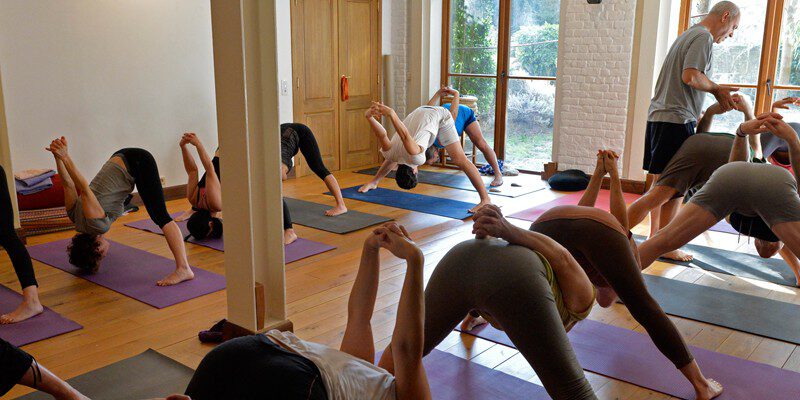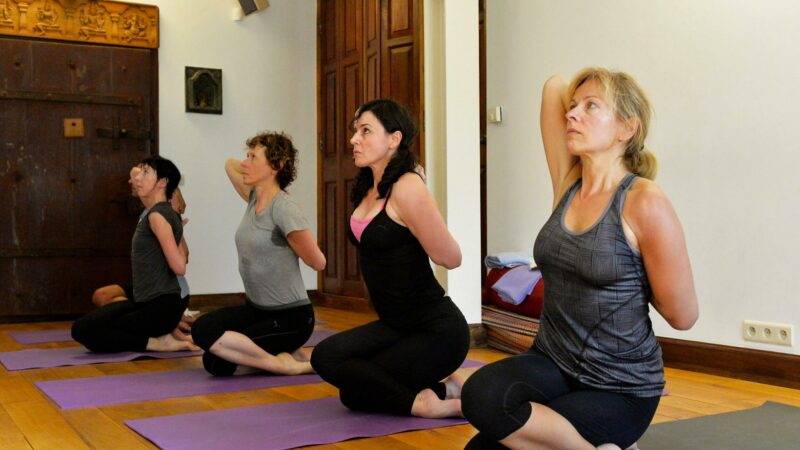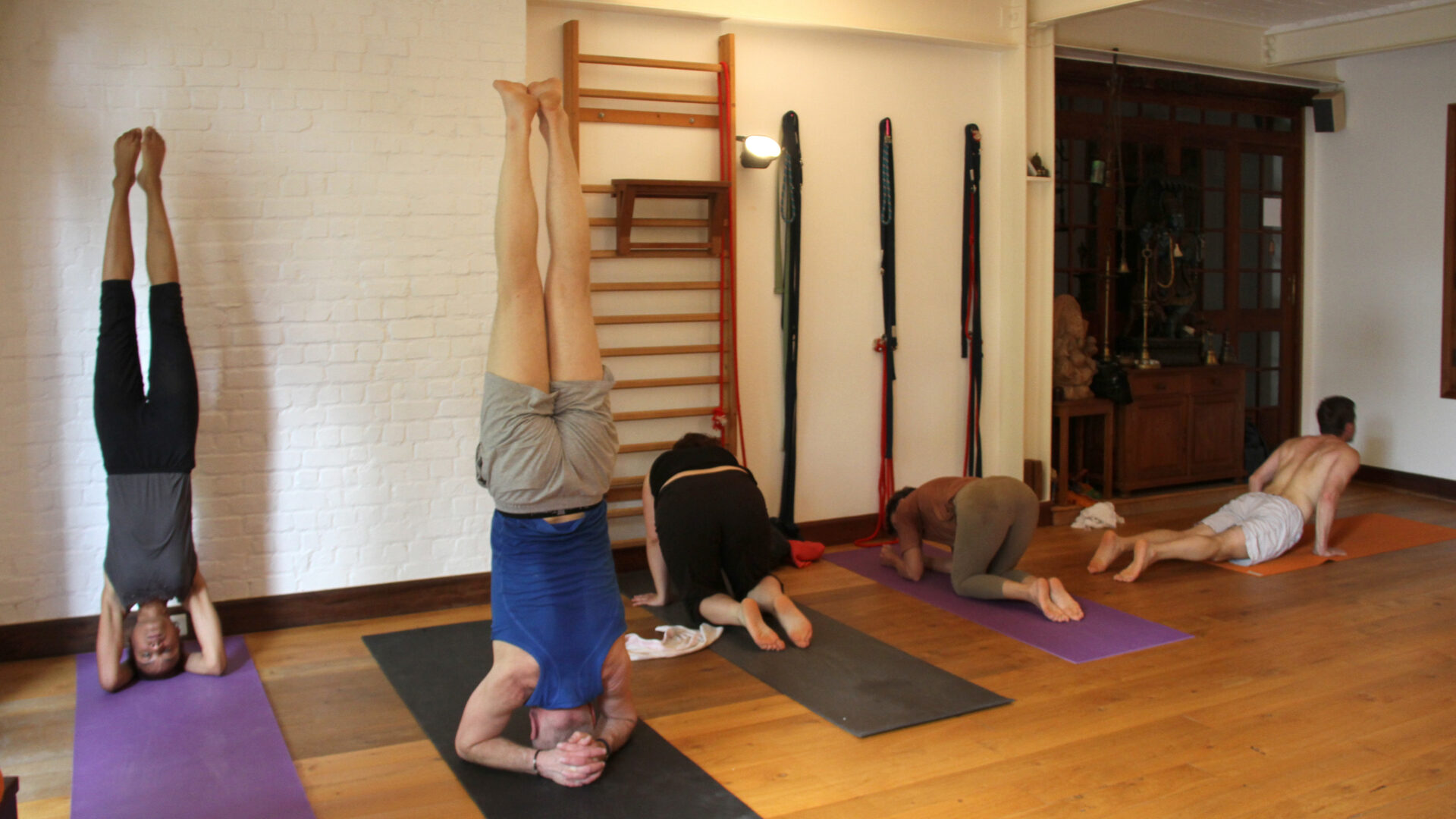
The Advanced Series of Ashtanga Yoga allow the practitioner to deepen, step by step, the study of the traditional method transmitted by Sri K. Pattabhi Jois. Whatever the series practised, the session begins with the sun salutations (Sūrya namaskāra) and ends with the finishing postures. As the practice matures, the breath, the rhythm, the Bandha and the gaze integrate with greater precision, gradually leading the practitioner towards a deeper understanding — a meditation — of Ashtanga Yoga. This class offers a framework for exploring the First, Second and Third Series according to the level of the participants and, when appropriate, the Fourth Series.
“The quieter you become, the more you are able to hear.”
Rumi
The spirit of the class
The Advanced Series are for practitioners who wish to deepen their understanding of the method beyond the foundations of the First Series. The aim is not merely to approach more demanding postures, but to develop a subtler, steadier and more conscious practice. Through the gradual study of the advanced series (āsana), the practitioner refines the breath (prāṇāyāma and pratyāhāra), concentration (dhāraṇā), rhythm and the ability to remain present in action (dhyāna). Progress is built over time, with patience, regularity, respect for the body and acceptance of its limits. What matters in the practice of yoga is not performance. The point is not so much to go far in a posture: yoga is above all an inner journey that cultivates our capacity to let go — a disposition that flows directly from our mental perception.
The series studied
Yoga Cikitsā – The First Series
Yoga Cikitsā means « therapy » or « care ». The First Series embodies a holistic approach to health. It harmonises the body to prepare it for deeper work. It gradually develops strength and flexibility, endurance and stability, and drains toxins to ensure the solid physical foundation needed for the following series.
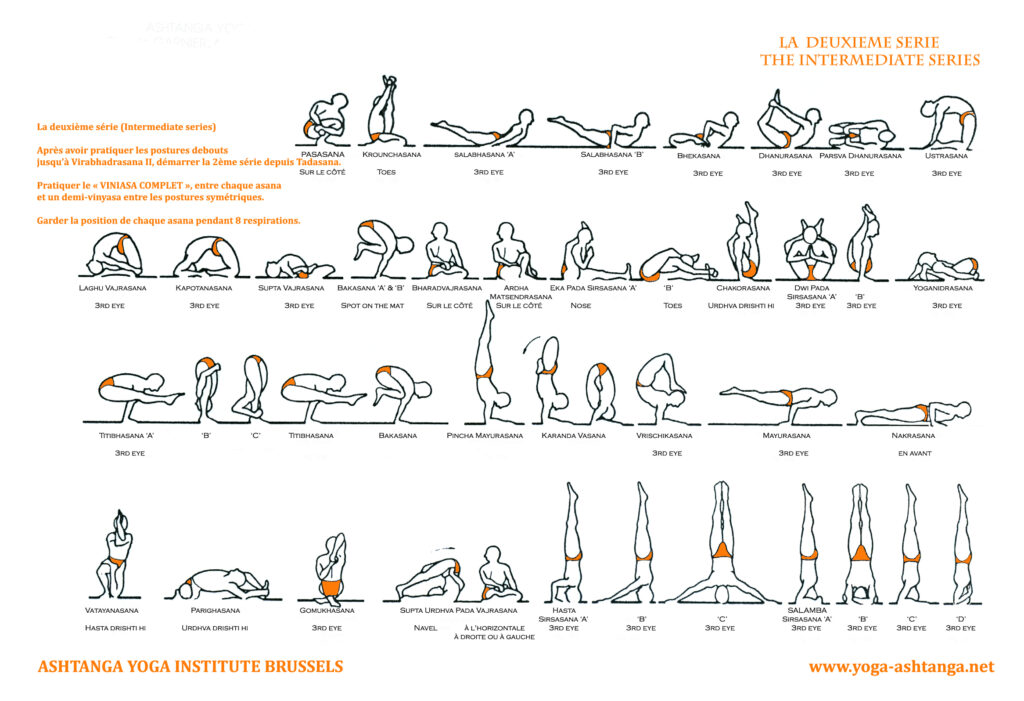
Nāḍī Śodhana – The Second Series
Nāḍī Śodhana means « purification of the subtle channels, the nāḍī ». This series harmonises the nervous system through a set of back bends that stimulate the sympathetic nervous system, twists that release residual tension, and postures that demand greater coordination between breath, energy and concentration. Made up of around forty postures, it develops the practitioner’s ability to anchor the breath in complex situations.
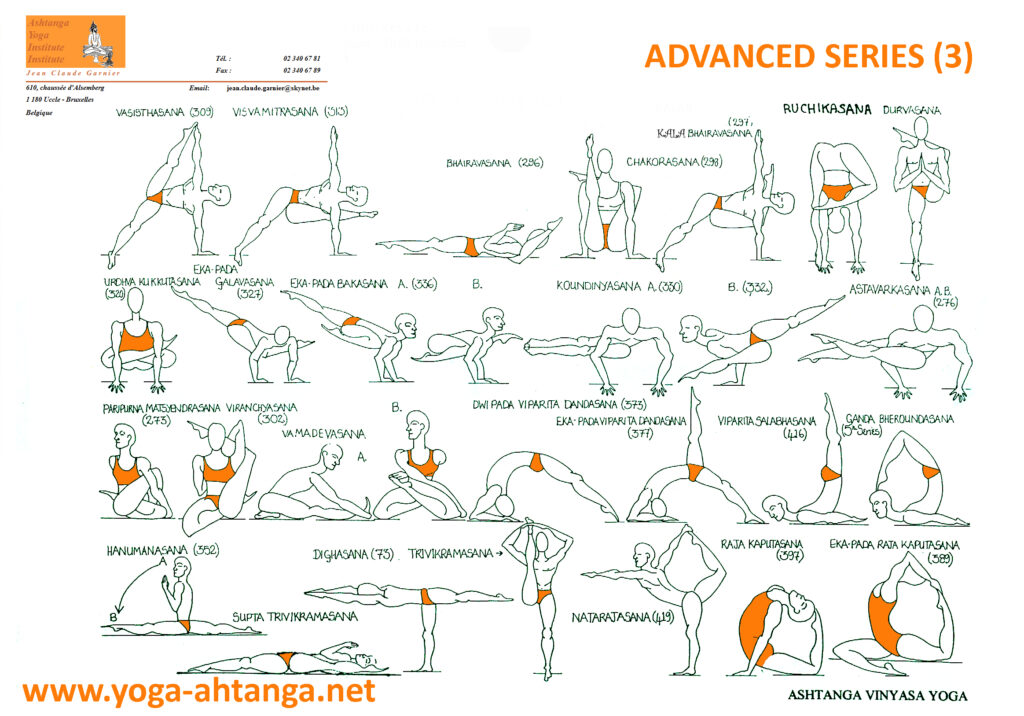
Sthira Bhāga – The Third Series
Sthira Bhāga means « inner stability » or « divine strength ». This series explores the balance between the forces of Earth and Sky. It develops lightness, stability and the quality of presence. Practised gradually, this wonderful series invites the practitioner to move beyond the apparent limits of the physical and mental body, to discover a greater inner freedom and to unite body and mind.
Practice is built day after day.
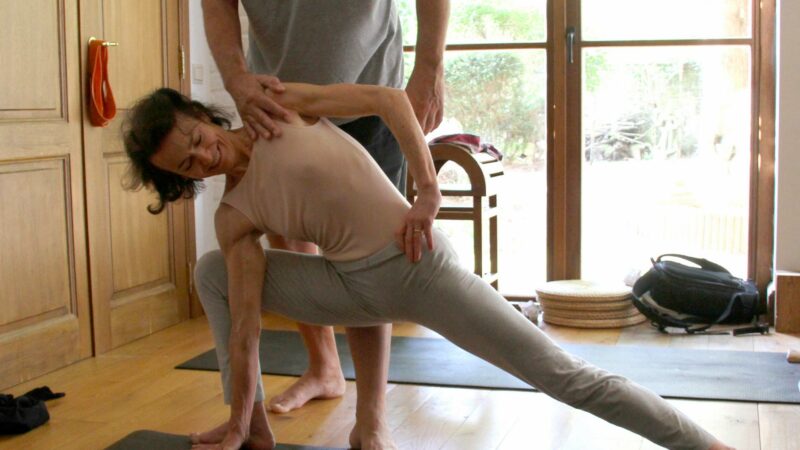
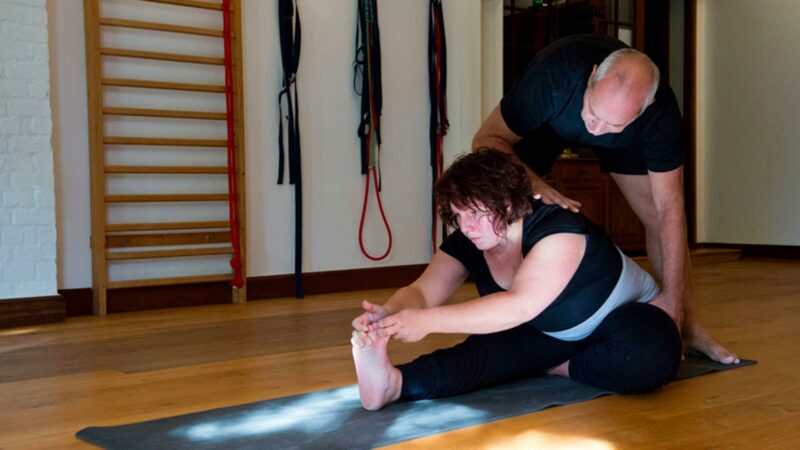
Ashtanga is transmitted through regularity: you come, roll out your mat, progress at your own pace, each posture adjusted individually — even in a group class. Beginner or experienced, there is a place for you.
Concrete transformations
Beyond philosophy, these series bring concrete transformations:
- Harmonisation of the nervous system: brings a state of peace and releases physical and mental tension.
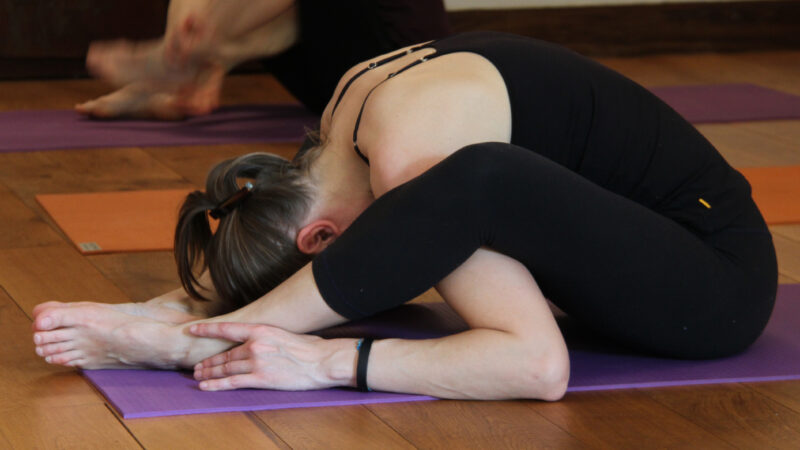
- Conscious occupation of space: handstands, inversions and deep bends demand concentration and letting go; they send a signal of safety to the brain, lower cortisol levels and neutralise the freeze response linked to fear, fostering an immediate sense of fulfilment.
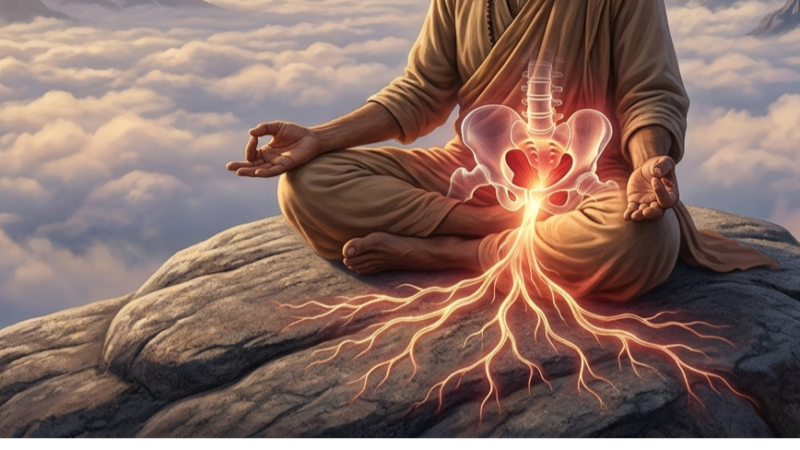
- Energetic alignment: balances the telluric (Earth) and cosmic (Sky) forces for a better circulation of the vital energy.
“When you meet a difficulty, a contraction, a pain, do not fight it; the breath becomes difficult — do not force it, relax, let go… then the breath will naturally deepen, and the muscular tension will dissolve…”
Sri K. Pattabhi Jois
The foundations of the practice
The breath (Ujjāyī)
In the advanced series, the breath is the true support of the practice.
You will learn to deepen the quality of the breath and gradually develop a fuller, steadier inhalation.
The breath then becomes the guide of movement and attention — and from attention to meditation, there is but one step…
The energetic locks (Bandha)
Work with the Bandha gradually becomes finer.
You will deepen:
- Mūla Bandha;
- Uḍḍiyāna Bandha;
- their integration into the postures and the transitions.
This mastery protects the body, supports the effort and develops more lightness in the practice.
The gaze (Dṛṣṭi)
The Dṛṣṭi becomes a genuine tool of concentration.
As the postures become more demanding, the quality of the gaze contributes to the practitioner’s physical and mental stability.
Attention becomes more constant and more profound.
The movement (Vinyāsa)
The Vinyāsa link the postures in a continuous rhythm.
The practitioner gradually learns to smooth the transitions and maintain the continuity of breath, attention and movement.
The practice then becomes more alive, more harmonious and more meditative.
The Institute’s approach
At the Ashtanga Yoga Institute of Brussels, we pay particular attention to:
- the quality of the breath;
- understanding the rhythm;
- the precision of the placements;
- the protection of the body;
- adapting the practice to each person’s level.
Each practitioner receives guidance suited to their experience, to continue their progression while respecting their abilities.
The class allows individual attention, with detailed instructions and specific adjustments when needed.
What you will develop
Regular practice of the Advanced Series gradually develops:
- a more alive rhythm of practice;
- a deeper, steadier breath;
- better mastery of Tristana;
- a greater quality of concentration;
- more fluidity in the Vinyāsa;
- a better understanding of the Bandha;
- greater autonomy in the practice;
- a more lasting inner stability.
As the practice matures, the practitioner develops a subtler relationship with the breath, the body and attention.
Towards a meditation in movement
When the three pillars of the practice are harmoniously integrated:
- the breath (Ujjāyī);
- the Bandha;
- the gaze (Dṛṣṭi);
the practitioner gradually reaches the state of Tristana.
This harmony gradually transforms the practice into a true meditation in movement (Dhyāna).
The body acts with fluidity, the breath becomes regular and attention remains stable.
The practitioner (Sādhaka) then discovers a quality of presence that fosters inner peace, strength and deep joy.
“The yogi who, fixing his gaze between the eyebrows and equalising the inward and outward breaths that move within the nostrils, master of his senses, mind and intellect, the Sage bound for deliverance — his ultimate goal — freed from desire, fear and anger, is liberated for ever.”
Bhagavad Gītā, V, 27–28
Who is this class for?
This class is for:
- regular practitioners of Ashtanga Yoga;
- students who have integrated the foundations of the First Series;
- practitioners wishing to deepen their understanding of the method;
- teachers and future teachers wishing to enrich their practice.
Participation depends on each person’s experience and on the level of the participants present in the class.
Practical information
When to join this class
-
Vendredi 12h30 → 14h00
- Level
- Advanced
- Duration
- 1h30
Teachers who lead this class
Where this class takes place
Ashtanga Yoga Institute – Brussels studio
610, Chaussée d'Alsemberg – 1180 Uccle, Brussels
View on Google MapsOur rates
Your first class costs 30 €, with no commitment. The membership card (30 €), which is your insurance while practising, is only needed if you decide to continue.
See all rates →Come practice with us
There is nothing to book. You pick a time slot, walk in, and meet your teacher.
Prepare my first visit →Frequently asked questions
What level is required for this advanced class?
It is intended for confirmed practitioners who are comfortable with the first series and ready to approach the advanced series.
Do I need to practise very regularly?
Yes. A regular, sustained practice is strongly recommended to progress safely into the advanced series.
Are the advanced postures guided?
Every step is guided individually, respecting your body and never forcing.