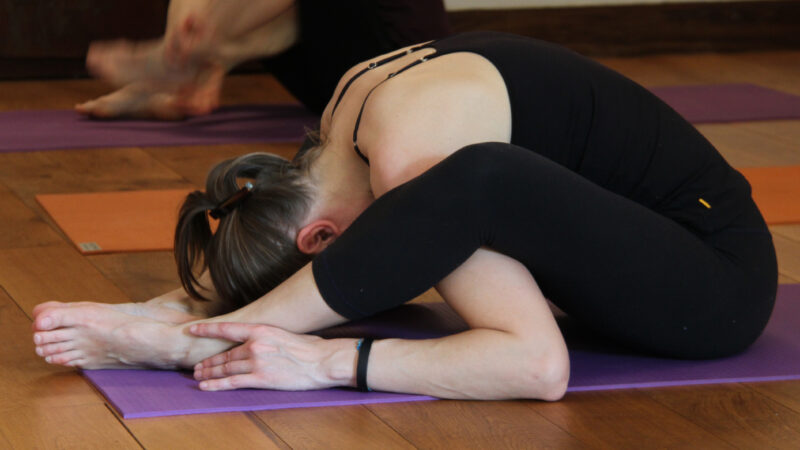
Definition:
Literally, Tristhāna means « the three pillars » or « the three places of attention ». It is the fundamental method of the Yoga Korunta (Aṣṭāṅga Yoga), set out by Sri K. Pattabhi Jois, and it is what turns a physical practice into a meditation in movement.
Etymology:
- Tri: three.
- Sthāna: place, seat or anchorage.
- A historical note: outside yoga, the word also means « that which dwells in the three worlds ».
The three anchor points, to be held steady together:
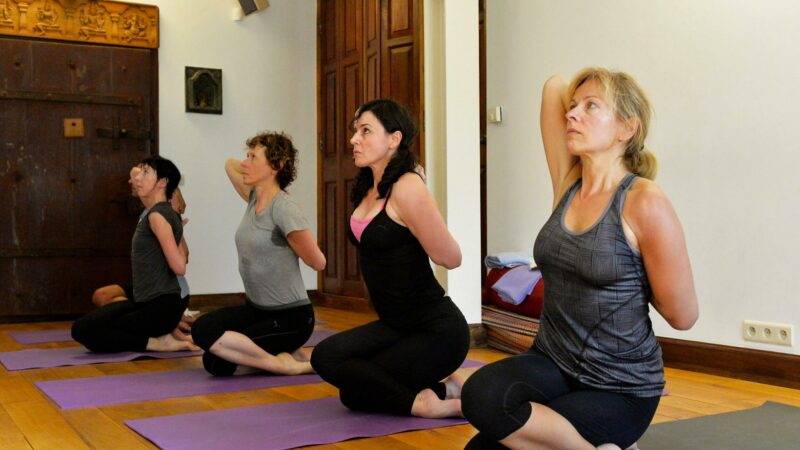
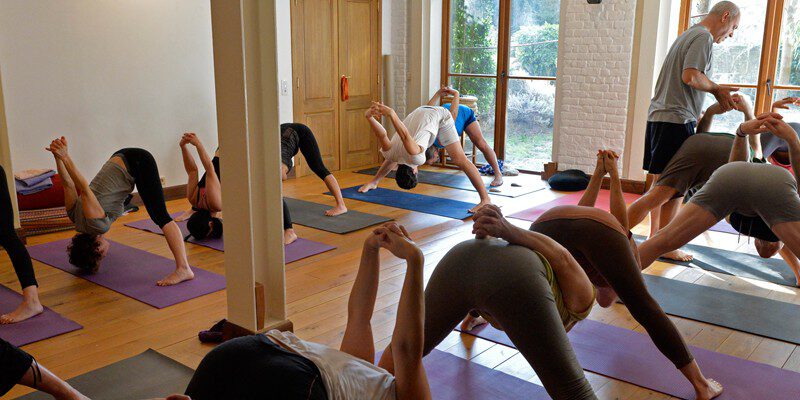
- Posture (Āsana)
- Action: to carry out the physical movements with correct alignment.
- Aim: to purify, strengthen and free the physical body.
- Effect: to build strength and overall steadiness.
- Breath (Prāṇāyāma)
- Action: to synchronise every movement with a measured breath (ujjāyī breathing).
- Aim: to purify the nervous system and regulate the vital energy (prāṇa).
- Effect: to calm the mind and generate an inner heat that clears toxins.
- The gaze (dṛṣṭi)
- Action: to rest the eyes on one precise point — the tip of the nose, the third eye, the navel — according to the posture.
- Aim: to prevent the mind from scattering, by settling the gaze.
- Effect: to develop deep concentration (dhāraṇā) and turn the attention inward.