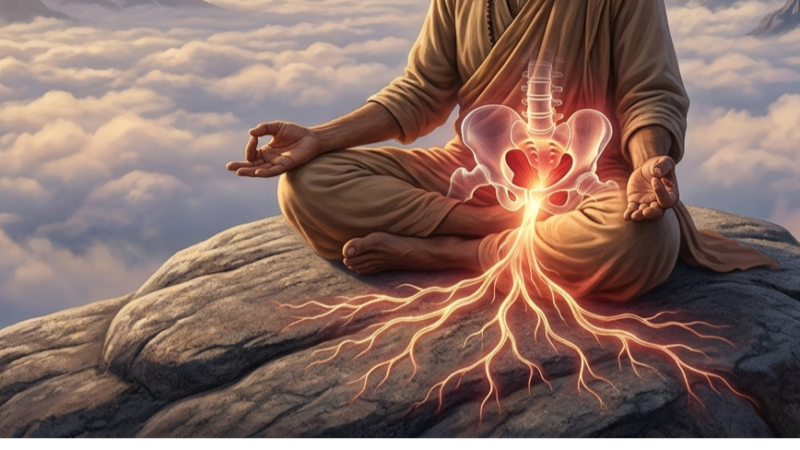
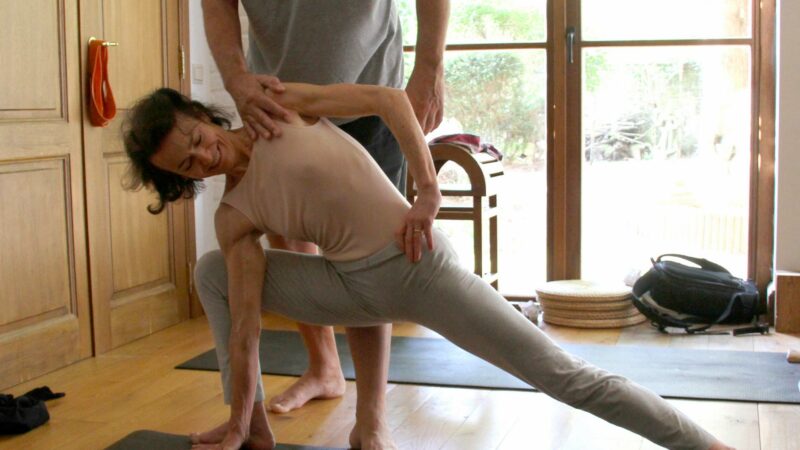
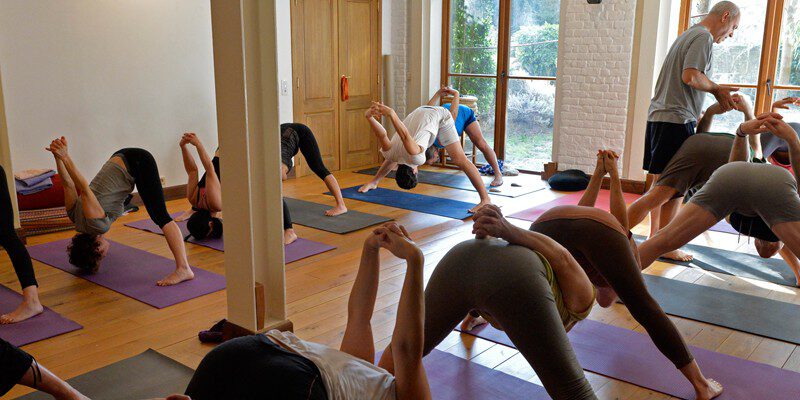
Uḍḍiyāna (उड्डियान) is Sanskrit for « flight » or « rising ». In practice, this « flight of the prāṇa » should be present in every posture (āsana). The abdominal balloon it draws up is itself called « Uḍḍiyāna ». The state rests on three pillars:
- Rooting through the feet.
- Lengthening the space between the iliac crests and the ribs. This action stretches and engages the transverse muscles, the obliques — internal and external — and the rectus abdominis.
- A light drawing back of the belly, kept supple and free of excessive contraction.
Not to be confused with Uḍḍiyāna Bandha (उड्डियान बन्ध). The essential difference is that Uḍḍiyāna is the overall postural idea of the energy taking flight, whereas Uḍḍiyāna Bandha names the specific bodily and respiratory technique that uses and intensifies that flight.
- Uḍḍiyāna (a principle of placement): from the root ud-ḍī (« to fly up »), it means keeping the energy of the prāṇa awake and rising throughout the practice.
- Uḍḍiyāna Bandha (a yoga technique): « the ligature of flight » or « the contraction of rising » (see its own entry for the full definition).
In short: Uḍḍiyāna is the continuous state of prāṇic rising within the postural sādhana (āsana), while Uḍḍiyāna Bandha is a precise postural and respiratory tool, often tied to prāṇāyāma, used to seal that energy and go further.