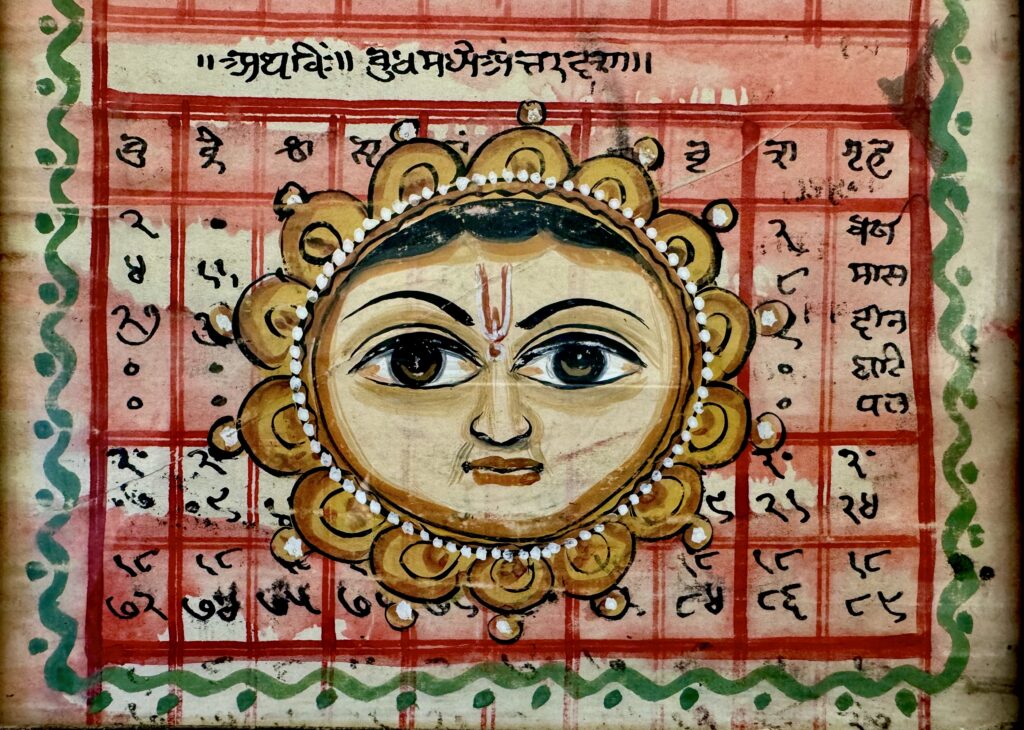
Sūrya सूर्य comes from the Sanskrit root sur or svar, meaning to shine. Sūrya is the sun god, son of the goddess Aditi — divine consciousness within matter, the mother goddess personifying undivided nature — and of the sage Kaśyapa, one of the great sages, father of humankind. He is the father of Manu, the first man and lawgiver of humanity, and also of Yama, the god of death.
Depiction: he is often shown on a magnificent golden chariot drawn by seven horses, which stand for the seven days of the week, or the seven colours of the rainbow.
In the sacred texts of India, Sūrya is the original source of the knowledge of Yoga.
The link between Sūrya and Yoga
According to the Bhagavad Gītā (chapter 4, verses 1-3), Yoga was not created by human beings. Krishna explains that he taught this eternal Yoga to Vivasvān — another name for Sūrya — at the very beginning of creation. Sūrya then passed it on to the first sage-kings, establishing the lineage of masters of the solar dynasty (Sūryavaṃśa).
Sūrya in the sacred texts
The sun god holds a central place across several ages of sacred literature:
- The Ṛg Veda: the oldest sacred text of Hinduism contains the Gāyatrī Mantra, a universal prayer taken from Maṇḍala 3 (hymn 62, verse 10). This mantra is addressed to Savitṛ, the quickening, spiritual aspect of Sūrya, that he may illuminate the human mind.
- The Upaniṣads: the Sūrya Upaniṣad and the Praśna Upaniṣad describe the Sun as the eye of the universe and the visible manifestation of Prāṇa, the vital energy without which no life is possible.
- The Purāṇas: the Sūrya Purāṇa and the Bhaviṣya Purāṇa are given over entirely to his myths, his healing rituals and his power to purify body and mind.
The yogic practices dedicated to Sūrya
Two major Haṭha Yoga practices come directly from this textual symbolism:
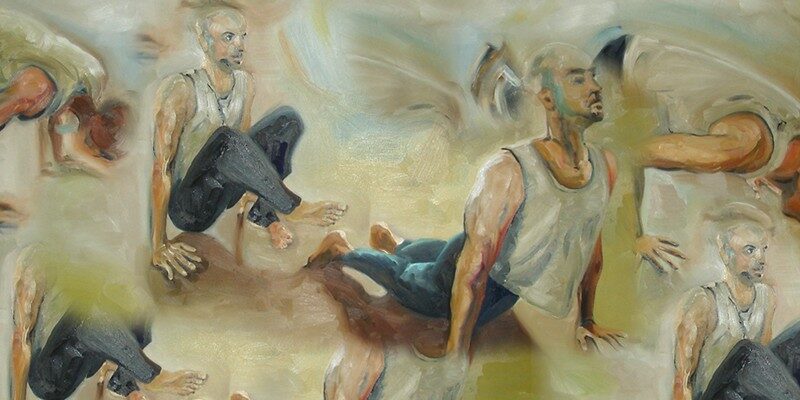
- Sūrya Namaskāra (the Salutation to the Sun): this sequence has its spiritual roots in the Vedic rituals of prostration. It joins twelve postures with specific mantras honouring the twelve names and aspects of the Sun, in celebration of its vital energy — creator of the universe and source of all life on earth.
- Sūrya Bhedana Prāṇāyāma: a breathing technique in which one breathes in through the right nostril only — the Piṅgalā channel (पिङ्गला), associated with solar, thermal, active energy — to stimulate the nervous system, warm the body and increase vitality.