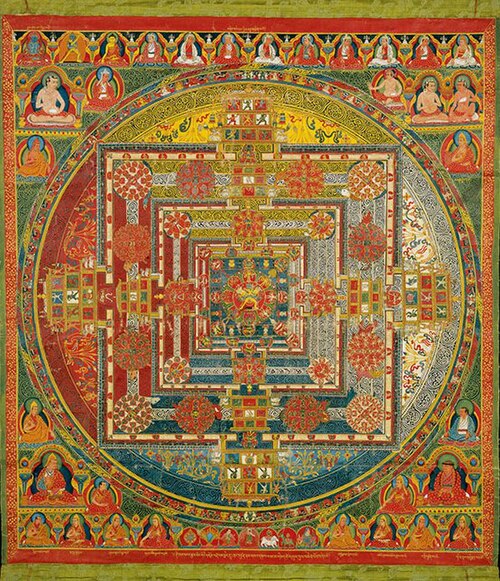
The end of summer, and the school year slowly taking shape with the return of yoga classes in September. Yoga invites us to this constant search for otherness and balance between the opposing forces of Yin and Yang, feminine and masculine (Pārvatī / Śiva).
Indian thought
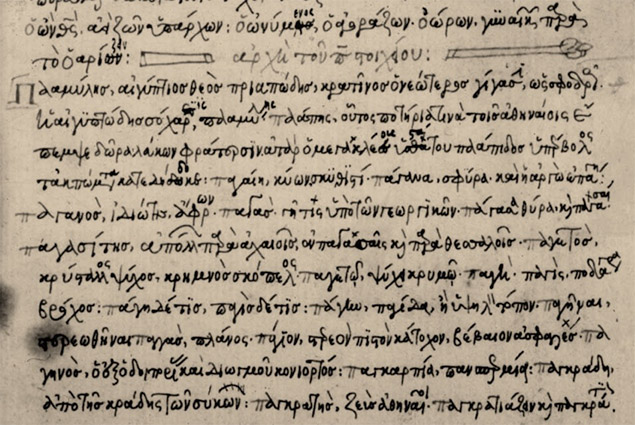
Indian thought rests on a cosmogonic vision of life. Contrary to the Western view that presents Hinduism as polytheistic, for Indians the Divine is ONE in its essence. Among the ancients of India, time is seen in a cyclical or spiral way — as with Hesychios of Alexandria, the grammarian, who wrote that life is “chronos tou einai”, the “time of Being”. Reversed, as the theologian Raimon Panikkar proposes, this becomes “time is also the life of being” — and this is telling, for life is breath, the movement of inhale and exhale, this coordination of movement in space along a line, a circle or a spiral that never goes back. Time is rhythm.
Rhythm
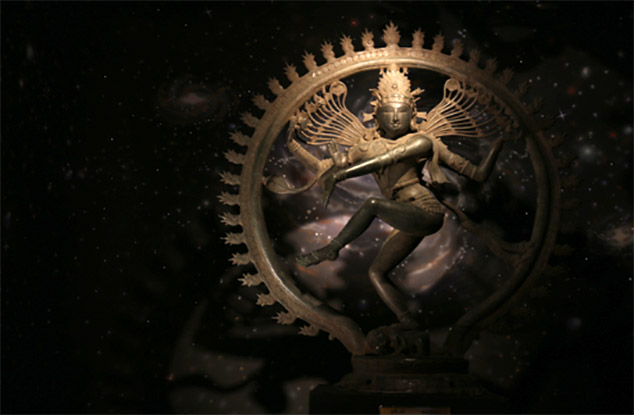
In Indian mythology, rhythm has a quality that can be creation or destruction, as shown so well by Śiva, the cosmic dancer or “Naṭarāja”, in the dance called Tāṇḍava. This quality of rhythm — “creation” or “destruction” — is like the quality of “silence”, “positive” or “negative”, described in Jaina-Yoga by the philosopher Jiddu Krishnamurti.
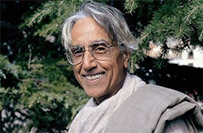
“Understanding our power to create illusion is infinitely more important than understanding reality. This power must cease altogether — not in order to obtain reality… The false must go because it is false, not in order to find the truth. We live in illusion most of the time… we see the world through the eyes of others. To free ourselves from illusion, we must begin by observing it, by understanding how we create it. Through this attention, we gradually weaken the power of illusion and grasp the truth. For illusion is an erroneous perception of reality, created by thought.”
Krishnamurti
How does one leave māyā, the illusion — how does one enter the rhythm, enter the circle? Practising yoga is one of the ways. Yoga is a breath, a movement, a dance; through the rhythm of the practice, the practitioner (the sādhaka) reaches mokṣa, deliverance, freedom.
“To worship God while dancing fulfils every inspiration, and the way of deliverance opens to the one who dances.”
Ancient text, quoted in Les civilisations de l’Asie (Casterman, ISBN 2-203-15707-0)
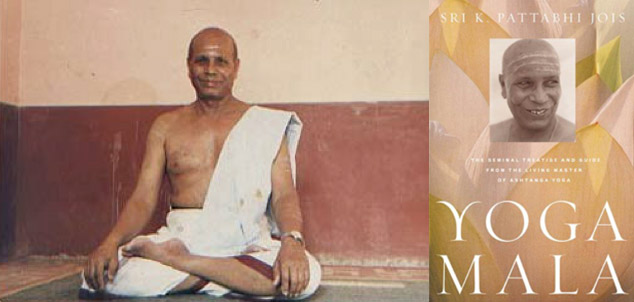
It is no accident that Śrī K. Pattabhi Jois called his book Yoga Mālā. The mālā is the prayer rosary: the postures are the pearls, the thread is the victorious, uninterrupted ujjāyī breath. We never go back, but move from pearl to pearl without ever skipping one, in rhythm. In rhythmic time, the postures pass but do not repeat. Thanks to Mūla Bandha and to the ujjāyī, the tension stays constant along the thread of the necklace.
Om Shanti,
Jean-Claude Garnier