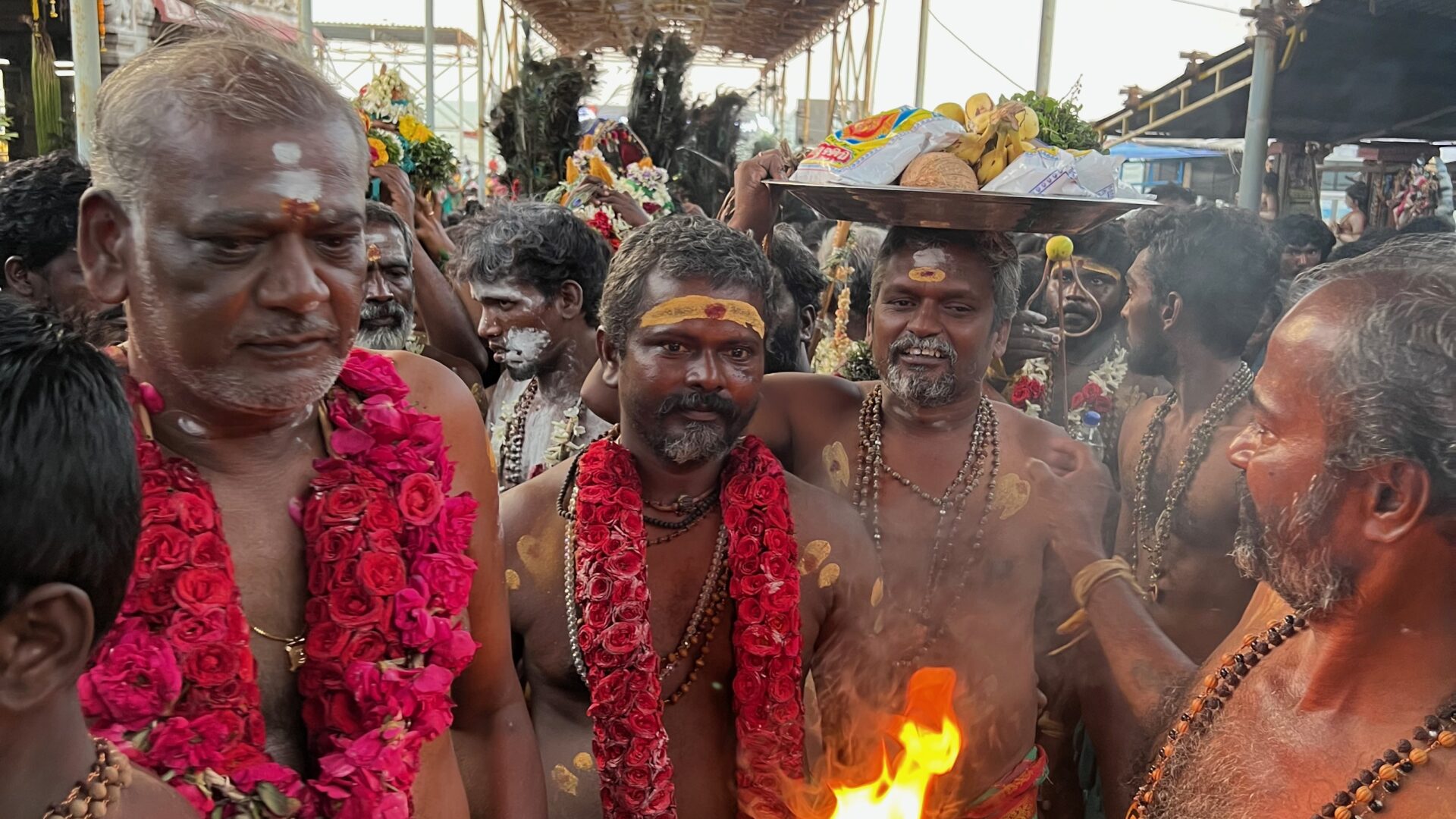
The training originally transmitted by Sri K. Pattabhi Jois continues at the Ashtanga Yoga Institute of Brussels. Since 1973, Jean-Claude Garnier has trained students in Europe and Asia who deepen their knowledge of yoga — and, for some, find their vocation as teachers.
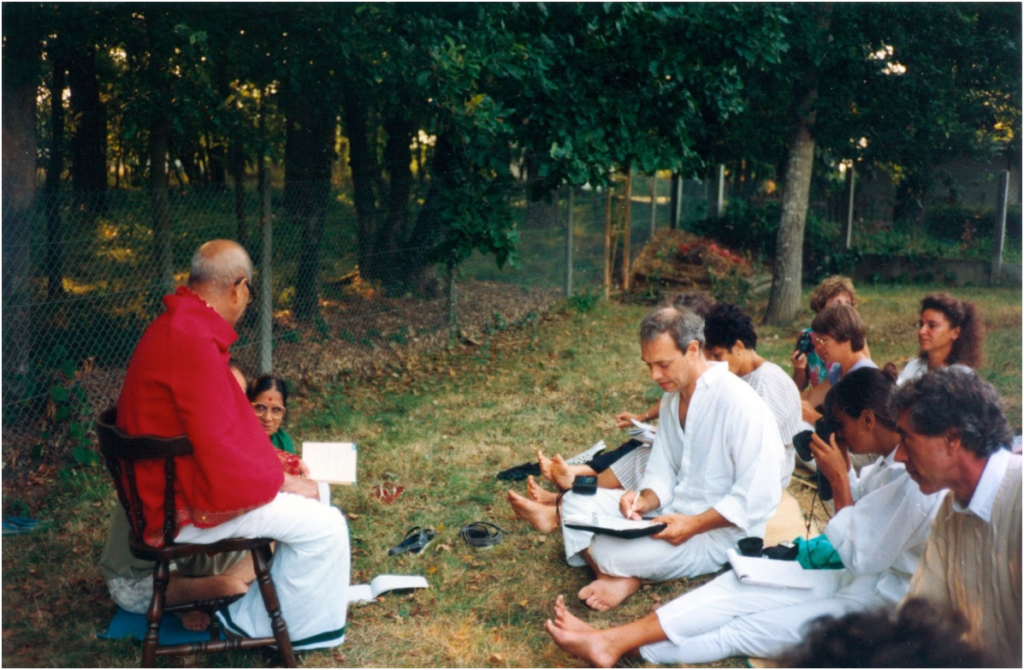
Who is the training for?
The training, deepening and continuing education of yoga teachers is aimed at:
- practitioners seeking greater self-knowledge and a better balance of body and mind;
- those who wish to deepen their approach to the yoga tradition;
- future teachers wishing to teach within European institutions (a minimum 5-module course);
- teachers of another method wishing to deepen their practice;
- yoga teachers required to keep improving.
How does the training work?
With personal follow-up:
- you deepen the practice (first, second, third series according to level);
- you receive teaching on yoga and its philosophy;
- you learn to observe classes (group and individual);
- you gradually assist the teacher;
- you are supervised from your very first classes.
Obtaining a diploma
The training is made of modules. At the end of each, you take a practical and theoretical exam; with the certificate obtained, you move up a grade. You must complete, in order, a minimum of 5 modules (A to F). To obtain the diploma, you write a thesis on an aspect of yoga. This recognition is essential to:
- teach in a European country;
- hold a training aligned with the European curriculum;
- teach in a recognised institution;
- register in the national professional register;
- obtain insurance;
- be an asset to your students.
European Yoga Union: yogaeurop.com
Topics covered
Theoretical materials are given at the end of each module (digital version, training-area access). Themes: anatomy, physiology, psychology, pedagogy, ethics, history, etymology, the sacred texts of India — as well as communication, oral and written expression, dietetics and healthy living.
Training module A
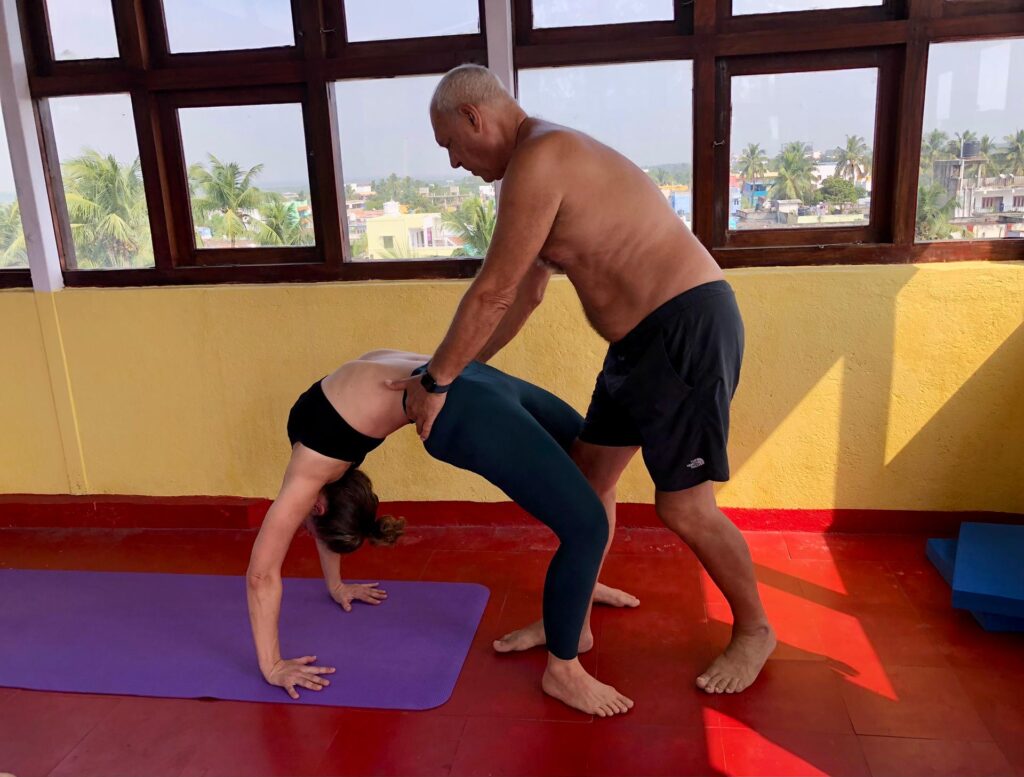
1. Postural practice (first and second series — Sādhanā Yoga). The postural basics, the supports, the resumption and improvement of postures and their variations, the breath leading to the experience of prāṇāyāma, concentration, letting go, individual and group work, workshops and first attempts at teaching.
2. Theory classes: the classical Indian tradition through its Vedic origin; the invocations (opening and closing of class) and their translation; the theory of Ashtanga (Mūla Bandha, Uḍḍiyāna, Ujjāyī Prāṇāyāma, Vinyāsa); anatomy related to practice; the value of stretching; the use of Sanskrit; religious festivals; the creation of the world (Taittirīya Āraṇyaka); the life and work of Sivananda, Ramakrishna, Swami Ramdas, Yogi Ram Surat Kumar, Sri Yukteswar, Alain Daniélou, Krishnamurti. The contents of the other modules are in the PDF.
Admissions
The terms are common to the schools of the National Federation of Yoga Teachers. To enrol in the first year, you must:
- have practised yoga for at least two years (sponsorship form completed by a teacher);
- be over 18;
- have a level of general education equivalent to the baccalaureate.
Where and when?
- In India: longer (one month);
- in Greece: condensed (two weeks);
- in Belgium: all year round (9 weekends from September to June + a 7-day session in July), over 3 years.