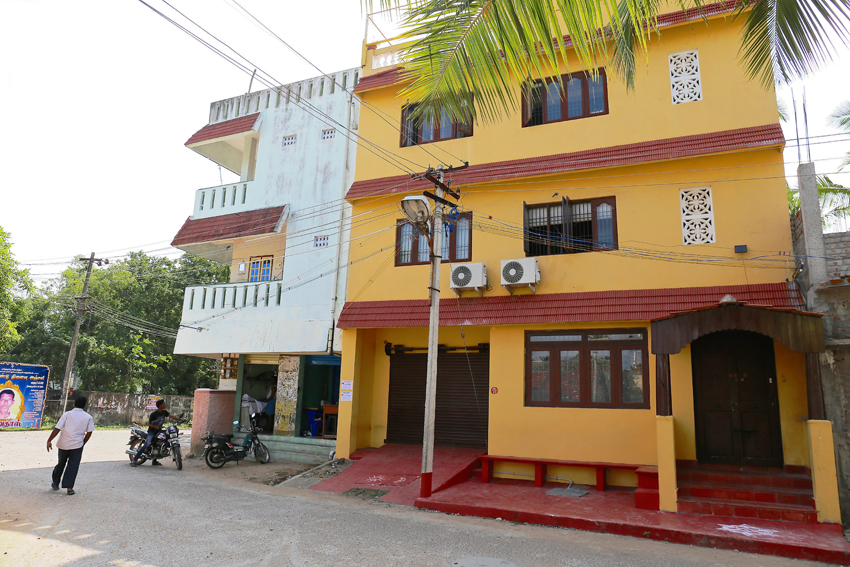
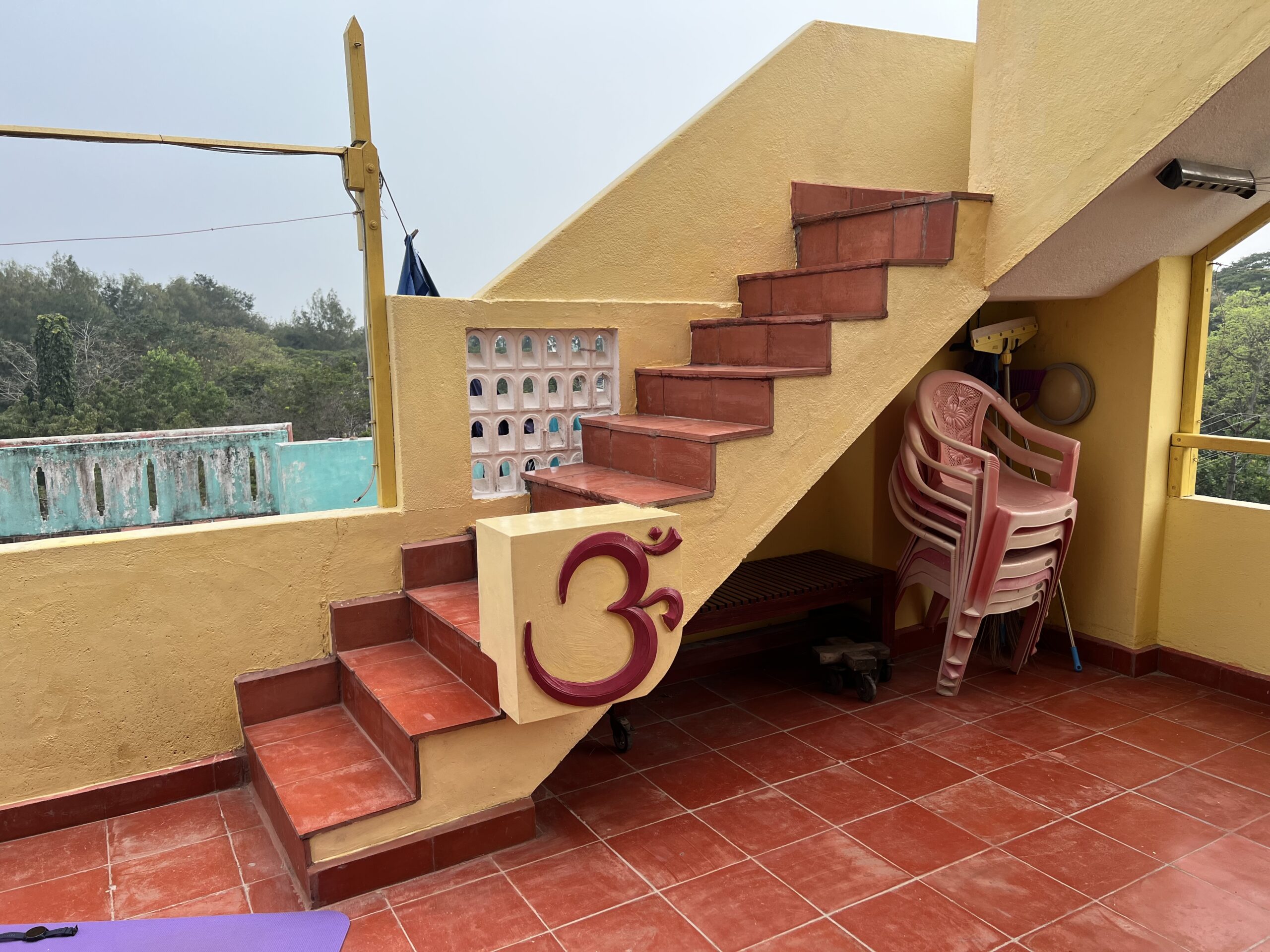
In Mahābalipuram, on the coast of Tamil Nadu, the Yellow House is one of the Ashtanga Yoga Institute’s places of practice in South India.
Located at 1/1 A. Gandhi Street, it has hosted the Institute’s seminars, retreats and trainings for many years, in an environment deeply connected to Indian culture, Dravidian tradition and the history of yoga.
More than a simple yoga room, the Yellow House is a place of immersion. People come here to practise Ashtanga Yoga according to the teaching transmitted by Sri K. Pattabhi Jois, but also to discover a living, everyday India, deeply rooted in its traditions.
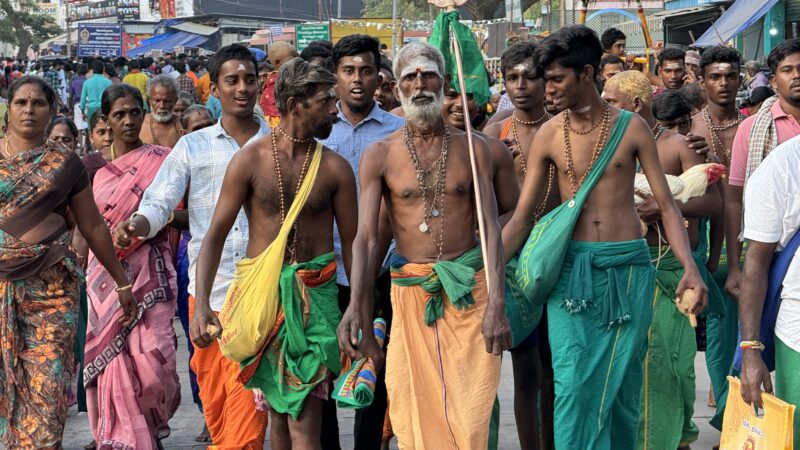
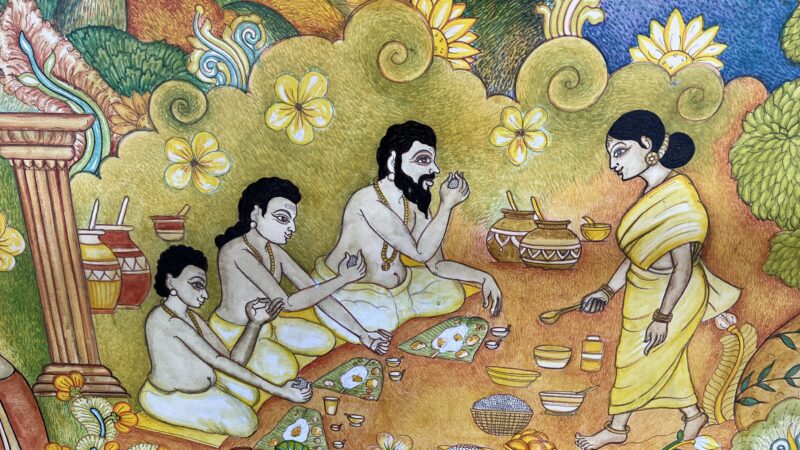
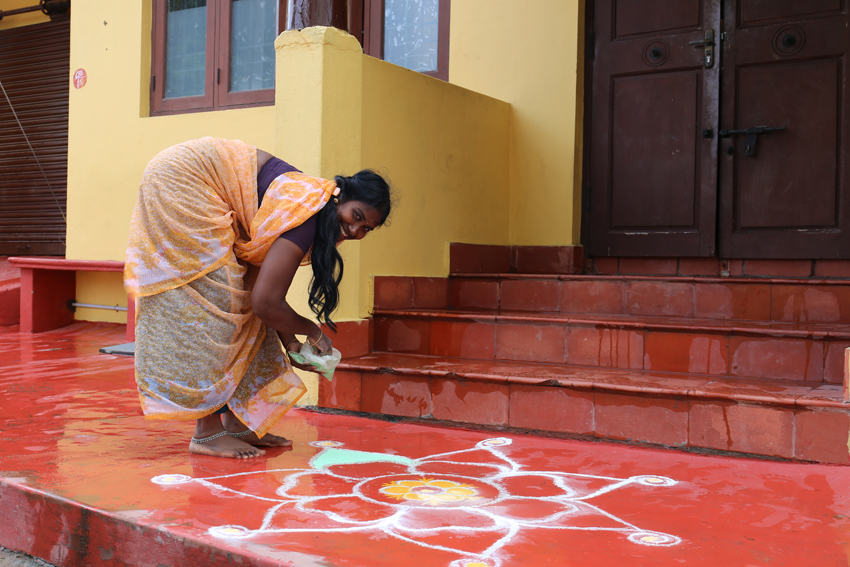
Here, the practice does not take place apart from the world: it is set within a village, a culture, a light, a history — a few steps from the ocean, at the heart of a land marked by temples, rituals, craftspeople, fishermen and the kolam drawn on the ground.

A place designed for practice in India
Practising Ashtanga Yoga in India is not the same experience as practising in Europe. The rhythm, the heat, the sounds, the smells, the colours, the encounters and the presence of the sacred in daily life naturally change the way one approaches the practice.
The Yellow House was designed as a simple, living place, entirely turned towards this experience. It allows a continuity between the morning practice, the study times, the meals, the exchanges, the visits and the moments of rest.
It is a place of retreat, but also a place of transmission: a space where one comes to learn, deepen, observe, practise and share.
The origin of the bond with Mahābalipuram
The bond between Jean-Claude Garnier and Mahābalipuram goes back to his first visit to South India, in 1970.
One night, he set out with a fisherman on a traditional boat, made of wooden beams tied together with ropes. At sunrise, the return to the coast revealed the Shore Temple, standing before the Bay of Bengal, among the palm trees, the waves and the first light of day.
This vision of the Dravidian temple emerging from the dawn remains a founding experience. It inscribes Mahābalipuram in an intimate memory, made of beauty, silence and encounter with India.
Jean-Claude Garnier gave his first Ashtanga Yoga sessions there from 1996. The courses first took place in various hotels; then, thanks to the friendship and support of Ramesh, the Yellow House gradually became the main venue for the Institute’s seminars in South India.
For more than twenty years, it has welcomed the students who come to practise, study and live an immersion at the heart of the tradition. It is not accommodation chosen at random: it is a place built over time, around practice, encounters, friendship and transmission.
The spaces of the Yellow House
The Yellow House has several spaces dedicated to practice and to the life of the group: two yoga rooms, a library, a terrace, as well as areas for meals and rest. It keeps a simple, family and living atmosphere — far from the impersonal comfort of a standardised retreat centre.
The small Dakshinamurti room
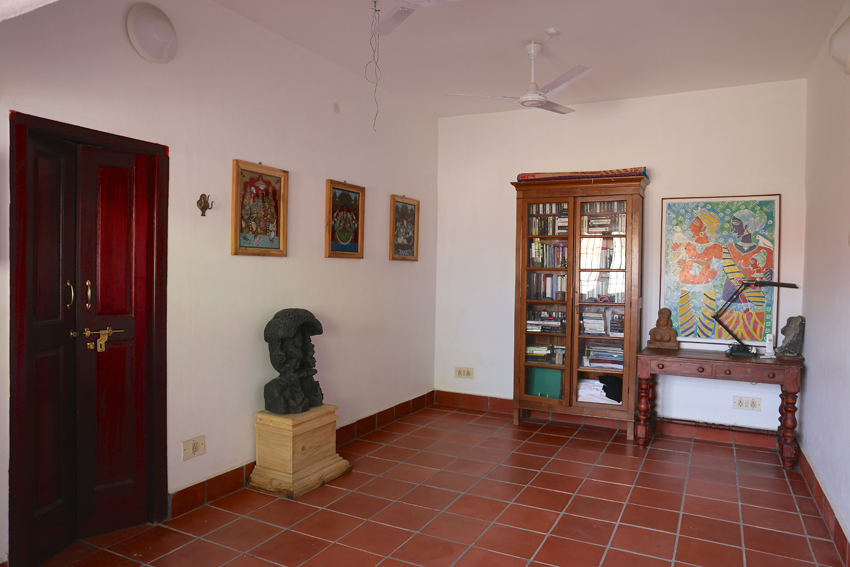
The small yoga room, called Dakshinamurti, offers a more intimate space for small-group practice or quieter times. The name Dakshinamurti evokes a form of Śiva associated with the silent transmission of knowledge — a choice that resonates with the spirit of the Institute: learning through presence, observation and the direct relationship with the teacher.
The large Maha Lakshmi shala
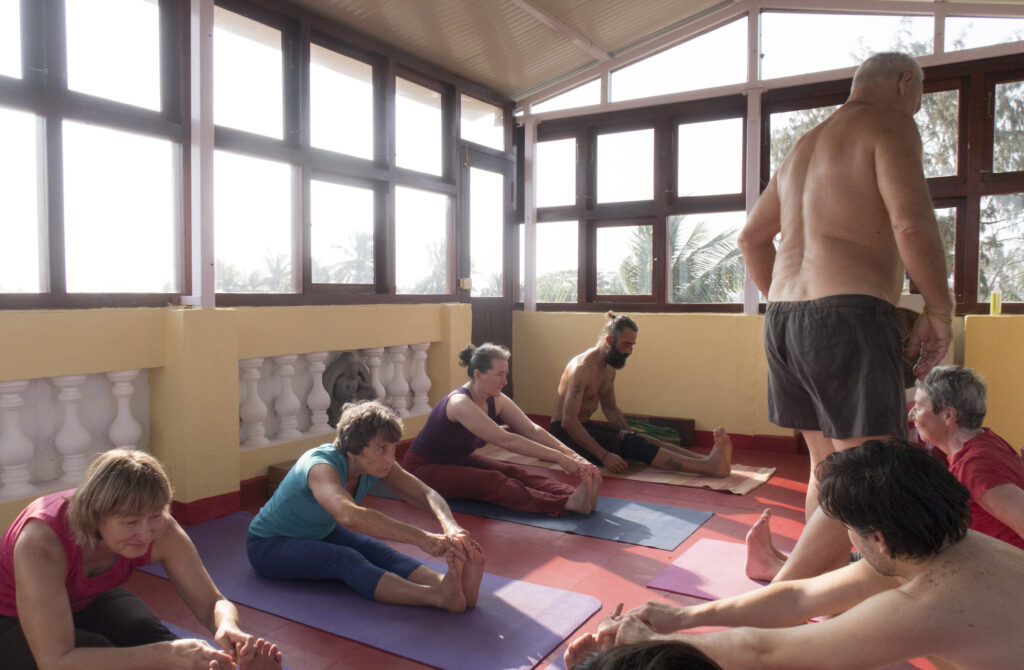
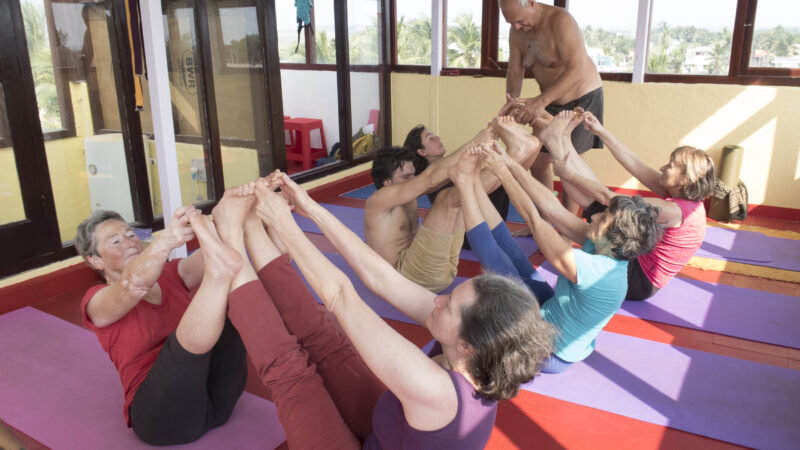
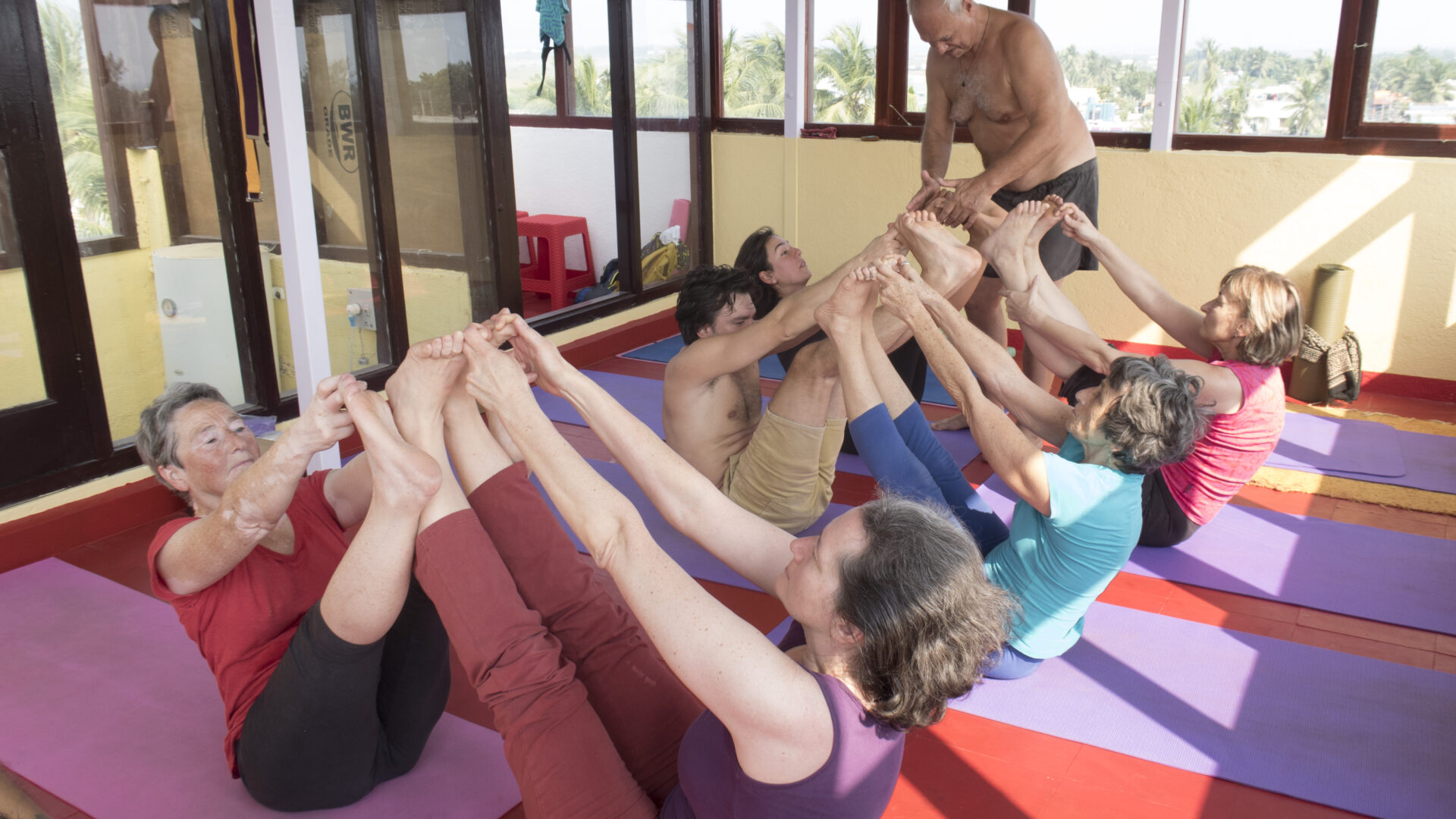
The large Maha Lakshmi shala is the main practice space. It hosts the Ashtanga Yoga sessions, the trainings and the great times of transmission. Its name refers to Lakshmi, a figure of prosperity, beauty and harmony. It is here that students gather each morning to deepen the method, work the series, refine the breath and observe the Bandha.
The terrace, the library and the shared spaces
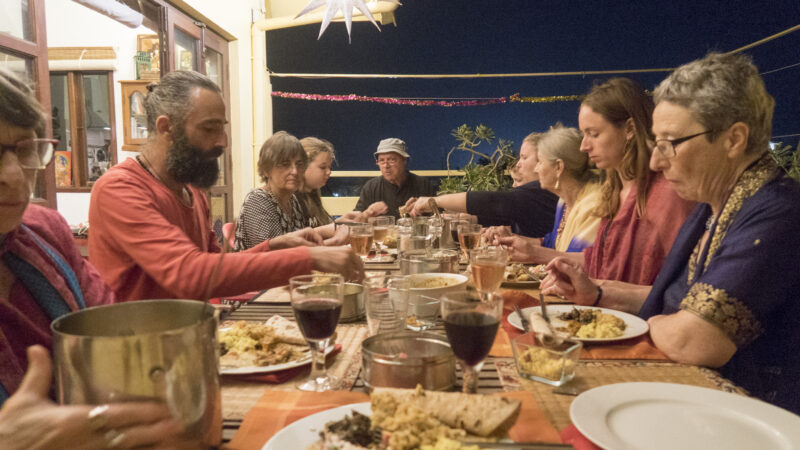
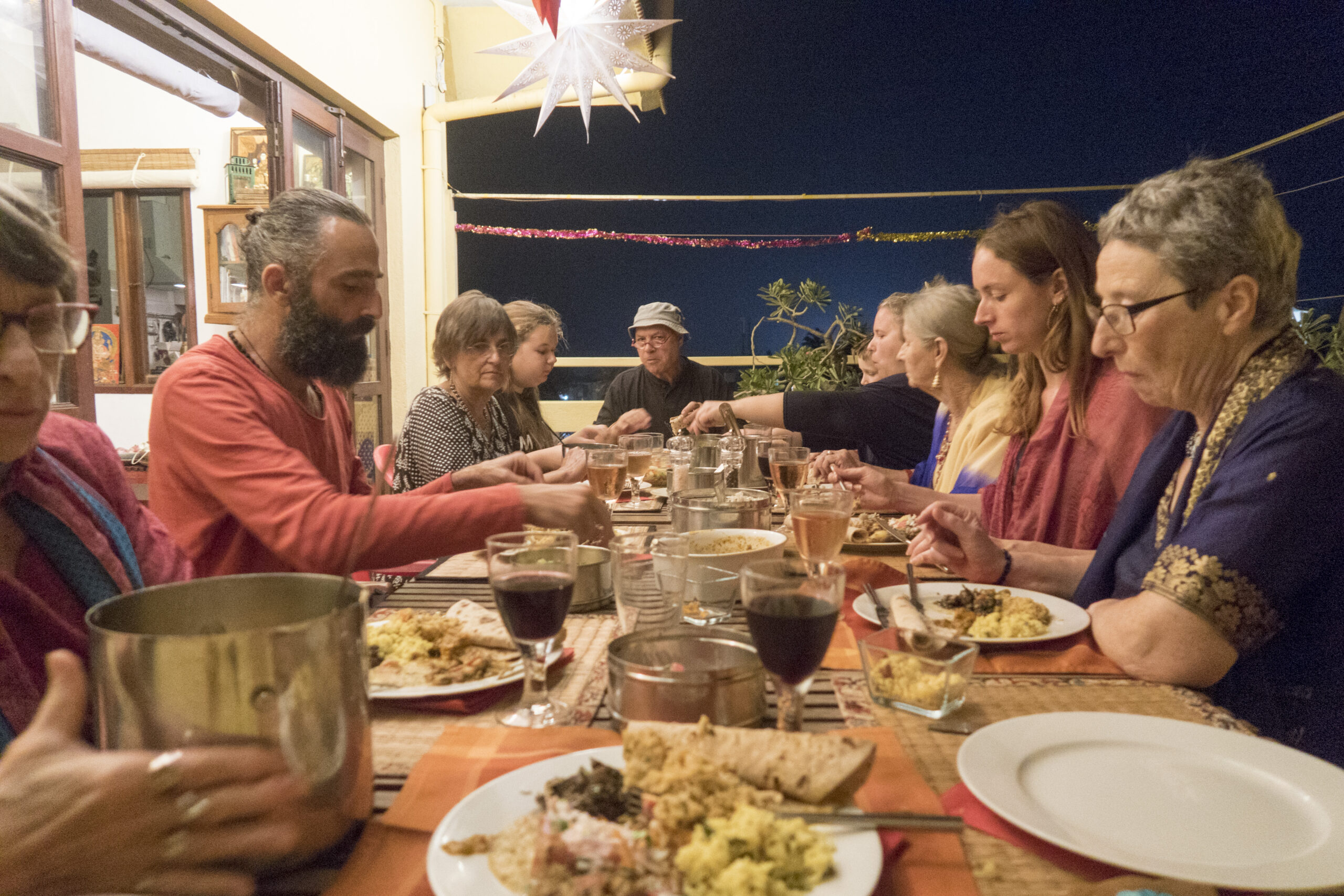
The terrace is a place to meet between two practice sessions, to read or to talk. The library extends the spirit of the Institute — to practise, but also to study and deepen. The meals and pauses, finally, are fully part of the experience: one learns through practice, but also through observing, listening and sharing the life of the group.
A practice open to all levels
The classes offered at the Yellow House are centred on traditional Ashtanga Yoga, also called Yoga Korunta, and open to different levels.
Beginners discover the foundations of the method; regular practitioners deepen the Primary Series; advanced students work on rhythm, Vinyāsa, Mūla Bandha, Uḍḍiyāna Bandha, Ujjāyī and the more advanced series. Teachers and future teachers can also observe the way students are accompanied and guided.
This diversity creates a particular dynamic: one learns as much through one’s own practice as through the observation of others.
A retreat and immersion experience
The seminars held at the Yellow House usually last several days and offer a rhythm very different from the weekly classes. Practice opens the day; then come rest, meals, exchanges, readings, visits and, for those in training, the theoretical classes.
This continuity fosters a deep immersion. It allows you to step out of daily life and devote several days to practice, self-observation and the discovery of India. Immersion does not rest only on the intensity of the practice: it also comes from walking, silence, the heat, the relationship with the group and the times of solitude.
Seminars may include excursions to major spiritual sites, such as the ashram of Sri Aurobindo in Pondicherry or that of Ramana Maharshi in Tiruvannamalai — a natural extension of the practice through a broader encounter with the Indian spiritual tradition.
A living house at the heart of Mahābalipuram
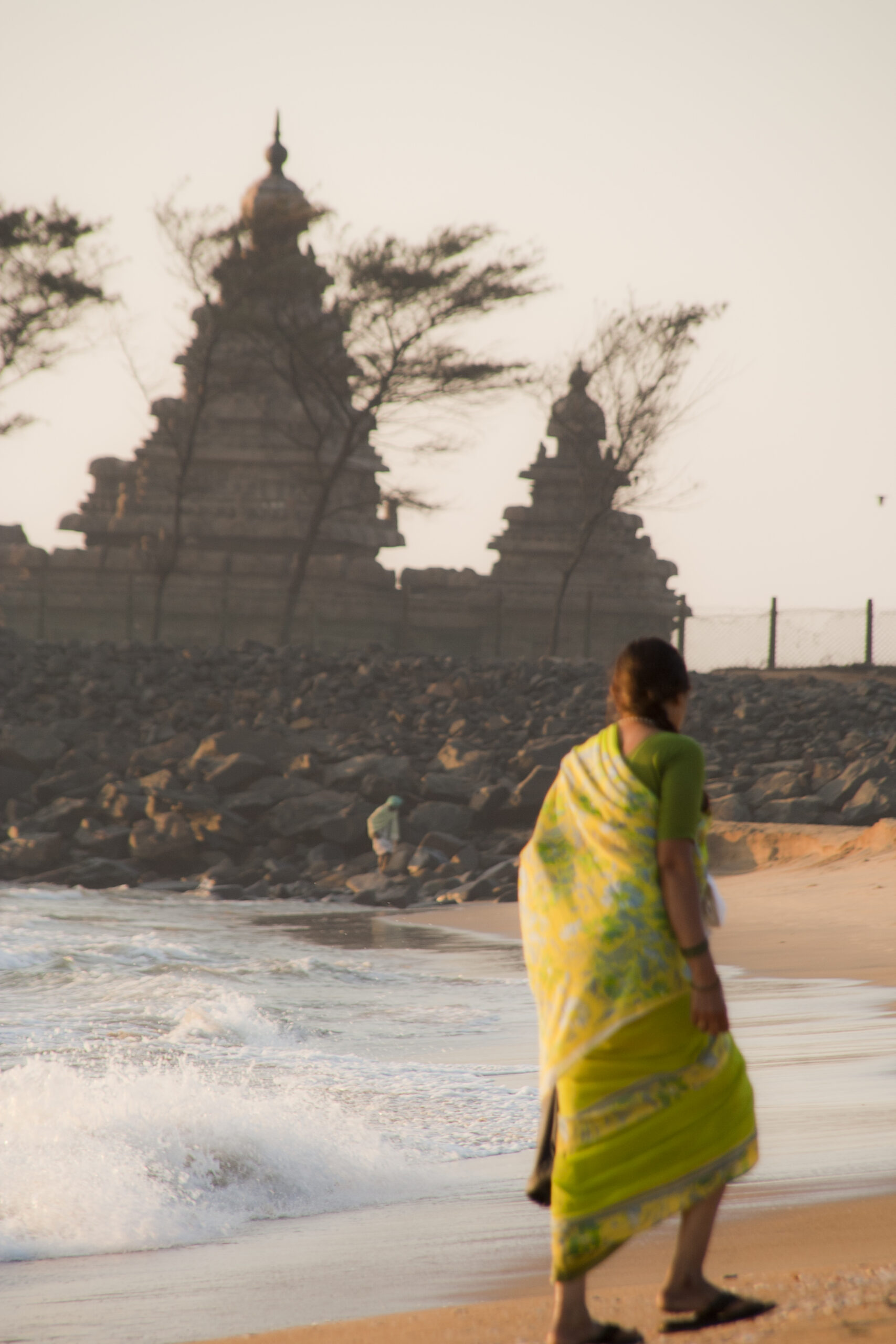
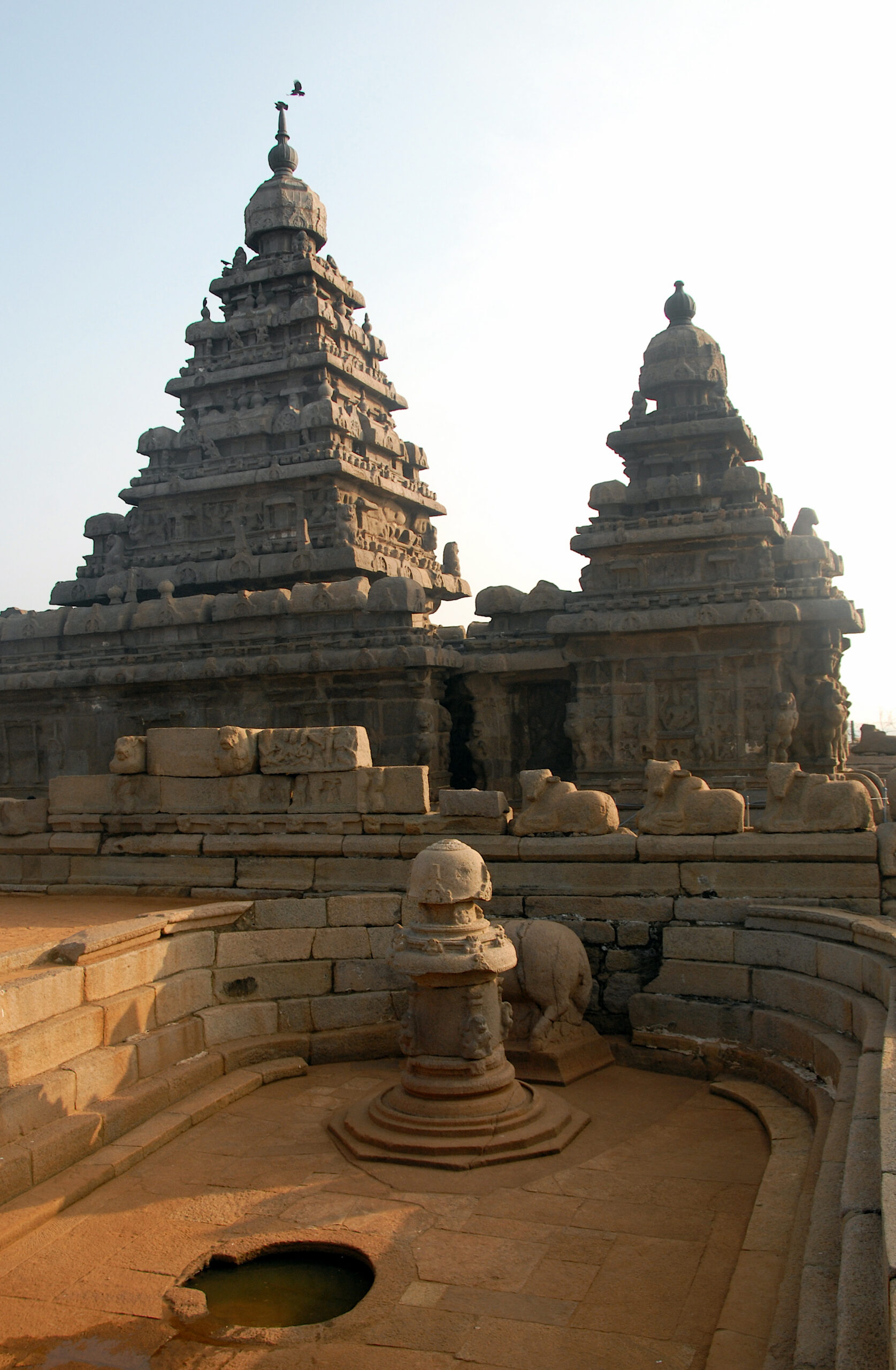
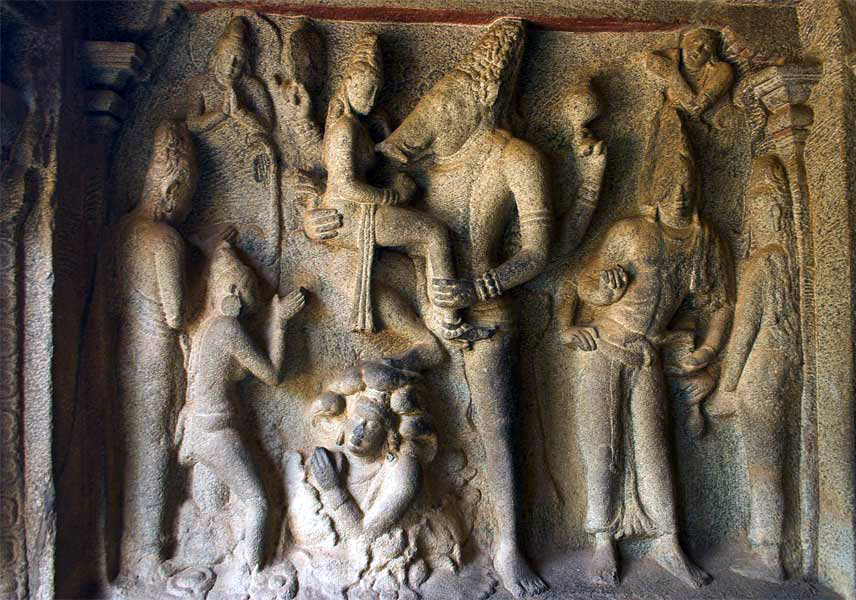
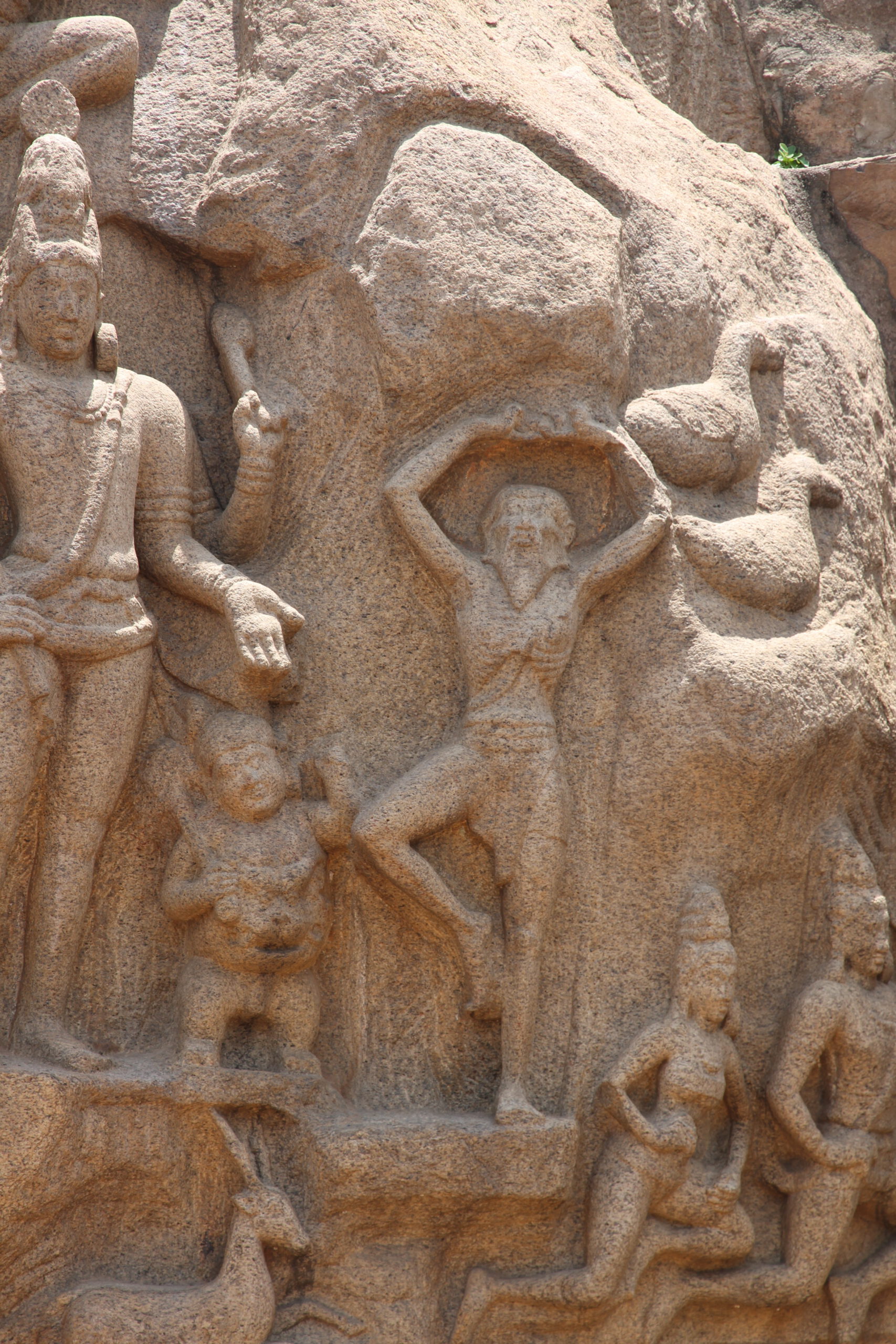
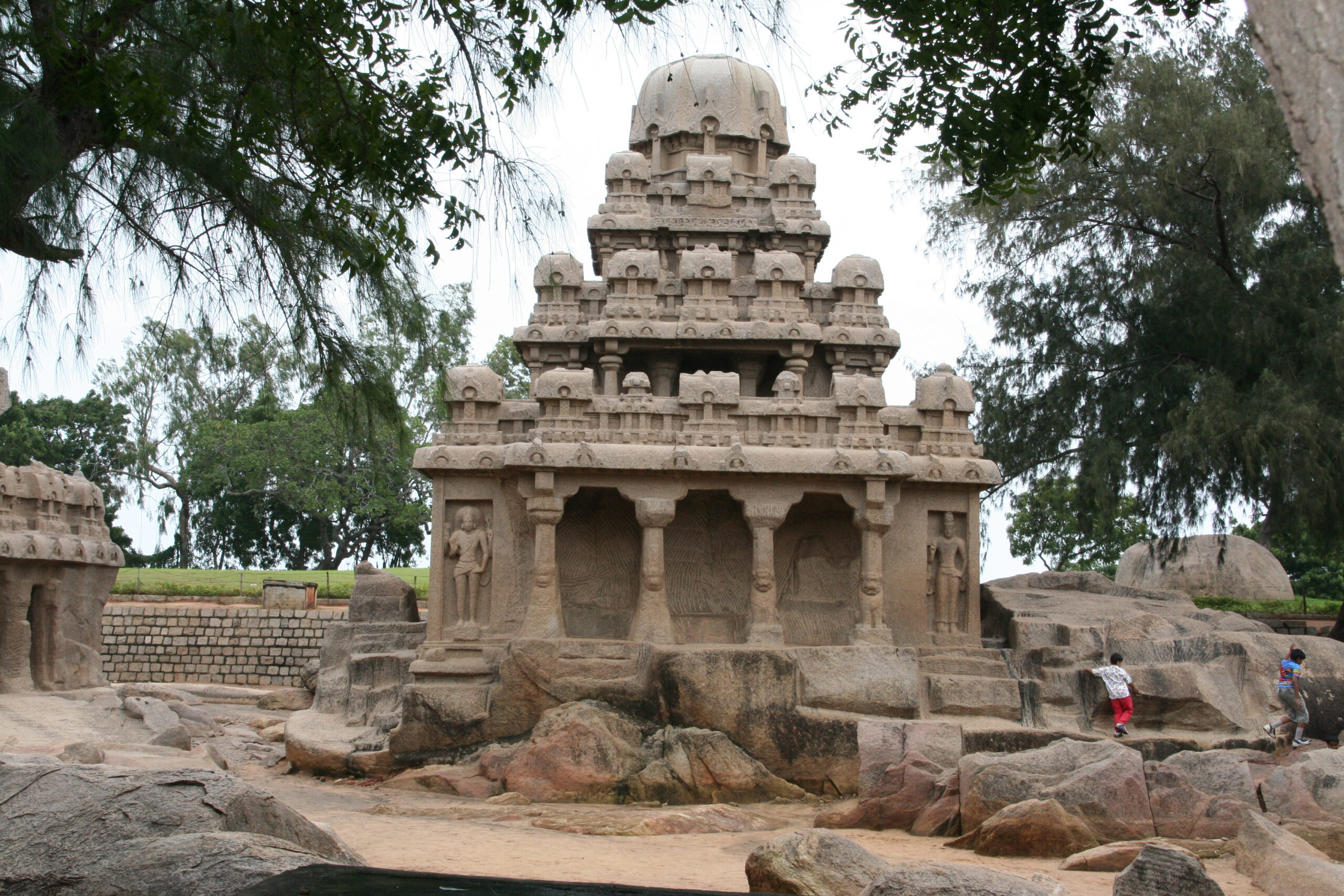
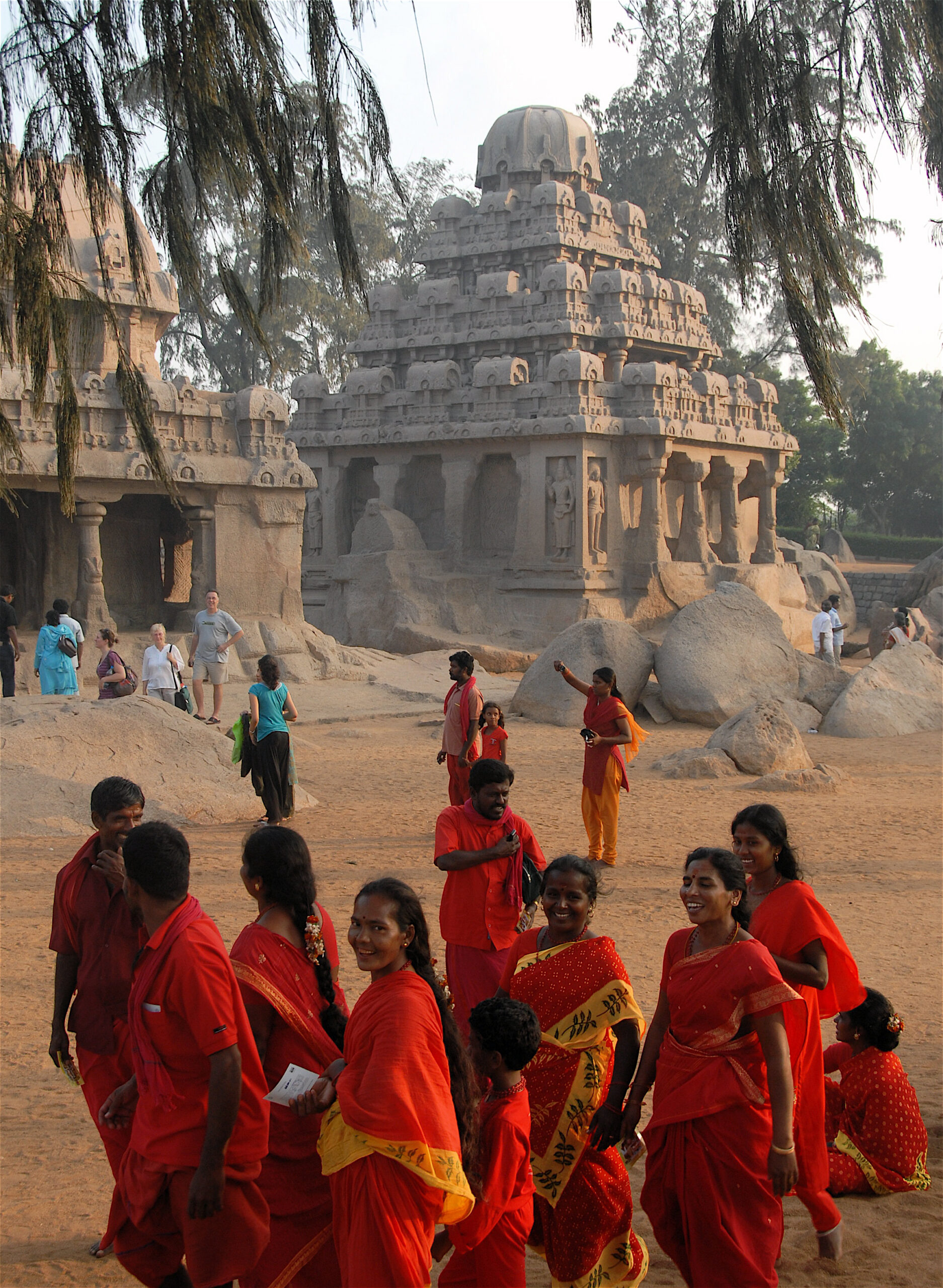
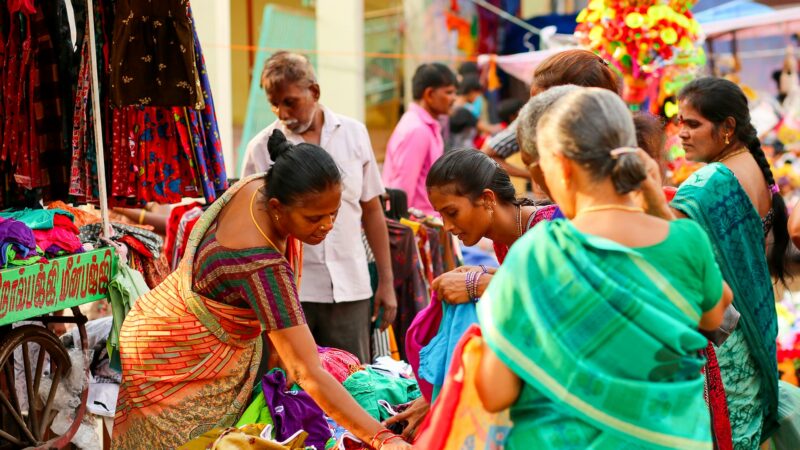
The Yellow House is not cut off from the village: it is part of the daily life of Mahābalipuram, among the streets, the inhabitants, the craftspeople, the fishermen, the markets, the temples and the nearness of the ocean.
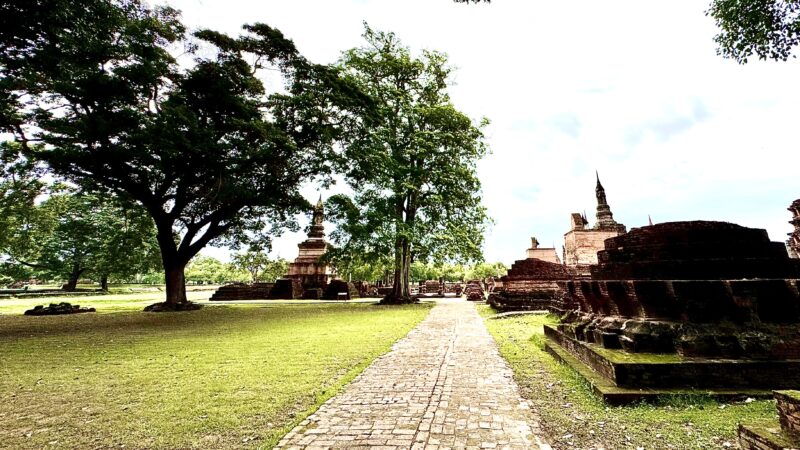
A coastal town of Tamil Nadu, a few steps from the great historical sites of South India, Mahābalipuram gives the stay a particular depth. Here, India is not a backdrop: it is present in every day, in the way one walks, looks, eats and meets a country.
To come and practise at the Yellow House is to accept to experience India in all that is living, direct and sometimes disconcerting about it. That is also what makes the experience so precious: the place invites you to slow down, to observe and to return to the essential — practice, breath, study, encounter and presence.
Practical information
Address
Yellow House
1/1 A. Gandhi Street
Mahābalipuram
Tamil Nadu – South India
Getting there
Participants generally arrive in India via Chennai airport, then reach Mahābalipuram by road. Transfer arrangements vary from one seminar to another; we invite you to consult the practical information for the relevant stay.
Accommodation and meals
Accommodation depends on the seminar and the options offered at registration: depending on the session, participants are housed near the Yellow House or in partner hotels. It is generally not included in the price, unless stated otherwise. Meals and pauses are fully part of the group experience, and Mahābalipuram offers many opportunities to discover Indian cuisine.
Equipment provided
All the necessary equipment is available on site: mats, blocks, straps and practice supports. You are of course welcome to bring your own accessories.
Conditions of participation
Seminars are open according to the arrangements specific to each stay: some are accessible to all levels, others are aimed at people engaged in a training. Before registering, please read the page of the relevant seminar carefully and contact us if you have a question about your level or your preparation.
Practical information
Contact
- Address
- 1/1 A. Gandhi Street, Mahābalipuram, Tamil Nadu – South India