Monthly Archives: December 2014

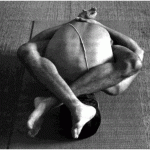
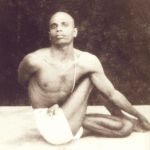
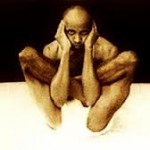
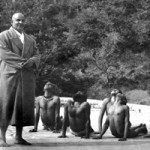
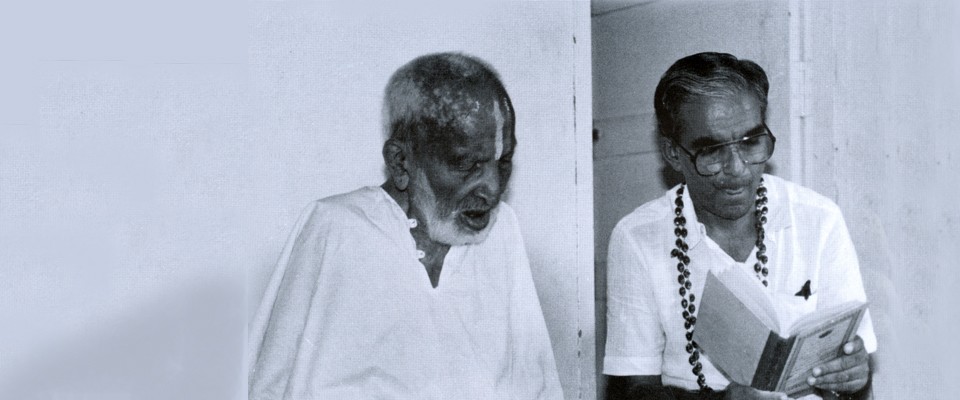
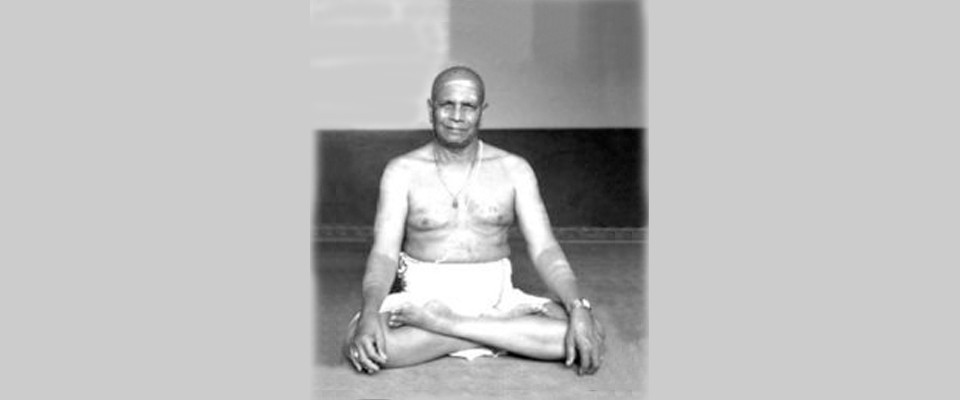
Sri K. Pattabhi Jois has learned, developed, and taught others Ashtanga Yoga


Warning: Array to string conversion in /home/ashtangarc/www/wp-content/plugins/carousel-without-jetpack/carousel/jetpack-carousel.php on line 252

Warning: Array to string conversion in /home/ashtangarc/www/wp-content/plugins/carousel-without-jetpack/carousel/jetpack-carousel.php on line 252

Warning: Array to string conversion in /home/ashtangarc/www/wp-content/plugins/carousel-without-jetpack/carousel/jetpack-carousel.php on line 252

Warning: Array to string conversion in /home/ashtangarc/www/wp-content/plugins/carousel-without-jetpack/carousel/jetpack-carousel.php on line 252

Warning: Array to string conversion in /home/ashtangarc/www/wp-content/plugins/carousel-without-jetpack/carousel/jetpack-carousel.php on line 252

Warning: Array to string conversion in /home/ashtangarc/www/wp-content/plugins/carousel-without-jetpack/carousel/jetpack-carousel.php on line 252

Warning: Array to string conversion in /home/ashtangarc/www/wp-content/plugins/carousel-without-jetpack/carousel/jetpack-carousel.php on line 252

Warning: Array to string conversion in /home/ashtangarc/www/wp-content/plugins/carousel-without-jetpack/carousel/jetpack-carousel.php on line 252

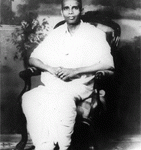
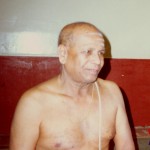
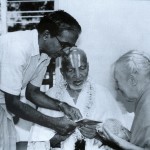
Sri K. Pattabhi Jois, was born on July 26, 1915, a day of the full moon, in a small village near Somnathpur in Karnataka in South India. He died on May 18, 2009, at the age of 94.

His father, Krishna Pattabhi Jois, was a well-known astrologer in the service of the Maharajah of Mysore.

After his primary and secondary schooling in 1930 he began studying Sanskrit and Vedic philosophy at the Maharaja Sanskrit College in Mysore. In 1937, he graduated, he immediately went into teaching Sanskrit at the University of Mysore and continued until 1973. He spent another three years teaching at the Ayur Vedic College, and he then retired.

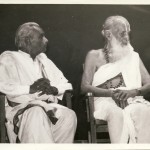
He began studying Yoga in 1927, when he was 12 years old. He then lived with his parents in a small village near Hassan “Kowshek” (Karnataka). During the first three years, he undertook a journey back and forth every day to visit his Guru Sri T. Krishnamacharya, who lived in Mysore at that time (a distance of some 35 km). He received the teaching of his master for 25 years (from 1927 to 1952). Krishnamacharya asked him to transmit a method of original Yoga, called Yoga Korunta (known today as Ashtanga Yoga). Sri K. Pattabhi Jois taught Yoga in India from 1937, then later in the U.S.A and Europe. He received students from around the world to study this wonderful method of Yoga.

He was the founder-director of the Ashtanga Yoga Research Institute in Mysore in 1942. In 1946, he founded the Institute for Research on Ashtanga Yoga, where he experimented and developed the healing powers of Yoga. He was appointed Honorary Professor of Yoga at the Indian Government Medical College in Mysore, from 1976 to 1978.

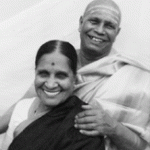
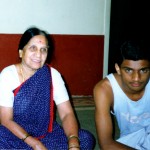
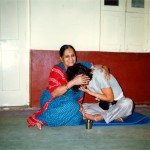
Shri K. Pattabhi Jois was married with the delicious Savitramma, known as her diminutive Amma). She left us far too early in December 1997. She always wore a smile, offered comfort or had a blessing on her lips and she prepared an absolutely delicious coffee.

What is less well known is that she had also studied and practiced Yoga and sacred Shri T. Krishnamacharya texts. This is where she met Guruji. She was 14 when she was married, a marriage of love which was very rare at the time. They had three children, two boys and a girl (their eldest son Ramesh died in an accident on the Kaveri dam).

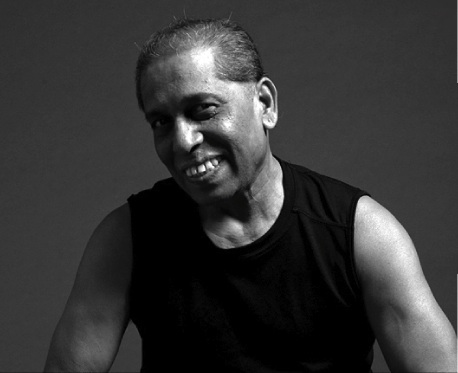
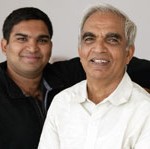
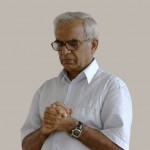
Manju Jois

Manju Jois

Manju, their son, teaches Yoga at Emanitas in California – U.S.A. Saraswati, their daughter still lives in Mysore, she is married to a professor and also teaches yoga.

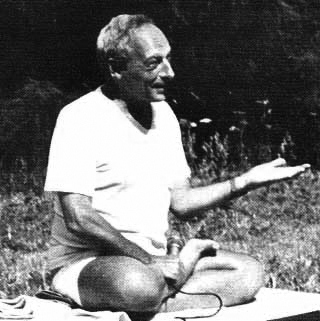
andrevanlysebeth

In 1964, André Van Lysbeth, the first European, came to study the Korunta Yoga at the Ashtanga Yoga Research Institute in Mysore with Guruji. André spoke about him and made him known through an article he published in the early review of the time “YOGA”, which he edited.

Around 1972, Sri Pattabhi Jois received the first Americans after the “meeting” with Manju at the Gitananda ashram near Pondicherry (160 km south of Madras). The practice of Ashtanga Yoga spread in America from California, and extended later to Hawaii. In 1975, Guruji and Manju on their first tour spread the word about the practice of yoga. Since then, the practice of Ashtanga Yoga has spread worldwide.


Guruji passed on to the other side of existence on 18 May 2009 at 2:30pm in the afternoon (local Mysore time).   Guruji had taught continuously for 63 years this wonderful method that he had learned from his Guru Sri T. Krishnamacharya in 1927.

Chidambaram flowers

Om Loka Samasta Sukhino Bhavantu Om Shanti, Shanti, Shanti Om (Om, may all beings achieve peace and harmony, Om Shanti).


Today, his grandson Sharath Rangaswamy, the son of Sarasvati, is Director of the Institute. He was born in 1971. He is transmitting the Ashtanga Yoga he learned from his grandfather. Sharath is married to Shruthi and he is the happy father of two children, a charming little girl called Shradda (Dedication), and a son Sambhav (connected to the being or Manifestation of being).


The new Yoga course room “Yogashala” can be found :

  • Ashtanga Yoga Research Institute
235, 8th Cross
2nd Main, 3rd Stage
Gokulam, Mysore 570 002
Karnataka, India

Warning: Array to string conversion in /home/ashtangarc/www/wp-content/plugins/carousel-without-jetpack/carousel/jetpack-carousel.php on line 252

Understanding the methods of yoga more clearly


Warning: Array to string conversion in /home/ashtangarc/www/wp-content/plugins/carousel-without-jetpack/carousel/jetpack-carousel.php on line 252

Warning: Array to string conversion in /home/ashtangarc/www/wp-content/plugins/carousel-without-jetpack/carousel/jetpack-carousel.php on line 252

Warning: Array to string conversion in /home/ashtangarc/www/wp-content/plugins/carousel-without-jetpack/carousel/jetpack-carousel.php on line 252

Warning: Array to string conversion in /home/ashtangarc/www/wp-content/plugins/carousel-without-jetpack/carousel/jetpack-carousel.php on line 252

Warning: Array to string conversion in /home/ashtangarc/www/wp-content/plugins/carousel-without-jetpack/carousel/jetpack-carousel.php on line 252

Warning: Array to string conversion in /home/ashtangarc/www/wp-content/plugins/carousel-without-jetpack/carousel/jetpack-carousel.php on line 252

Warning: Array to string conversion in /home/ashtangarc/www/wp-content/plugins/carousel-without-jetpack/carousel/jetpack-carousel.php on line 252

Warning: Array to string conversion in /home/ashtangarc/www/wp-content/plugins/carousel-without-jetpack/carousel/jetpack-carousel.php on line 252

Warning: Array to string conversion in /home/ashtangarc/www/wp-content/plugins/carousel-without-jetpack/carousel/jetpack-carousel.php on line 252

Warning: Array to string conversion in /home/ashtangarc/www/wp-content/plugins/carousel-without-jetpack/carousel/jetpack-carousel.php on line 252

Warning: Array to string conversion in /home/ashtangarc/www/wp-content/plugins/carousel-without-jetpack/carousel/jetpack-carousel.php on line 252

Warning: Array to string conversion in /home/ashtangarc/www/wp-content/plugins/carousel-without-jetpack/carousel/jetpack-carousel.php on line 252

Warning: Array to string conversion in /home/ashtangarc/www/wp-content/plugins/carousel-without-jetpack/carousel/jetpack-carousel.php on line 252

Warning: Array to string conversion in /home/ashtangarc/www/wp-content/plugins/carousel-without-jetpack/carousel/jetpack-carousel.php on line 252

Warning: Array to string conversion in /home/ashtangarc/www/wp-content/plugins/carousel-without-jetpack/carousel/jetpack-carousel.php on line 252

Warning: Array to string conversion in /home/ashtangarc/www/wp-content/plugins/carousel-without-jetpack/carousel/jetpack-carousel.php on line 252

When one starts to take an interest in yoga, one is surprised and sometimes overwhelmed by the number of different schools. What does this mean? At what level can I take part in classes?

In certain yoga classes, there is a moment of respite between each posture or between each group of postures. In others, one assembles oneself the chronology of postures, which varies according to different criteria.

We will help you see more clearly.

The different variations all stem from Haṭha Yoga, “Ha” means Sun, “Tha” Moon, “Yoga” means Union. “The search for balance in the union of opposing forces”. This may be one of the most beautiful definitions of our practice.

In the practice of Ashtanga yoga or Yoga Korunta (its original name), the order of postures in each series is immutable. The transitions between each position are interlinked rhythmically and dynamically.

The series of Ashtanga Yoga are presented in an order of increasing difficulty. Before passing on to the next series, it is essential to have mastered the preceding one. Generally, this type of Yoga appeals to those with an open spirit looking for an intense physical and spiritual activity and not afraid of sweating.

Its principal characteristics are :

  • Control of the pelvic floor (Mūlābandha)
  • Deep breathing (Ujjãyi)
  • Concentration of gaze (Drishti dṛṣṭi)
  • Dynamic movements of transition between the postures (Vinyasa)

Composed of six series, the first is called therapeutic yoga.

You will be encouraged to breathe deeply, to concentrate, and the teacher will correct you.

Following, the various methods of Haṭha Yoga that are best known:

Kripalu Yoga teams the practice of Yoga with consciousness and acceptance of oneself. It is a meditative Yoga, the student executes the postures and movements intuitively according to his needs.

Sivānanda Yoga is based on the five following principles: suitable exercises (āsana);  correct breathing (āsana);  deep relaxation (savāsana); healthy eating (vegetarian) ; positive thought and meditation (vedanta & dhyāna). Very well known thanks to André Van Lysebeth, the series of 12 principal postures unfolds in the opposite sense to the method of Ashtanga Yoga.

Satyananda Yoga or Bihar Yoga takes up several methods: Haṭha, Raja, Karma, Jnāna, Mantra and Bhakti Yoga, as well as other branches of Yoga, very much geared to the aspects of mental Yoga.

Bikram Yoga encompasses a series of 26 postures which are repeated twice in a room heated to 40° Celsius. The heat promotes suppleness, the elimination of toxins and weight loss.

Energy Yoga, of Tibetan origin, insists on the importance of a balance of the energies influencing our physical body. The respiratory work is the key that promotes the training of attention and allows the mind so often distracted and overburdened to relax.

Haṭha Yoga according Eva Ruchpaul is a yoga that purports to be secular and stresses an attitude of interior work rather than one of physical effort. The lesson is based on a rhythm of three: a posture, a period of rest, a breath, a posture… Postures and breath are intimately linked.

Kundalini Yoga is based on the idea that each of us have capital within ourselves “Health, Happiness, Faith” which can grow thanks to the practice encompassing postures, exercises in respiratory techniques, chanting and meditation.

Anusara Yoga is based on the idea that everything is supreme consciousness. Everybody is divine in all his parts, body, thoughts and spirit. It considers the postures of Yoga, practiced in accordance with the universal principles of alignment an expression of the divine.

Viniyoga, developed by the son of Sri Krishnamacharya, Desikachar – “The more we progress in life, the more we transform ourselves, physically, emotionally and intellectually” – is a method meant to integrate these changes in a way adapted to each individual.

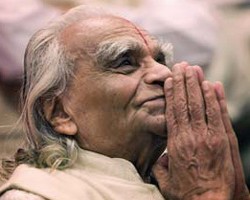
Sri BKS Iyengar

Sri BKS Iyengar

Yoga Iyengar is a practice in which one uses numerous props to better accomplish certain postures which allows practitioners to circumvent problems of flexibility. This technique emphasizes alignment and precision of postures.

Power Yoga, developed in the United States, takes up the principal foundations of Ashtanga Yoga but does not follow a predetermined order of postures and series. It is a physical and dynamic training in very aerobic style.

Jivamukti Yoga is a system that is at the same time overtly meditative and very physical like Ashtanga Yoga. During classes, participants practice series of postures punctuated by chants (in Sanskrit), meditations, lectures, discussions, music.

Vinyasa Flow Yoga is a more traditional style of Yoga that respects the original principles of Yoga. Like in Ashtanga Yoga, the pupil adapts little by little to the method, which stays immutable.

etc.

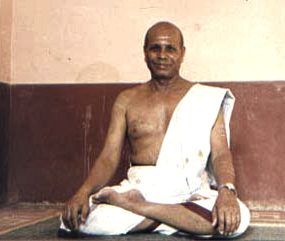
Guruji

Guruji

At the Ashtanga Yoga Institute of Brussels, we practice Yoga as expressed by Sri K. Pattabhi Jois “Practice, practice, practice, every day…“


Warning: Array to string conversion in /home/ashtangarc/www/wp-content/plugins/carousel-without-jetpack/carousel/jetpack-carousel.php on line 252

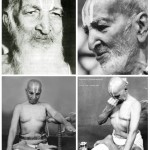
Sri Tirumalai Krishnamarcharya, one of the greatest masters of yoga (1888 – 1988)


Warning: Array to string conversion in /home/ashtangarc/www/wp-content/plugins/carousel-without-jetpack/carousel/jetpack-carousel.php on line 252

Warning: Array to string conversion in /home/ashtangarc/www/wp-content/plugins/carousel-without-jetpack/carousel/jetpack-carousel.php on line 252

Warning: Array to string conversion in /home/ashtangarc/www/wp-content/plugins/carousel-without-jetpack/carousel/jetpack-carousel.php on line 252

Warning: Array to string conversion in /home/ashtangarc/www/wp-content/plugins/carousel-without-jetpack/carousel/jetpack-carousel.php on line 252

Warning: Array to string conversion in /home/ashtangarc/www/wp-content/plugins/carousel-without-jetpack/carousel/jetpack-carousel.php on line 252

Warning: Array to string conversion in /home/ashtangarc/www/wp-content/plugins/carousel-without-jetpack/carousel/jetpack-carousel.php on line 252

Warning: Array to string conversion in /home/ashtangarc/www/wp-content/plugins/carousel-without-jetpack/carousel/jetpack-carousel.php on line 252

Warning: Array to string conversion in /home/ashtangarc/www/wp-content/plugins/carousel-without-jetpack/carousel/jetpack-carousel.php on line 252

Warning: Array to string conversion in /home/ashtangarc/www/wp-content/plugins/carousel-without-jetpack/carousel/jetpack-carousel.php on line 252

Warning: Array to string conversion in /home/ashtangarc/www/wp-content/plugins/carousel-without-jetpack/carousel/jetpack-carousel.php on line 252

Warning: Array to string conversion in /home/ashtangarc/www/wp-content/plugins/carousel-without-jetpack/carousel/jetpack-carousel.php on line 252

Warning: Array to string conversion in /home/ashtangarc/www/wp-content/plugins/carousel-without-jetpack/carousel/jetpack-carousel.php on line 252

Sri T. Krishnamacharya, one of the greatest masters of yoga, the light of his knowledge has profoundly influenced the whole world.

He has never left anyone indifferent. In the course of a life that would easily fill several ordinary lives, he had many extraordinary encounters. A descendant of the great priests serving at the temple of the Lord of the Seven Hills, who in turn were descendants of Nâthamuni, Sri Venkateshvara of Tirumalai, this teacher had been promised an exceptional destiny at his birth. Nothing commonplace could happen to him.

Sri Tirumalai Krishnamacharya was born on 18 November 1888, the eldest of six children (four boys and two girls).

His father, Sri Tirumalai Srinivasa Thathacharya, a great religious master teaching the knowledge of the holy books (the Vedas), takes charge of the child’s education with his wife Shrimati Ranganayakamma.

The young Krishnamacharya is gifted with great physical force, coupled with extraordinary temperament and intelligence. He also suffused with an intense ardour to know and… to know how.

Still an adolescent, Krishnamacharya sets off to discover his country, its sages, its scholars, its artists and its mystics.

An incredible journey is the life of this young man who will by and by discover, then master, the most varied disciplines, from close-quarters combat to astrology to Vedic rituals.

A well of sciences, fluent in seven languages, an eminent pundit, he will successively explore each of the classical viewpoints of Indian philosophical thought, obtaining the highest distinctions in the most celebrated traditional schools.

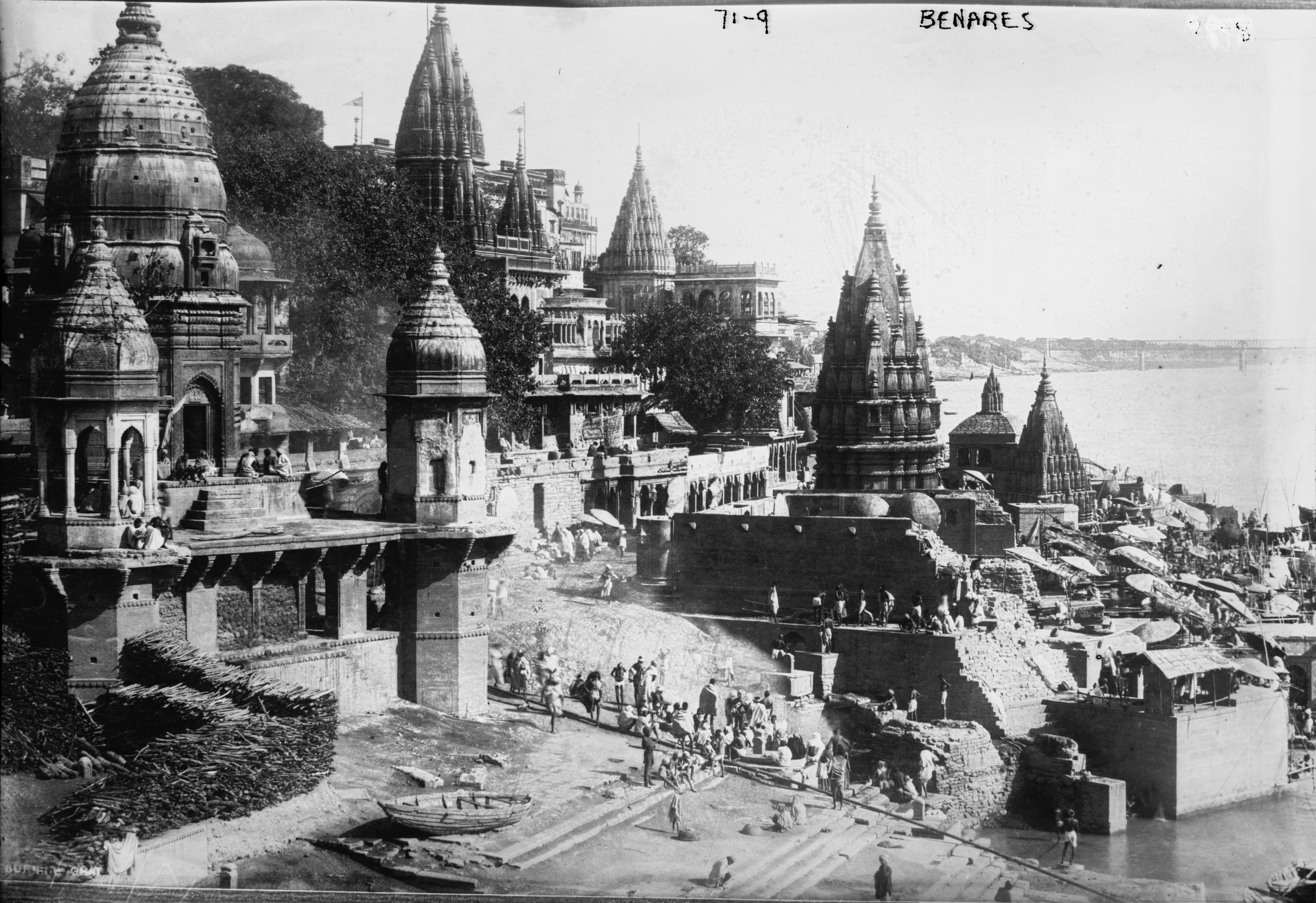
Benares, Varanasi, India in 1922

Benares, Varanasi, India in 1922

Varanasi

When he left for Benares for the first time, around the age of 18, he was fortunate to be instructed in certain secrets of Sanskrit grammar in the course of a single night by a sort of genius, Shivakumar Shâstri. Back in Mysore, he received an exhaustive three-year education in the philosophy of Vedânta by the director of Parakala Mutt, Brahmatantra Sri Krishna Brahmatantra Swâmi. Once again back to Benares, he found there a deeply enlightened tutor, Sri Vamacarana Bhattâchârya who, while teaching him philosophy, alsohelped him for years giving him advice on how to live his life.

The holy lake of Mânasarovar…

As advised by his tutor at the University of Patna, he then set off on foot for the Himalayas. By difficult paths and rope bridges over spanning torrents, he arrived at the foot of Kailash, the mythical mountain considered to be the abode of Shiva and the axis of the universe, and at the holy lake of Mânasarovar.

Yoga

He learns and practices intensively all the different aspects of yoga. Thus, in the second phase of his life, he will become one of the greatest (Maha) yogi (âcharya) of his time.

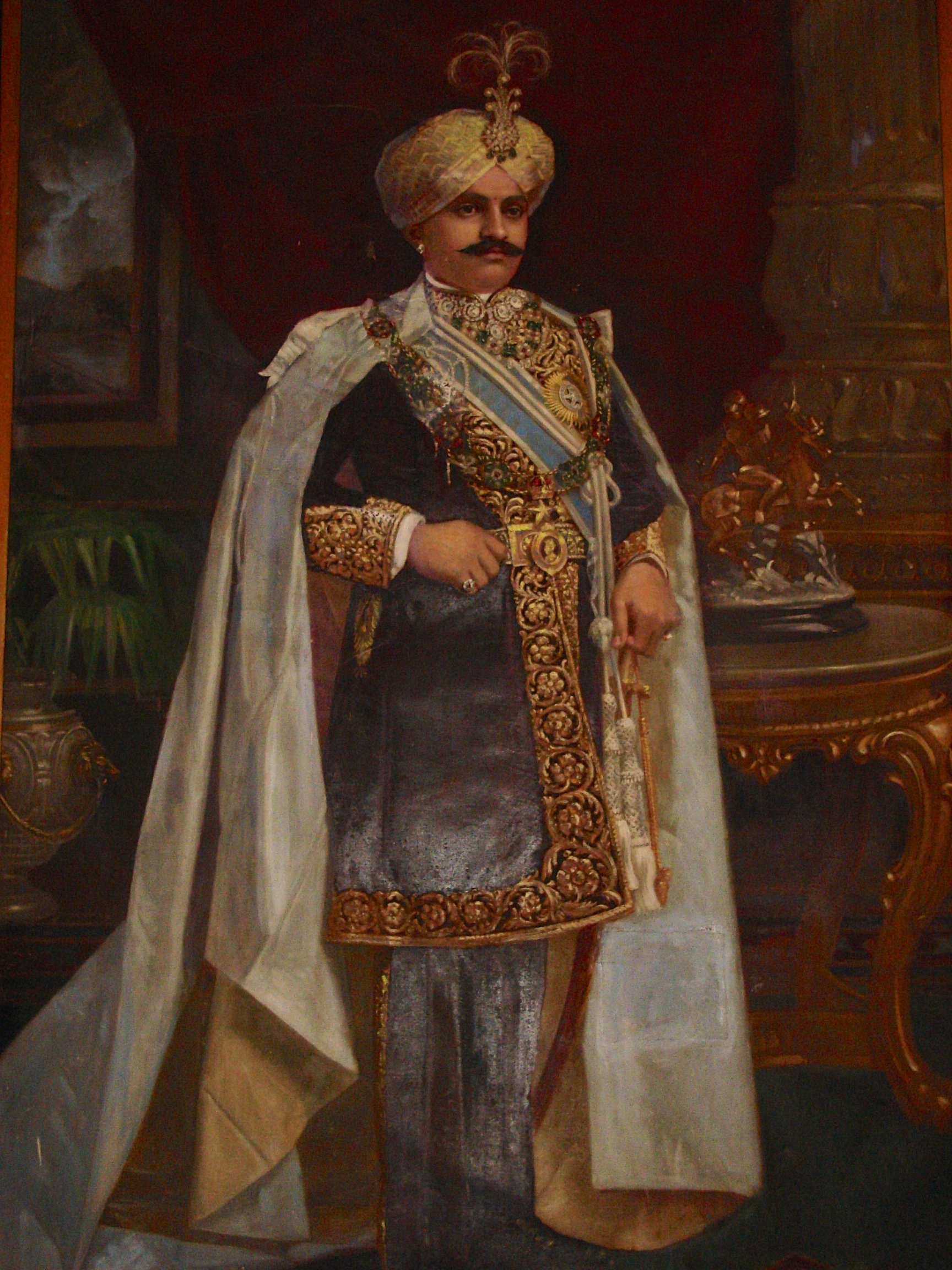
Maharaja of Mysore, painting

Maharaja of Mysore, painting

The maharajah of Mysore

In 1924, he is invited by the maharajah of Mysore who viened yoga as a help in treating his numerous physical ailments. He opened a yoga school in his palace in 1955.

He established himself in Mysore

He is already in his forties when he established himself in Mysore, in the South of India, there he marries the very young Srimati Namaginammal. She will give him six children, three boys and three girls.

Srimati Namaginammal wife of Krishnamacharya

Srimati Namaginammal wife of Krishnamacharya

Madras (Chennai)

When he established himself in Madras in the fifties, he once again had the opportunity to treat two men in very senior positions. Both suffered from paralysis: an eminent lawyer Sri T.R. Venkatarâma Shâstrî and Sir Alladi Krishnaswâmi Iyer, the celebrated jurist who had participated in the drafting of the Indian constitution. Both, causing him stay Madras, added themselves to the long list of crucial encounters that influenced the course of his life. (Extract of N° 24 of Viniyoga, dedicated to the 100th anniversary of Sri T. Krishnamacharya).


The legend of Yoga-Rahasya

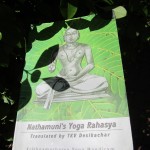
Of the Yoga-Rahasya, an important work on yoga that had been lost for several centuries, only a few excerpts were known. Krishnamacharya declared having received the whole of this original teaching in a dream from the mouth of Sri Nâthamuni, this Vishnu saint who lived in the 9th century

It was not until 1965 that T. Krishnamacharya wrote the verses of Yoga Rahaysa down on paper.

The important concepts of this text are:

  • The importance of yoga for women
  • The yoga practices to follow during pregnancy
  • The adaptation of yoga to make it suitable for everyone in different stages of his life
  • Yoga is an essential therapeutic tool

It contains the main ideas of the teachings of Krishnamacharya on techniques such as āsana and Prāṇāyāma.

T.K.V. Deskachar & Shri Bhashyam

Two of their sons also became yoga instructors.

The elder one, T.K.V. Deskachar, lives in Madras, and manages an important yoga therapy centre – the Krisnamacharya Yoga Mandiram – officially recognized by the Health Ministry of Tamil Nadu.

Sri Bhashyam, his pupil, lives in Nice (France). He has married a Frenchwoman and teaches yoga mainly in France and Switzerland – Yogakshemam, a school teaching traditional Indian philosophy – Ayurveda and Yoga.

 Dissemination…

Compared to the occident, the dissemination of the teachings of T. Krishnamacharya incurred a strange fate.

  • Indra Devi
  • Yvonne Millerand
  • K.V. Desikachar
  • K. Sribhashyam
  • Sri B.K.S. Iyengar
  • Sri K. Pattabhi Jois

Mainly due to the engagement of his two sons and their pupils, it is firmly rooted in French speaking countries (France, Switzerland & Quebec).

In Anglo-Saxon countries, this teaching is better known through the interpretation provided by his brother-in-law and pupil, B.K.S. Iyengar with his worldwide reputation – as well as that of Sri K. Pattabhi Jois, also known worldwide.

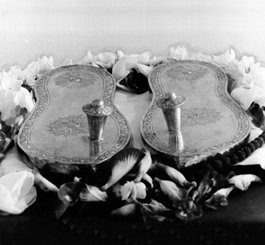
 abtkym_sandals

His death

He died on 28 February 1989 in Chennai in the South of India. He was nearly 101 years of age. The teacher Sri T. Krishnamacharya will for many remain an unmatched and irreplaceable master of yoga…

In accordance with tradition, he never left his native India in his life. Nevertheless, the light of his knowledge of yoga has profoundly influenced the whole world.

“Yoga is the greatest gift of India to the world.”

Sri T. Krishnamacharya

Sources:

  • The Yoga of the Yoga The legacy of T Krishnamacharya by Kausthud Desikachar – Edition: K. Y. M – Chennai – India
  • Shri T. Krishnamacharya 1888 – 1988 Cent ans de Béatitude
  • Notebook
    Edition: K. Y. M – Chennai – India
  • La revue « Viniyoga » n° 24
  • Yoga Sutra de Patanjali – Translation and commentary by K.V. Desikachar – Edition du Rocher – 1986
  • Reflection on Yoga Sutra – s of Patanjali – By K.V. Desikachar
    KYM – ISBN: 81.87847.20.4
  • The Heart of Yoga – Developing a Personal Practice – By K.V. Desikachar
    KYM – ISBN: 0.89281.681.3
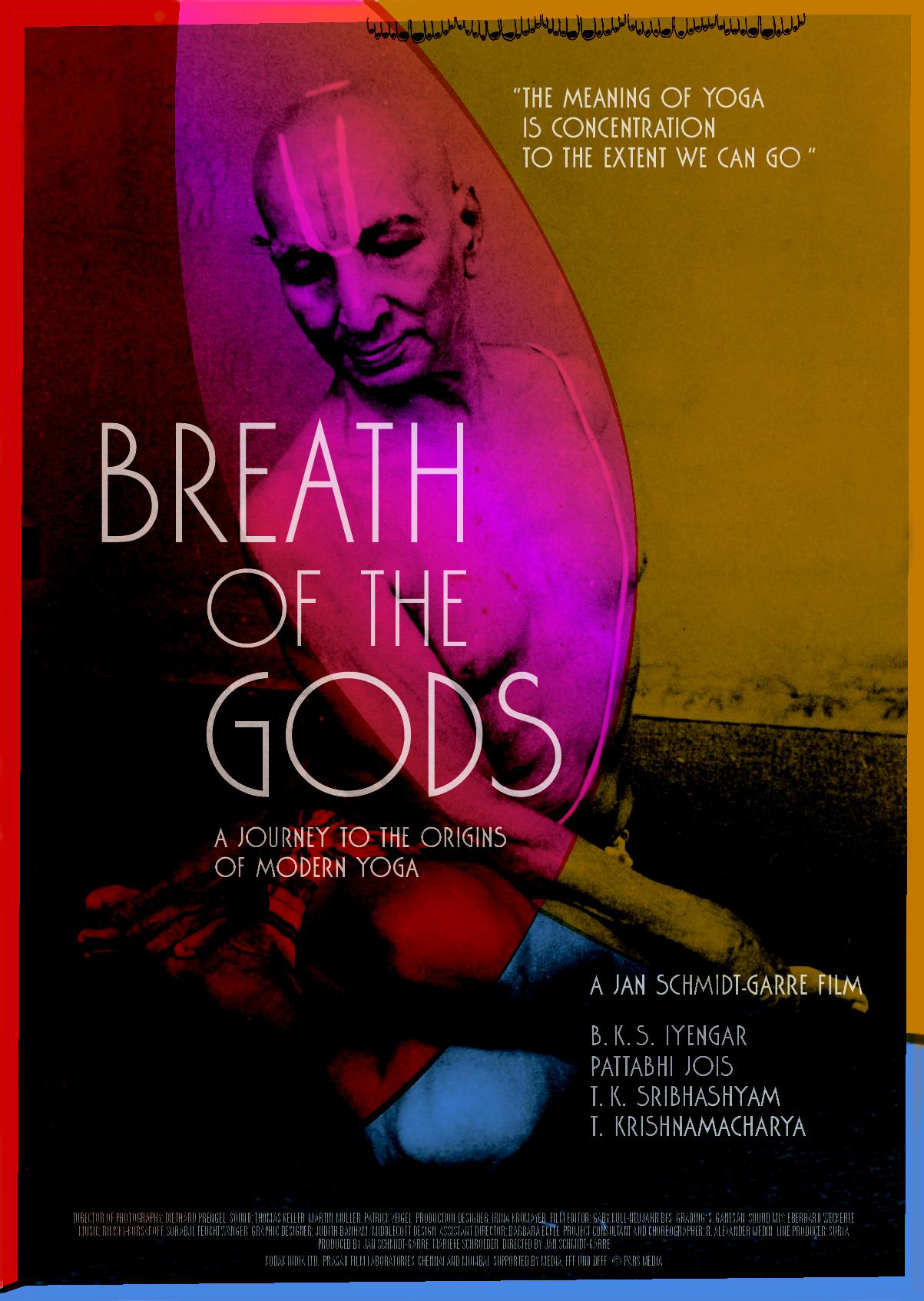
Breath Of The Gods

Breath Of The Gods

Film:

Breath of the Gods, A Journey to the Origins of Modern Yoga, by Jan Schmidt – Garre Film – Length 105 minutes

  • K.S. IYENGAR
  • PATTABHI JOIS
  • K. SRIBHASHYAM
  • KRISHNAMACHARYA

Very beautiful and moving testimony to the life of Sri T. Krishnamacharya as recalled by his students, his children…

Websites:


Warning: Array to string conversion in /home/ashtangarc/www/wp-content/plugins/carousel-without-jetpack/carousel/jetpack-carousel.php on line 252

Religions in India


Warning: Array to string conversion in /home/ashtangarc/www/wp-content/plugins/carousel-without-jetpack/carousel/jetpack-carousel.php on line 252

Warning: Array to string conversion in /home/ashtangarc/www/wp-content/plugins/carousel-without-jetpack/carousel/jetpack-carousel.php on line 252

Warning: Array to string conversion in /home/ashtangarc/www/wp-content/plugins/carousel-without-jetpack/carousel/jetpack-carousel.php on line 252

Warning: Array to string conversion in /home/ashtangarc/www/wp-content/plugins/carousel-without-jetpack/carousel/jetpack-carousel.php on line 252

Warning: Array to string conversion in /home/ashtangarc/www/wp-content/plugins/carousel-without-jetpack/carousel/jetpack-carousel.php on line 252

Warning: Array to string conversion in /home/ashtangarc/www/wp-content/plugins/carousel-without-jetpack/carousel/jetpack-carousel.php on line 252

Warning: Array to string conversion in /home/ashtangarc/www/wp-content/plugins/carousel-without-jetpack/carousel/jetpack-carousel.php on line 252

Warning: Array to string conversion in /home/ashtangarc/www/wp-content/plugins/carousel-without-jetpack/carousel/jetpack-carousel.php on line 252

Warning: Array to string conversion in /home/ashtangarc/www/wp-content/plugins/carousel-without-jetpack/carousel/jetpack-carousel.php on line 252

Warning: Array to string conversion in /home/ashtangarc/www/wp-content/plugins/carousel-without-jetpack/carousel/jetpack-carousel.php on line 252

Warning: Array to string conversion in /home/ashtangarc/www/wp-content/plugins/carousel-without-jetpack/carousel/jetpack-carousel.php on line 252

Warning: Array to string conversion in /home/ashtangarc/www/wp-content/plugins/carousel-without-jetpack/carousel/jetpack-carousel.php on line 252

Warning: Array to string conversion in /home/ashtangarc/www/wp-content/plugins/carousel-without-jetpack/carousel/jetpack-carousel.php on line 252

Warning: Array to string conversion in /home/ashtangarc/www/wp-content/plugins/carousel-without-jetpack/carousel/jetpack-carousel.php on line 252

Warning: Array to string conversion in /home/ashtangarc/www/wp-content/plugins/carousel-without-jetpack/carousel/jetpack-carousel.php on line 252

Warning: Array to string conversion in /home/ashtangarc/www/wp-content/plugins/carousel-without-jetpack/carousel/jetpack-carousel.php on line 252

Warning: Array to string conversion in /home/ashtangarc/www/wp-content/plugins/carousel-without-jetpack/carousel/jetpack-carousel.php on line 252

Warning: Array to string conversion in /home/ashtangarc/www/wp-content/plugins/carousel-without-jetpack/carousel/jetpack-carousel.php on line 252

Warning: Array to string conversion in /home/ashtangarc/www/wp-content/plugins/carousel-without-jetpack/carousel/jetpack-carousel.php on line 252

Warning: Array to string conversion in /home/ashtangarc/www/wp-content/plugins/carousel-without-jetpack/carousel/jetpack-carousel.php on line 252

Warning: Array to string conversion in /home/ashtangarc/www/wp-content/plugins/carousel-without-jetpack/carousel/jetpack-carousel.php on line 252

Warning: Array to string conversion in /home/ashtangarc/www/wp-content/plugins/carousel-without-jetpack/carousel/jetpack-carousel.php on line 252

Warning: Array to string conversion in /home/ashtangarc/www/wp-content/plugins/carousel-without-jetpack/carousel/jetpack-carousel.php on line 252

Warning: Array to string conversion in /home/ashtangarc/www/wp-content/plugins/carousel-without-jetpack/carousel/jetpack-carousel.php on line 252

Warning: Array to string conversion in /home/ashtangarc/www/wp-content/plugins/carousel-without-jetpack/carousel/jetpack-carousel.php on line 252

Warning: Array to string conversion in /home/ashtangarc/www/wp-content/plugins/carousel-without-jetpack/carousel/jetpack-carousel.php on line 252

Warning: Array to string conversion in /home/ashtangarc/www/wp-content/plugins/carousel-without-jetpack/carousel/jetpack-carousel.php on line 252

Warning: Array to string conversion in /home/ashtangarc/www/wp-content/plugins/carousel-without-jetpack/carousel/jetpack-carousel.php on line 252

Warning: Array to string conversion in /home/ashtangarc/www/wp-content/plugins/carousel-without-jetpack/carousel/jetpack-carousel.php on line 252

Warning: Array to string conversion in /home/ashtangarc/www/wp-content/plugins/carousel-without-jetpack/carousel/jetpack-carousel.php on line 252

Warning: Array to string conversion in /home/ashtangarc/www/wp-content/plugins/carousel-without-jetpack/carousel/jetpack-carousel.php on line 252

Warning: Array to string conversion in /home/ashtangarc/www/wp-content/plugins/carousel-without-jetpack/carousel/jetpack-carousel.php on line 252

Warning: Array to string conversion in /home/ashtangarc/www/wp-content/plugins/carousel-without-jetpack/carousel/jetpack-carousel.php on line 252

Warning: Array to string conversion in /home/ashtangarc/www/wp-content/plugins/carousel-without-jetpack/carousel/jetpack-carousel.php on line 252

Warning: Array to string conversion in /home/ashtangarc/www/wp-content/plugins/carousel-without-jetpack/carousel/jetpack-carousel.php on line 252

India is the crib of the four main religious traditions. Here are the results of the last census :

  • Hindouism 82,41%
  • Bouddhism 0,77%
  • XXX 0,77%
  • Sikhism 1,99%, but mostly in Penjab

We can add to that four other great traditions which have a long history in India :

  • The XXX or the XXX, 80% of them live in Maharastra, others live in Gujarat.
  • Judaism
  • Catholicism 2,32%
  • Islamism 11,67%, mostly in Cashemire

To be thorough, we should add :

  • Bahaism

Religious minorities

  • Kukis
  • Nagas
  • Bodos
  • Chakmas
  • Hajongs

Religion in India is of great importance In our indian friend’s daily life, it plays an essential part. It gives social and cultural life their rythme. Each religion in India influenced architecture, sculpture, painting, music, and even medecine. Almost all the great religions of the world are represented in India. One can notice, however, that religious values among the city-dweller youth are shrinking. India is very proud of its religious diversity. Nevertheless, interfaith weddings remain rare and tensions within different communities, mostly between hindus and muslims, keep on disturbing certain states.


Hindouism

It is the main religion. Around 84% of the population of India is Sanatana Dharma. It is one of the oldest religion in the world. The Sanatana Dharma is rather more a way of life and of thinking, than an organised religion.

Supreme court of India defined the shapes of « Hindu faith » in 1966, as it follows :

  1. respectful acceptance of Veda as the Highess Authority on religious and philosophical subjects as well as respectful acceptance of Veda by hindu thinkers and philosophers as unique base for hindu philosophy.
  2. spirit of tolerance and good will to understand and appreciate the other’s point of view, based on the unveiling that truth holds many appearances
  3. acceptation among all of the six philosophical hindu systems of a world rythm, that experiences times of creation, upkeeping and destruction, times – or Yuga – that goes on endlessly
  4. acceptance of the faith of reincarnation and the pre-existence of beings from all the philosophical hindu systems
  5. identification to the fact that means to get to salvation are diverse
  6. the understanding of truth, that, as many divinities as there is to worship, one can be a hindu and not belive that idols must be worhiped
  7. unlike other religions or beliefs hindu religion is not linked to a defined ensemble of philosophical concepts.

A hindu is therefore someone who belives the philosophy presented in the Veda (The Knowledge). Veda are the oldest religious writings in the world. The principle of this teaching is that the true nature of man is divine : God, or the Brahman, lives in each living thing.

This tradition is therefore an exploration of inside knowledge, a search of the divine that lies in each individual.

For the Veda, no one needs to « be saved », since no one is ever lost. One only lives in ignorance of one’s profund and divine nature.

This religion is based on sacred fundamental texts that explain the samsara, the karma, the dharma and the castes. Hindus believe that human life is cyclic : after death, the soul reincarnates (the samsara) in a new body, either human, animal, or plant, depending on its acts. They believe that the karma of the ongoing life can lead to reincarnation in an inferior caste, or even in an animal. To reach « moksha », which is the freeing of the cycle of rebirths (samsara), one has to free himself from the power of suffering, from attachment, and from ignorance.

Nowadays, hinduism belief is based either on faith, or on philosophy, or sometimes a mix of both. It is known that there are many different approaches of the Divine, all of which are valid. No matter the spiritual practice, as long as it leads to the same state of self-acheivement. The Veda teach the respect of all beliefs and in doing so, differenciate themselves from most of the other religions.

Sacred hinduism books are : the four Veda that constitute the fundamentals of the philosophy, the Upaniṣad, the Mahābaratha, the Rāmāyaṇa, the Bhagavad Gītā.
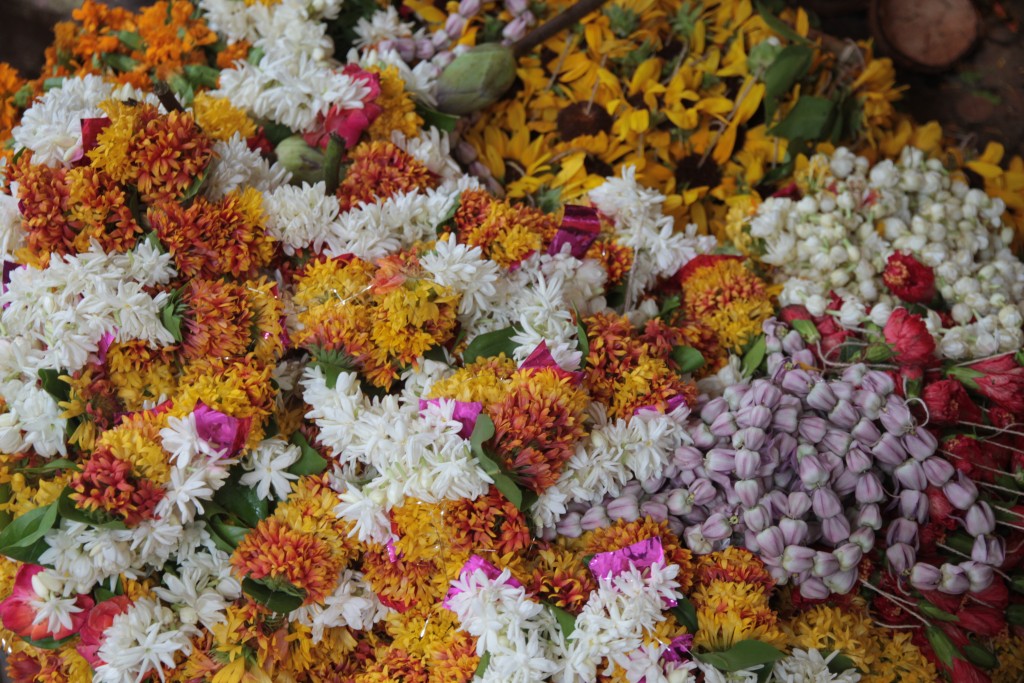
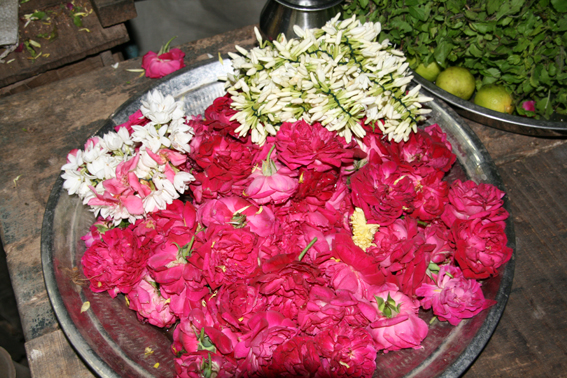
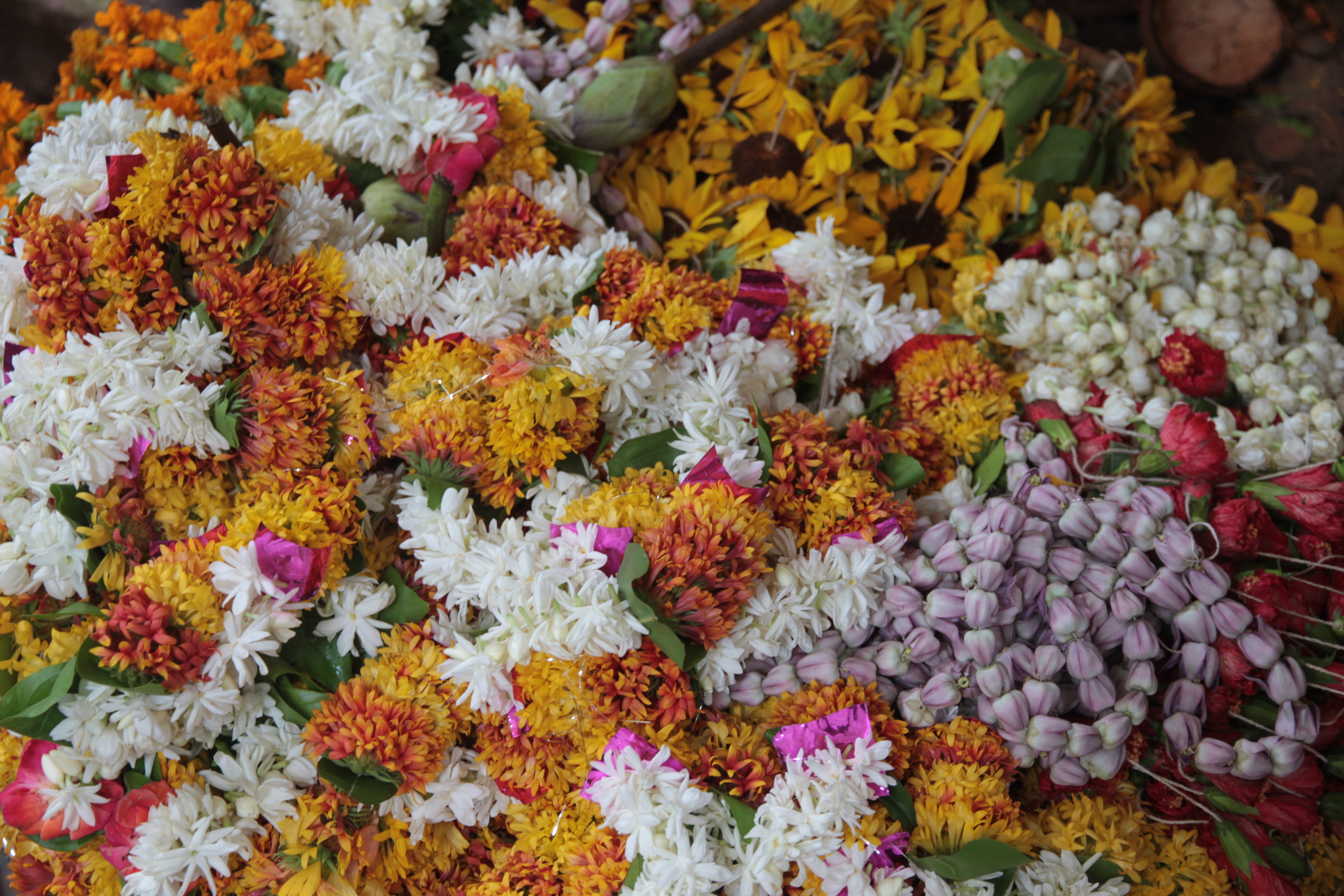
Offering flowers, Puja

Offering flowers, Puja

The Hindu trinity : Brahmā, Shiva, Viṣṇu.

Brahmā, the God creator, symbolizes the Supreme Truth. His spouse Sarasvati is the Goddess of knowledge, of music, and arts.

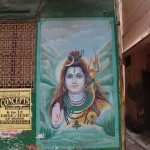
Shiva, the God who breaks the evil and the ignorance, as well as the God who regenerates. He is often pictured as a naked ascetic with a snake around his waist, a trident, and riding a white bull called Nandi. His spouse (his consort) is Parvati, they have two children : Ganesh, the God with an elephant’s head, and Karttikeya (Skanda or Murugan south of India). Ganesh is the most invocated God, for he is known for removing obstacles et bringing wisdom.

Viṣṇu, the conservative God, is said to be eternal, associated to primitive waters, and considered as omnipresent before the creation of the Universe. His spouse, Lakshmi, is the Goddess of beauty and wealth. It is only several years later, that the conception of Vishnu as the rescuer of the world appeared, incarnating as differents avatara(s), when the equilibrium of the world is in danger.


Bouddhism

Buddhism is the third biggest religion in the world after christianism and islamism. Only 7 millions of people are considered buddhists nowadays in India, including our fellow refugees friends from Tibet.

Buddhism was created in year 500 before J.C., when prince Siddhârta Gautama (546-324, the future Buddha) left in the search for illumination and ended up reaching nirvana.

Buddhism in India reached golden age during the Maurya empire, under the reign of Ashoka (Açoka) who converted himself to buddhism. By the end of this empire, buddhism shrinked and was evicted by hinduism.
According to the buddha, life rests on four noble truths : Duhka, Samudaya, Nirodha, Marga.

  1. The first noble truth, called Duhka in sanskrit, if often translated by « suffering » or « pain », which means « asking life what it cannot give us ».
  2. The second noble truth, called Samudaya, means that pains exist because of some reasons. Therefore it is normal to know those reasons.
  3. The third noble truth, called Nirodha, means the end, the termination, or the end of the pains.
  4. The fourth noble truth, called Marga, is the voice that leads to the termination of suffering.

Suffering is caused by desirs. To avoid any, one must follow the path that leads to comprehension. Anyone following that path gets rid of desirs and hate, and reaches inner peace as well as « Nirvana ». All of that leads to the end of the reincarnation cycles of the soul.

Buddhism is not a religion, it is a philosophy. There are two schools considered as leaders in buddhism : Hinayana, for exemple in Sri Lanka, where it is more strict, and Theravada, the one of our fellow Tibetan friends.

One must notice that in hinduism, Buddha is considered as the ninth incarnation of the Vishnu God.
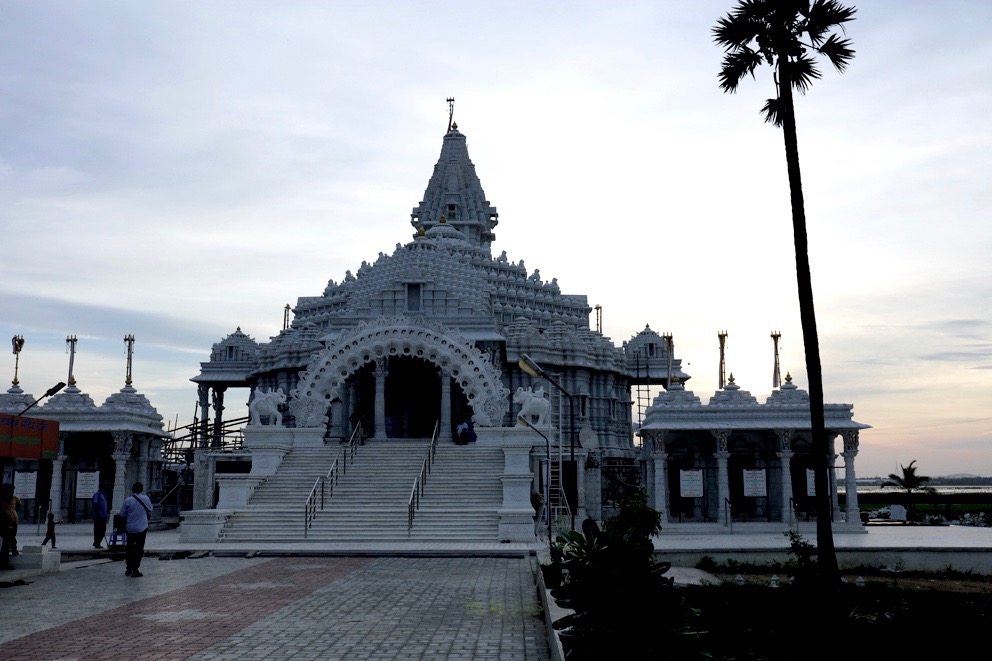
 

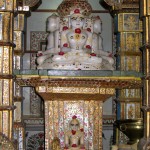
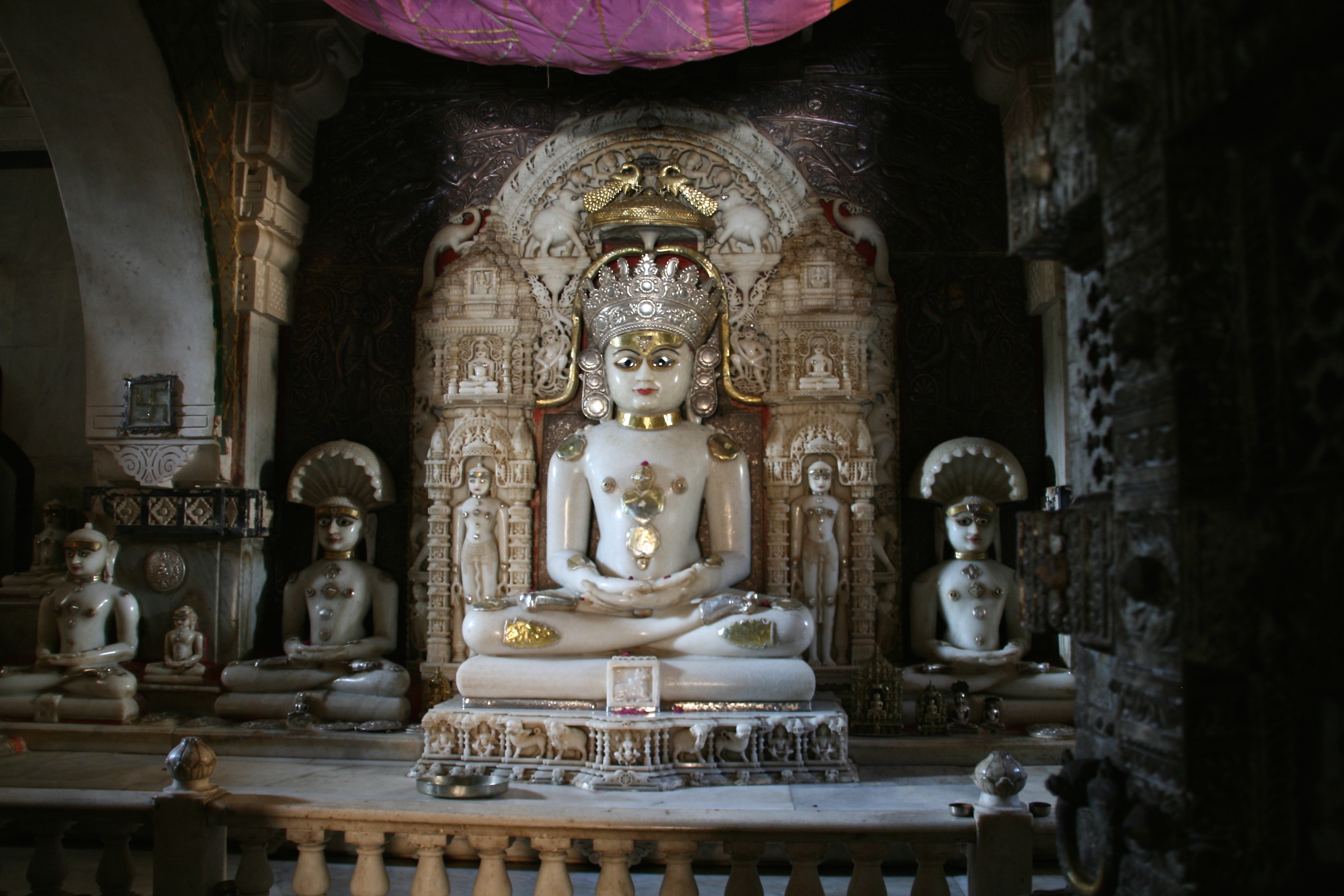
Jaïn Temple near Mahabalipuram, Tamil Nadu

Jaïn Temple near Mahabalipuram, Tamil Nadu

Janism

About 4 millions people are concerned in India. Janism was founded by Mahariva during the sith century before J.C. Mahariva is contemporary to Buddha, who himself also preached atheism, or the absence of a God. Mahariva is the last of the 24 « Tirthankara(s) » or « boatman ». Jainism is therefore a religion without a God.
The jains believe that only a truly pure soul can reach liberation.

To purify it, one has to let go of his Karma through fasting, meditation, and Yoga. The Jains try hard not to harm any sort of life. One can come accross an ascetic Jain with a tissue convering his mouth so that he does not swallow any insect or microscopic being, as well as sweeping before his feet to not step on any.

They belive that one can obtain the termination of rebirths by destroying the accumulated Karma of his previous lives.

Jains, who are ascetic and not harmful, have influenced Hinduism and Yoga a great deal. Hinduism and Yoga actually get the principle of ahimsa (non-violence) from the Jains.
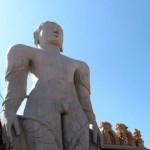
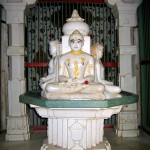
Jain_Mt Palitana Gujerat

Tirthankara Jaïn, Mt Palitana Gujerat

Mahârîva established five ways of getting rid of perpetual rebirths :

  • Do not destroy life
  • To tell the truth
  • To be single
  • To possess nothing
  • To not accept anything that is not given freely

The Jain community is strictly vegetarian, it does not wear leather or perfume, and a women does not enter a temple on her period.


Islamism

Coran


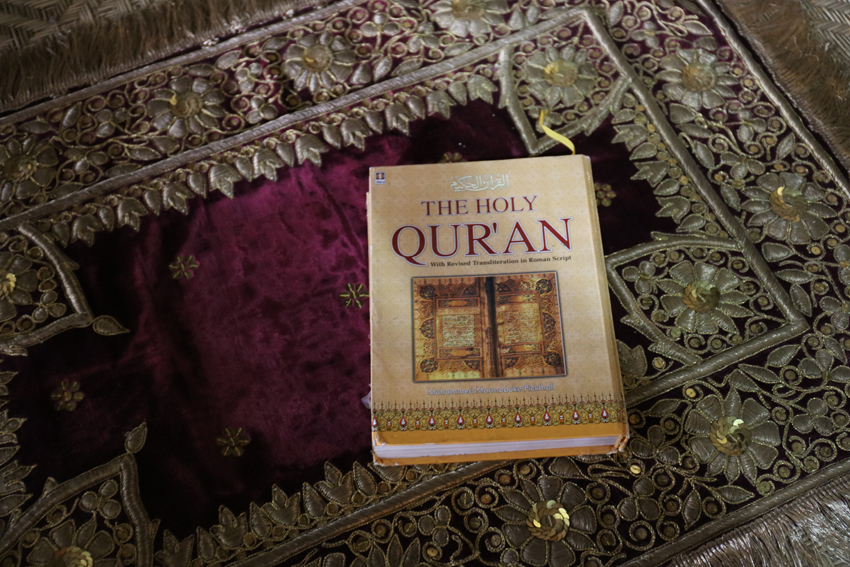
During the eith century, arab traders brought their faith along to India. Muslims are the largest minority in India. Almost 12% of the population is « Sunni ». The prophet Muhammad founded islam. He was born in Mecca in Saudi Arabia in 570 after J.C. Islam is a very strict monotheist religion : « Allah is God and Muhammad is his prophet ». The Coran is the sacred book for muslims. It advocates universal brotherhood and submission to Allah. Five « pillars » support the religious life of those who belive :

  • Declaration of faith
  • Praying five times a day
  • Ramadan fasting
  • Pilgrimage to Mecca once


Christianism

It is traditionally said thay christianism arrived with India along with Saint Thomas the apostle, one of the Christ’s apostles. He might have evangelized the Kerala and the Tamil Nadu. He may have died as a martyr in Madras and burried in St Thomas Cathedral. A second wave of christianism might have come along with the Syriac church. It reached India through Syrian traders who came to Kerala with their families to settle there. The third wave came during the fifteenth century, when the Portugueses arrived. The miraculously intact corps of Saint François Xavier can still be seen at Don Jesus Basilica in Goa.

There are about 19 millions of christians in India, most of whom live in the south (Tamil Nadu and Kerala)

Christianism and its teachings influenced numerous ascetics such as Ramakrishna, intellectuals, or Mahatma Gandhi.

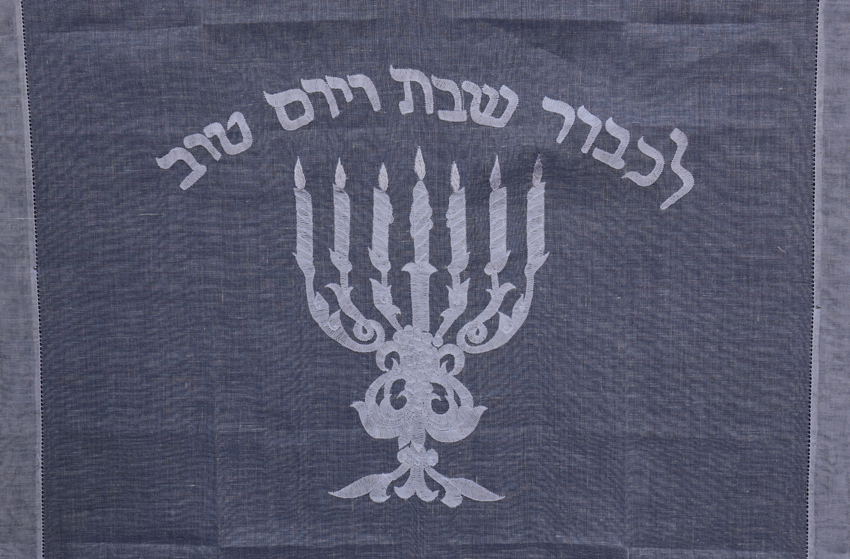
Blessings and praises in honor of the Sabbath

Blessings and praises in honor of the Sabbath

Judaism

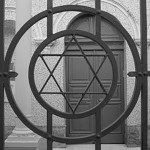
The jewish people arrived in Kochi during the wixth century before J.C. The jewish tradition align itself to Abraham, father of the believers and of Moses. He is Israel’s legislator. 

The holy book is the Torah.

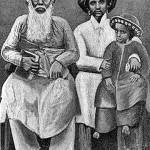
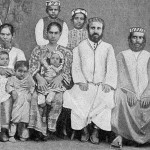
There are three disctinct communities, all of which are sephardic : one in Goa, the Bnei Israel in Maharashtra state, and the baghdadi, who arrived from Irak, Iran and Syria two centuries ago because of persecutions in their own countries. They follow the sephardic ritual but without a rabbi. Most of them are settled in Mumbai and Kolkotta.

The jewish community represents around 5000 members. This can be explained by the emigration of several jews to Israel, the United Kingdom, the United States, Canada and Australia.


The parsee

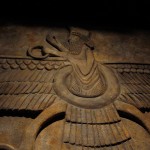
It is a monotheist religion. The believers are called parsee. Their God, Ahura Mazda, is invisible and omnipotent. Zoroastrism was founded by Zoroastre, who was a priest and lived in eastern Persia. They are the descendants of immigrants from Persia in the tenth century who ran from muslim persecutions.

Their holy book is the Zend-Avesta. It describes the conflict between good and evil and it was written by the prophet Zarathoustra.

Zoroastrism is based on each man and woman’s responsability to choose between good or evil. This religion rejects practices such as fasting and celibacy.

According to them, man, who is mortal, holds eternal elements such as the soul. Those who acted well on earth, through their acts and speech are supposed to have a pleasurable existence in the after life. To the contrary,

Nowadays, most of India’s Zoroastrians live in Mumbai and are called Parsis.

It is the most urban religious group as well as the wealthiest of the indian nation (industries, finances, high technologies etc.).

Parsis do not burry their dead ones, nor do they incinerate them. In Mumbai, there are the renowned « Towers of silence » that are open to the sky. The elements being sacred for Parsis, those can not burry their dead ones or they believe it would ruin the ground. They can neither incinerate, for it would ruin the fire. Therefore, they lay their dead ones on top of high towers so that crows and vultures and scavengers take care of the remains in less than an hour.

Website : http://w-z-o.org


 Bahaism

Mostly present in the United-Stats, in Europe, in India and the Middle-East, the baha’is were harshly persecuted in Iran. Bahaism is a religious syncretism in which ritual assemblies include readings of the Bible, the Gospels and the Coran.
Baha’ie’s faith claims itself to be a « wordly independant religion ». It was founded by the Persian Mirza Husayn-‘Ali Nuri, who was the Bab disciple (Sayyid ‘Ali Muhammad Sirazi)
Baha’is consider all of the Bab and Baha’u’llah’s writings as divinely revealed under the influence of the Holy Spirit.

« True religion and science are not contradictory. When a religion is opposed to science, it becomes mere superstition. What is contrary to knowledge is ignorance. How can a man believe in the reality of a fact that was demonstrated as false by science ? If, against all senses, he still believes it, it is rather because of a blinded superstition than because of faith. The true principles of all the religions are conform to the teachings of science. (…) religion and science are the two wings that allow men’s intelligence to raise towards hights, and allow the human soul to progress. It is not possible to fly with only one wing. Someone trying to fly with the wing of religion only would soon fall into the swamp of superstition. Whereas, with the only wing of science, he would do no progress and sink into the hopeless rut of materialism. »

Conversations of ‘Abdu’l-Baha in Paris,
paragraphs 55.2-4 (page 124) and 55.15-16 (page 126)
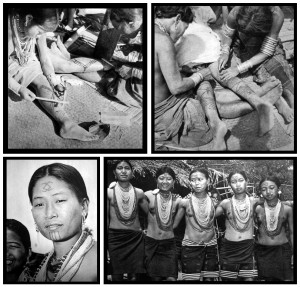
Nagas People

Nagas People

Tribal religious minorities
On that subject, read the book « AU PAYS DES FEMMES GIRAFES » by Vitold de Golish, expeditions 1955 and 1957 in Burma, assisted by Pierre de Arceluz.

Text and photographs by Vitold de Golish, Arthaud Editions (1958).

  • Kukis
  • Nagas
  • Bodos
  • Chakmas
  • Hajongs

Half of those primitive tribes that make up this region of India are either buddhists or animists. Others were partially converted to christianism recently.

Kukis

They are part of wild mongoloid tribes known in India. They are essentially spread in the North-East of India, Burma, and in Bangladesh. Traditionally animist, they were converted by different missionaries (Christians, Protestants, Baptists etc.)

Nagas

They are also spread in the Nort-East region of India. They are about two and a half millions. Nagas are divided in 30 tribes, between the states of Nagaland, Manipur, Assam, Arunachal Pradesh, Burma.

Social and religious structures could vary. Each clan lived in self-sufficiency and ha dits own cultural landmarks. Their cultures almost remained unaltered before the arrival of missionaries (essentially Baptists in the 20th century).

We do not know much about their life, except that they were hunter-gatherers, and that tribal wars were frequent. Nagas were head-beheaders until the 1960’s. This custom was banned in 1991.

Nowadays, 80% of Nagas are evangelised.

With the influence of missonaries, the practice of traditional tattoo weakened. Although it is declining, it still plays an important part in their customs. Young women of age to be married usually get their legs and forehead tattooed. The dyes come from a plant. Tattooers inject it under the skin with a needle attached to a stick. The geometrical drawings on the legs prevent the body from Hla’s bites. He is the legendary vampire who fed from women and snake’s blood.

Nagas villages were surrounded by defensive fences. Two particular buildings were found. The morung, which is the men’s and the women’s dormitory. Men from the village could not get into the women’s dormitory. Only men from another village could.

Official website of Nagaland : http://nagaland.nic.in

Bodos, or Boros

Bodos are the first authentified inhabitants of the Assam. They are part of the Indian Constitution. They speak Bodo, which has a burman and tibetan origin. According to the last census of 1991, they are 1,2 millions, which represents 5,3% of India.

At India’s independance in 1947, Bodos represented 49% of the population of the Assam. But successive migrations and colonizations from muslims of Bengalis origin, as well as other communities, relegated them to a minority.

The consequence of those migrations were the spoliation of their lands and a loss of their economical strengh, as well as their identity.

The traditional and favorite beverage of Bodos is rice beer (Zu Mai), which means :
Zu : beer, and Mai : rice.

Many families grow their own rice silkworms. Weaving is another important part of their culture. Girls are taught very early to weave. Most of women weave their own « Dokhnas » clothes and wraps. The Bodos are also wonderful craftsmen with products made of bamboo.

Their religion

In terms of religion, the practice is a mix between primary animist faith, hinduism and christianism.

Bathouism (the faith of Bodos) is not strictly animist, although strangers believed so. It is based on the belief that God is infinite and is forever called Obonglaoree. The legend says that the infinite God got tired of its shapeless existence and therefore took the shape of a human being called Jiw Borai, or old soul. It is a way of honouring its ancestors. The number « Five » is a symbolic and important one in the Bodo religion.

Efforts were made to identify the « Jiw Borai » God with the hindu God « Siva ». Several elements of hinduism were incorporated in the Bodos religion throughout times.

There are no rooted cultural place for Bodo. The altar is placed in whichever place that is convinient around the house, usually in the courtyard. For the most important Bodo festival, the Kherai Puja, the altar is placed in the paddy field for spring and fertility rituals.

Despite the progress of hinduism in Bodo culture, hindu practices such as castes and dowry are not practiced. They are non-vegetarians.

Readings on that subject :

Le Bodos : Enfants du Bhullumbutter, published by Thomas Pulloppillil and Jacob Aluckal, first published in 1997.

Website : http://udalguri.gov.in/bodo.htm

Chakmas

They live under the authority of a king. Their social system is original. They preserved the ancient sorting in gutthi(s) (first clans of Chakma), from the historical groupings around the village chief. With the growing of their people, the gutthi(s) gave birth to the Goja(s).

They call themselves Changma.

The chakma language, the Changma Kodha, belongs to a group called « bengali-assamais ». It is associated to the Indo-european language. Chakma has its own writing. But this one is on the verge of disappearance, because many Chakma(s) do not have the opportunity to learn their language at school.

The Chakma(s) people originated from the North-East of India (Arunachal Pradesh), and from Bangladesh, a region of hills overhanging the delta of Gange, which is shelter to a dozen of ethnies very different from the bengali majority, in terms of way of life, language, religion, culture and even physical traits.

Since over fifty years in Bangladesh, those peoples undergo agressions from those who want to chase them off their land (persecutions, massacres). Many of them had to leave Bangladesh to take refuge in India and in the rest of the world.

The Chakma(s) are buddhists.

« Ajha » (in chakma language means) « hope ».

The Hajongs

From a tibetan and burman origin, the Hajongs is a population that lives the meridional Piedmont of Megalaya (its name means the « Dwelling of the clouds » in sanskrit). Tribal population from an aboriginal origin were called « The men from the mountains » (Hill tribes) ». At the 1951 census, around thirty thousand of them were established in that time’s eastern Pakistan. Because of the missionaries, most of them are hindus and christians.

Official website of Megalaya : http://meghalaya.gov.in:8080/megportal/


Warning: Array to string conversion in /home/ashtangarc/www/wp-content/plugins/carousel-without-jetpack/carousel/jetpack-carousel.php on line 252

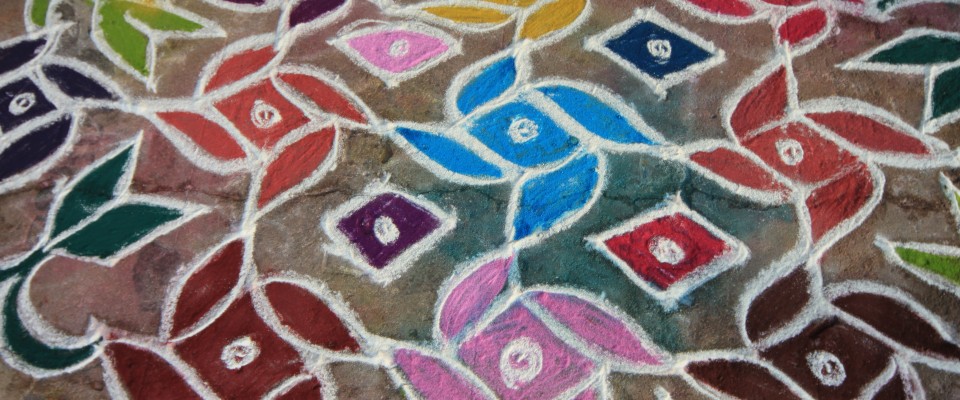
The meaning of Rangolis, an ephemeral art form.


Warning: Array to string conversion in /home/ashtangarc/www/wp-content/plugins/carousel-without-jetpack/carousel/jetpack-carousel.php on line 252

Warning: Array to string conversion in /home/ashtangarc/www/wp-content/plugins/carousel-without-jetpack/carousel/jetpack-carousel.php on line 252

Warning: Array to string conversion in /home/ashtangarc/www/wp-content/plugins/carousel-without-jetpack/carousel/jetpack-carousel.php on line 252

Warning: Array to string conversion in /home/ashtangarc/www/wp-content/plugins/carousel-without-jetpack/carousel/jetpack-carousel.php on line 252

Warning: Array to string conversion in /home/ashtangarc/www/wp-content/plugins/carousel-without-jetpack/carousel/jetpack-carousel.php on line 252

Warning: Array to string conversion in /home/ashtangarc/www/wp-content/plugins/carousel-without-jetpack/carousel/jetpack-carousel.php on line 252

Warning: Array to string conversion in /home/ashtangarc/www/wp-content/plugins/carousel-without-jetpack/carousel/jetpack-carousel.php on line 252

Warning: Array to string conversion in /home/ashtangarc/www/wp-content/plugins/carousel-without-jetpack/carousel/jetpack-carousel.php on line 252

Warning: Array to string conversion in /home/ashtangarc/www/wp-content/plugins/carousel-without-jetpack/carousel/jetpack-carousel.php on line 252

Warning: Array to string conversion in /home/ashtangarc/www/wp-content/plugins/carousel-without-jetpack/carousel/jetpack-carousel.php on line 252

Warning: Array to string conversion in /home/ashtangarc/www/wp-content/plugins/carousel-without-jetpack/carousel/jetpack-carousel.php on line 252

Warning: Array to string conversion in /home/ashtangarc/www/wp-content/plugins/carousel-without-jetpack/carousel/jetpack-carousel.php on line 252

Warning: Array to string conversion in /home/ashtangarc/www/wp-content/plugins/carousel-without-jetpack/carousel/jetpack-carousel.php on line 252

Warning: Array to string conversion in /home/ashtangarc/www/wp-content/plugins/carousel-without-jetpack/carousel/jetpack-carousel.php on line 252

Warning: Array to string conversion in /home/ashtangarc/www/wp-content/plugins/carousel-without-jetpack/carousel/jetpack-carousel.php on line 252

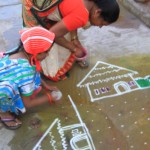
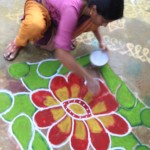
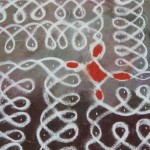
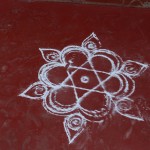
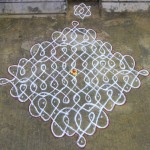
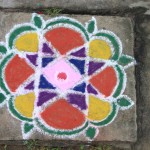
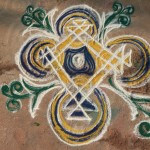
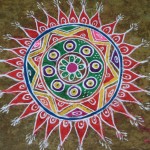
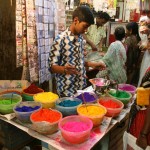
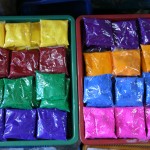
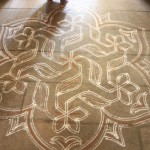
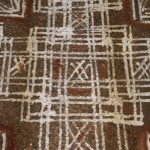
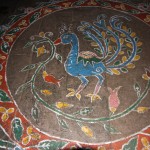
All over India, each morning  just after daybreak, it is traditional for the women to decorate the ground in front of their houses by making simple or complex patterns using white or colored rice powder.

In the evening, at dusk, those drawings are erased. Thus every morning, at dawn, a new drawing is made. According to tradition women are responsible for the maintenance and the decoration of the home. But they are also in charge of the representation of lucky signs, the sacred representation of the link between the microcosm and the macrocosm.

Truly ephemeral mandala(s), these images are created every morning, their only aim being to be erased at the end of the day, a memento of the immanence of all things: everything has an end and will finally return to Earth! The names given to these decorations vary from region to region. In Western India, for instance, they are called Rangoli (from the Sanskrit Ranga, meaning to dye, to color), in Southern India they are called Kolam and in Eastern India they are called Alpana (from Alpa : small, insignificant).

Defying the classical Hindu or Mongol art forms, the rangolis let us enjoy their simple or complex designs, always full of fantasy. The spontaneity of their creation let forms and colors emerge delighting us by their harmony. They are a permanent invitation to the passers-by, a freely offered gesture, a  spontaneous form of art that aims to share  a bright beamig of the heart.

You can also find « rangolis » in sacred places and in Hindu Temples, as  geometric symbols with the power of protection and support  for introspective meditation. In some « yoga » and « tantric » texts the representation of truth is mentioned as being  located  in « Bindu », the central point of energy.


Warning: Array to string conversion in /home/ashtangarc/www/wp-content/plugins/carousel-without-jetpack/carousel/jetpack-carousel.php on line 252

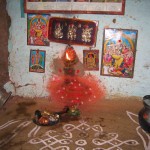
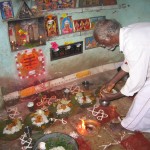
Pūjā – the ceremony of offerings to the divine


Warning: Array to string conversion in /home/ashtangarc/www/wp-content/plugins/carousel-without-jetpack/carousel/jetpack-carousel.php on line 252

Warning: Array to string conversion in /home/ashtangarc/www/wp-content/plugins/carousel-without-jetpack/carousel/jetpack-carousel.php on line 252

Warning: Array to string conversion in /home/ashtangarc/www/wp-content/plugins/carousel-without-jetpack/carousel/jetpack-carousel.php on line 252

Warning: Array to string conversion in /home/ashtangarc/www/wp-content/plugins/carousel-without-jetpack/carousel/jetpack-carousel.php on line 252

Warning: Array to string conversion in /home/ashtangarc/www/wp-content/plugins/carousel-without-jetpack/carousel/jetpack-carousel.php on line 252

Warning: Array to string conversion in /home/ashtangarc/www/wp-content/plugins/carousel-without-jetpack/carousel/jetpack-carousel.php on line 252

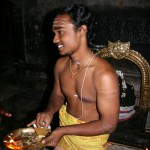
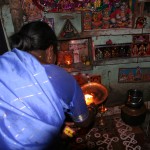
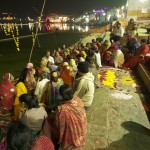
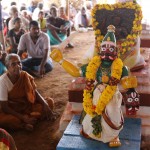
The Pūjā is a festive ritual supposed to cause the descent (archāvatara) of a deity into an image representing the deity or into a symbol such as the lingam.

The course of the ceremony of the invocation of pūjari (the person officiating), 

The prayer begins with the ringing of a bell, calling the deity. It continues with offerings of fresh flowers, of food, incense, accompanied by music and the recital of mantra(s). If it takes the form of a statue or a lingam, it is anointed (coated) with oil, camphor, and sandalwood paste and covered with garlands.


The liṅgam or liṅga is washed with milk and sacred water such as that from the Ganges. The liquid poured on  spreads into the yoni (sacred place). It is, then anointed with ghī (घी), with sandalwood paste and decorated with flowers. The high point of the ritual is the moment where divinity is revealed to all. The Brahmins celebrate the Pūjā in temples. In private homes, it is the Head of the household who assures its celebration.

The Pūjā plays an essential role In Hindu society, it is a central and daily act of Hinduism.  Depending on the requested Pūjā, there is an official price to settle with the person officiating. The “Pūjā” occupies an important place among the daily rituals not only of the Hindu world but also that of the Jains, Buddhists, and even Christians in India..

Places of invocation

Are normally indoors in the Pūjā room, when there is one, or, when the House is too small, outside near the front door.

When the Pūjā is performed in a temple, there are two possibilities, either you yourself perform it or you ask the help of a Brahmin priest called pūjari (the officiating person) to present the offerings to God

A ritual in Indian life

In the Hindu tradition, temples and homes all have their altars before which the priest, the family, the friends’ family come to their “Pūjā” in honour of the Gods and divinities.  The Pūjā is a rite of worship of Aryan origin, which has replaced the Yajna (यज्ञ), the Vedic sacrifice.

The altar before which the ceremony takes place includes one or more statues, one or more images that represent the God or goddess of the place.  If, as is the case most often, the Pūjā ceremonies are performed in the family home or temple, they can also be performed in the street, at a crossroads, or at the foot of a sage called “guru” वसंत.

If in the multitude
we unrelentingly pursue the One,
it is to return with the blessing
and the revelation of the One
confirming itself over and over again.
Śrī Aurobindo

Om Shanti, Shanti, Shanti …


Warning: Array to string conversion in /home/ashtangarc/www/wp-content/plugins/carousel-without-jetpack/carousel/jetpack-carousel.php on line 252

Sanskrit, its meanings, the writing of the Gods


Warning: Array to string conversion in /home/ashtangarc/www/wp-content/plugins/carousel-without-jetpack/carousel/jetpack-carousel.php on line 252

Warning: Array to string conversion in /home/ashtangarc/www/wp-content/plugins/carousel-without-jetpack/carousel/jetpack-carousel.php on line 252

Warning: Array to string conversion in /home/ashtangarc/www/wp-content/plugins/carousel-without-jetpack/carousel/jetpack-carousel.php on line 252

Warning: Array to string conversion in /home/ashtangarc/www/wp-content/plugins/carousel-without-jetpack/carousel/jetpack-carousel.php on line 252

Warning: Array to string conversion in /home/ashtangarc/www/wp-content/plugins/carousel-without-jetpack/carousel/jetpack-carousel.php on line 252

Warning: Array to string conversion in /home/ashtangarc/www/wp-content/plugins/carousel-without-jetpack/carousel/jetpack-carousel.php on line 252

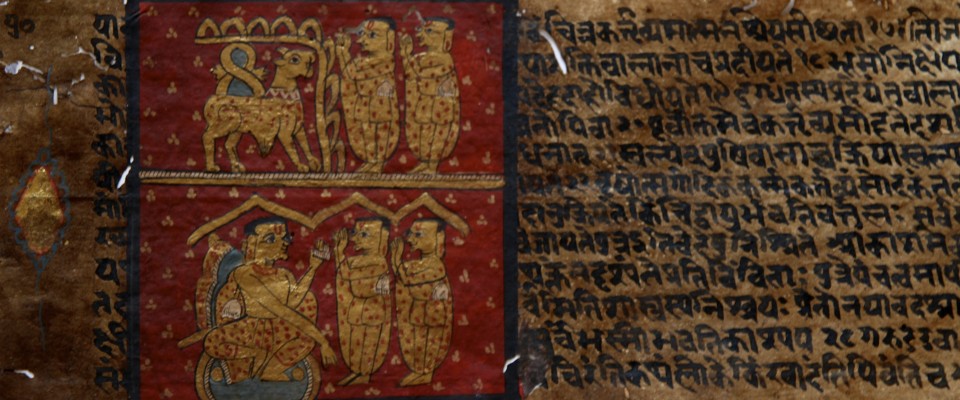
Getting to know Sanskrit “devanagari” (the script of the Gods), is fundamental for those wishing to study Indian culture and the disciplines belonging to it like Yoga teaching.

For example: Yoga and the Āyurveda use terms in “sanskrit”.

Yoga postures, placing and body positions are all written in sanskrit generally. Prefixes are used for several postures to explain a variation, a direction, a sense.

  • Ardha, means “half”, “lateral”
  • Adho means “downwards”
  • Baddha, means “linked”
  • Madhu, means “down”
  • Parivrtta, means “returned” or “tensed”
  • Supta, means “turned over”
  • Urdhva, means ‘upwards’
  • Utthita, means “stretched”
  • etc.

Knowing the way to pronounce and the meaning of the word helps you to understand the symbolism, and spiritual and philosophical concepts.

Sanskrit is not only a sacred language, it is also a vibrant force.

“Sanskrit is therefore truly the transcendent power, and as such, it is ‘the technical instrument of the rite of fulfilment of the presence and action of God ‘.
P.S. Filliozat 

Pierre-Sylvain Filliozat

Pierre-Sylvain Filliozat

Knowing Sanskrit helps you develop your philosophical and postural practices.

The relationship to the original language enables us to place ourselves in the present time and create links for the future. In the face of the chaotic development of contemporary yoga, it is good to identify safe paths in the jungle of words and images and to make yogic science global in a correct manner. The use of Sanskrit remains the key to that transformation. It is the agenda. This is not an inflexible return to tradition. Rather a firm basis from which to serve wisdom and perpetuate profundity… »

Micheline Flak

Further reading:

  • Le Sanskrit, souffle et lumière : voyage au cœur de la langue sacrée de l’Inde, par Colette POGGI, aux éditions ALMORA
  • Le sanskrit, par P.-S. Filliozat, (Que sais-je ?, 1416), Paris, aux éditions PUF, 1992.
Colette Poggi

Colette Poggi


Warning: Array to string conversion in /home/ashtangarc/www/wp-content/plugins/carousel-without-jetpack/carousel/jetpack-carousel.php on line 252

The music of India


Warning: Array to string conversion in /home/ashtangarc/www/wp-content/plugins/carousel-without-jetpack/carousel/jetpack-carousel.php on line 252

Warning: Array to string conversion in /home/ashtangarc/www/wp-content/plugins/carousel-without-jetpack/carousel/jetpack-carousel.php on line 252

Warning: Array to string conversion in /home/ashtangarc/www/wp-content/plugins/carousel-without-jetpack/carousel/jetpack-carousel.php on line 252

Warning: Array to string conversion in /home/ashtangarc/www/wp-content/plugins/carousel-without-jetpack/carousel/jetpack-carousel.php on line 252

Warning: Array to string conversion in /home/ashtangarc/www/wp-content/plugins/carousel-without-jetpack/carousel/jetpack-carousel.php on line 252

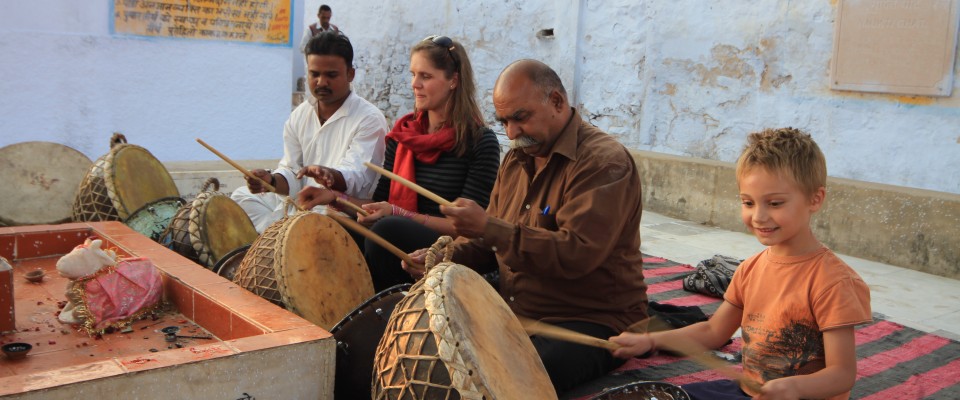
In India everything has a divine origin. Music comes from the Gods. Brahma, the creator, has also created the universe, the world, with the primeval sound, the song ‘Ôm’.

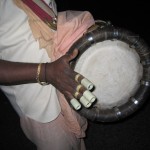
Brahma, the creator, is a singer; all the Gods of Indian mythology are musicians. Shiva, plays the Damaru, symbolizing the sound pulse, source of all creation, but also rhythm (Damaru, double small hourglass drums). Ganesh plays the mridang (elongated barrel shaped drum providing two-sided percussion – a temple instrument – sanskrit: mrid ‘land’ and ‘body’ ang). Hamunan played little cymbals on handles and also the mridang. Sarasvati plays the vina, and Krishna plays the bansuri (great flute), etc.

There is even a celestial orchestra, consisting of musicians: the ghandarvas.

Indian music is very diverse but can be divided into two broad types, one designed for expression to the divine in the temples, the other for the pleasure of the King and Princes and for popular entertainment.

With time and geopolitical changes (invasions) classical music has divided into two kinds, the so-called Southern “carnatic” music is integrated with dance, while the so-called Northern ‘Hindustani’ music brings together Muslim and Mughal influences.

Carnatic musical instruments include the Vina (stringed instrument, called Saraswati vina or Viña carnatic) and mridangam (long two-ended drum), accompanied by the “tambura” (called tanpura in the North), which produces a harmonic drone throughout (now replaced by an electrical appliance, alas !).


For the Northern music, you find the sitar or sarod, accompanied by the tabla and the Dhaga (famous percussion instrument – tabla has a male sound, the Dhaga has a feminine sound). Here too, all is accompanied by the ‘tanpura’ (with its harmonic drone throughout.

Indian classical music is based on rhythmic mathematical principles. It is on these rhythmic structures that the musician will be able to improvise as he wills. Classical music has no partition (but there are very strict rules, you do not play just any which way). The raga defines the melodic framework for the played piece. Each raga is associated with a feeling, a season, a time of day (dawn, dusk, etc.).

Popular music 

In the modern era, the most common popular music comes from Bollywood-type movies, tirelessly broadcast on TV and radio channels and even on mobile phones.  It is a romantic, eclectic music that incorporates, in addition to Indian orchestrations, Western influences, Greek, African, jazz, South American etc. Indian pop has enjoyed growing success in recent years. It represents more than 30% of the television channel MTV-India.

Folk music 

There are in India as many folk music types as there are languages… and musical instruments, often made by the musician himself.

There is also 

Bhajan

Bhajan (sometimes called kirtan) means any type of devotional singing, most often in the form of a sung prayer in honour of a deity.

The qawwalî.

The gawwali are of Sufi origin, from the North of India in the 14th century. These are songs, of two groups: hamd or manqabat devotional songs dedicated to Allah.

The ghazal

The ghazal are the songs of love dedicated to women in the Muslim tradition, from Persia, sometimes with mystical resonance. They have only one verse and are sometimes sung in syncopated rhythm. They are found throughout the Muslim world. In India, they have been translated into Urdu.

The Bâuls, the madmen of God…

The Bâuls (fools in Bengali) refer to groups of nomadic musicians who roam Bengal and the North of India, singing religious songs and begging for their livelihood. They follow a similar philosophy to that of the poet and philosopher Kabîr. The Bâuls have influenced the poetry of Rabindranath Tagore. It was not so long ago that there was no TV or radio, and the only means of cultural dissemination was through itinerant musicians and players such as the Bâuls. For millennia, they have been the means of transmitting knowledge to all layers of society.

To deepen your knowledge:

  • Alain Daniélou, La Musique de l’Inde du nord, Paris: Éditions Buchet-Chastel, 1985.
  • Alain Daniélou, Origines et pouvoirs de la musique, Ed. Éditions Kailash, 2003 (ISBN 2842680901)
  • Alain Daniélou, Musiques et danse de l’Inde, Ed. Michel de Maule, 2007 (ISBN 2876232200)

Web sites:

Hinustani Raga Sangeet Online : http://www.moutal.eu/index.php EN/FR bilingual site, with rare audio & video archives since 1902; radio broadcasts on the ragas.

Bollywood music:


Warning: Array to string conversion in /home/ashtangarc/www/wp-content/plugins/carousel-without-jetpack/carousel/jetpack-carousel.php on line 252

The popular or folkloric ethnic dances of India


Warning: Array to string conversion in /home/ashtangarc/www/wp-content/plugins/carousel-without-jetpack/carousel/jetpack-carousel.php on line 252

Warning: Array to string conversion in /home/ashtangarc/www/wp-content/plugins/carousel-without-jetpack/carousel/jetpack-carousel.php on line 252

Warning: Array to string conversion in /home/ashtangarc/www/wp-content/plugins/carousel-without-jetpack/carousel/jetpack-carousel.php on line 252

Warning: Array to string conversion in /home/ashtangarc/www/wp-content/plugins/carousel-without-jetpack/carousel/jetpack-carousel.php on line 252

Warning: Array to string conversion in /home/ashtangarc/www/wp-content/plugins/carousel-without-jetpack/carousel/jetpack-carousel.php on line 252

Warning: Array to string conversion in /home/ashtangarc/www/wp-content/plugins/carousel-without-jetpack/carousel/jetpack-carousel.php on line 252

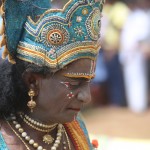
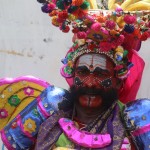
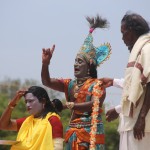
We all know the many and wonderful classic sacred Indian dances related to Shiva, under his form of Naṭarāja Shiva, the king of dance.

As colourful as they are lively, a great number of popular dances from villages, as well as sacred dances, are also found throughout India up to the borders of Himalaya. According to specialists, there are as many different folk dances as there are languages in India – which means a lot.

I admired and sometimes took part to a few ones.

In Ladakh, the Tse Shu or Nagrang dance is a ritual through which oracles make predictions. Similarly, the Kabgyat Gustor Gangon Tsedup and the masked dances (Chams) can be admired in September in Leh.

In Sikkim, the « chaam » is a religious “lamaïst” dance practiced in the Gompas temples. The most famous is the « Tse Chi », which happens in July and expresses the life of Guru Rinpoche. Another chaam happens in the beginning of February, two days before the Tibetan New Year, and symbolises the fight between good and evil.

In Penjab, the Bhangra, was originally a folkloric dance meant to celebrate the harvesting of the crops. It disappeared with the partition of the country in 1947. A new folkloric dance, the Bhangra, was then created in the years 1950. Very energetic, it is specifically practiced by men. Other dances from Penjab are Luddi, Jhummar, Dhamaal, and Gham Luddi.

In Rajasthan, there are many traditional dances such as the Kalbeliya dance, or « dance of the snake », and the « Chari dance » which involves pots full of fire. The pots that the dancers carry on their heads derive from of a ritual traditionally executed during marriages where they were used to spread light on the face of the bride.

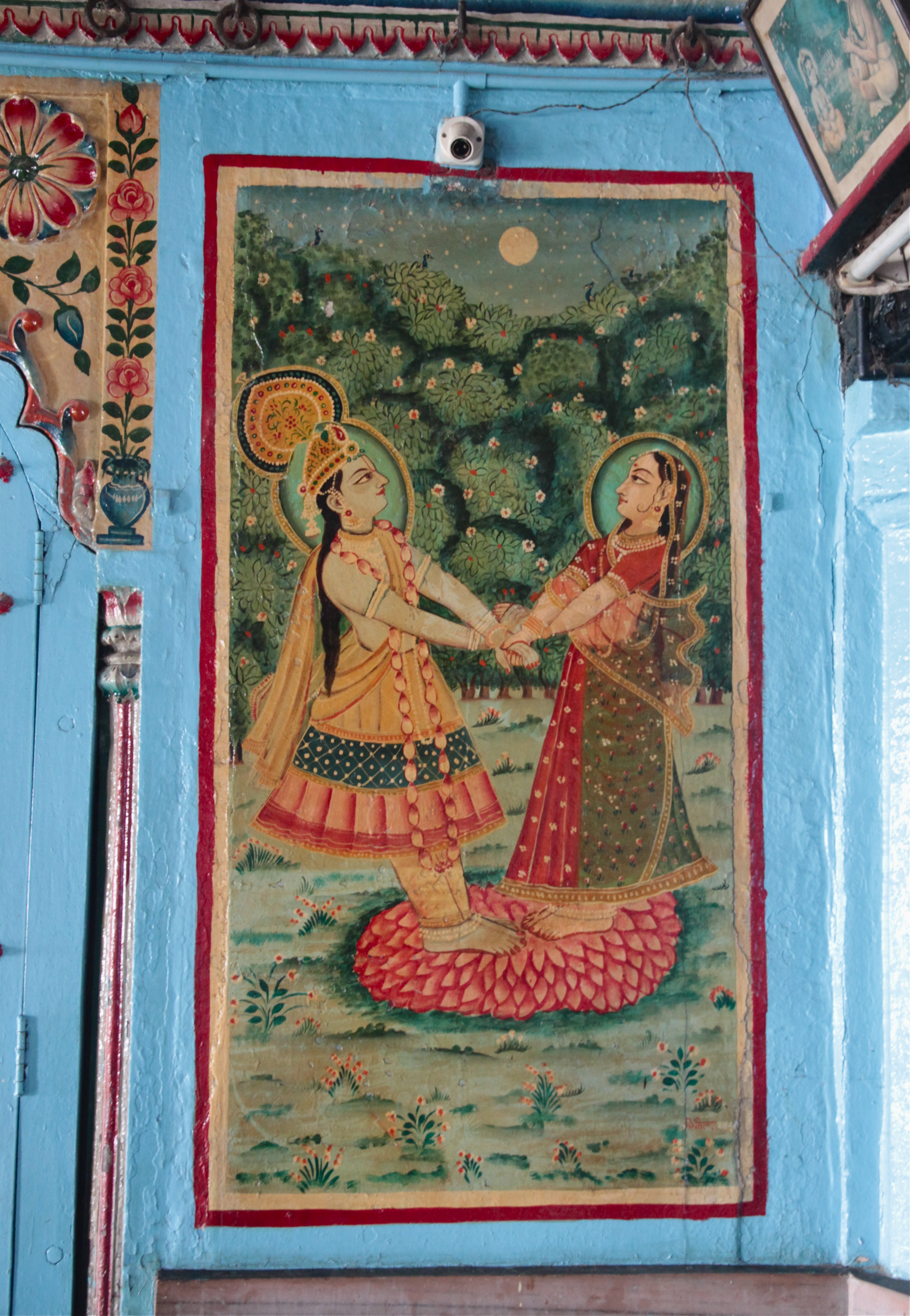
Radha & Krishna dancing painting

Radha & Krishna dancing painting

In Gujarat, « Ghumna », which means « to turn », is a dance practiced by women using sticks. The « Teratali » dance, only interpreted by women, consists in a prayer addressed to the god Babaramdev (one the names of Krishna). Dancers carry small cymbals between each of their fingers and toes. « Terah » meaning thirteen, the dancer (who is seated) attaches thirteen cymbals on different parts of her body.

Danseur flok

In Tamil Nadu, the Kalhaï kûtthu is more of an acrobatic show than a dance, offered by traveling artists groups who turn somersaults on poles or stilts. In the Kolâttam dance, a very old local practice, dancers choke sticks against each other following various rhythmic patterns. Finally, the Bagavatha nadanam is a religious dance, executed around a ritual oil lamp in the Madapam of temples, and practiced in honour of Krishna.

Mahābalipuram, during your stay to practice Ashtanga Yoga in winters, late December and during the month of January of each year you will have the opportunity to see in the first part of the show’s « Dance Festival », some one of these folk and colorful expressions.

See : The Classical dancing


Warning: Array to string conversion in /home/ashtangarc/www/wp-content/plugins/carousel-without-jetpack/carousel/jetpack-carousel.php on line 252

Astrology Indian (Jyotish), assistance in decision making…


Warning: Array to string conversion in /home/ashtangarc/www/wp-content/plugins/carousel-without-jetpack/carousel/jetpack-carousel.php on line 252

Warning: Array to string conversion in /home/ashtangarc/www/wp-content/plugins/carousel-without-jetpack/carousel/jetpack-carousel.php on line 252

Warning: Array to string conversion in /home/ashtangarc/www/wp-content/plugins/carousel-without-jetpack/carousel/jetpack-carousel.php on line 252

Warning: Array to string conversion in /home/ashtangarc/www/wp-content/plugins/carousel-without-jetpack/carousel/jetpack-carousel.php on line 252

Warning: Array to string conversion in /home/ashtangarc/www/wp-content/plugins/carousel-without-jetpack/carousel/jetpack-carousel.php on line 252

Warning: Array to string conversion in /home/ashtangarc/www/wp-content/plugins/carousel-without-jetpack/carousel/jetpack-carousel.php on line 252

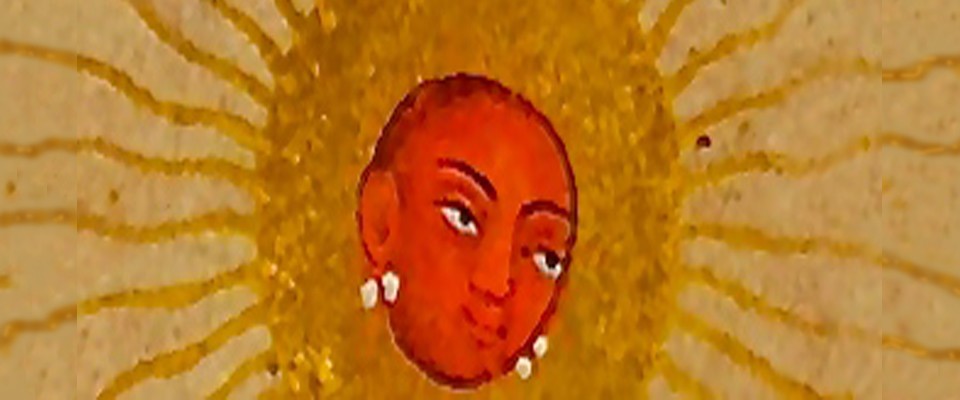
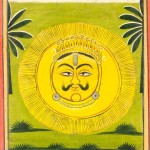
Indian Astrology is part of the auxiliary sciences of Hinduism, so connected to the Veda.

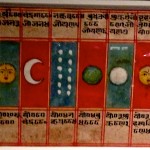
In India, no important decision is taken without consulting an astrologer. Indian Astrology (Jyotish), the oldest, is based on 27 moon constellations (nakṣatra) and passages of the Moon close to them in the union or not with the position of the Sun.

According to jyotish astrology, we are at any time connected with the universe.

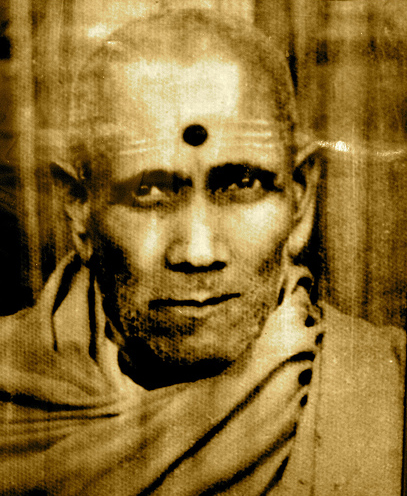
The Maharaja of Mysore had at his service his own Devin/Astrologer, Krishna Pattabhi Jois (the father of Guruji – Sri K. Pattabhi Jois).

Sri Krishna Pattabhi Jois fater of Guruji

Sri Krishna Pattabhi Jois fater of Guruji

What is that Indian Astrology?

Everyone knows his “sign” in Western Astrology: Cancer, Lion, Sagittarius or otherwise. It is in fact the seasonal sign occupied by the Sun on the day of the birth.

The Sun lies a month in each sign, since it passes over all twelve in the year. The changes occur around the 21st of each month. So, a date of birth tells us directly to which ‘sign’ the person belongs.

Things are not as simple in Indian Astrology, firstly because this discipline gives primacy to the Moon and not to the Sun and then because it uses a Zodiac said to be “sidereal”: the signs of the Zodiac are superimposed on the constellations, without the inexorable shift due to the precession of the equinoxes. Knowing one’s sign in Indian Astrology would more or less imply knowing the constellation crossed by the Moon at the moment of birth. This Lunar position cannot be simply inferred from the date of birth, it requires other skills and other means.

What is a natal chart?

It is the representation of space, visible from a specific point of the globe, at a specific time. In this place, at this moment, someone came into the world. The schema of his sky of birth is called the theme.  As in a snapshot, the natal chart captures this inextricable energy node that corresponds to the new-born being. Because a being is an energy node…

He can only stay, continue to be what he is, as long as these energies in their clash remain in balance. No balance is perfectly stable, so the being will never cease to transform.

The great currents that are at work will keep for a time (time of an existence) their strength, their meaning, and their character. The intensity and quality of these energies come from all over the universe, they define at the birth of an individual his nature, shape and  “degree in being” or, if preferred, his level of consciousness.

To go further  

You can receive a free Indian astrological study: http://www.yourplanets.com/
I deeply thank Mr Jean Dethier, for his introduction to Indian Astrology. He had the pleasure of studying in India with the Professor, K. Neelakantan, recently deceased, who also exercised Astrology with the Maharajah of Mysore, circa 1928.