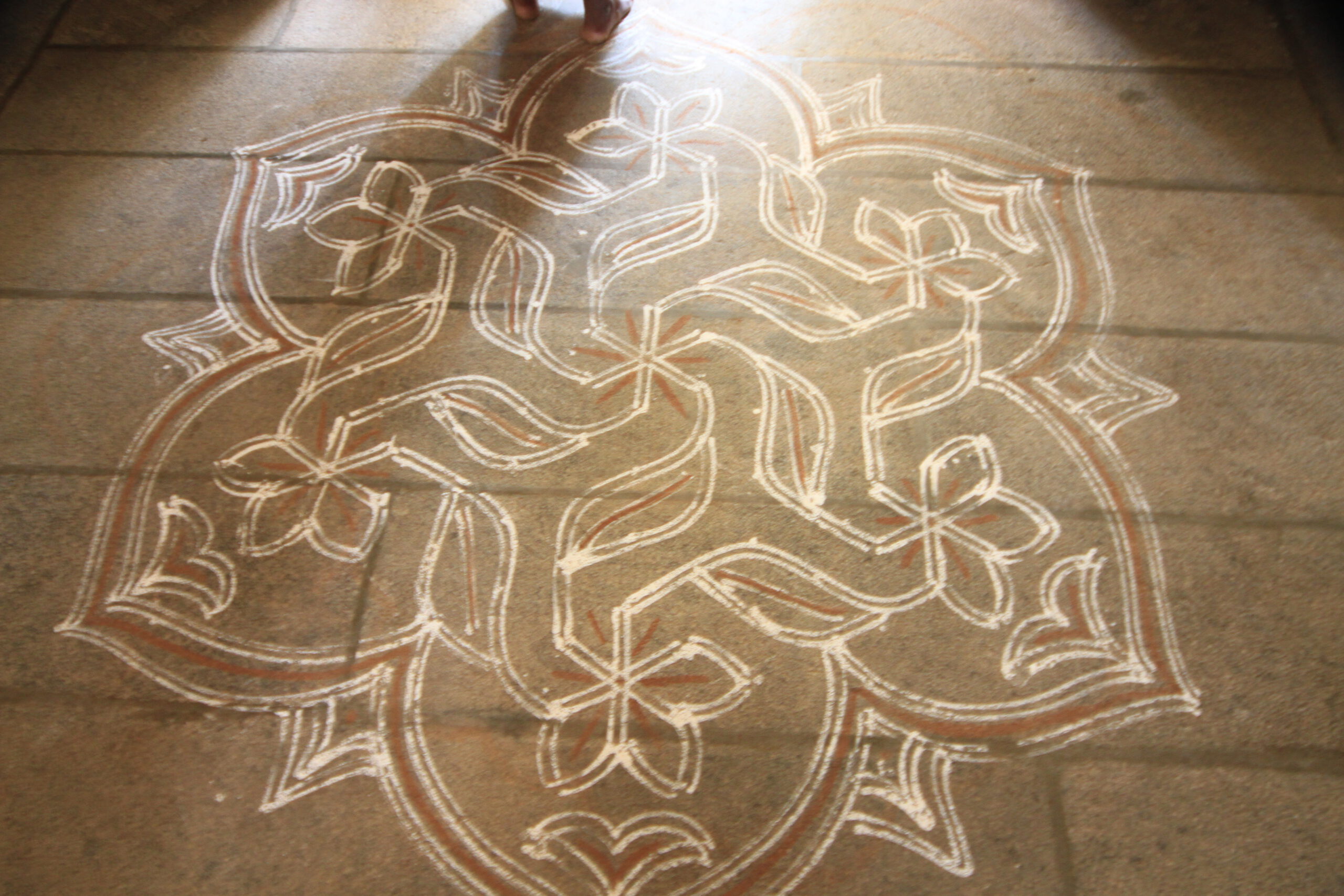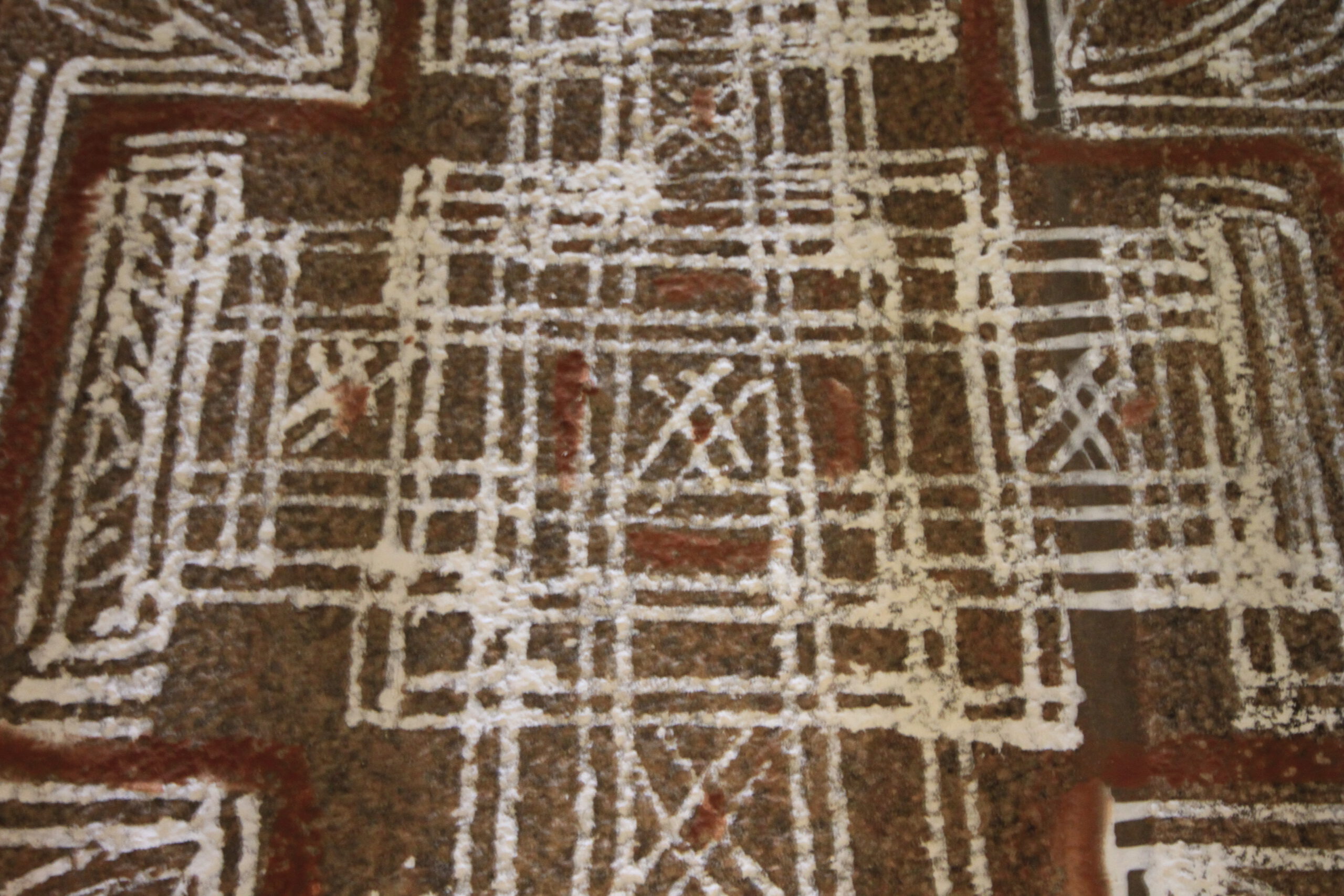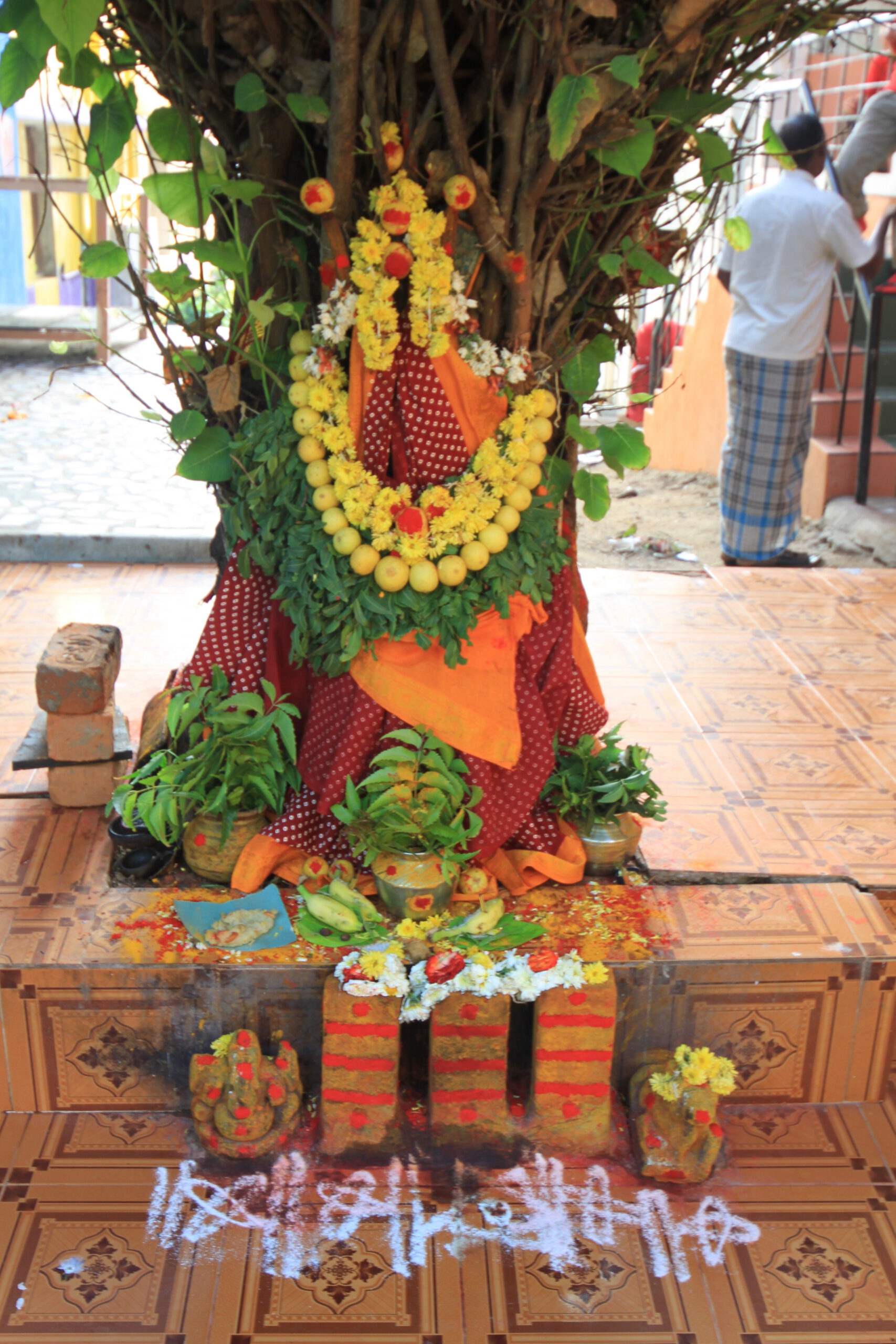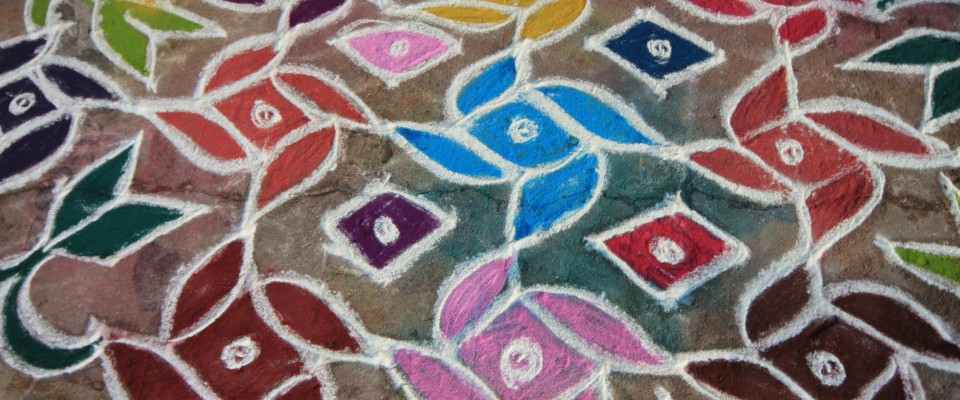
Every morning, soon after daybreak, women all over India trace designs of rice powder — white or coloured — on the threshold of their homes. By evening the image is erased, and a new pattern is reborn at dawn. Behind this daily gesture lies a whole art — decorative, sacred and deeply symbolic.
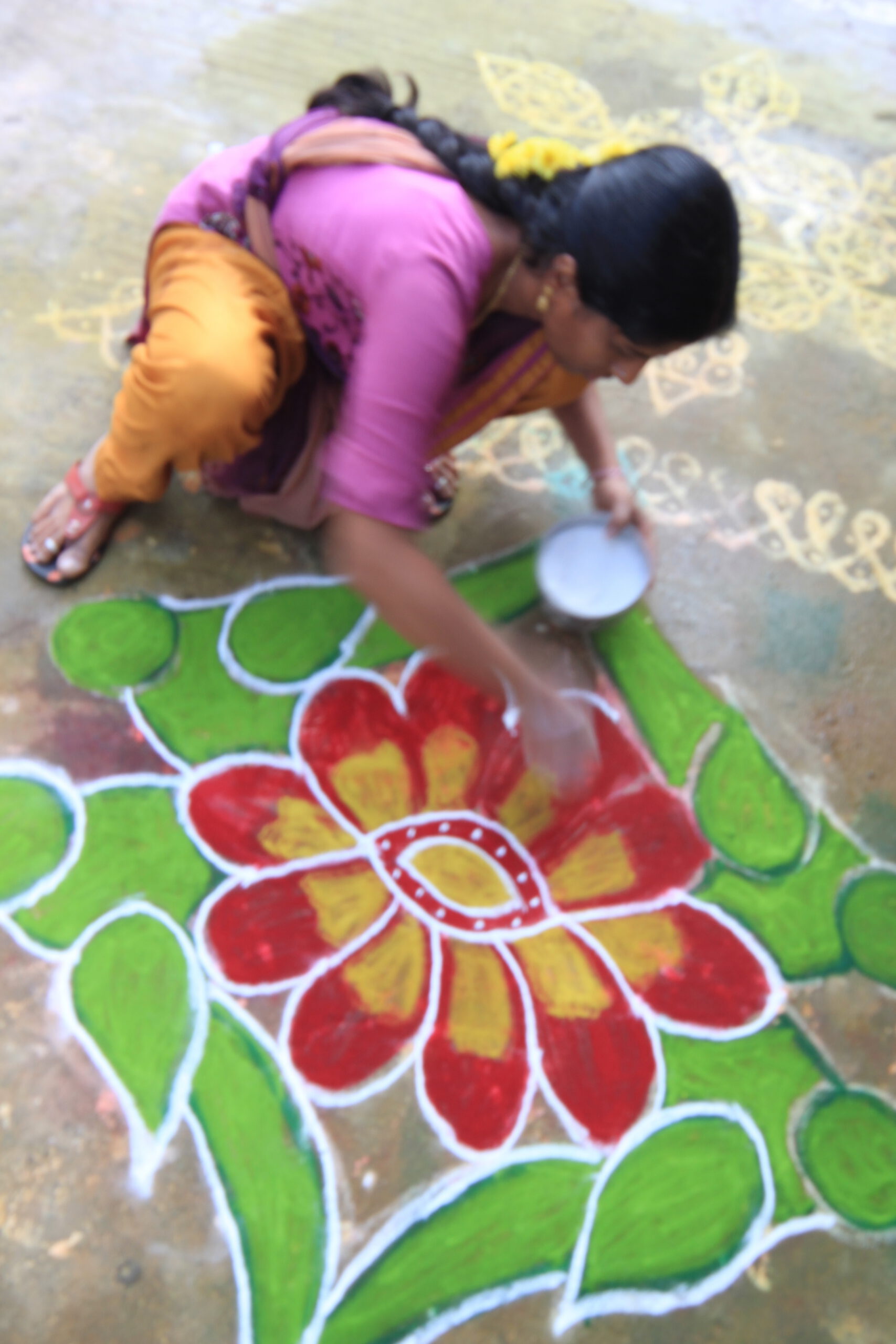
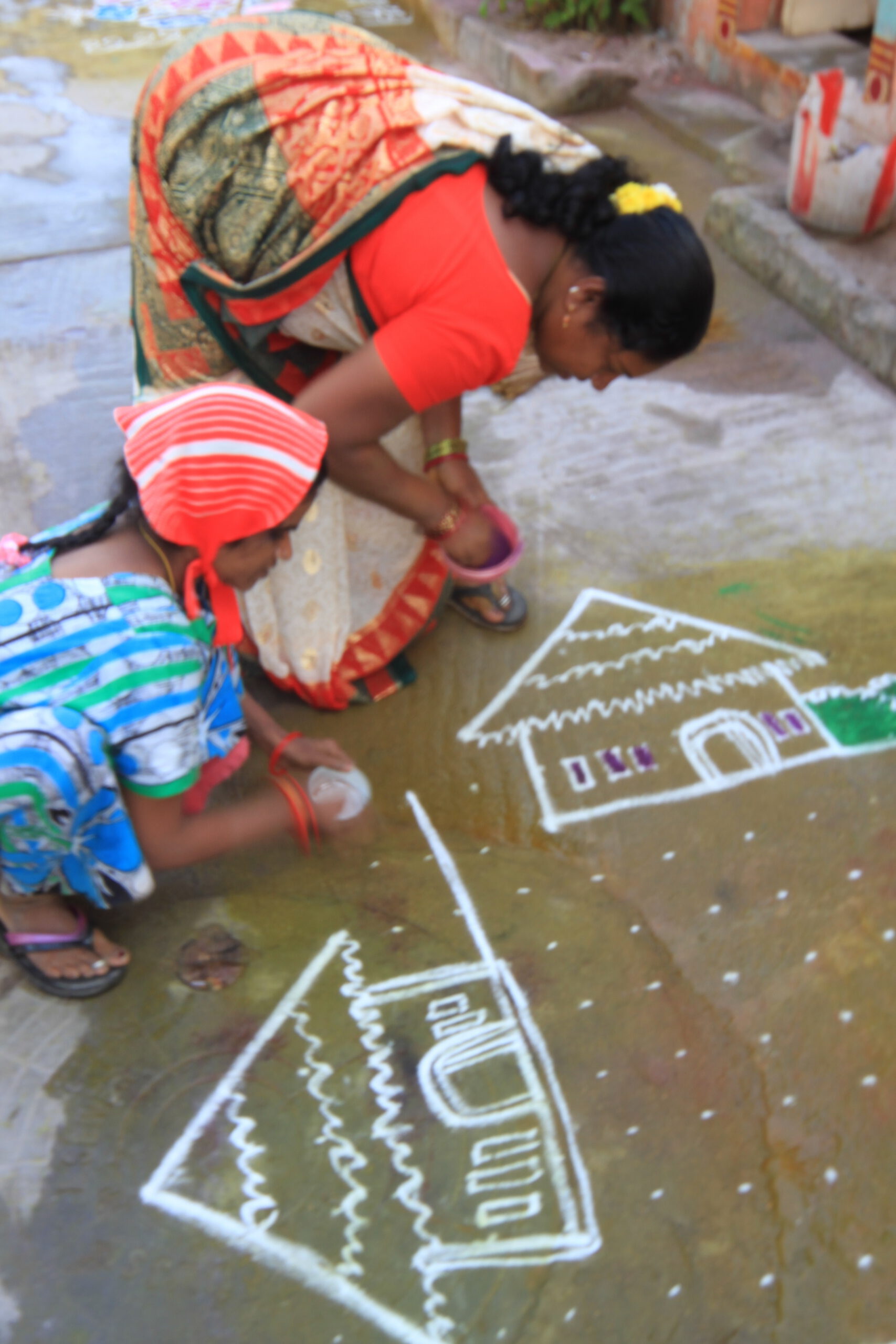
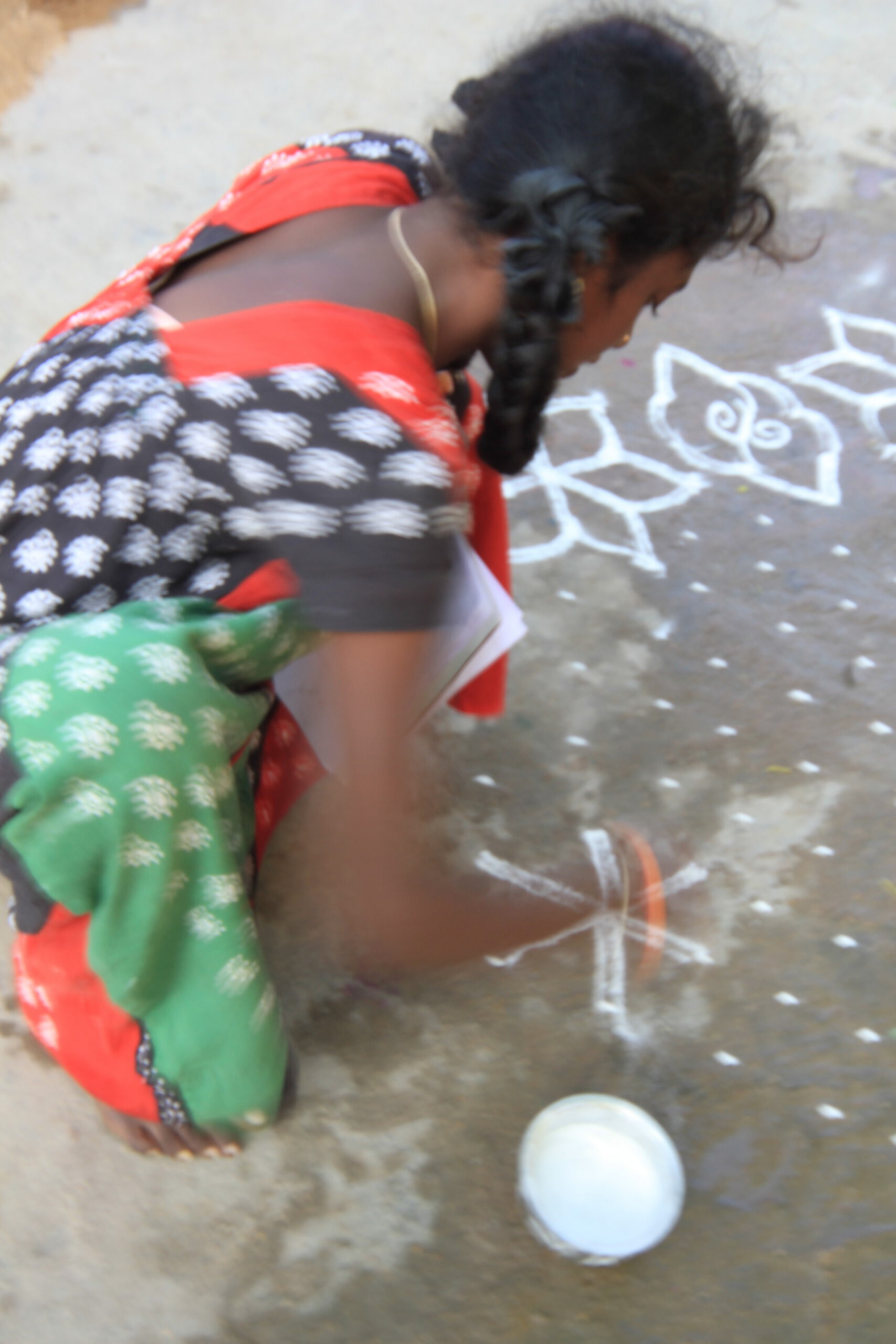
A daily ritual, at dawn
The rangoli follows the rhythm of the day: it is created at dawn, on the cleaned and sometimes dampened ground, and fades naturally with the passing feet and the dusk. Traditionally responsible for the upkeep and beauty of the home, women are also the keepers of these auspicious signs (maṅgala). The design is a welcome: it honours the household, greets the visitor, and invites the goddess Lakṣmī — prosperity — to cross the threshold. An adorned threshold is said to keep misfortune and bad energies away.
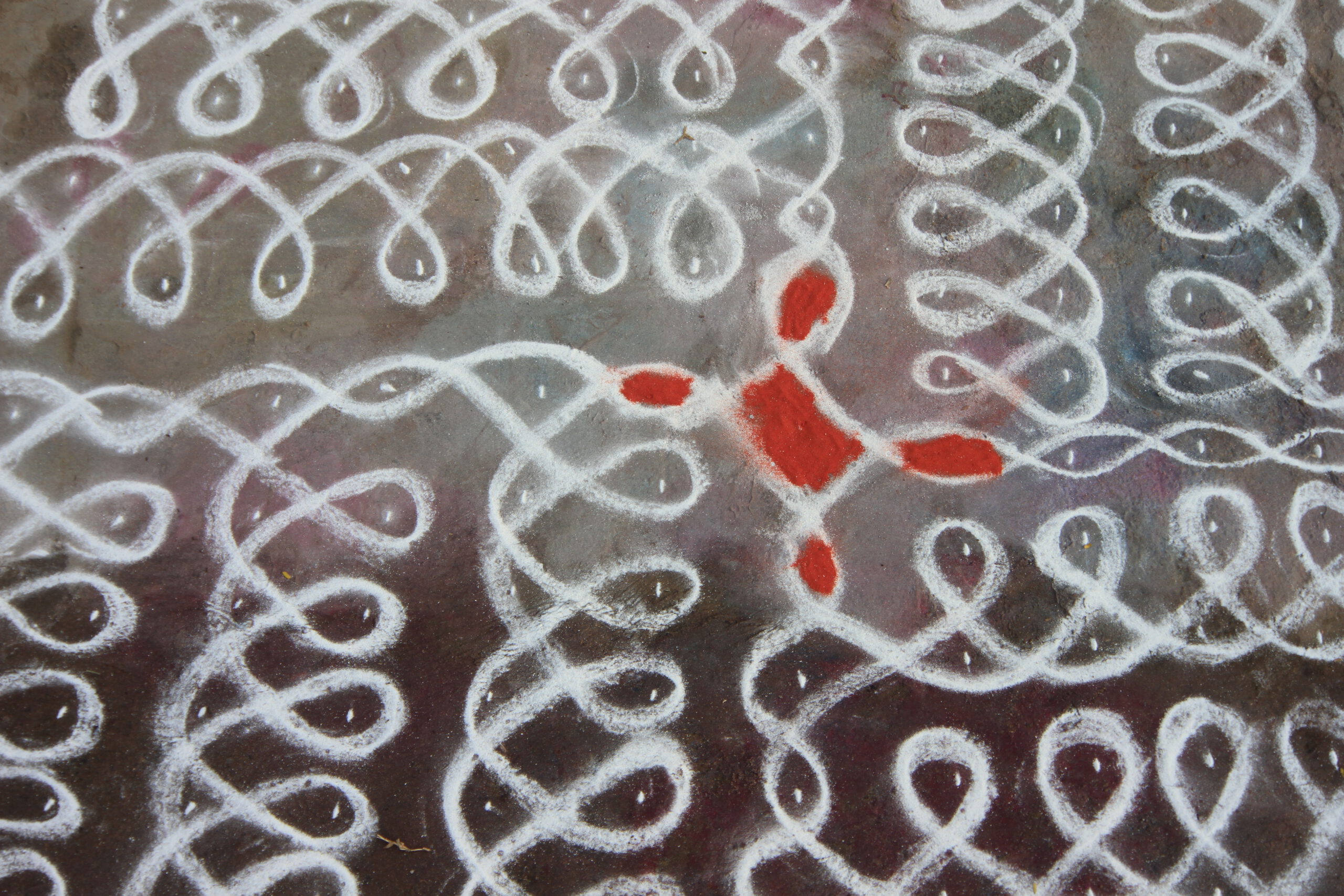
Names and styles by region
One art, a thousand faces. The names and motifs change from region to region:
- Rangoli — West and Maharashtra (from the Sanskrit raṅga, “colour”).
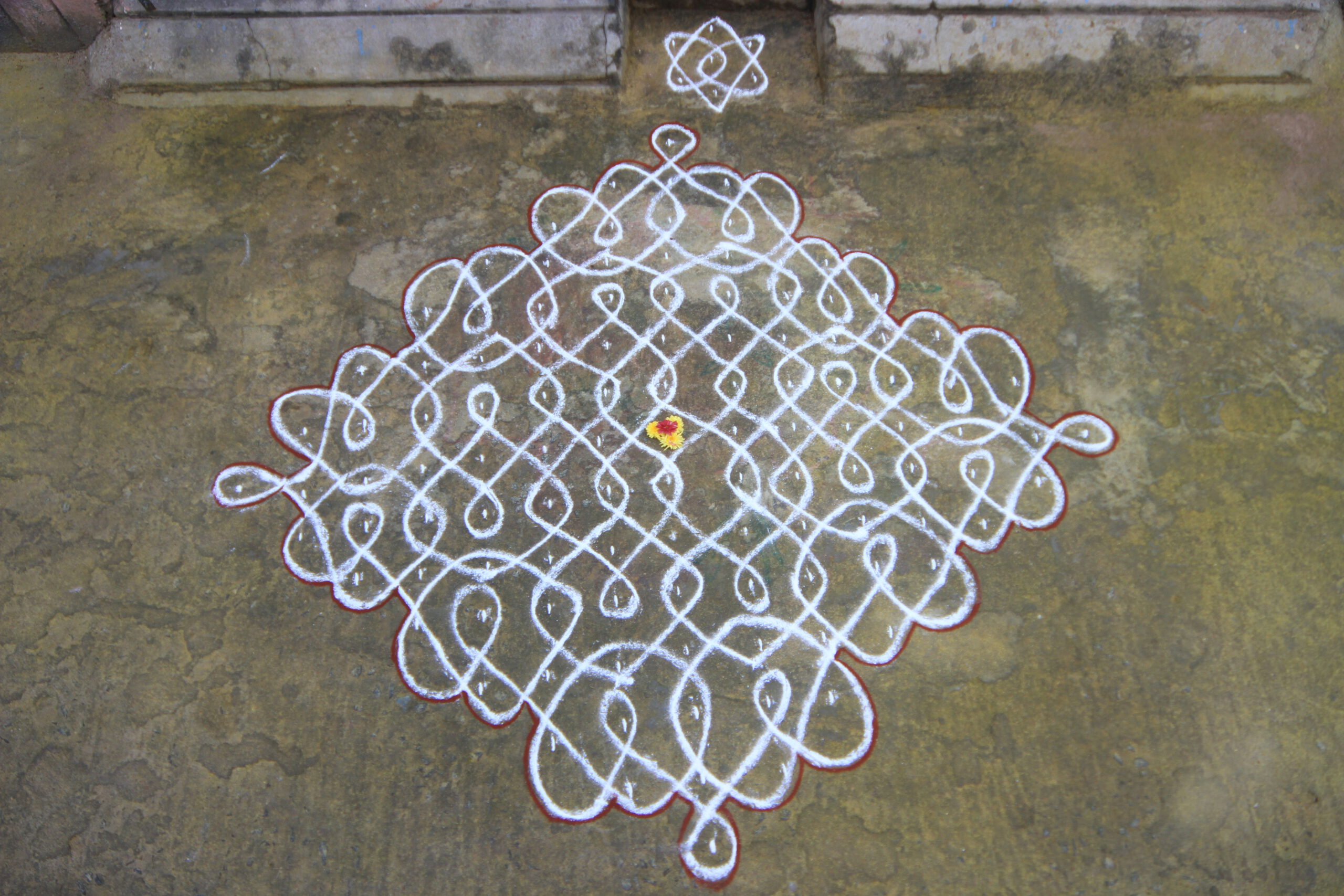
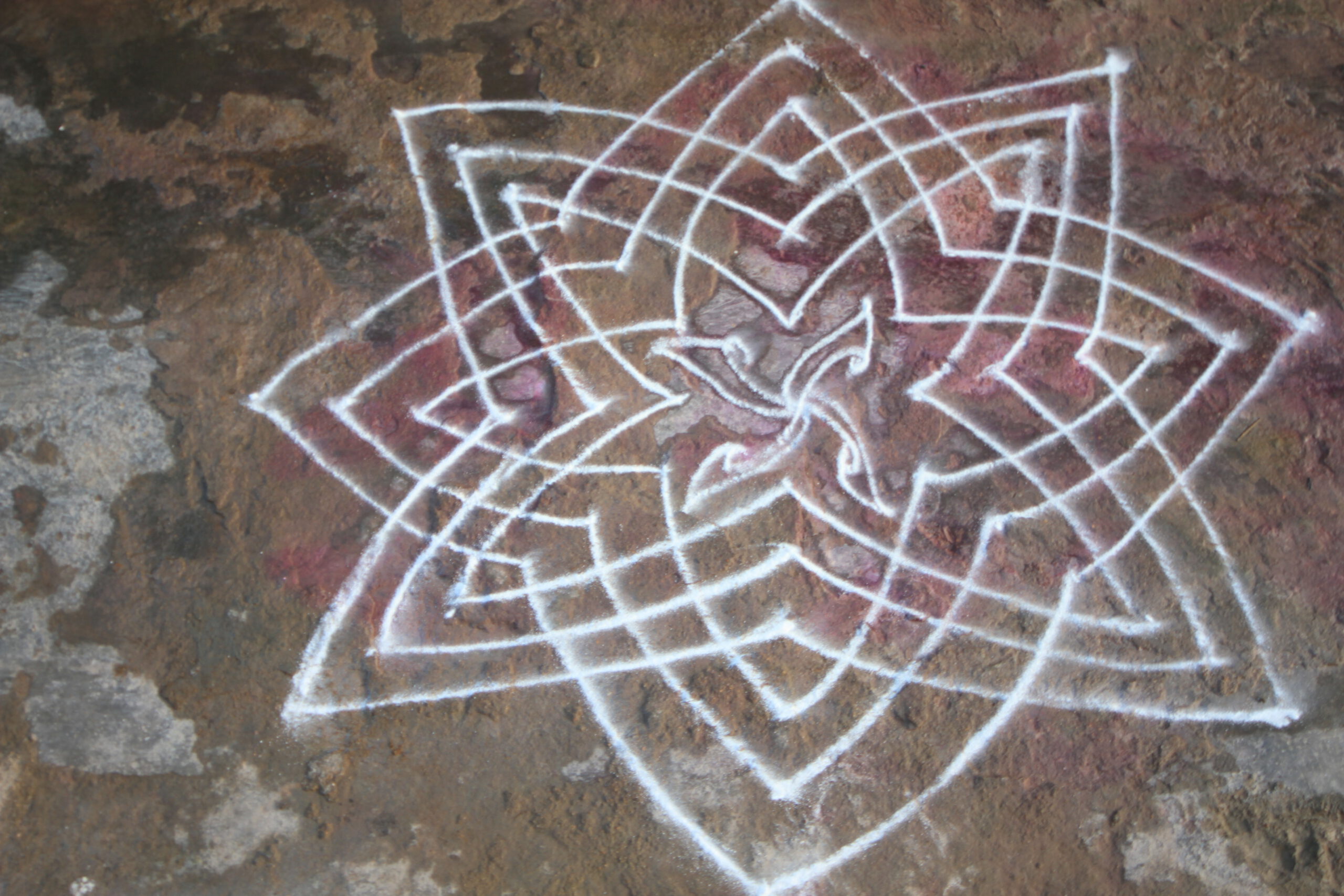
- Kolam — Tamil Nadu and the South: geometries of dots (pulli) joined by continuous lines, often drawn freehand.
- Muggu — Andhra Pradesh and Telangana.
- Alpana — Bengal and the East.
- Mandana — Rajasthan and Madhya Pradesh, often in ochre and lime.
- Pookalam — Kerala: carpets of flower petals, emblematic of the Onam festival.
Materials and techniques
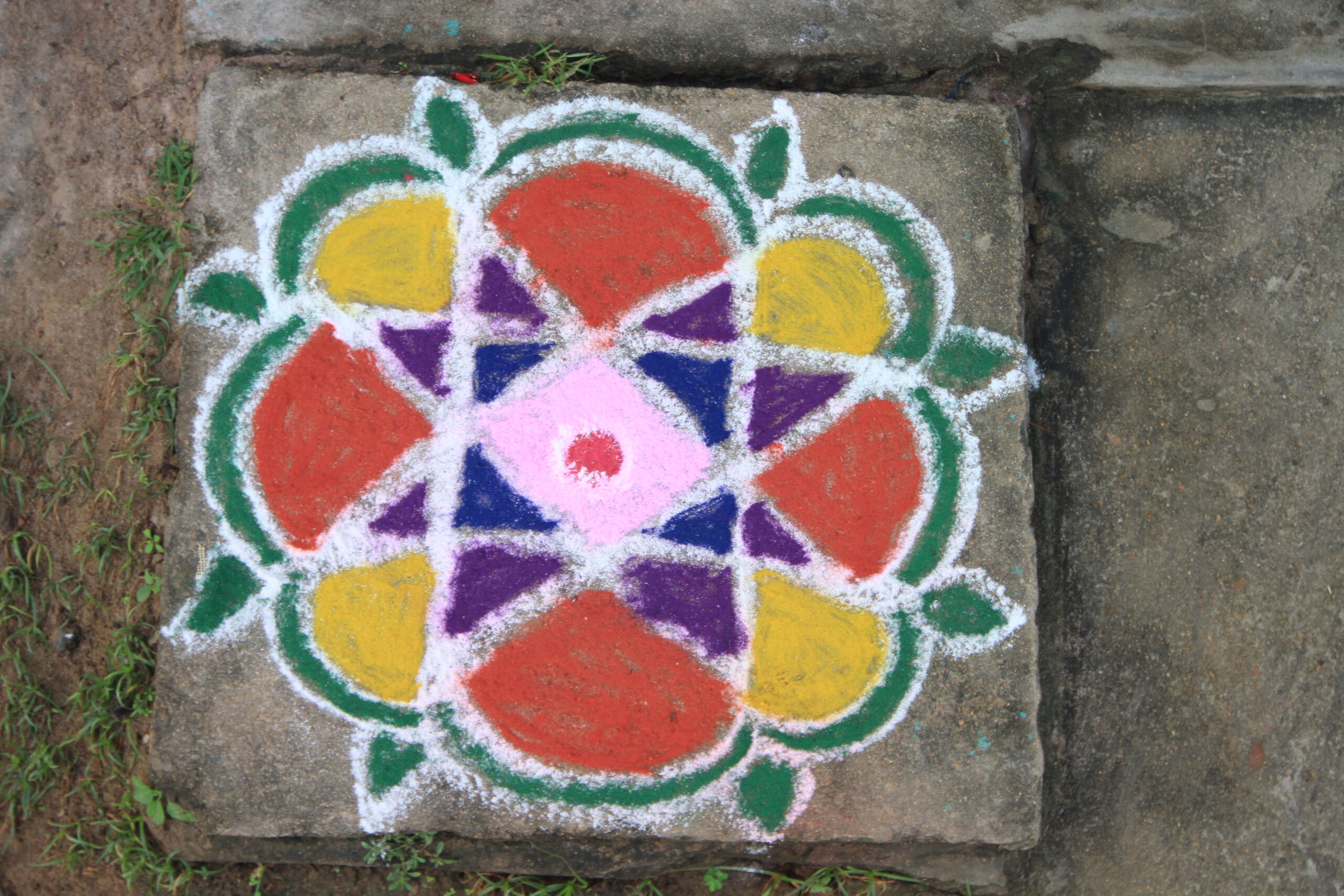
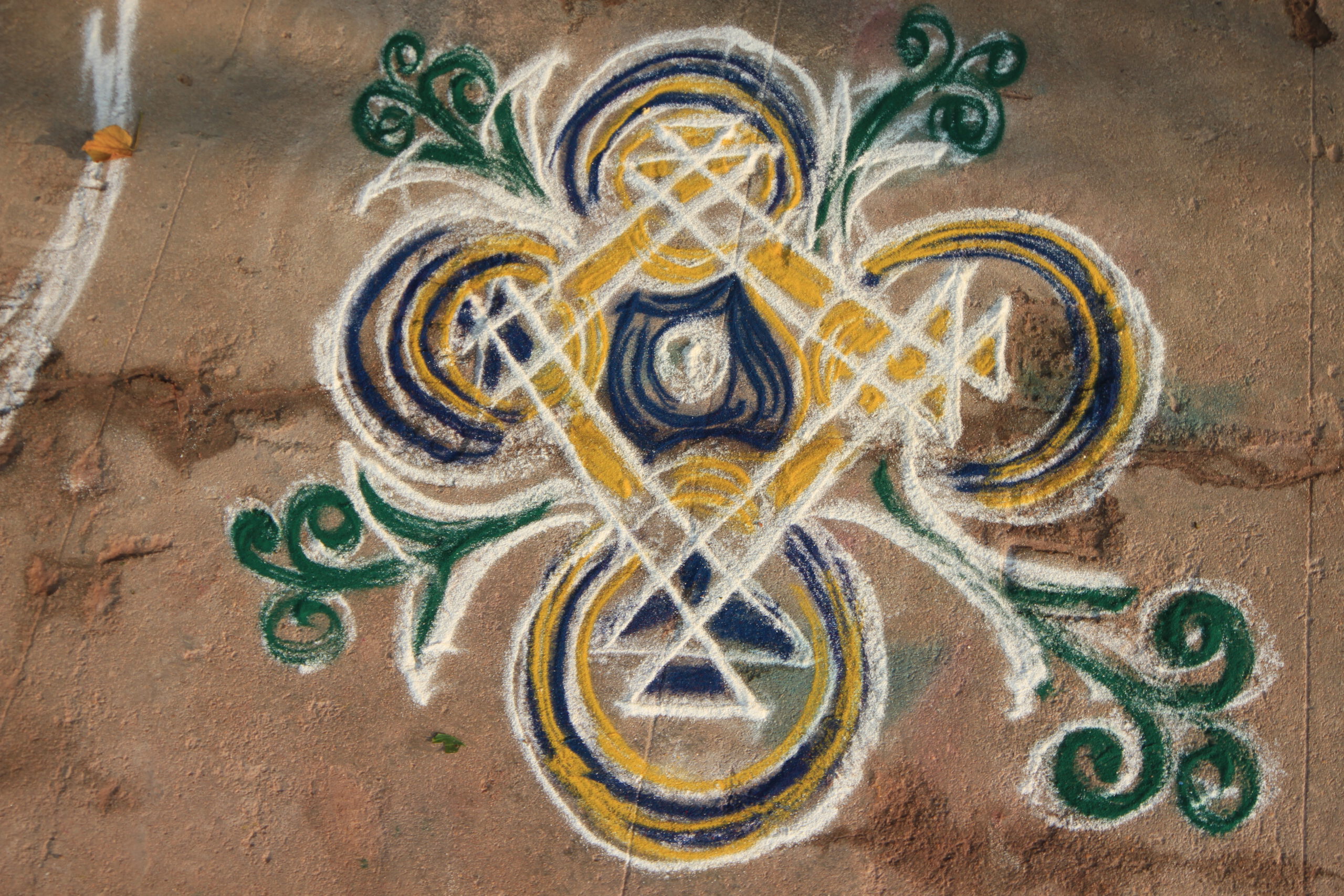
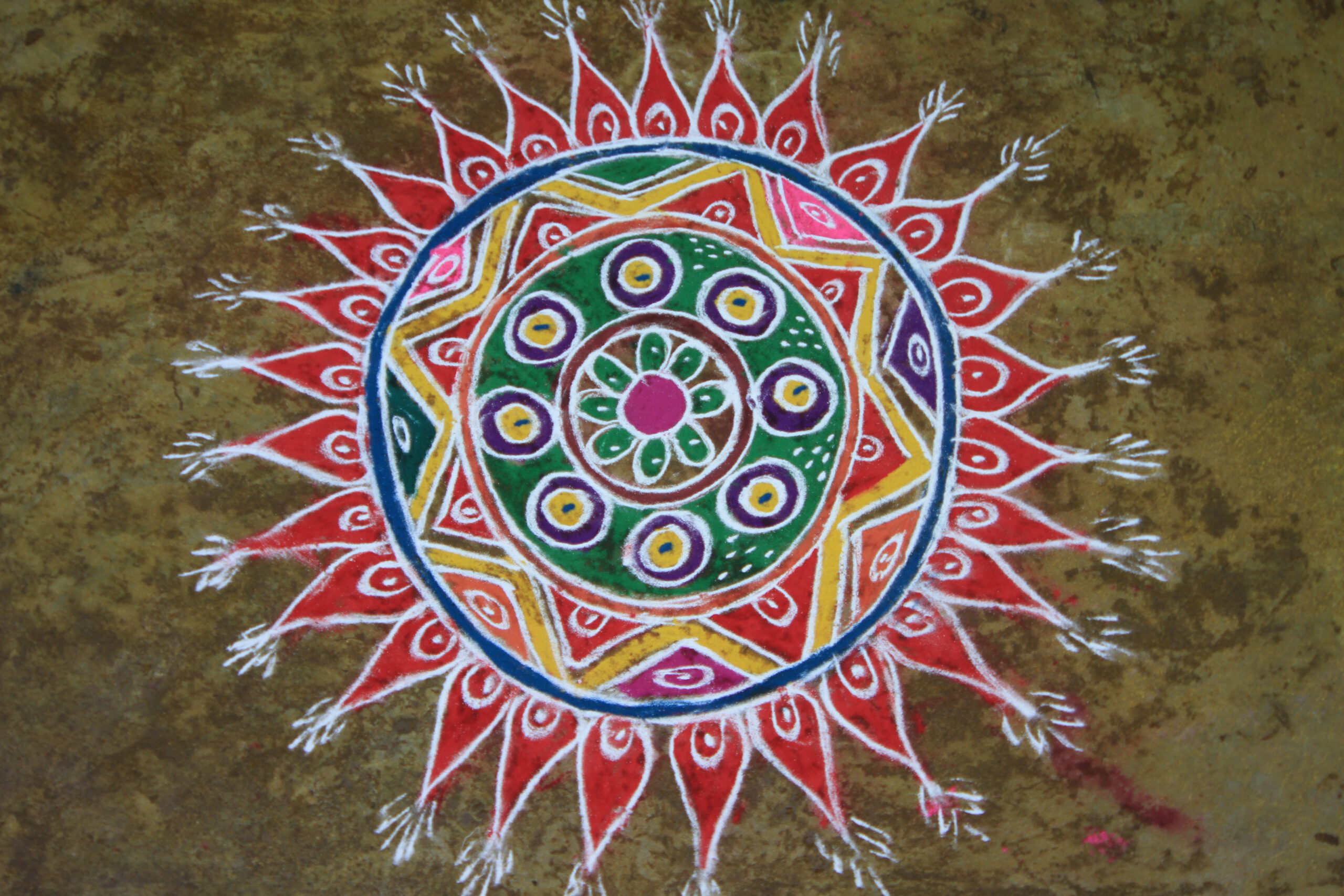
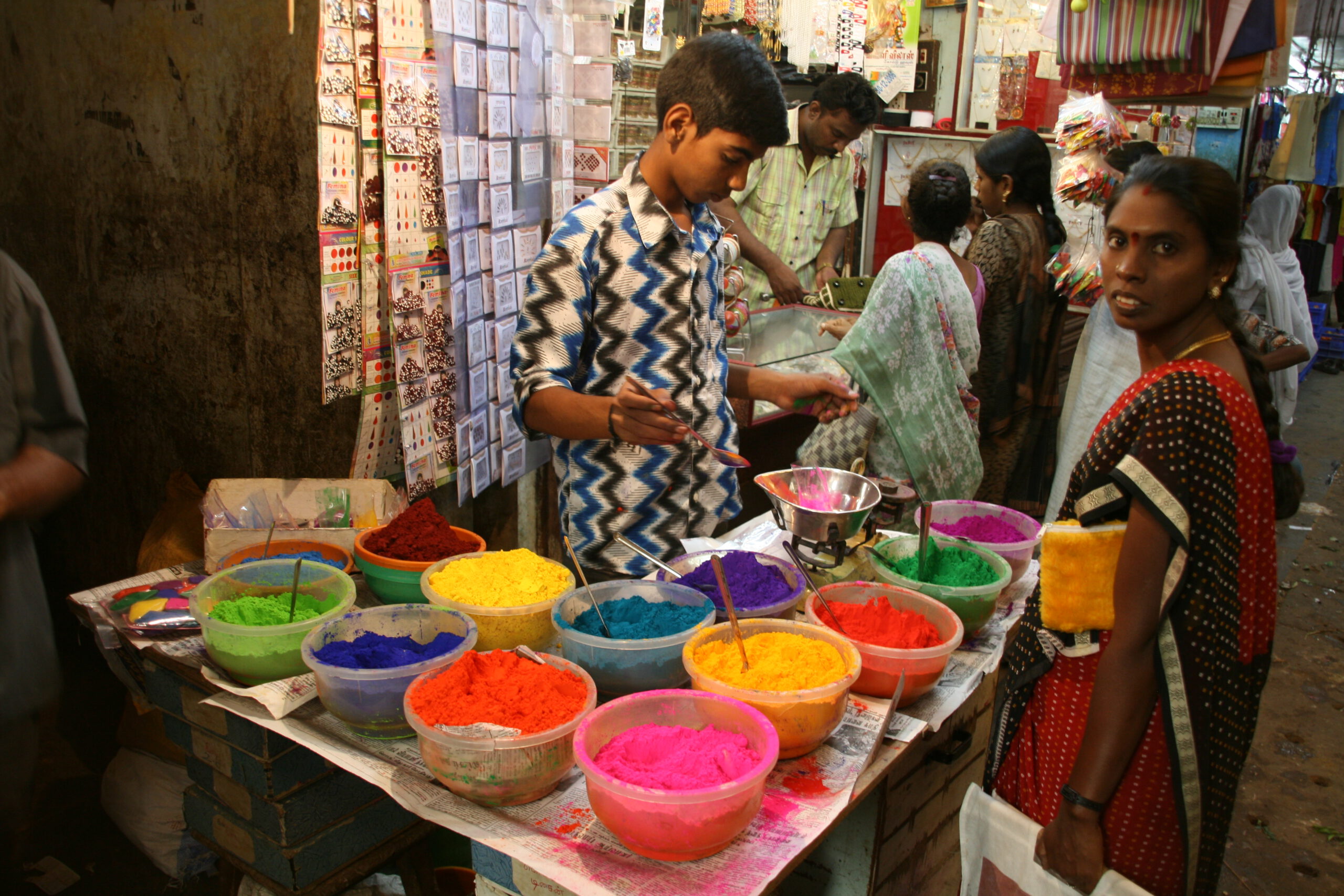
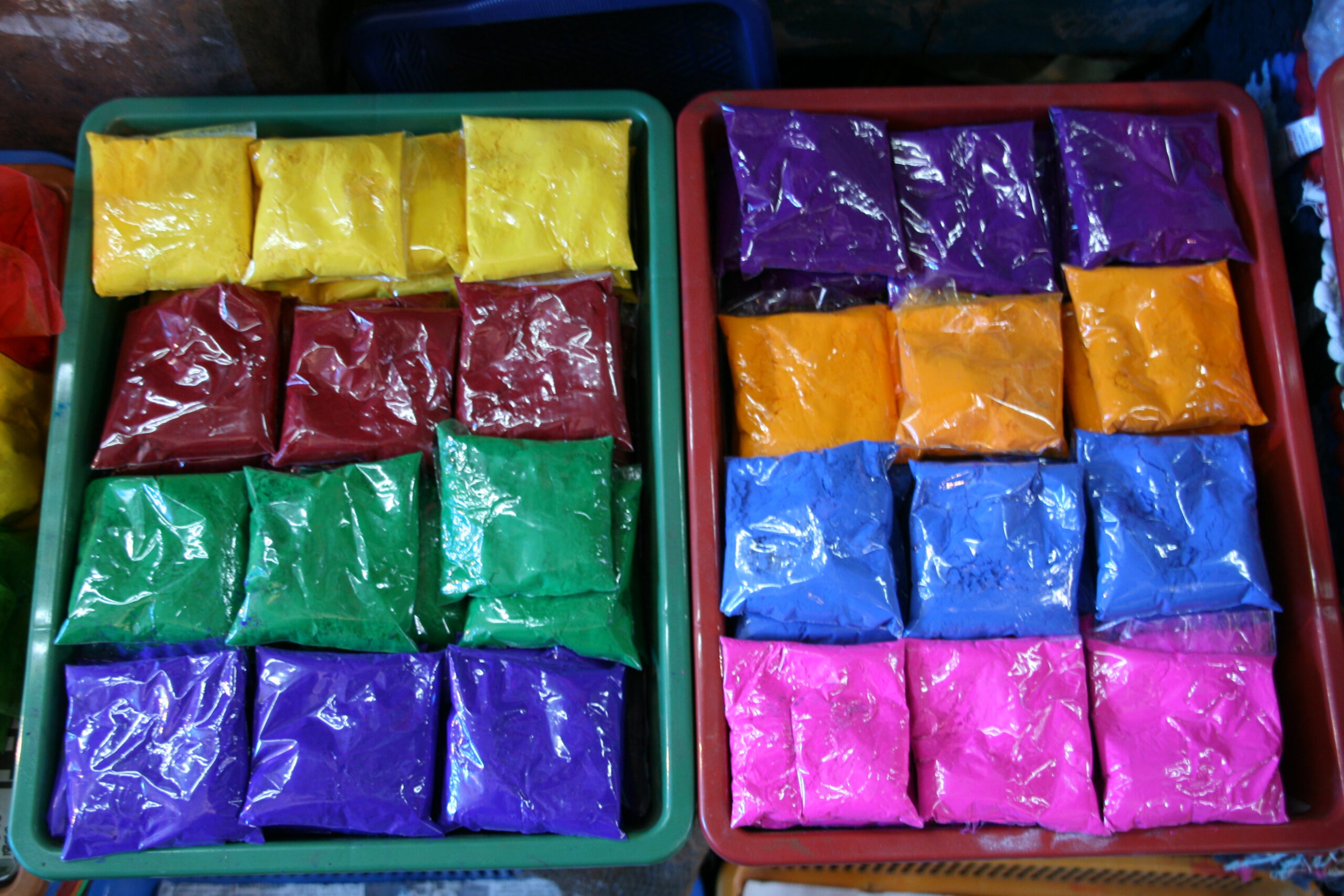
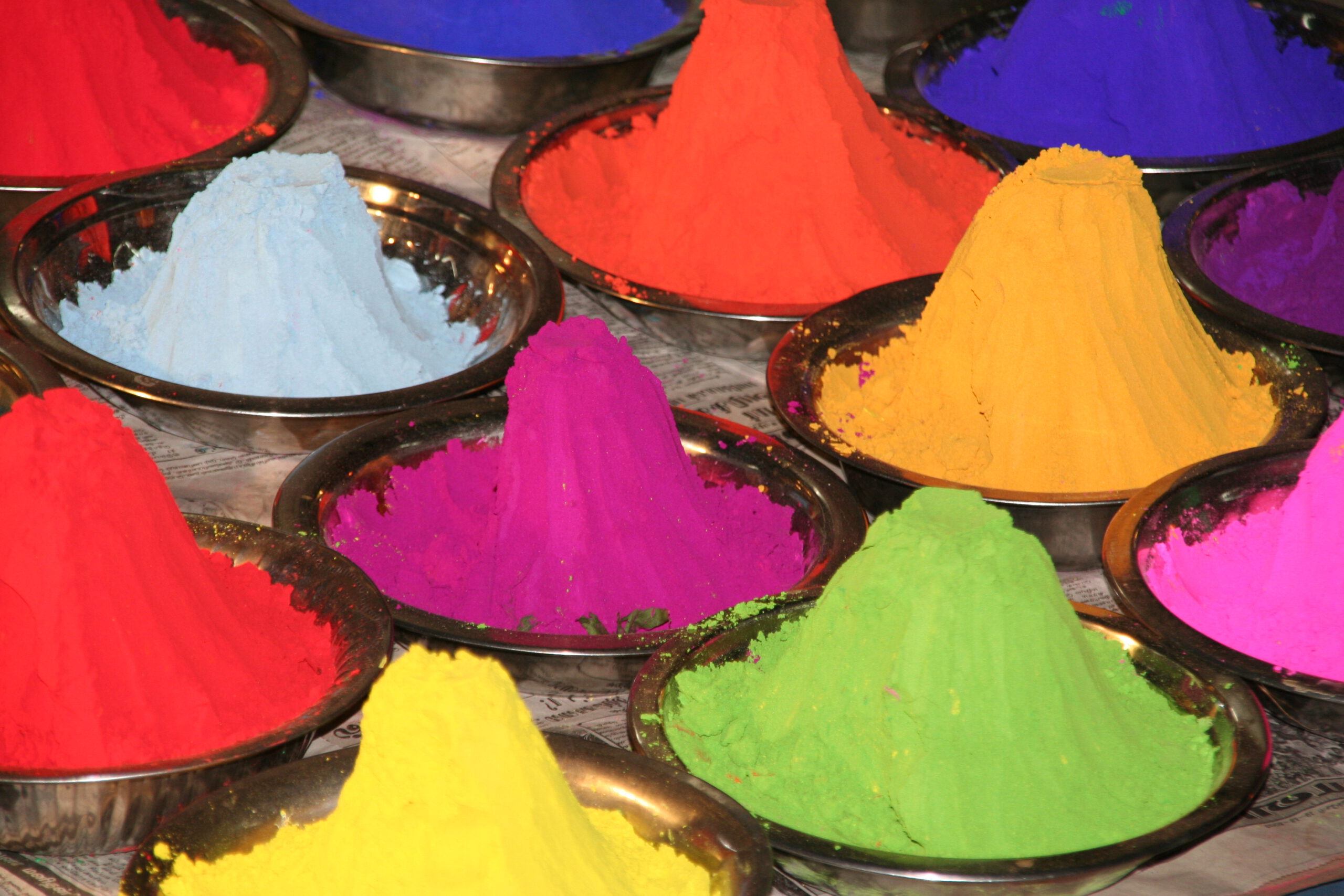
The most traditional material is rice flour or powder — a choice that is no accident: the design feeds ants, birds and small insects, extending the principle of ahiṃsā, non-violence, into a decorative gesture. To it are added coloured powders, chalk, flower petals, sometimes grains or spices. The Southern technique rests on a grid of dots (pulli) that the hand joins in a single continuous line, without lifting the finger; elsewhere the drawing is freer — spirals, lotuses, peacocks, solar swastikas and geometric motifs.
A mandala of the ephemeral
Created in the morning to be destroyed in the evening, the rangoli is a mandala of the ephemeral: with a smiling gentleness, it recalls the impermanence of all things — that everything ends and returns to the earth. In temples and sacred places, the rangoli also becomes a geometric diagram with a protective power and a support for meditative introspection. Some yoga and tantra texts see in it the representation of Truth at its central point of energy, the bindu — like the heart of a yantra towards which the inner gaze converges.
The great occasions
While the daily rangoli stays modest, it unfolds sumptuously during festivals. At Pongal (the Tamil harvest) and Diwali (the festival of lights), thresholds vie in colour and oil lamps (diya) set upon the patterns; at Onam, in Kerala, the flower pookalam grow larger day by day. The rangoli is then a feast for the eye as much as an act of devotion — a prayer traced on the very ground.