Monthly Archives: December 2014

IDLI (For 12 idlis)


Warning: Array to string conversion in /home/ashtangarc/www/wp-content/plugins/carousel-without-jetpack/carousel/jetpack-carousel.php on line 252
  1. Buy ready-made dough: idly/dosa batter

Put it in a pot and dilute with a little water

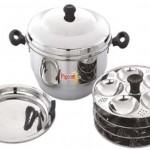
In a idly saucepan

  1. Put a shallow layer of water (1 to 2 cm) and heat
  2. Oil the idly shapes, and then pour the dough in and stack them in the saucepan.
  3. Close and boil +/-15 minutes (if the pan whistles ‘no problem’ leave it like that for 15 minutes)
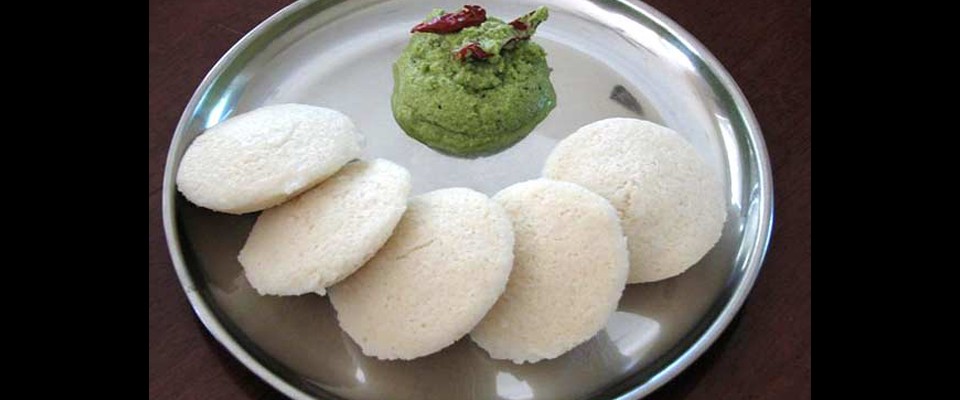
  1. Accompanying « Chutney ».

Ingredients : 

  • ½ coconut that you empty (white) with a knife; cut into small cubes
  • 1 green chili
  • Dal, 2 tablespoons
  • Garlic (2 cloves)

 Preparation :


Grind this mixture in a blender with a little water until it is completely liquid.

Heat in a saucepan with a little oil, and then add in the order

  • The mustard seeds (1 to 2 teaspoons; heat strongly until seeds pop!)
  • Curry leaves
  • Blended mixture

Remove from the flame after +/-30 seconds

  • Add salt

Warning: Array to string conversion in /home/ashtangarc/www/wp-content/plugins/carousel-without-jetpack/carousel/jetpack-carousel.php on line 252

” Indian cooking ”


Warning: Array to string conversion in /home/ashtangarc/www/wp-content/plugins/carousel-without-jetpack/carousel/jetpack-carousel.php on line 252

Warning: Array to string conversion in /home/ashtangarc/www/wp-content/plugins/carousel-without-jetpack/carousel/jetpack-carousel.php on line 252

Warning: Array to string conversion in /home/ashtangarc/www/wp-content/plugins/carousel-without-jetpack/carousel/jetpack-carousel.php on line 252

Warning: Array to string conversion in /home/ashtangarc/www/wp-content/plugins/carousel-without-jetpack/carousel/jetpack-carousel.php on line 252

Warning: Array to string conversion in /home/ashtangarc/www/wp-content/plugins/carousel-without-jetpack/carousel/jetpack-carousel.php on line 252

Warning: Array to string conversion in /home/ashtangarc/www/wp-content/plugins/carousel-without-jetpack/carousel/jetpack-carousel.php on line 252

Warning: Array to string conversion in /home/ashtangarc/www/wp-content/plugins/carousel-without-jetpack/carousel/jetpack-carousel.php on line 252

Indian cooking is wonderfully tasty. Annapurna Goddess always inspires it.

  • Anna = food
  • Purna = complete; abundant; total; full

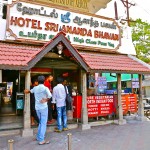
You will find many restaurants in Mahābalipuram, vegetarian and non-vegetarian and also western-style cooking at the “Nautilus”, run by a Frenchman who has been living in India for a very long time, and at the “Au Yogi” run by a former Indian yoga student, married to a Belgian. There is also “The Blue Elephant” et le well known “Moonrakers”, run by our friend Ramesh, and “The Gecko Café” held by Mani in a nice place with a view on the lake, 14 Othavadai Cross Street. For a kitchen dining room, very cheap: The « Mamalla », S. Mada Street, near the Bus Stand and the « Sri Ananda Bhavan », on the corner of E. Raja Street and Othavadai Street.

If you are invited to eat with an Indian family, you will be greeted with the “Namaskar” (Namaste in the North), the welcome made with both hands together. In India you never wish happiness to someone, it is considered to be in your hands and depends only on you. For a meal you generally bring your host sweets or fruit. You do not say thank you in Indian languages but you can say “Shukrya” (to say thank you in Sanskrit you say “dhanyavaad” or “shukrya” which means “thanks and be prosperious”).

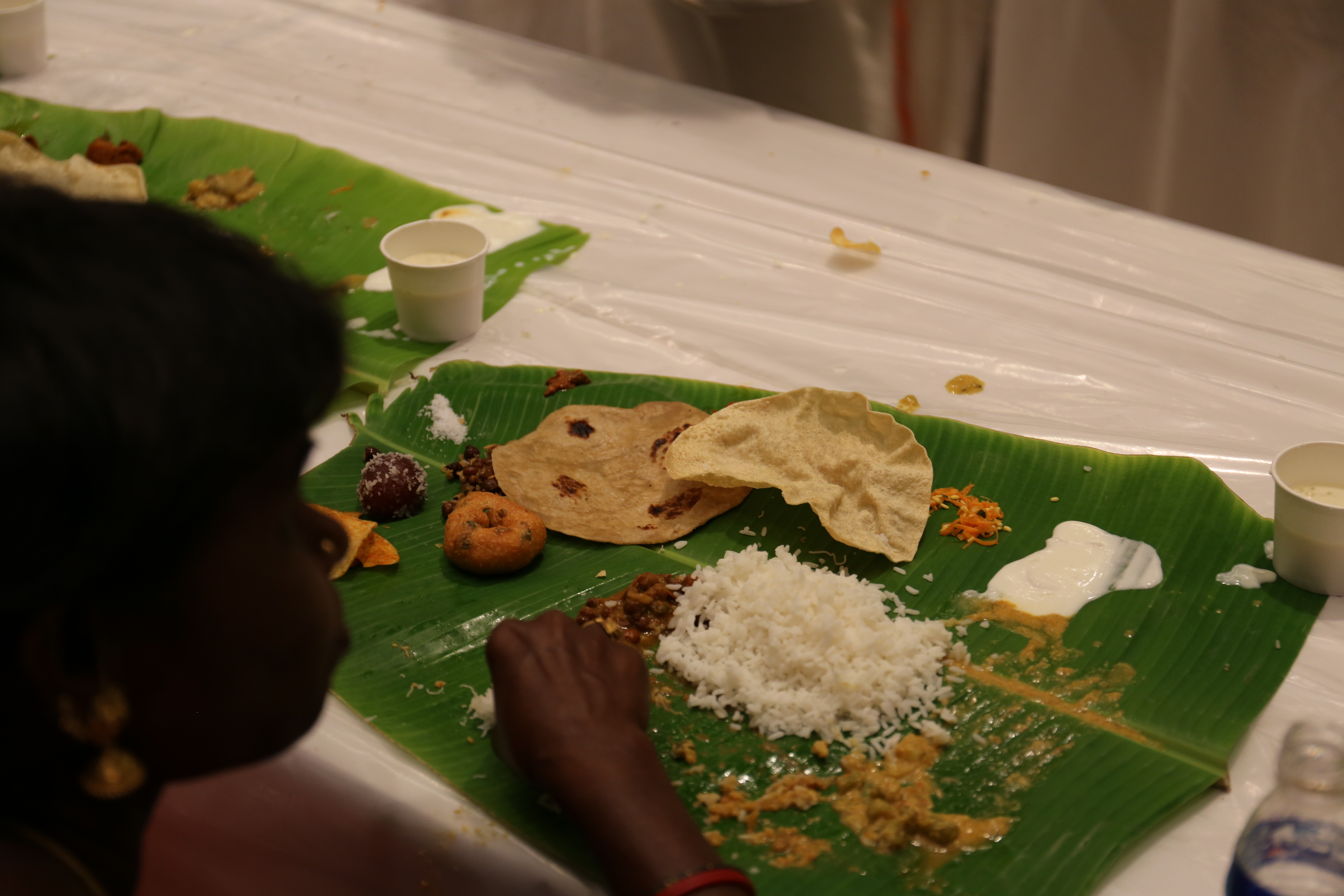
In the large international restaurants, your cutlery will consist of a spoon, fork and knife while in more modest restaurants you are likely to have only a spoon for the semi-liquid dishes. You eat with your fingers of your right hand in India and only with them as those on your left hand are considered impure. In the North you may take the food with your whole hand, but in the South it is considered more polite to use only the end of your fingers. Bread or pancakes are used to help you eat.

In many restaurants in India, the cold chain is not necessarily respected. Fridges or freezers are often turned off to save money, so avoid eating food that has been frozen.

In the temples, saffron powder, blessed water from the Ganges, and sometimes blessed food are offered to visitors as a sign of “Prasad”, blessing of the Gods. It is considered impolite to refuse such gifts.

It’s cuisine

The types of food served in the North differ significantly from those served in the South. Southern cuisine is quite different from the northern culinary habits in that it is much more vegetarian in most of the hotels, with the exception of the international hotel chains. On the other hand, you will more often find fish either grilled or in sauces, in the South.

Southern cooking is generally spicier than that of the North. For those with sensitive palates, you can ask the cook to reduce the spices (“No chilli, please”).

During the meal, our Indian friends drink water or “lassi” which is a diluted dahi (yoghurt), salty or sweet, sometimes with a taste of rose water.

You will often find local beer in the restaurants. Tea and coffee are almost always drunk outside mealtimes in the morning or afternoon, and are served with milk (reminder: alcohol is not sold in the general stores in Tamil Nadu, but only in specialised stores). 

Dishes that you must discover for a heavenly tasting experience … 

At breakfast

  • Idli(s), a sort of steamed rice ball served with a spicy sauce and coconut chutney.
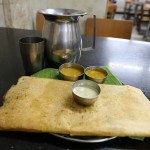
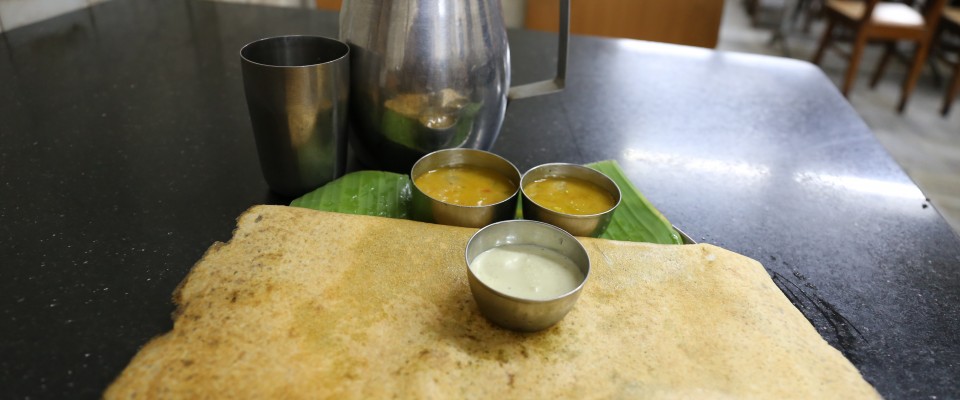
  • Plain dosa, lentil flour pancakes served with a spicy sauce and coconut chutney.

At midday

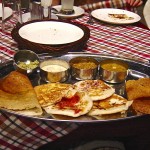
  • Chapatti (ćapātī): kind of unleavened wheat wafer or thin pancake cooked on a “tava” (metal hotplate), which is served with spicy cooked vegetables and coconut chutney.
  • Masala Dosa: lentil and rice flour pancake, stuffed with spicy vegetables served with a spicy sauce and coconut chutney.
  • Nann or naan: in Indian cooking a kind of large leaf-like flat “bread” cooked on the vertical side of an earthen oven, and made with flour and a little yoghurt as leavening, oil and salt, served with each course. It comes down from the 16th century Muslim tradition in India. It is delicious.
  • Parata(paratha): in Indian cooking a kind of “bread” served with the main course or or with the first course. Paratha(s) should be about 3 mm thick. They are made with flour, dal, ghee (clarified butter), salt and a little water. The pastry is flattened with a rolling pin and cooked on a “tava” (metal hotplate) with butter and ghee. They are served with spicy cooked vegetables and coconut chutney. A paratha stuffed with potatoes is called “aloo paratha”.
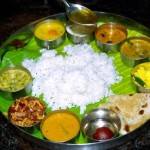
  • “Thali”: in the South of India traditionally served on a banana leaf, the thali is a complete meal where first course, vegetables, dal (lentils) chutney, and dessert is served at the same time, with rice and chapatti or paratha. 

Other additional information:

  • Travel information: “flights” and “transfers”
  • “Visas”
  • Finding an “hotel” in Mahābalipuram
  • Taking photos in India
  • Information on “health” in India
Warning: Array to string conversion in /home/ashtangarc/www/wp-content/plugins/carousel-without-jetpack/carousel/jetpack-carousel.php on line 252

Masala Dosa (for 2-3 people)

DOSA (S) :

Dough made from rice and dal powder

Ingredients :

  • 2 onions
  • 2 tomatoes
  • 2 Green Chile
  • 2 or 3 potatoes
  • Curry leaves
  • Mustard seeds
  • Dal, a handful
  • Turmeric, a pinch
  • Salt

Preparation :

1.  Boil potatoes

  1. Cut the vegetables into cubes
  1. Heat oil in a frying pan then add in the order :
  • Mustard
  • Small curry leaves
  • Dal
  • Onion and chilli
  • Tomatoes
  • Turmeric
  1. Cook dosas in a pancake pan
  1. Crush the potatoes by hand and add them to the preparation
  1. Warm all by adding a little water to make a sort of “paste” a bit sticky !

Put preparation on dosa and serve


Warning: Array to string conversion in /home/ashtangarc/www/wp-content/plugins/carousel-without-jetpack/carousel/jetpack-carousel.php on line 252

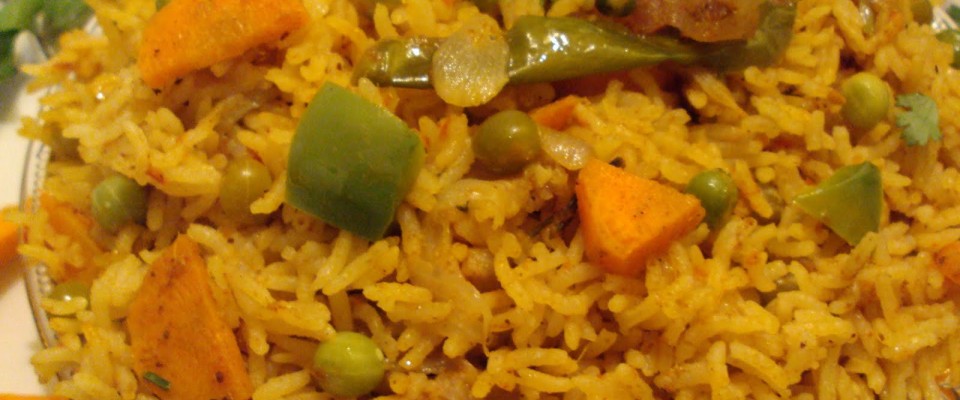
Biryani Rice (for 4 people)

Ingredients :

  1. One onion
  2. One potato
  3. One carrot
  4. 5 to 6 green beans
  5. Peas (a good handful)
  6. Chilli
  7. 2 or 3 fresh tomatoes
  8. Coriander (a good handful)
  9. Fresh mint (a good handful)
  10. Cloves (+/-12)
  11. Cardamom (3)
  12. Cinnamon in pieces
  13. Laurel leaves
  14. ½ «Biryani masala» packet {brand: Aachi}
  15. ½ packet of “ginere garlic paste” {Aachi}
  16. 2 cups of biryani rice
  17. 4 cups of water
  18. Salt
  19. A pressure saucepan

Preparation :

Cut all the vegetables into small cubes, remove the mint leaves from the twigs (not cut), chop the Coriander into small pieces

  1. Heat oil in pressure Pan + / _ 1 minute then put in order stirring in, all the time :
    1. Cloves, Cinnamon, Cardamom, Laurel leaves.
    2. Onion and chilli
    3. Ginger paste and garlic
    4. Tomatoes
  2. Boil while stirring for 2 minutes then add in order
  3. Cut coriander and mint leaves
  4. All vegetables diced
  5. 4 glasses of water
  6. 2 glasses of washed rice
  7. Salt
  8. ½ packet of biryani masala
  9. Cook until the pressure saucepan whistles, turn off the gas, wait for the pan to cool down and serve

Raïta (en accompagnement du plat) Voir la recette 


Warning: Array to string conversion in /home/ashtangarc/www/wp-content/plugins/carousel-without-jetpack/carousel/jetpack-carousel.php on line 252

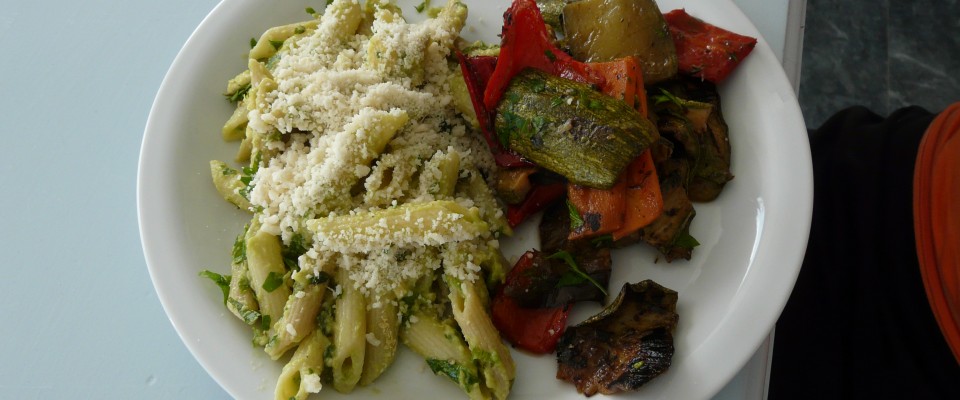
Pasta Avocado

Ingredients for 4 portions

  • 500 gr whole-wheat penne
  • ½ red chilli
  • 3 ripe avocados
  • 25 grams chopped pine kernels
  • 2 limes
  • ¼ cup fresh basil finely chopped
  • ½ teaspoon fresh grated garlic
  •  ¼ cup Fresh parsley finely chopped
  • Salt & pepper and olive oil 

Directions

In a large pot put some water, salt and olive oil and bring to the boil. Cook the pasta until it’s ‘all dente’. Drain the pasta and reserve half a cup of the pasta water.

While the pasta is being cooked put 1 teaspoon of olive oil in a pan and slightly sauté the garlic, chilli and pine kernels and then move them in a large bowl. Add the lime juice, avocado cut into cubes, basil and parsley and mix well. Add the reserved pasta water and 4 tablespoons of olive oil and mix well. Stir in the pasta and add some salt and fresh pepper.

You can serve with some grated parmesan or nutritional yeast flakes for a vegan version of the dish.


Warning: Array to string conversion in /home/ashtangarc/www/wp-content/plugins/carousel-without-jetpack/carousel/jetpack-carousel.php on line 252

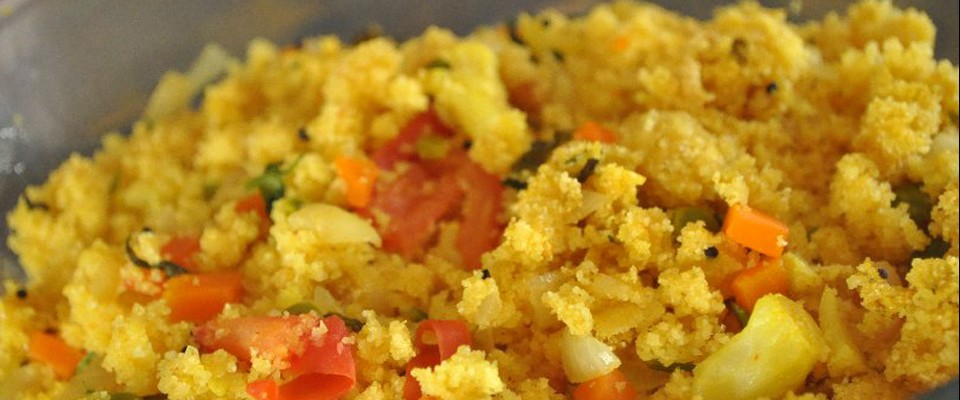
Vegetable Upuma (for 2 people)

Ingredients :

  • 1 tomato
  • 1 onion
  • 1 carrot
  • 1 potato
  • 5 to 6 green beans
  • Green peas
  • Dal, 1 hand full
  • 1 Green Chilli
  • Curry leaves
  • Fresh Coriander
  • 250 gr roasted Rava (powder)
  • Sunflower oil (vanaspati oil)

Preparation : 

1 cut the vegetables into small cubes

  1. Put in a saucepan cold-water onion, carrot, beans, potato, and peas.
  2. Bring to a boil and Cook for +/-10 minutes (1/2 of cooking time)
  3. In a frying pan, heat the roasted rava without any fat
  4. Put the oil to heat in another saucepan then add in order :
  • Mustard seeds
  • Curry leaves
  • Dal
  • Onion
  • Chilli
  • Tomato
  • Vegetables that have been cooked
  • 3 glasses of water

6.  boil all for 5 minutes
7.  Add the roasted rava gently stirring
8.  Add fresh coriander
9.  Book to boil
10. Stir in the oil (vanaspati)
11. Add salt

This forms a kind of vegetable porridge


Warning: Array to string conversion in /home/ashtangarc/www/wp-content/plugins/carousel-without-jetpack/carousel/jetpack-carousel.php on line 252

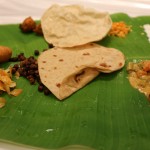
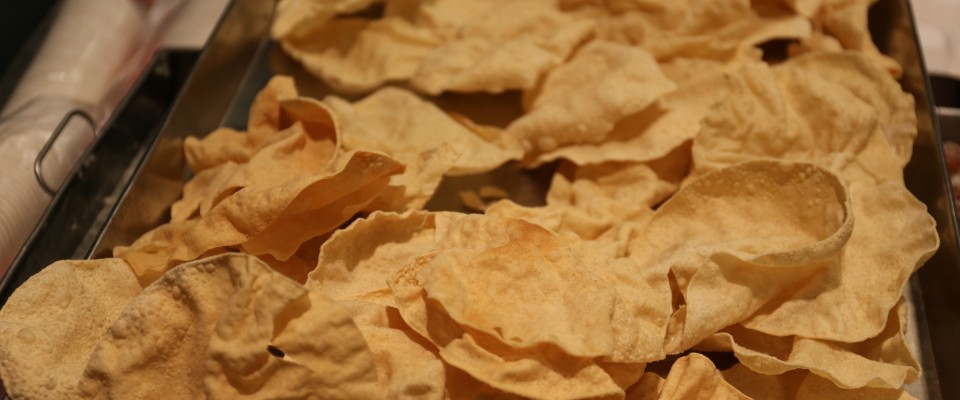
Pappadams

Ingredients :

  • Pappadams
  • Sunflower oil 

Preparation :

  • Heat the oil in the frying pan
  • Add the pappadums, remove them when cooked.

Warning: Array to string conversion in /home/ashtangarc/www/wp-content/plugins/carousel-without-jetpack/carousel/jetpack-carousel.php on line 252

Advice on what to wear for a stay in India


Warning: Array to string conversion in /home/ashtangarc/www/wp-content/plugins/carousel-without-jetpack/carousel/jetpack-carousel.php on line 252

Warning: Array to string conversion in /home/ashtangarc/www/wp-content/plugins/carousel-without-jetpack/carousel/jetpack-carousel.php on line 252

Warning: Array to string conversion in /home/ashtangarc/www/wp-content/plugins/carousel-without-jetpack/carousel/jetpack-carousel.php on line 252

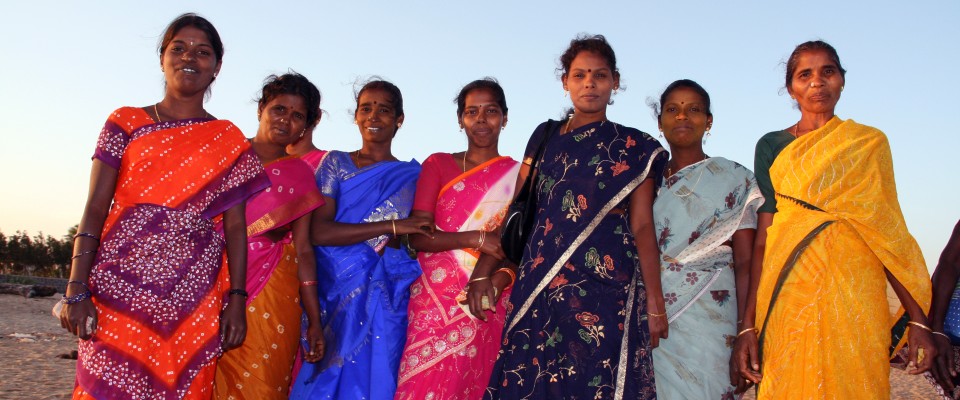
In India you will be surprised by the brilliance of the Indian women’s shimmering saris, and their femininity, their hair adorned with flowers and scented with jasmine.

A mark of respect

Indians, in general, appreciate cared-for, even elegant, dress. That is for them a mark of respect for oneself and for one’s interlocutor.

We remind you that for women, very short skirts, shorts, plunging necklines, and tank tops … are to be avoided.

For men, short shorts are also unsuitable, especially for visits to places of worship, be they Hindu, Jain, Sikh, or Muslim.

Covering up is also the best protection against mosquitoes and the sun depending on the region and time of the year. You will need to remove your footwear to enter places of worship; your shoes will be kept for a few rupees (if you don’t want to walk barefoot, bring along some socks). Don’t wear leather (belt, bags, wallet, sunglasses cases, etc.) when you visit a Jain family or their temples.


Shopping

You will find many dress shops for shopping (Kashmir shawls)…The Tamil cloth sellers’ stalls sell a wide range of fabrics, loincloths (dhoti) of various colours, and shimmering “Madras” style.

Other additional information:

  • Travel information: “flights” and “transfers”
  • “Visas”
  • Finding an “hotel” in Mahābalipuram
  • Taking photos in India
  • Information on “health” in India
Warning: Array to string conversion in /home/ashtangarc/www/wp-content/plugins/carousel-without-jetpack/carousel/jetpack-carousel.php on line 252

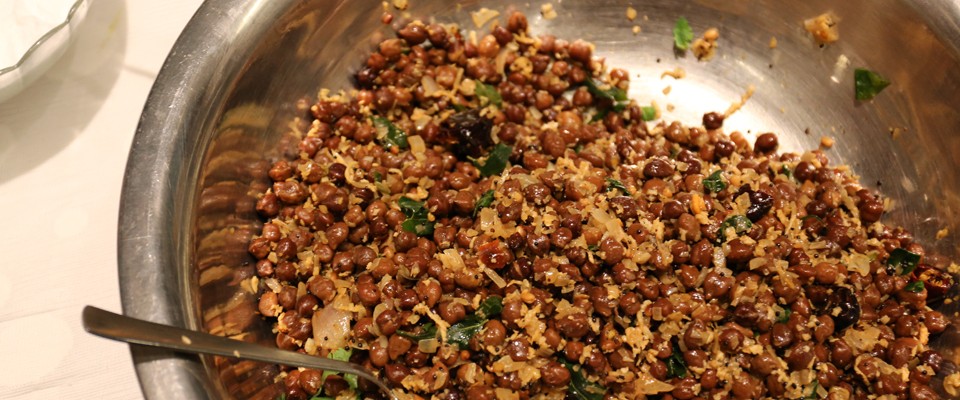
Mediterranean chick peas

Ingredients

  • 225 gr chick peas soaked
  • 2 red peppers, chopped in cubes
  • 3 table spoons olive oil
  • 1 green pepper, chopped in cubes
  • Pinch of ground coriander
  • 450 gr tomatoes chopped in cubes
  • Pinch of ground ginger
  • salt and pepper to taste
  • Pinch of grated nutmeg 

Directions

Place the pre-soaked chick peas in a pan and cover with fresh water. Add 1 tablespoon of the olive oil and some salt. Bring to the boil, half cover and simmer for about 1 hour until tender. Drain and set aside.

Heat the remaining oil in a heavy frying pan. Add the spices, peppers and tomatoes and sauté until the vegetables are tender. Add the chick peas, mix well and cook together for about 5 minutes. Season with salt and pepper and serve hot.


Warning: Array to string conversion in /home/ashtangarc/www/wp-content/plugins/carousel-without-jetpack/carousel/jetpack-carousel.php on line 252

Guide of “Savoir vivre for a European in India”.

Hello

Saying “hello” seems to be the simplest thing

Unless your interlocutor takes the initiative, never shake hands, it is considered to be impolite, like an impure act. Greet people saying “Namaste” joining your two hands in front of your chest. It is the equivalent to “Hello” in Europe.

Kissing each other is not done in public, it is considered as very disrespectful and impolite.

IMG_0172

Couples :

The modest side of Indian couples will surprise you. They never kiss in public nor do they show each other any sign of affection. So keep you marks of affection discrete. You can only touch your wife!

On the street, a man can touch another man but never a woman.
A woman can touch another woman but not a man.
A man does not speak to a woman if she is alone. If she is accompanied, it is allowed.
A woman does not speak to a man if she is alone. If she is accompanied, it is allowed.

IMG_0227

In a restaurant :

If you eat in a restaurant with Indian friends, do not be offended if one of them gets up and goes to eat at another table when the food is served (some vegetarians are not allowed to eat and share a table with a non-vegetarian… because of their religious doctrine)

In India, people eat with their fingers, only those of the right hand, the left hand is considered to be impure.

In a family :

If a family invites you, you can give them some sweets, cakes etc.… above all don’t offer your help, it is considered to be ungracious.

Even if the meal is delicious, which it will be; avoid drowning them with compliments on the meal.

Don’t say the children are good-looking; our Indian friends think that it brings the evil eye.

IMG_1085

On the train :

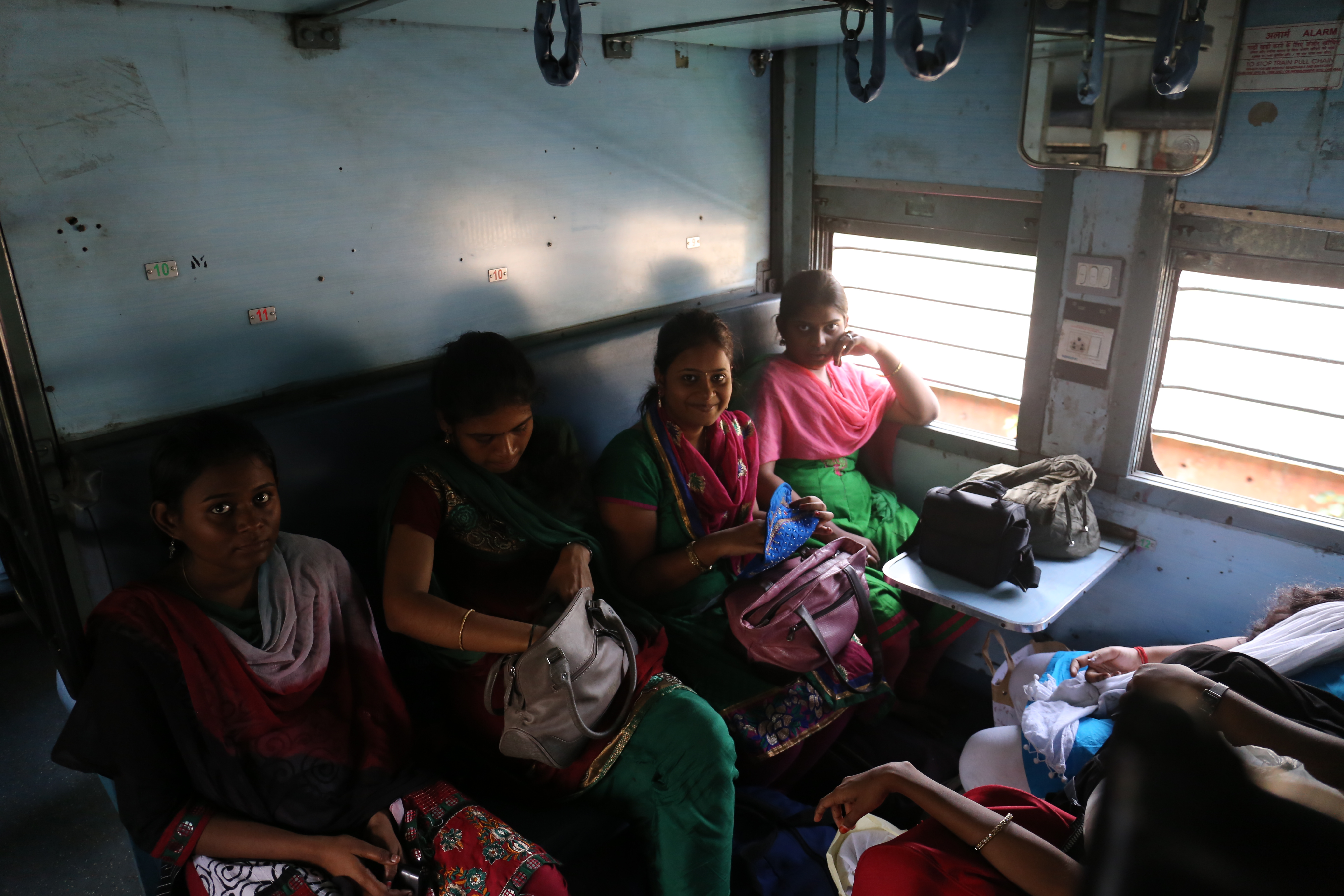
If a person is asleep lying in the corridor, it is better to wake him up than to step over him, it is a sign of respect.

On the bus :

Normally a man does not sit next to a woman, the contrary is also true, except if you are married.