
In yoga practice, pain must never be ignored, but it deserves to be understood with precision. This letter continues the reflection on discomfort, fear, resistance and transformation. It invites us to practise with discernment — without brutality, but without automatic flight.
Should we avoid pain?
This News Letter n° 8 was written in November 2011 in Athens.
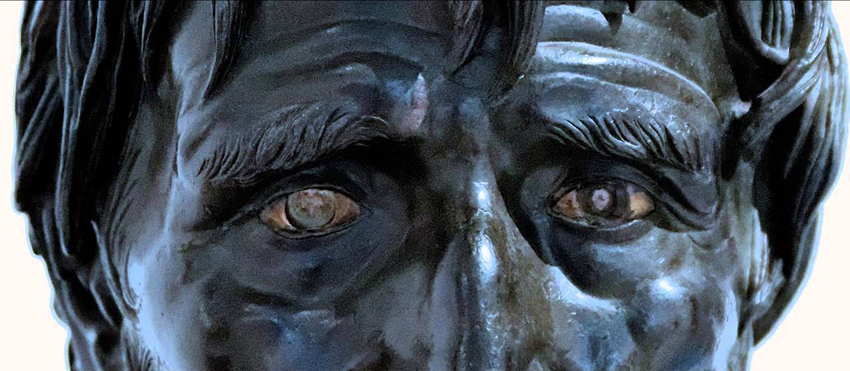
“Light griefs speak; great sorrows are silent.”
Seneca
Should we avoid pain? Find tricks to dodge it, skip the postures that cause discomfort or fear? Where does pain come from in practice? Is it a defence reaction — and what is it defending? And fear, where does it come from?
A body conditioned from within
Our dense body is conditioned, from its own interior, by its load-bearing structure, its muscular, organic, energetic, psychic, mental and spiritual systems — and by the theory of “traces”, the persistence of the past. If we accept Socrates’ injunction, “Know thyself”, as the keystone of bodily, emotional and spiritual intelligence, we should be awake to each sensation as it comes. We keep in memory repressed information that sometimes resurfaces: a scent revives a happy memory and the mood changes in an instant; a smell revives a negative feeling and we feel threatened. In postural work, let a sense of strangeness brush us, and it is panic: “this posture is not for me”.
Emotion, faster than thought
The emotional mind is far faster than the rational mind: it acts in a few milliseconds, excluding analytical reflection. According to Paul Ekman, this speed is essential to the adaptive character of emotions. It is exactly what we feel in a “pain” or a fear during postural work: the heart rate changes, the breath quickens and loses amplitude, and muscular contractions appear, most often unconscious.
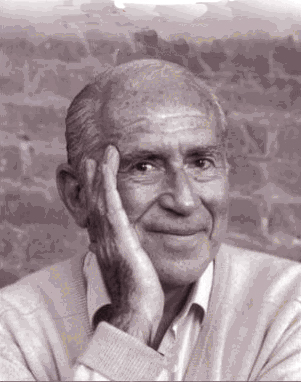
“You are afraid to live because to live is to take the risk of suffering.”
Arnaud Desjardins, L’audace de vivre
From pain to gentleness
Faced with pain, we want to withdraw: not do this posture, “forget” it. Yet what does a gardener do with a plant that is suffering? He does not withdraw or forget it: he cares for it, speaks to it, encourages it, gives it the right care — and it becomes the finest of his flowers. In French there is only one letter to change to go from douleur (pain) to douceur (gentleness).
Understanding Duḥkha
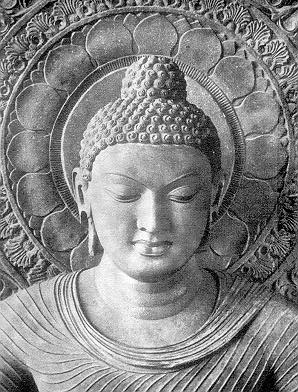
The Buddha declared that what holds beings in saṃsāra and prevents their awakening is that they do not fully understand Duḥkha. A same threefold structure is found across traditions: to Yoga, power; to grammar, communication; to medicine, healing — three paths offered to the human being, like the three theological virtues: Faith, Hope and Love.
Om Shanti,
Jean-Claude Garnier
In short
Pain can become a precious signal when it is welcomed with attention. In yoga, the point is not to force, but to learn to turn resistance into intelligence of the body.