
Pain directly questions the way we practise yoga: should we flee it, listen to it, understand it or transform it? This letter opens a sensitive reflection on the passage from darkness to light, from pain to gentleness, at the heart of bodily experience.
From pain to gentleness
This News Letter n° 7 was written in November 2011 in Athens.
“It is only with the heart that one can see rightly; what is essential is invisible to the eye.”
Antoine de Saint-Exupéry, The Little Prince
In daily life it is legitimate to avoid pain: our nervous system pushes us to — a hand on a too-hot surface pulls away by reflex. Since childhood, our upbringing invites us to judge pain as negative. It may come from a trauma, an illness, a nervous dysfunction, or a psychic and moral experience.
Defining pain, from West to East
In Sanskrit, Duḥkha covers suffering, affliction, dissatisfaction, discomfort, anguish. It is distinguished into Viparināma duḥkha, the suffering of change; Saṅkhāra duḥkha, that of conditioning; Kleśa, affliction; Hiṃsā, injury.
Non-violence, a myth to dispel
Gandhi and Śrī Aurobindo made known in the West this “force of love” called non-violence. But both knew prison and triggered conflicts they judged necessary: non-violence must not be confused with a neutrality that would be a flight from oneself. Towards oneself, it is sadly confused with laxity — whereas Yoga asks for a toned musculature, perseverance and a flawless mind. Haṭha Yoga means “union by living force” (and, esoterically, the union of the Sun, Ha, and the Moon, Tha).
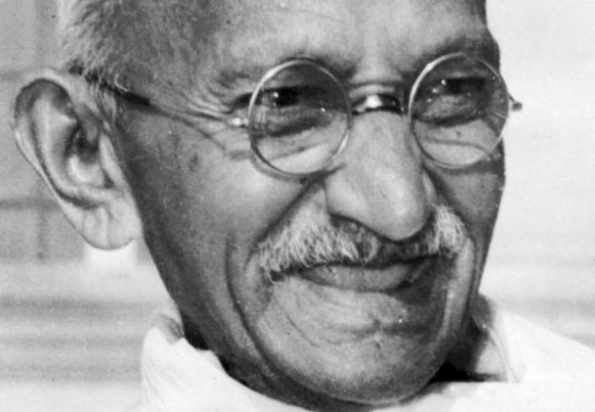
“Ahiṃsā is not compatible with fear… I can preach ahiṃsā to those who know how to die, but not to those who are afraid of death.”
Gandhi, Letter to the Ashram
The body, a path to light
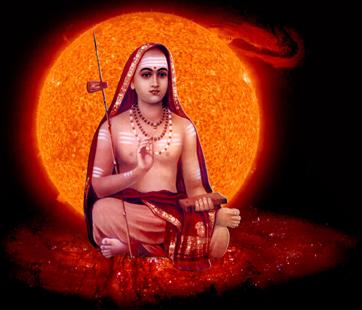
As Satprem writes, it is through the dense body (sthūla-śarīra) that the practice of Yoga awakens the body of light, the energy body (prāṇamaya-kośa). Yoga distinguishes five sheaths (pañcha-kośa) around the Self (ātman): the sheath of nourishment, of vital energy, the mental, that of the intellect, and the sheath of bliss — the teaching of Ādi Śaṅkarācārya in the Vivéka-chūḍāmaṇi.
Om Shanti,
Jean-Claude Garnier
In short
The path of yoga invites us to listen to pain without dramatising or denying it. This listening opens a passage towards more gentleness, discernment and bodily awareness.