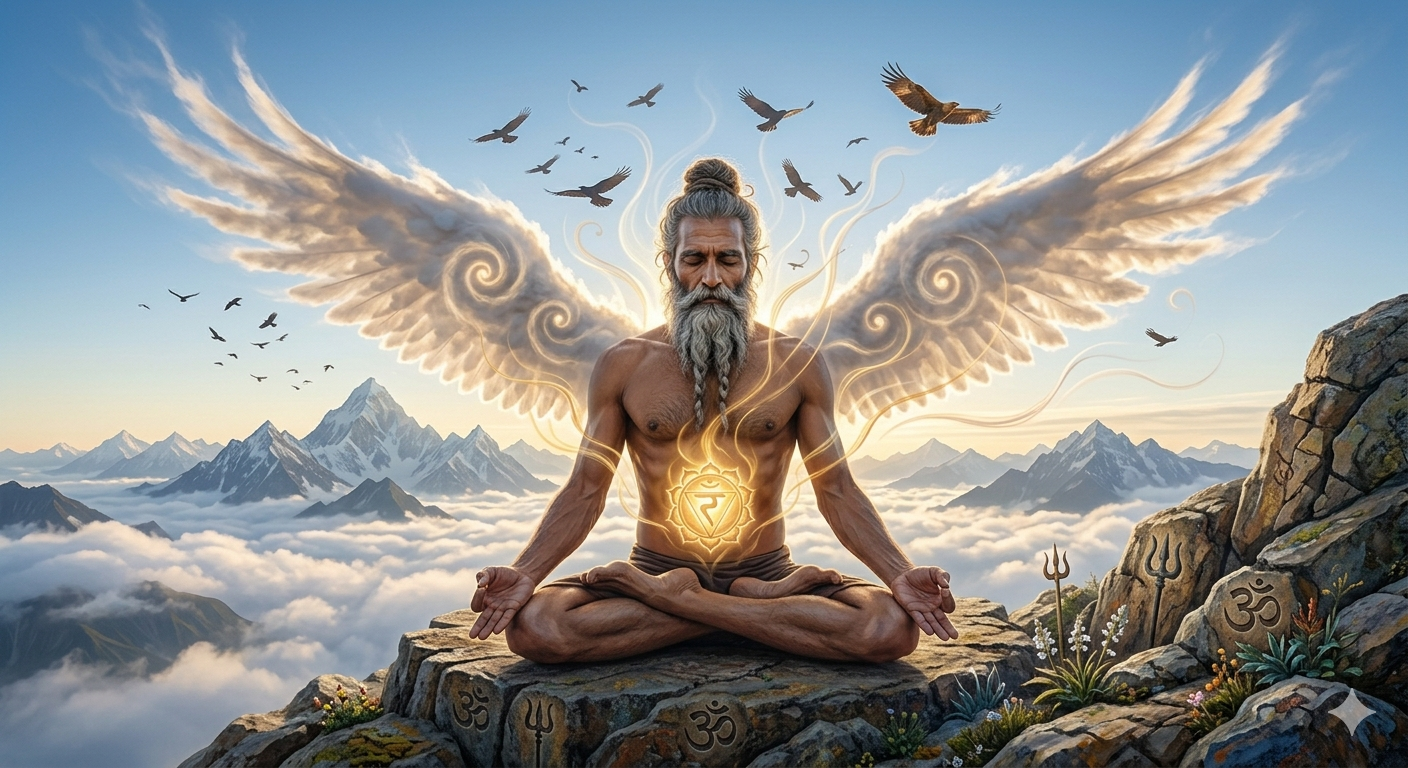
Uḍḍiyāna is a central support of yoga practice: it organises the abdominal space without excess contraction and accompanies the movement of the breath. In Ashtanga Yoga, this abdominal control works together with Mūla Bandha to protect the body, support the posture and direct energy with precision.
The bandhas in the yoga tradition
In the yoga tradition there are several muscular engagements (Bandha). The first is “Mūla”, the pelvic floor, the base. The second is “Uḍḍiyāna”, the abdominal balloon.
How to experience Uḍḍiyāna
- Standing, at the end of the exhale (when the lungs are completely empty);
- lengthen the space between the iliac crests and the floating ribs — this stretches the transversus, the obliques (inner and outer) and the rectus abdominis. The belly draws in without contraction;
- keeping the belly gently drawn in, inhale, then exhale…
Do not confuse Uḍḍiyāna with Uḍḍiyāna bandha, which is a breath-retention technique — a hold on the empty breath (Bāhya Kumbhaka). This distinction is essential to avoid an over-forceful practice. In the postural session, Uḍḍiyāna is not an abrupt closing: it is a lengthening, a natural abdominal draw linked to the exhale and held with suppleness throughout the breath.
The best posture to learn and deepen Uḍḍiyāna & Mūla Bandha
This “abdominal draw” is most easily experienced in Adho Mukha Śvānāsana (downward-facing dog) within sūryanamaskāra, held for five deep breaths. There, the practitioner can observe the relationship between the breath, the abdominal centre and the stability of the supports. The aim is not to pull the belly in by force, but to create space. When that space appears, the breath becomes more even and the body finds its axis more easily.
Mūla Bandha and Uḍḍiyāna: a protective system
Together, “Mūla Bandha & Uḍḍiyāna” form a safety system that protects the body through its action on the lower fascia (the reciprocal tension of the right and left fascia). This set also takes part in controlling the energy of the body (Prāṇa). In Ashtanga Yoga this protection is precious: transitions, forward and back bends and balances all require an available centre. Uḍḍiyāna helps not to collapse into the lower back, to breathe within the effort and to keep the movement tied to the breath.
Conclusion
Uḍḍiyāna is discovered with subtlety. Combined with Mūla Bandha and the breath, the practice becomes steadier, safer and deeper.