This ‘News Letter’ no. 8 was written in November 2011 in Athens – Greece
From Darkness to Light, or from pain to the sweetness, the way of the Yoga road towards plenitude…
By Jean Claude Garnier
But what about pain in yoga practice ?
“Light pain can be expressed; big pains are silent.”
Sénèque
Do we have to avoid it ? Find tricks to dodge from it ? Should we not practise the posture or the postures that provoke the discomfort, the pain or the fear ?
Where does the pain come from when we practice Yoga?
Is pain a reaction of defence? What does it defend ?
Where does the fear come from?
Our body of dense material is conditioned by its own inside by :
ï It strong structure
ï Its muscular system
ï Its organic system
ï Its energy system
ï Its psychic system
- Its mental system
- The theory of “tracks”, the latency, the persistence of the past of our life, or previous life …
- And its spiritual system
It is what conditions us and determines us in a unique way …
If we accept the order of Socrates ” Know, yourself! “, as the keystone of the physical, emotional and spiritual intelligence, it would be necessary to be conscious, to “awaken” to our different sensations when they occur.
We could think, wrongly, that our sensations are correct. We all keep in memory-repressed information, which sometimes surface to consciousness, reactivated by circumstances connected to our present. For example: you are of sad humour, a person crosses your road, his or her perfume awakes a happy recollection; in just a few thousands of seconds your humour changes; or the body odour of a person revives a negative feeling and you think that this person wishes harm to you … In the postural work, if a feeling of strangeness goes through you it may make you panic, this posture is not for me …
The emotional mind is much faster than the rational one; it goes into action in only a few milliseconds excluding the analytical thought, which is the essence of the thinking mind.
According to Paul Ekman *, the speed with which the feelings seize us, is essential to their highly adaptive character, they mobilize us to react to pressing events without question.
Paul Ekman and his co-workers demonstrated that the expression of feelings begins with the movement of the facial muscles in the space of few thousandths of a second, accompanied by physiological changes features as for example acceleration of the heart rhythm and respiratory changes.
It is exactly the way we feel, when we experience a “pain” or a conscious or unconscious fear in the postural work, we observe a change of heart rhythm (more often an increase of the pulsations, more rarely a stunning, a sudden fall of the rhythm), and changes at the respiratory level (often an acceleration with a loss of amplitude); most of the time, these reactions are accompanied by unconscious muscle spasms.
” You are afraid of living because to live it is to take the risk of suffering ”
Arnaud Desjardins (dans « L’audace de vivre »)
In the on-line dictionary Wikipedia we can read about the pain: ” the person has an extremely unpleasant, even unbearable sensation, which can cause a reflex movement of withdrawal (at the level of the members and the extremities) or a change of position of the body “
It is exactly what takes place in the postural practice of Yoga, we want to make a withdrawal, and we do not want to go into this posture “forget it”.
However, what does a gardener do facing a plant which is suffering, he takes care of it, he does not put it in retreat, nor does he forget it. He will to talk to it, encourage it, and give her appropriate care. She will become the most beautiful of all his flowers, and will bloom …
In French, there is only a single letter to be changed, to go from “douleur” (pain) to “douceur” (sweet) …
” All actions or claimed actions are completed with the aim of escaping from suffering and reaching happiness. ”
Arnaud Desjardins (Anstract « You are there »)
Below is, to help you if you need it, or for your pupils, a programme of study for the knowledge of oneself when you are faced with a difficulty, a pain or a fear in your practice of Yoga (according to the books: “Self- Science” and “The Subject Is Me”, by Karen F. and Harold Q. Dill-hunt, Edition (Publishing): Goodyear Publishing, on 1978).
1 Self-knowledge: to observe and identify our feelings; to give oneself a vocabulary to translate them
2 Make decisions: examine our actions and become aware of their consequences
3 Accept and integrate our feelings: watch our “internal speech ” so as to reveal its negative elements such as its self-belittlement;
4 Decrease our tensions: understand the physical and respiratory benefits of the postural exercise, the work of symbolization,
5 Empathy: recognize the feelings and the concerns of others; understand their point of view.
6 Communication: express with efficiency feelings; know how to listen and raise the good questions; make a separation between the words or actions of a person and our own.
7 Opening to others: to value opening and to establish trust in the relations with others; know when it is suited to speak about our feelings, pains and personal fears.
8 Lucidity: identify in oneself and in others their predispositions to life and its emotional repercussions.
9 Acceptance of oneself: feel proud to see oneself under a positive light; recognize our strengths and weaknesses; be able to laugh about oneself.
10 Personal liability: accept our responsibilities; recognize the consequences of our decisions and our actions, meet our commitments (for example, in the study of yoga).
11 Certainty: express our concerns and feelings without anger or passivity.
12 Group dynamics: participate, know how to, at which moment to command and how, and when to accept to be guided.
13 Conflict Resolutions: know how to be loyal in conflicts with our brothers, parents and masters; negotiate compromises in which all the parts will be recognized.
Sri Patanjali as a reminder…
According to B.K.S. Iyengar, Sri Patañjali describes in the Yoga Sutra(s) the ways to exceed the agonies of the body and the spirit, the obstacles to spiritual evolution …

” Patañjali did not deal only about yoga, but also the grammar and the medicine. The Yoga(s) Sutra(s) are its chief work, the distillation of the human knowledge. Like pearls put on a thread, they form an invaluable necklace, a diadem of lightning knowledge. To understand their message and to put into practice it allows the transformation of all the being in a highly cultivated, civilized and rare person and beneficial. ”

Here is what says Sri T. Krishnamacharya about Sri Patañjali
“To express and communicate our thoughts, we were always dependent of the language. However, in a certain period, in ancient times, men did not know how to communicate with efficiency between them. This inability produced a big confusion because they did not understand each other; men were not capable of remedying their physical and psychic diseases.
At the end, they met and asked God, asking him to help them, because their inefficient verbal expression entailed an inefficient thought, a poor health and diseases. Affected by their great spirit of punishment,
God sent on earth an adversity having the shape of a snake ( ãdishesha ) to calm the problems of the human beings. This small snake fell (pata means to fall) in the helping hands (anjali) of the assembly, and showed its real shape – that of a snake to one thousand hoods. In its infinity wisdom, it taught the men to communicate with efficiency thanks to three works :
1. A treaty of grammar called Mahâbhâshya, for the communication
2. A treaty on the health and the longevity of the body, the heart and the soul, the Ayurveda, the traditional system of Indian medicine
3. And the treaty for the mental peace ” Yoga-Sūtra “.
The Buddha declared that the major reason that retains human beings in the saṃsāra (सhसार) and prevents them from becoming awake, is that they do not completely understand Duḥkha (Dīgha Nikāya, 16, 2, 1).
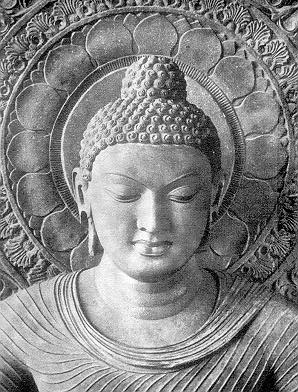
Presentation of the first noble truth of the Buddha
” Well, o monks, the noble truth of Duḥkha: the birth is Duḥkha, to age is Duḥkha, the disease is Duḥkha the death is Duḥkha, the sorrow and the lamentations, the pain, the affiction and the despair are Duḥkha, be united with what we do not like is Duḥkha, be separated from what we like or of what pleases is Duḥkha, not to obtain for what we wish is Duḥkha. In brief, five aggregates of the attachment are Duḥkha “.
For reminder we have the same mythical source, in three religions : Judeo-Christian and Muslim: the archangels who are a category of superior angels. The word archangel comes from Greek ἀρχάγγελος / arkhángelos composed of “ἀρχι-“/ from Greek “arkhè” which means at the same time “command” and “beginning” (it is, in a way the “head”) and from “ἄγγελος” / “ángelos” « messenger ».
Three main archangels :
. Saint Michel, prince of the celestial armies slaying the dragon (Mount St Michel), he is mentioned in the Apocalypsein the Bible, and in the Koran (Sura 2 verses 98),
. Saint Gabriel, the celestial messenger, appears in Judaism, Christianity and Islam (Djibril or Jebril).
. Saint Raphaël, the healer and protector of travellers mentioned in the Koran under the name of Israfil “!”
YOGA: when it is a question of spreading an outstanding power, it is the Archangel St Michel, the warrior, his name means, ” who is like God ” (etymologically EL “God” and at the MIDDLE, CHA ” who is similar “) who is sent. (Apocalypse 12,7)
GRAMMAR: it is the Archangel St Gabriel, the messenger who announces to Zacharie that his wife Elisabeth will have a son who will be named John, and then he announces to the Virgin Mary the birth of Jesus. His name means ” Strength of God “, who was sent. (Gospel of Luc, Luc 11-20 and Luc 26-38), (Psalm 23,8). Pope Pie XII wrote about Gabriel in ” The apostolic of the 12th of January 1951″, ” who brought to the human race, plunged into darkness and desperate for its safety, the announcement for a long time wished for Redemption of men”, ” celestial boss of all the activities relative to telecommunications and all their technicians and workers “.
MEDICINE: it is the Archangel St Raphaël, his name means “God cures “. (From Hebrew: rapha-: be cured and-El: God; that is ” God cures “) (Tobie 11,17). He is also like Ganesa in the Indian tradition, the Patron saint of the ” travellers on earth, sea and in the sky “. In the Islam, his name in Arabic is Israfil. He blows in his horn the ” breath of truth ” the “Day of the Judgment”.
Whether it is in the Indian tradition of yoga or in three Judeo-Christian and Muslim religions, they are three ways offered man, as the three theological virtues of the Holy Trinity, Faith, Hope and Love to join the Divine.
If we understand correctly the meaning of the yogic sadhana*, we have three poles which we should meet in our asceticism:
Yoga, this gymnastic strength ” which is similar to an outstanding power, “that of God “.
Medicine, this journey is the one of a lifetime, the path being long, it is better to be healthy.
Grammar, that is the communication with ourselves, in order to better know oneself and to exchange with the others, to obtain the state of Transparency.
Om Shanti,
Jean Claude Garnier
* Sadhanapada, is the second chapter of the Yoga Sutra by Patañjali dealing with the Path of the realization. The sadhana leads the notion of effort to reach a goal and, in the current usage, is close to the notion of asceticism