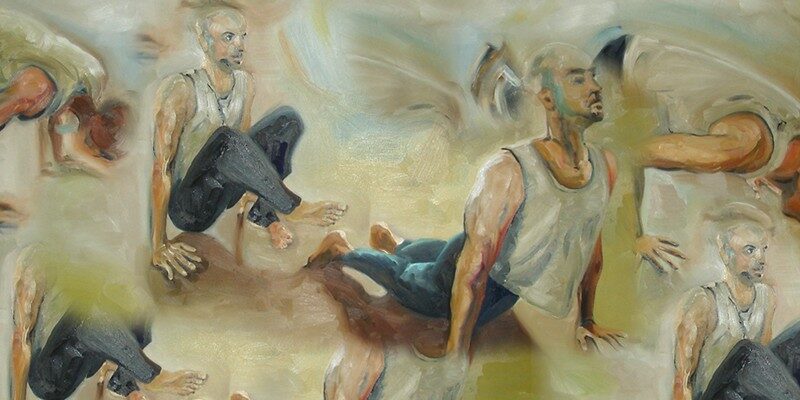
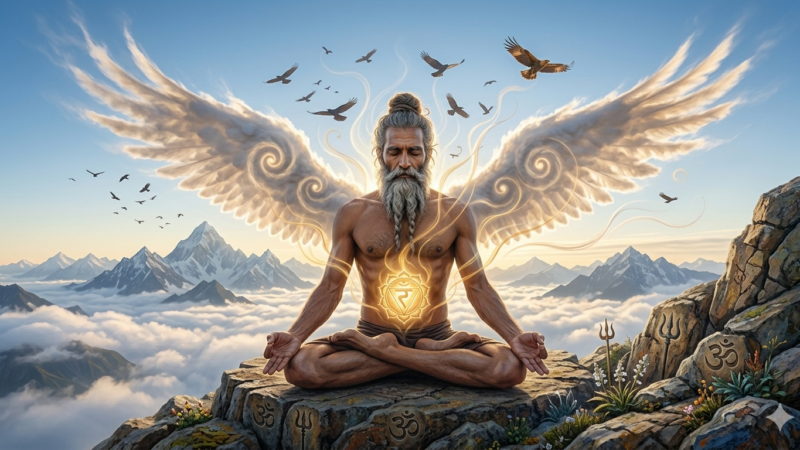
Śvānāsana (श्वानासन): from śvāna (a dog) and āsana (posture). Śvānāsana, the dog posture, is a Haṭha Yoga position in which the back is strongly lengthened, in the image of a stretching dog. There are several variants:
- Adho Mukha Śvānāsana: downward-facing dog
- Ūrdhva Mukha Śvānāsana: upward-facing dog
- Eka Pāda Adho Mukha Śvānāsana: a variant of the downward-facing dog with one leg lifted towards the sky.
- Eka Hasta Tri Pāda Adho Mukha Śvānāsana: a variant of the downward-facing dog with one leg and one arm lifted towards the sky.
The symbolic role of Śvānāsana rests on a sacred balance between protective watchfulness, humility and inner transition. In the Indian tradition the dog is a complex animal, tied at once to earthly faithfulness and to the guardians of the subtle worlds — the dogs of the god Bhairava, or of Yama.
- Watchfulness and spiritual awakening
- The guardian’s attitude: the dog stands for alertness, fine listening and protection. In this posture the practitioner develops a sharpened attention to their own sensations.
- Dynamic rest: just as a dog can pass instantly from sleep to action, Śvānāsana teaches one to stay perfectly calm while remaining ready and rooted.
- Humility and letting go
- The heart above the head: as the gaze and the head incline towards the floor, the intellect gives way to the heart, to intuition.
- A salutation to the Earth: the posture, especially in its downward-facing form (Adho Mukha), is a symbolic bow that purifies the ego.
- Transition, and a bridge of energy
- A bridge between two worlds: the dog is traditionally the keeper of the threshold between the visible and the invisible. In yoga, this posture serves as a major transition between the standing postures and those on the floor.
- Stretching towards the divine: the dog stretching on waking stands for the awakening of the vital energy (prāṇa) and for the wish to align the physical body with spiritual space.