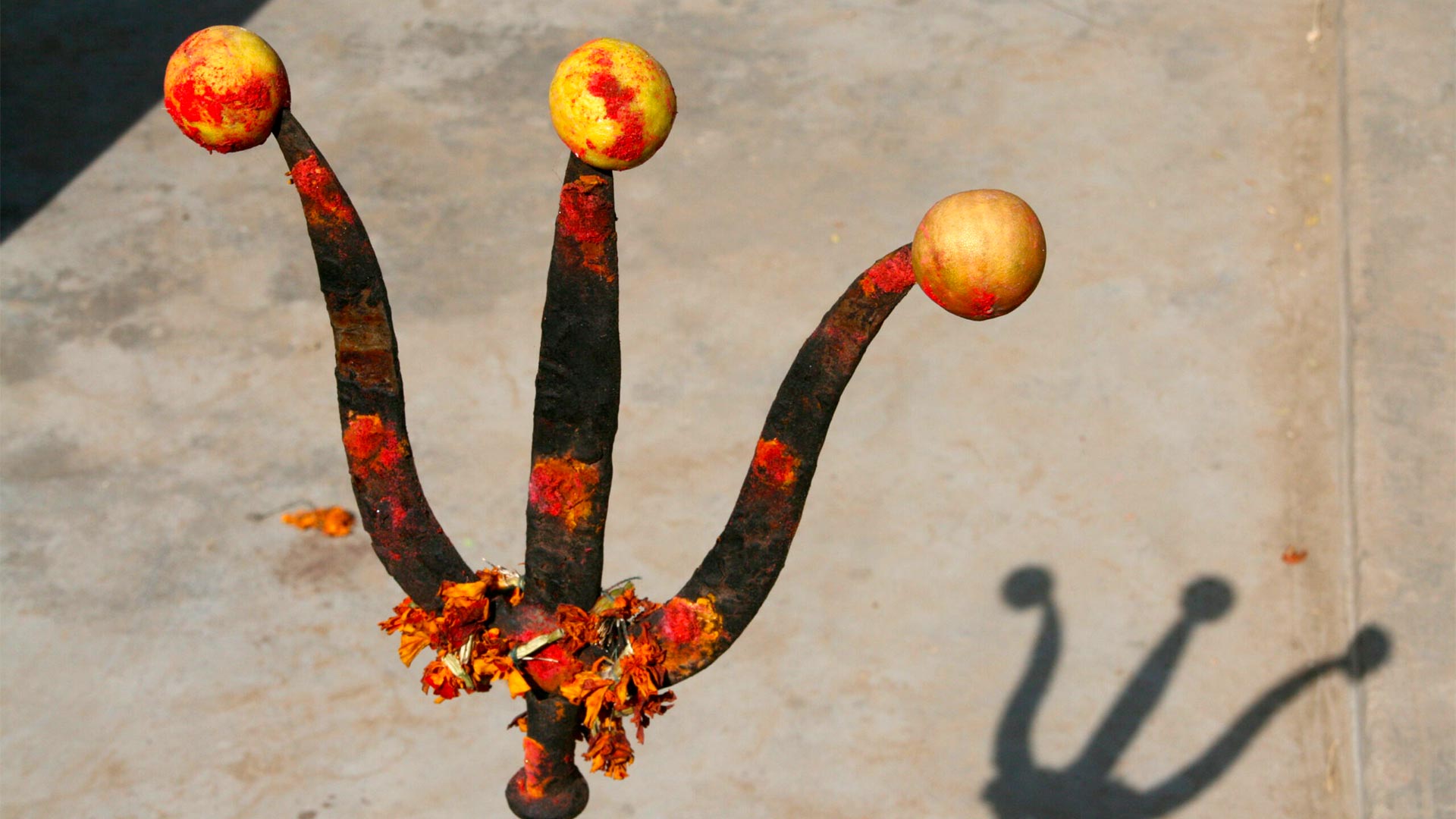
In Ashtanga Yoga, practice is not merely a chain of postures: it rests on three supports gathered under the name Tristana — the breath, the bandhas and the gaze. Together they give the body its stability, the breath its rhythm and the mind its direction. This is what makes the Yoga Mālā, taught by Sri K. Pattabhi Jois, not a simple series of āsana but a complete method of attention.
Vinyāsa, the heart of the “garland of postures”
The pivot of the Yoga Mālā — “the garland of postures” — is the Vinyāsa: the linking movement, coordinated with the breath, that connects one posture to the next. It is described in the fourth śloka of the Yoga Korunta:
“ Trī sthānam avalokayé āsanam prāṇāyāma driṣṭiḥ ”
The Vinyāsa rests on three fundamentals, the Tristana: the breath, the control of the body’s centre, and the gaze.
Tristana: breath, bandha and drishti
The breath — Ujjāyī Prāṇāyāma, the victorious breath
The breath sets the rhythm. It paces the Vinyāsa and ties each movement to the next: without it, the sequence is no more than a succession of shapes.
The bandhas — Mūla Bandha, the centre of the body
Control of the pelvic floor and the abdominal girdle organises the centre of the body. The bandhas stabilise the posture from within and protect the lower back.
The gaze — Drishti, gathered attention
The point of gaze (drishti) keeps the eyes — and then the mind — from scattering. It gathers the attention and directs it within the posture.
A practice that unifies body and attention
Within a session these three elements are never separate: the ujjāyī breath carries the Vinyāsa, the bandhas adjust the placement of the body in the āsana, and the drishti completes this trinity. They answer one another continuously.
For the practitioner, this changes everything. A posture is no longer sought as an outer shape: it becomes a space of presence, built by the breath, supported by the bandhas, lit by the gaze. It is this quality of unity that gives Ashtanga Yoga its depth.
From Tristana to meditation
When the three components are in harmony, synchronised with the movement and the rhythm of the postures, the practitioner (the sādhaka) reaches the Tristana — and opens to the seventh limb of aṣṭāṅga yoga: meditation (dhyāna). By linking Ujjāyī Prāṇāyāma, Mūla Bandha and drishti, the practice becomes steadier, more conscious, more meditative.