Sūryanamaskāra (सूर्य नमस्कार) comes from sūrya, « sun », and namaskāra, « salutation ». It is « the salutation to the Sun », a well-known sequence of Haṭha Yoga postures used as a warm-up. Forms of prostration and salutation exist the world over: Indian, Buddhist, Muslim and others.
In India, two main forms are distinguished:
- The salutation of the Raja of Aundh (western India): originally set out in ten movements in his historic work of 1928, The Ten-Point Way to Health: Surya Namaskars by the ruler Balasaheb Pant Pratinidhi. He published the sequence to improve the health and longevity of his subjects.
- The salutation known as the Mysore form (southern India): popularised later, it includes the variants Sūryanamaskāra A and B within Ashtanga Yoga.
Ancient roots: although the modern dynamic sequence is recent, the mantras and the rituals of prostration before the sun go back to the ancient Vedic texts.
The energetic mechanism (the inner sun and Agni):
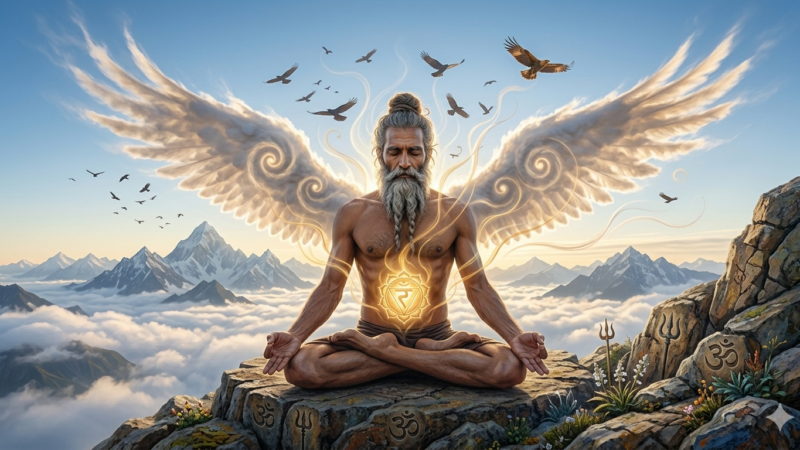
Depending on the method, the ritual comprises between eleven and eighteen movements synchronised with the breath. Practised in honour of the sun, source of life, it strongly stimulates Piṅgalā Nāḍī, the solar channel associated with heat and action.
That activation wakes Agni, the sacred fire, at once. This « inner sun » stands for the digestive fire and the metabolism, both necessary to purify the organism, clear toxins and maintain the health of the body as a whole.
A spiritual symbol: Sūryanamaskāra embodies transformation, purification, light, and the warmth of the inner flame.