Saṃsāra
Saṃsāra
the swirl of existence, the cycle of lives from birth to rebirth.
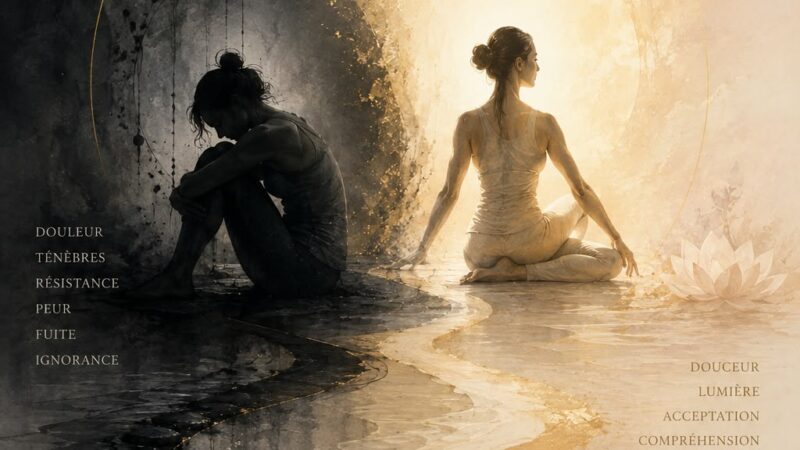
Saṃsāra (संसार), in Sanskrit, means literally « the continuous flow », « the current » or « the cycle of existences ». In the religions of India — Hinduism, Buddhism, Jainism and Sikhism — Saṃsāra names the endless cycle of rebirth and of suffering.
Since transmigration is bound up with pain, one must escape it by seeking the final liberation (Mokṣa) of the individual soul (Jīva) from the cycle.
How the word Saṃsāra is formed
• Saṃ: a prefix meaning « together », « intensely » or « completely ».
• Sāra: from the verbal root sṛ, « to flow », « to run » or « to move ». Saṃsāra is thus « flowing together », drifting in the current of existences.
Related ideas
• Transmigration: the passage of the soul, or of the stream of consciousness, from one body to another after death.
• Karma: the universal law of cause and effect, in which every action shapes the nature of lives to come.
• Mokṣa (or Nirvāṇa): the final spiritual liberation that brings one out of Saṃsāra.
Saṃsāra in Hinduism
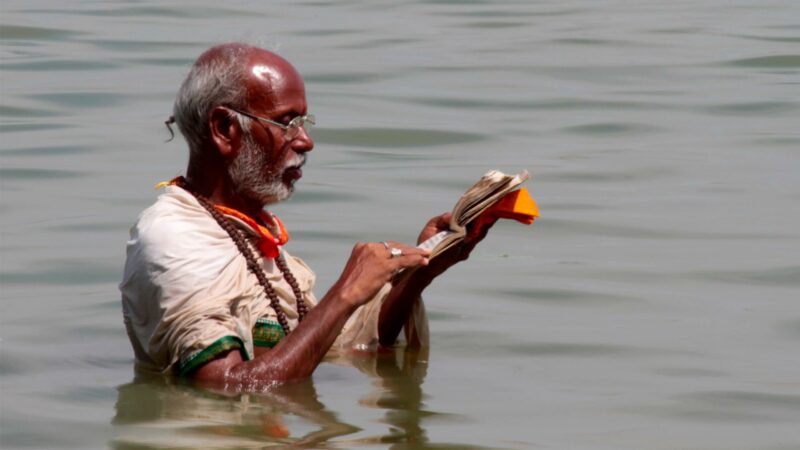
In Hinduism, Saṃsāra is seen as a prison — gilded at times, but fundamentally unsatisfying — in which the soul undergoes a cycle of deaths and rebirths. The ultimate aim is to break that cycle and reach Mokṣa.
How does one leave Saṃsāra?
Liberation comes when the individual soul (Ātman) realises its perfect oneness with the universal Absolute (Brahman). Hinduism offers four great ways (Mārga) to reach it:
1. Karma Yoga: the way of selfless action, acting without attachment to the fruits of one’s acts.
2. Bhakti Yoga: the way of spiritual devotion and pure love towards a deity (Kṛṣṇa, Śiva, Devī and others).
3. Jñāna Yoga: the way of transcendental knowledge and the study of the sacred texts (the Upaniṣads).
4. Rāja Yoga: the way of deep meditation and mastery of the mind (the Yoga Sūtra of Patañjali).
The Tibetan Buddhist perspective
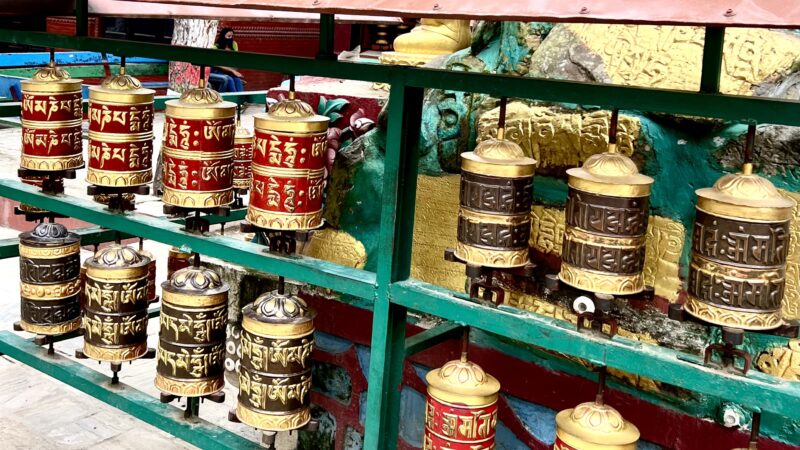
In the Tibetan tradition, the « Wheel of Life » (Bhavacakra in Sanskrit), painted on the traditional scrolls called thangkas, shows in images the various worlds and the psychological mechanisms that keep beings prisoners of Saṃsāra.
See also in the glossary: « The Wheel of Life ».