This ‘News Letter’ no. 7 was written in November 2011 in Athens – Greece
From darkness to light, or from pain to sweetness, the way of Yoga, the path towards plenitude…
By Jean Claude Garnier
We can only see correctly with the heart, the main part is invisible for the eyes. Antoine de Saint Exupéry –
In « Le Petit Prince »

In our everyday life, it is justified and normal to try to avoid the pain. Our nervous system pushes us to do so: if we put our hand on a very hot surface, our reflexes will instinctively make us take it away.
Larousse Dictionary definition :
The pain: feminine Noun (Latin dolor, doloris)
- Painful, unpleasant sensation, felt in a part of the body:
ex. : the deep pain caused by a burn.
- Painful feeling, affliction, moral suffering; sorrow, punishment:
ex. : to revive a former pain. Pain is an impression perceived as abnormal and unpleasant by an alive part of the body, and perceived by the brain. It is an unpleasant sensory and emotional experience associated sometimes with real or potential tissular damage.
Sanscrit definition :
Duḥkha (Suffering, sorrow, affliction, pain, anxiety, dissatisfaction, discomfort, anxiety, tension, misfortune and aversion).
Viparinama duḥkha : suffering due to change…
Sankhara duḥkha : it is the aspect of the conditioning. ” All that is of the order of the sensation is of the order of suffering “.
Kleśa (Affliction, suffering, distress).
Himsa : injuries or damages.
Non-violence (ahiṃsā – अहिंसा), a mythe…
The two famous Indian figures , Gandhi and Sri Aurobindo made known ” the powerful strength of love ” that we call “non-violence” in the West. Both had numerous stays in prison and engaged in many conflicts that they thought useful . It is important not to confuse non-violence and a neutrality of attitude which is, in fact, running away from oneself.
Non-violence towards oneself is unfortunately confused with letting-go and carelessness, while Yoga requires a tonic muscle structure, a strength of perseverance (which is considered in the Zoroastrian tradition as the biggest of the virtues) and a thought without defect. The illusion, comes because, too often, we confuse non-violence and Yoga practice,with an attitude of non-effort towards oneself, of not pushing oneself etc. It is forgetting that in the Indian tradition, the word Haṭha Yoga (हठयोग) means at a linguistic level “bound by lively strength or union by tenacity) “, we know more often the esoteric meaning of the word Haṭha which comes from Ha = Sun and Tha = the Moon, that is union by the strengths of the Sun and the Moon in the Catholic tradition to reach the theological virtues (faith, hope and charity), it is necessary to develop four cardinal human virtues (caution, temperance, strength and justice).
We are not going to reach to the state of ” Sthira sukham asanam ” (Y.S. II-46), magnificently translated by Gérard Blitz by ” the posture must be firm and pleasant “, effortless, without discomfort, or pain … It is like thinking that we can reach a total transformation of oneself without doing anything, effortlessly, without hard work……. do not confuse the state of arrival with that of the departure and the route …
The departure is difficult, it is to accept what we ARE … Accept our asymmetries, postural imbalances, neuromuscular dysfunctions, accept our very often unconscious tensions and our disharmonious breathing, and accept the psychic contents of our tensions.
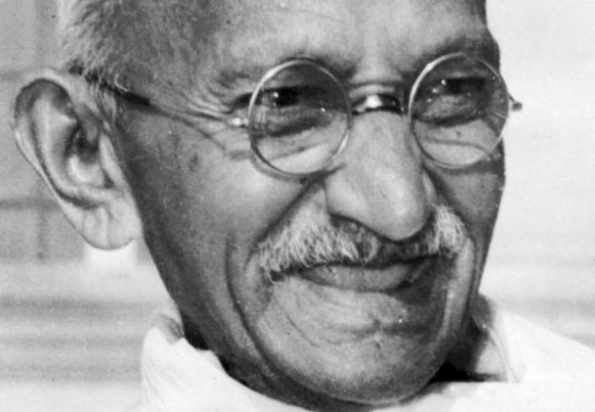
” The ahimsa is not compatible with the fear … I see how I can successfully preach the ahimsa to those who know how to die, but not to those who are afraid of the death “Gandhi (Letter to ’āshram, pp. 139/142).
As expressed so well by Satprem in the title of one of his books ” Son of the Sky by the body of the Earth “, it is through the body of earth *, the body of flesh, the dense body (sthula-sarira ), that will, by practicing Yoga, awake the body of light, the body of energy ( pranamaya-kosa ), the symbolic body (linga sarira).
But in this subtle body (sukshma-sarira ), there are also blockages, painful blocks, accumulations and discharges of energy …
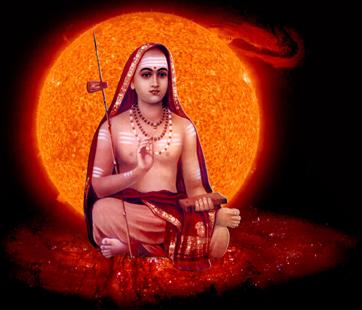
* Yoga distinguishes generally “five envelopes” (pañcha-kosa) or “girdles”, which wrap up the One (atman ). The unrefined body (sthula¬sarira ), in other words the physical body, contains only one envelope: the envelope of nutriment ( annamaya-kosa ); the subtle body (sukshma-sarira ) contains three envelopes: the envelope of vital energy (pranamaya-kosa ), the mental envelope (manomaya-kosa ), the envelope of the intellect ( vijñanamaya¬kosa ); the causal body (karana-sarira) that contains the envelope of bliss ( anandamaya-kosa ); finally, the One (atman ). It is what was taught in the VIIIth century by Ādi Śaṅkarācārya, the great master of the Védanta, in ” The most beautiful fleuron of discrimination ” (Vivéka-chudamani).
Om Shanti,
Jean Claude Garnier