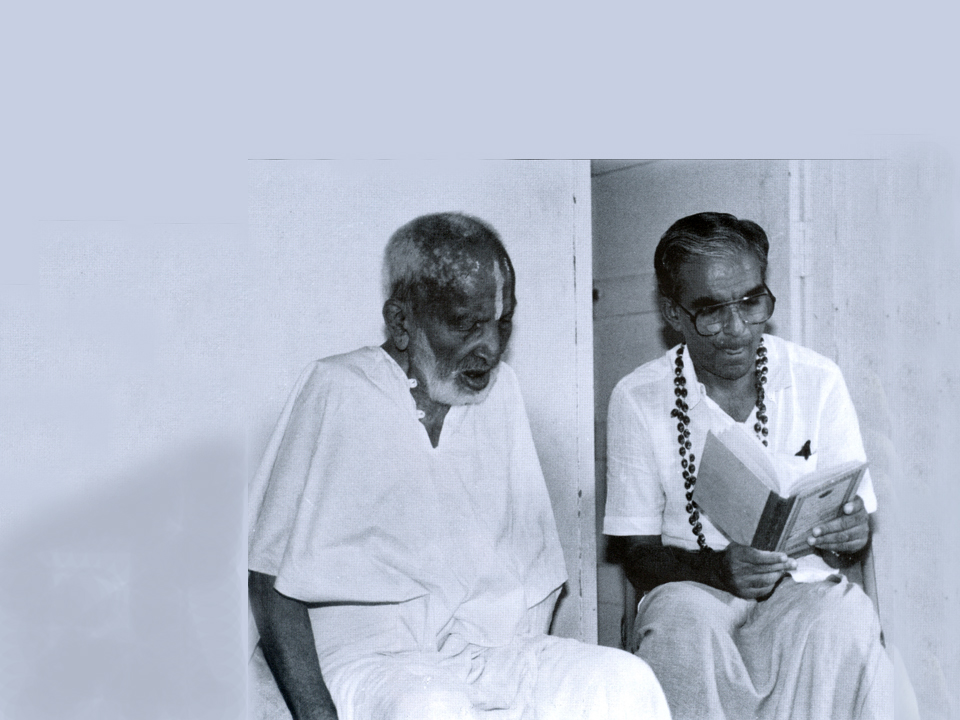
Sri T. Krishnamacharya (1888–1989) is one of the great figures of modern yoga: the light of his knowledge deeply influenced the whole world. A descendant of Nāthamuni, promised an exceptional destiny at birth, he made, over a life that would fill several ordinary ones, many extraordinary encounters.
An extraordinary youth
Sri Tirumalai Krishnamacharya was born on 18 November 1888, the eldest of six children. His father, a great religious master, took charge of his education in the knowledge of the Vedas. Gifted with great physical strength and an uncommon intelligence, the adolescent set out to discover his country, its sages and its mystics. He would master the most varied disciplines — from close combat to Vedic ritual — speak seven languages fluently, and explore each of the classical viewpoints of Indian philosophy, earning the highest distinctions.
Varanasi and the Himalayas
Around eighteen, in Benares, he received in a single night certain secrets of Sanskrit grammar from a true genius, Shivakumar Shāstri. Back in Mysore he received a full three-year education in the Vedānta. Returning to Benares, then advised by his tutor in Patna, he walked to the Himalayas — to the foot of Kailash, abode of Śiva and axis of the universe, and to the holy lake of Mānasarovar, where he learned and practised intensely every aspect of yoga. Thus he became one of the greatest yogins of his time.
The Maharajah of Mysore
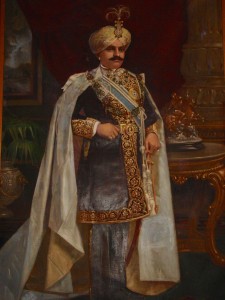
In 1924, invited by the Maharajah of Mysore — who saw in yoga a help for his physical ailments — he opened a yoga school in the palace, which he directed until 1955. Settled in Mysore in his forties, he married the very young Srimati Namaginammal, who gave him six children. When he moved to Madras in the 1950s, he treated two eminent men struck by paralysis: the lawyer Sri T. R. Venkatarāma Shāstrī and Sir Alladi Krishnaswāmi Iyer, one of the drafters of the Indian constitution.
The legend of the Yoga-Rahasya
Only a few excerpts were known of the Yoga-Rahasya, an important work lost for centuries. Krishnamacharya declared he had received the whole of it in a dream, from the very mouth of Sri Nāthamuni, a ninth-century Vaishnava saint. He wrote its verses down only in 1965. The text stresses the importance of yoga for women, its practice during pregnancy, its adaptation to each person and each stage of life, and its essential therapeutic value.
His sons, Desikachar and Sribhashyam
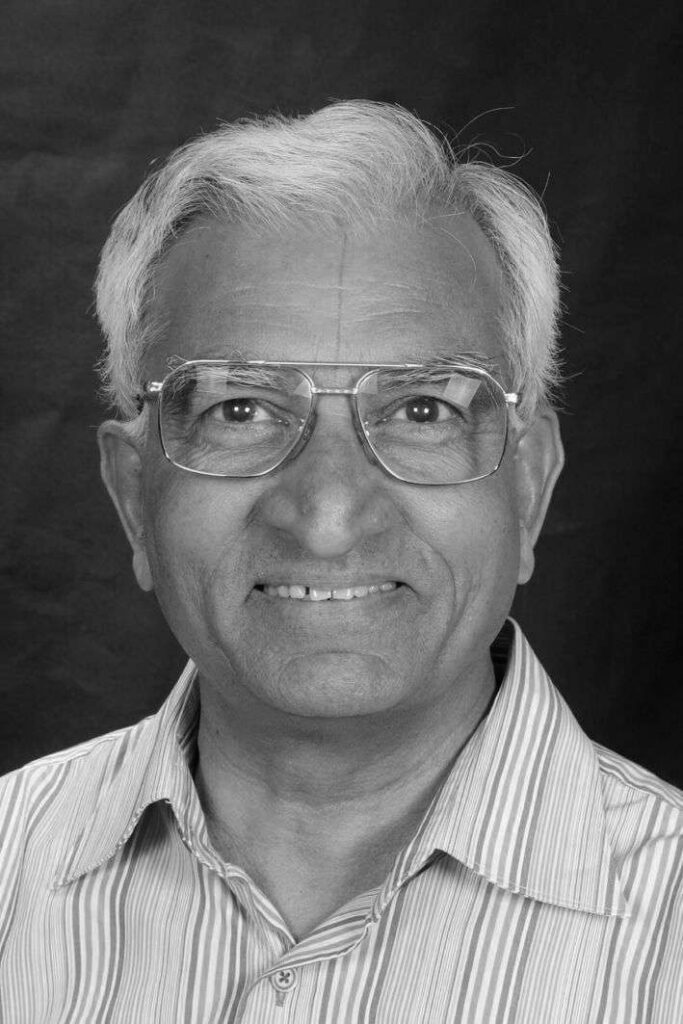
Two of his sons became yoga instructors. The elder, T. K. V. Desikachar, directed the Krishnamacharya Yoga Mandiram in Madras, a recognised yoga-therapy centre. His younger son, Sri Bhashyam, settled in Nice and taught in France and Switzerland (the Yogakshemam school).
The transmission
Krishnamacharya’s transmission to the West had a curious fate. Among his students: Indra Devi, Yvonne Millerand, T. K. V. Desikachar, K. Sribhashyam, Sri B. K. S. Iyengar and Sri K. Pattabhi Jois.
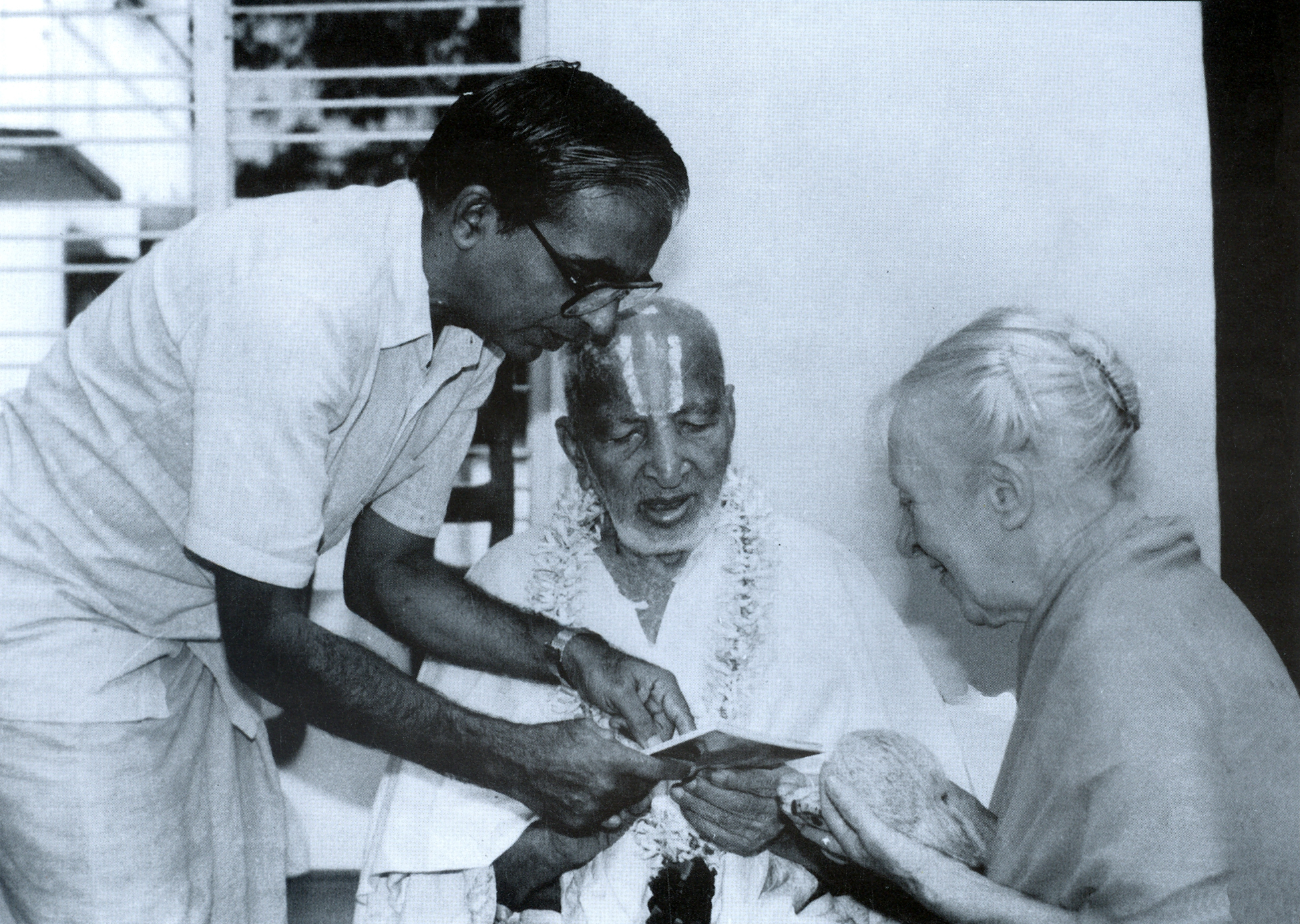

His teaching is firmly rooted in French-speaking countries (France, Switzerland, Quebec), chiefly through his two sons. In the English-speaking world it is best known through the interpretations of his brother-in-law B. K. S. Iyengar and of Sri K. Pattabhi Jois, both of worldwide renown.
His death
He died on 28 February 1989 in Chennai, at almost 101. True to tradition, he never left his native India — and yet the light of his knowledge deeply marked the whole world.
“I met him only three times, but I will never forget his infinite quality of presence.”
Jean-Claude Garnier
“Yoga is India’s greatest gift to the world.”
Sri T. Krishnamacharya
Further reading
Sources: The Yoga of the Yogi — The Legacy of T. Krishnamacharya (Kausthub Desikachar, KYM); Shri T. Krishnamacharya 1888–1988, A Hundred Years of Bliss; the magazine Viniyoga n° 24; the Yoga Sūtra of Patañjali translated and commented by T. K. V. Desikachar; The Heart of Yoga (T. K. V. Desikachar).
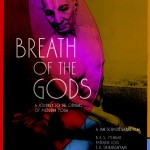
Film: Breath of the Gods — A Journey to the Origins of Modern Yoga, by Jan Schmidt-Garre (105 min): a moving testimony to Krishnamacharya’s life, recalled by his disciples (Iyengar, Pattabhi Jois, Sribhashyam) and his children.
Websites: kym.org · khyf.net · bksiyengar.com · kpjayi.org · yogakshemam.net