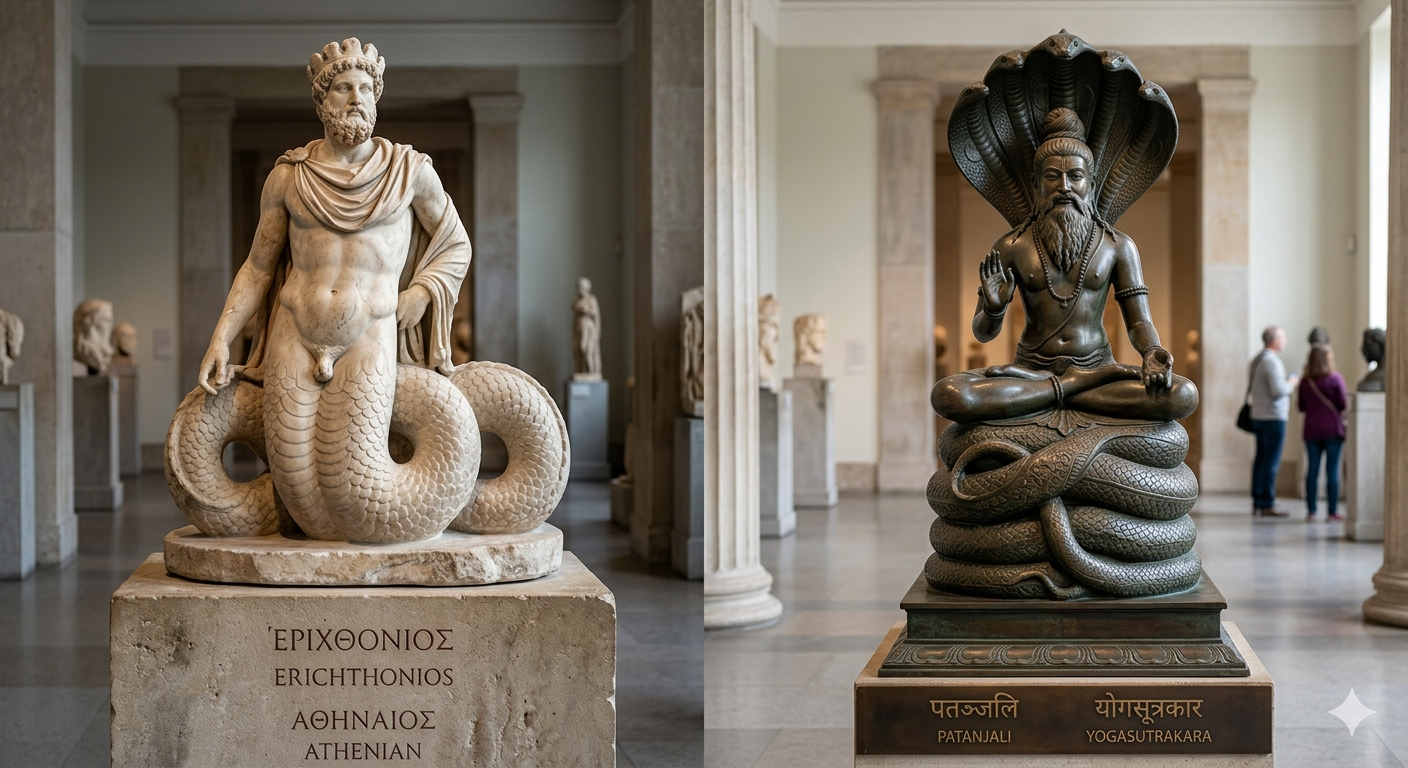
“Greece is the embodiment of beauty and light.”
Pascal Bruckner
Greece and India share a long common history. For about two centuries there existed Indo-Greek kingdoms, born from the territories conquered by Alexander the Great — and their mythologies show striking affinities.
Athena and the Śakti
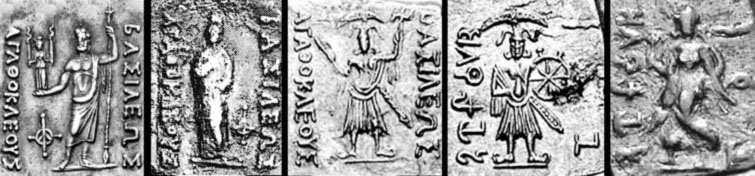
Between Athena and the Śakti — the great Indian goddess, the feminine creative energy in her many forms (Devī, Umā, Pārvatī, Durgā, Lakṣmī, Kālī, Sarasvatī…) — the common points are many, as they are in their offspring: Erichthonius for Greece, Gaṇeśa or Skanda / Murugan / Kārttikeya for India.

Erichthonius and Gaṇeśa: born of the earth
According to Homer, Erichthonius is the son of Hephaestus and Gaia (the Earth): Hephaestus tries to force himself on Athena; the goddess wipes herself with a piece of wool that she throws to the ground, and the Earth, thus made fertile, gives birth to Erichthonius (from erion, wool, and khthōn, earth). In the same way, according to the Śiva Purāṇa, Pārvatī conceives Gaṇeśa by mixing clay with the secretions of her skin.
The Pleiades and the Krittikā
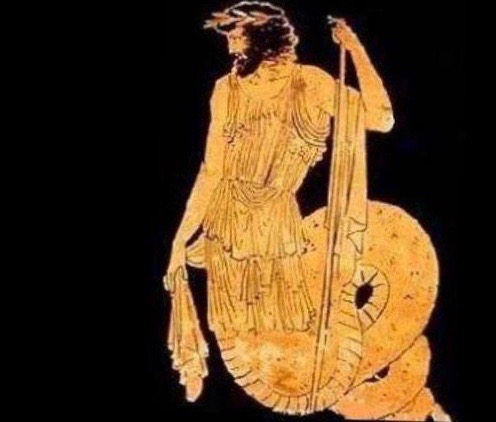
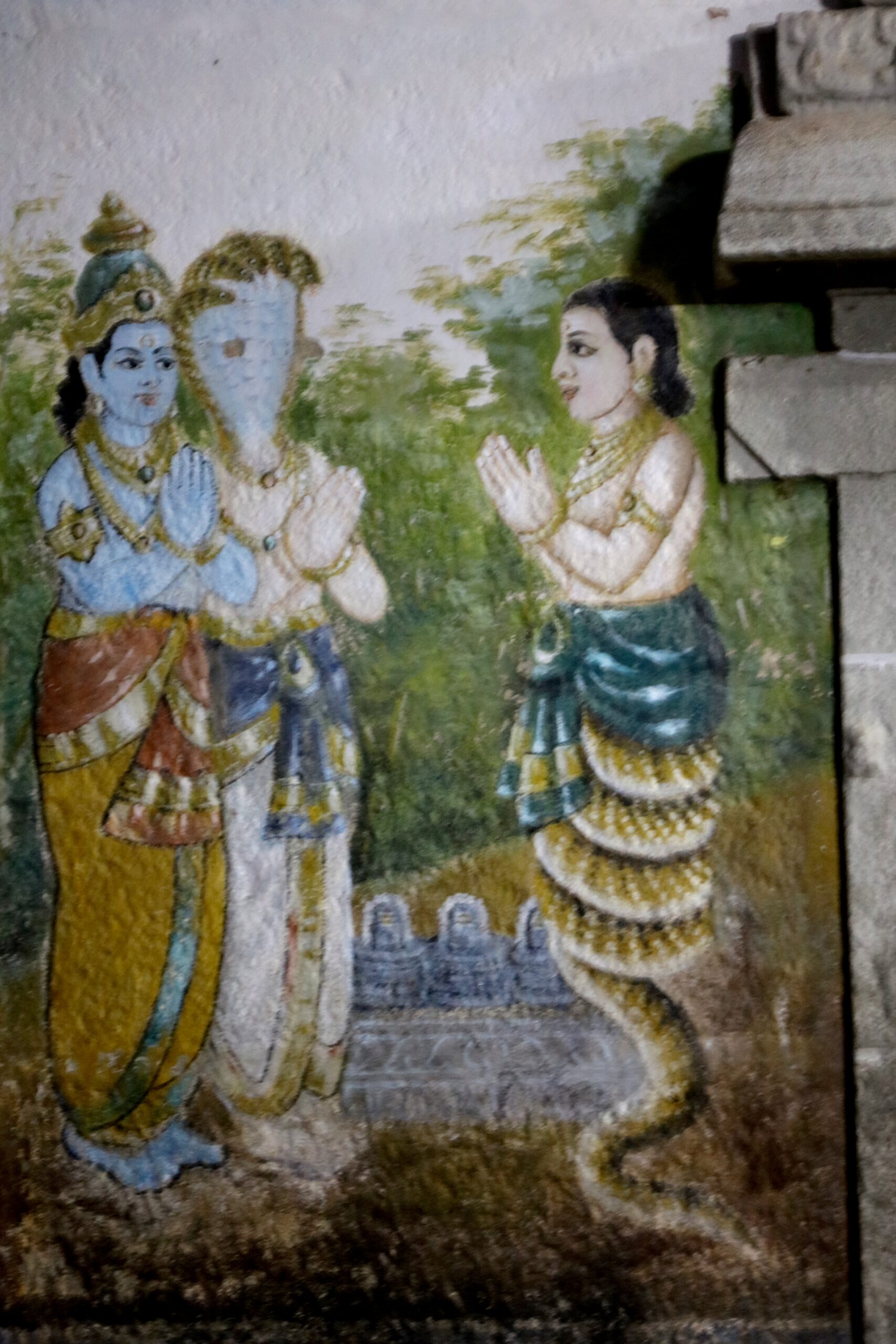
In Greek mythology, the Pleiades — the seven Krittikā — are seven sisters, daughters of the Titan Atlas and Pleione: Maia, Alcyone, Asterope, Celaeno, Electra, Taygete and Merope. The Sapta Mātṛkā, the seven divine mothers, were regarded as the personified śakti of the various gods: Brahmāṇī (Brahmā), Vaiṣṇavī (Viṣṇu), Māheśvarī (Śiva), Indrāṇī (Indra), Kaumārī (Skanda), Vārāhī (Varāha) and Cāmuṇḍā (Śiva). Derived from the goddess Caṇḍī / Caṇḍikā, they are the personification of the seven stars of the Pleiades.