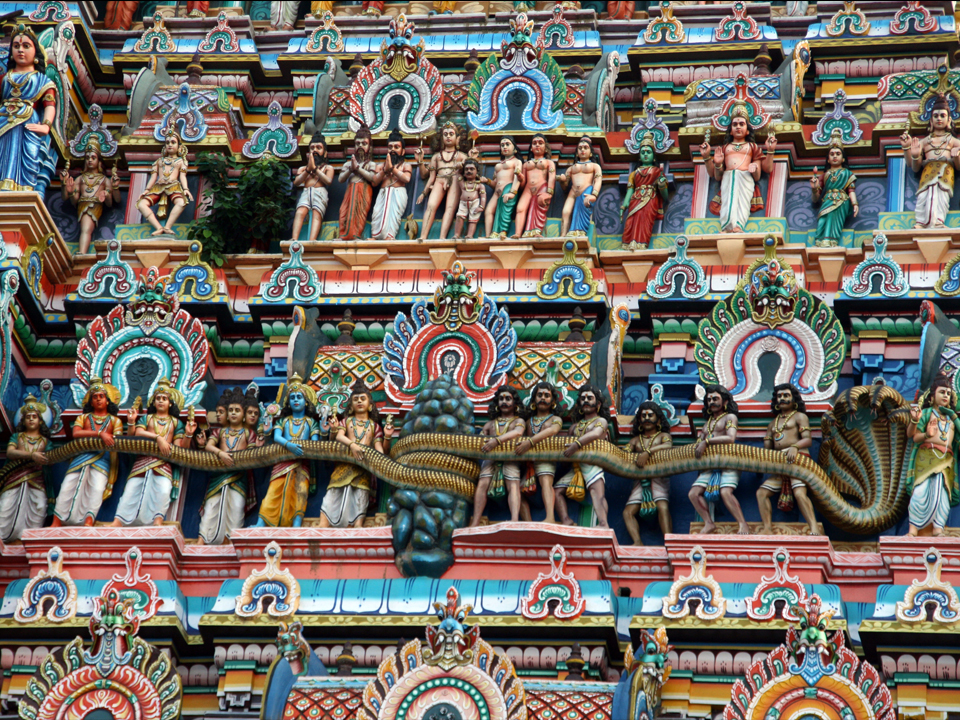
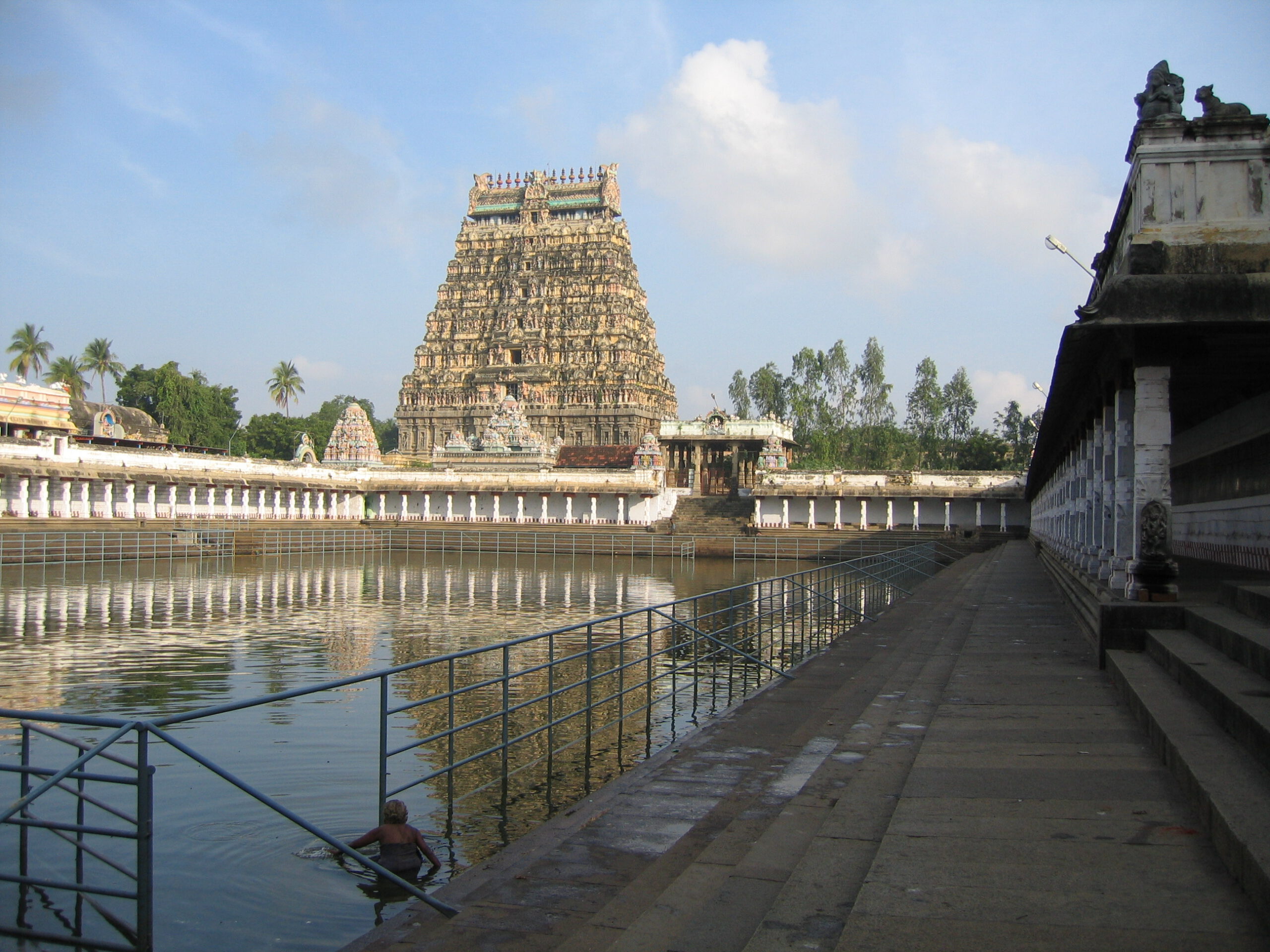
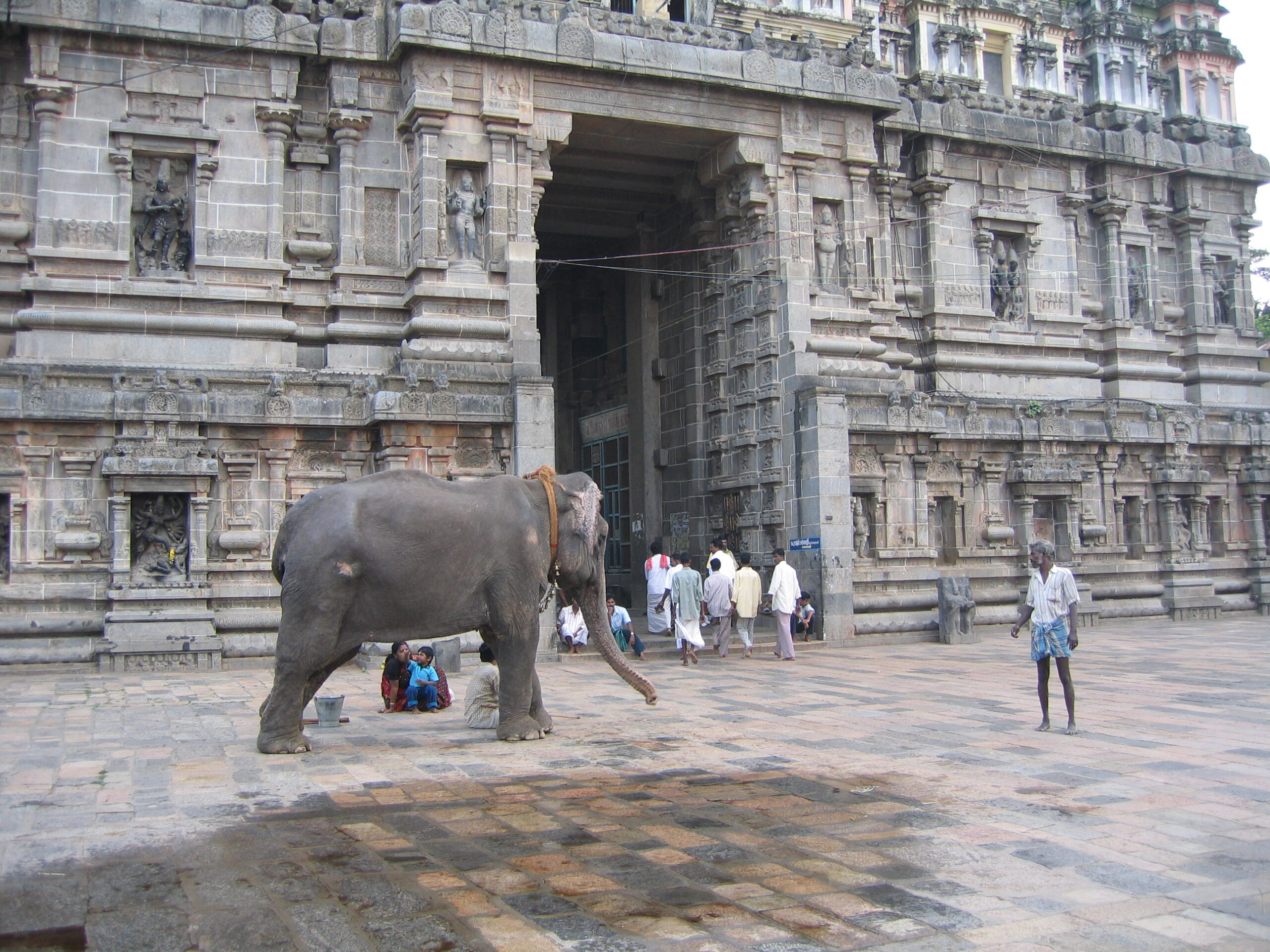
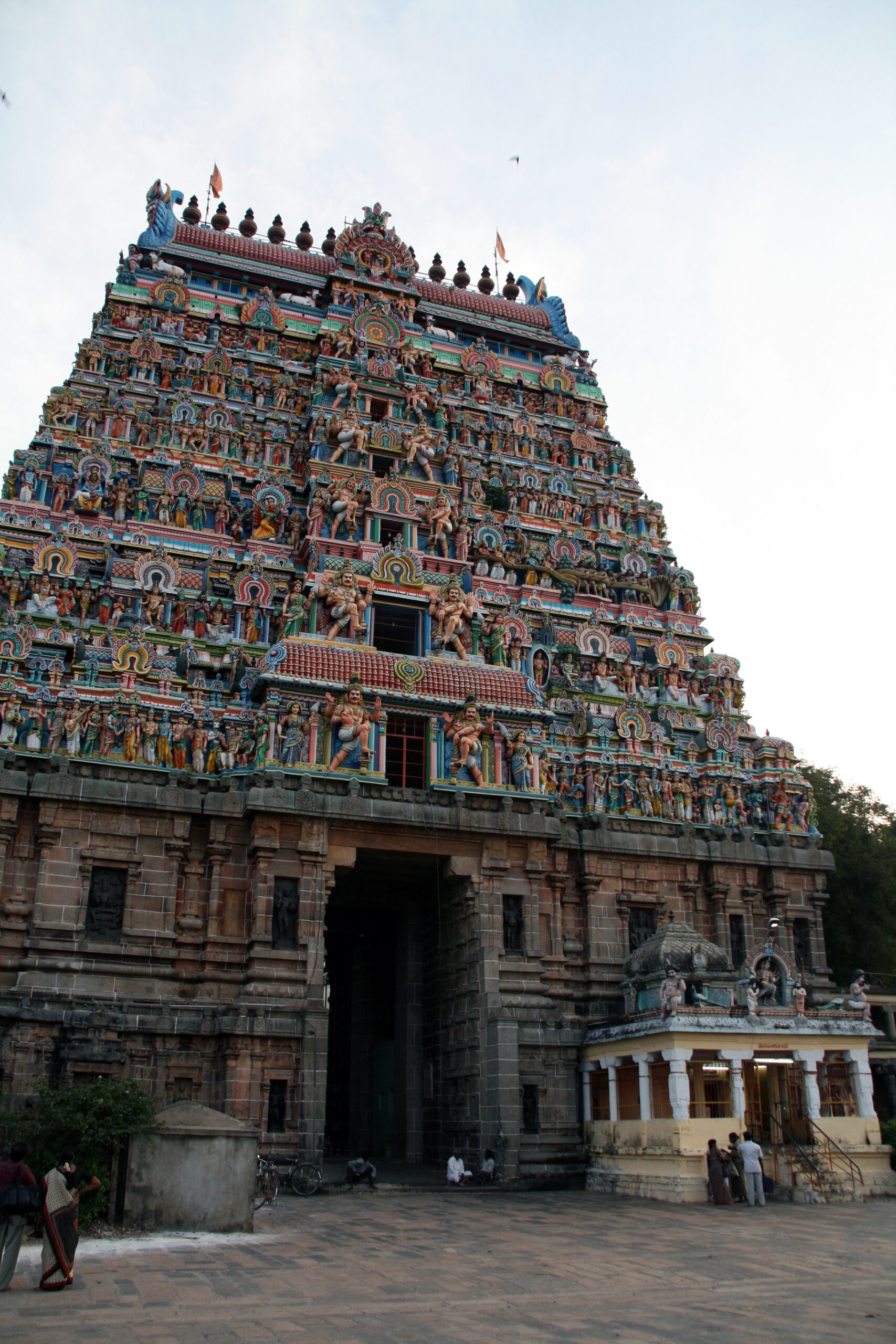
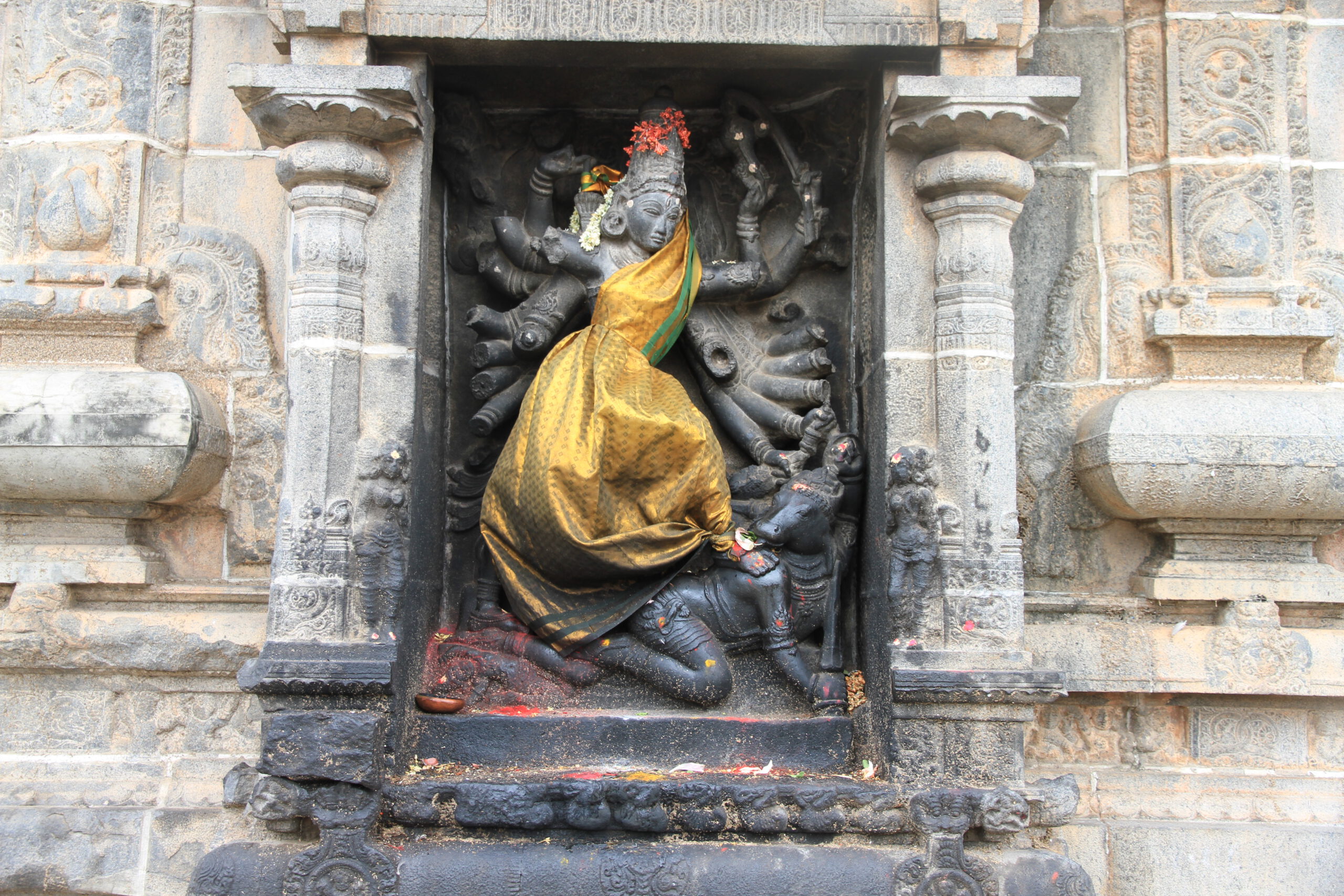
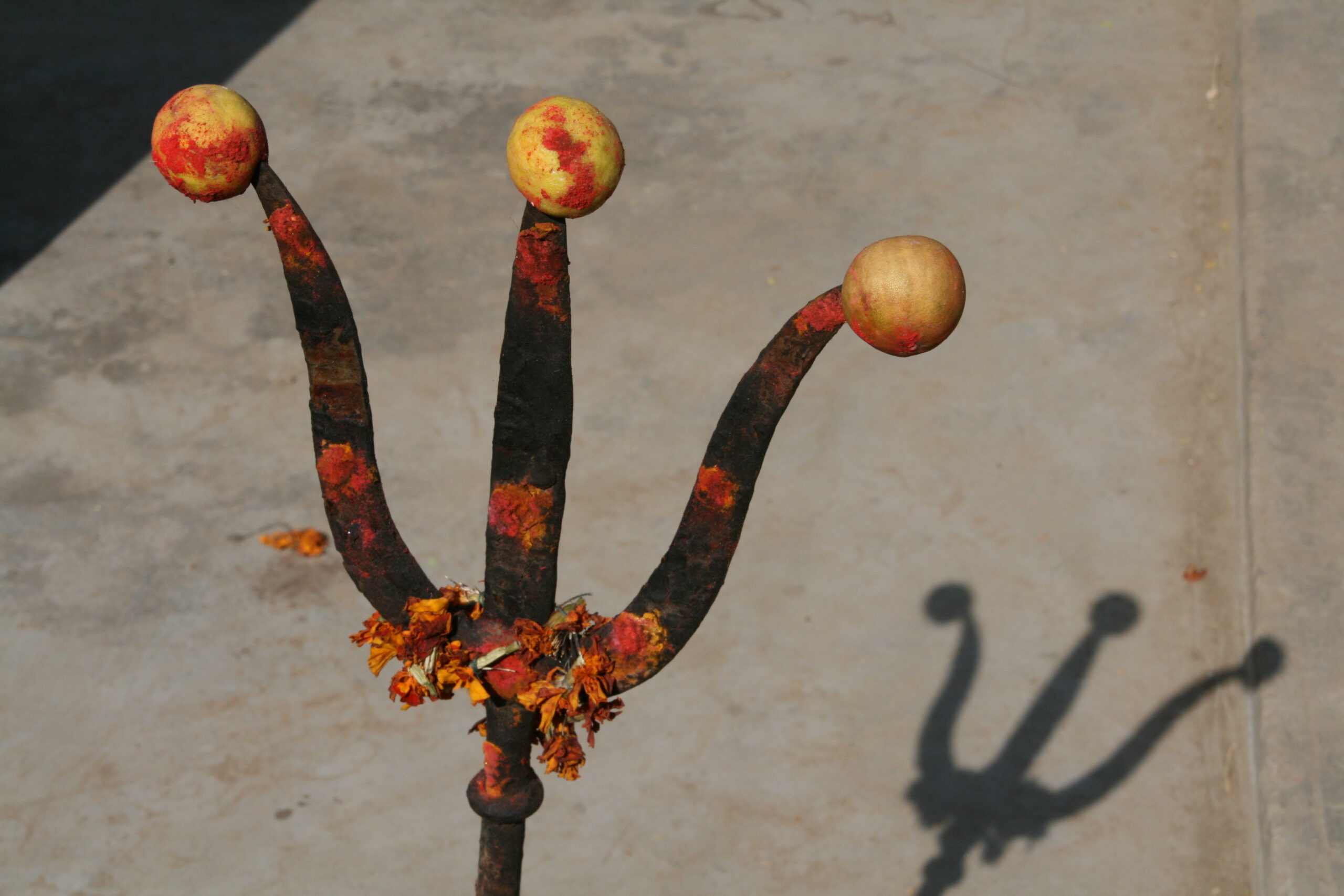
Chidambaram is famous throughout India for its temple dedicated to Śiva as Naṭarāja, the “cosmic dancer” who dances creation (Ānanda Tāṇḍava). This 22-hectare complex, from the late Chola empire (12th c.), has four great gopuram facing the cardinal points, carved with reliefs of the Hindu myths.
The symbolism of Śiva Naṭarāja
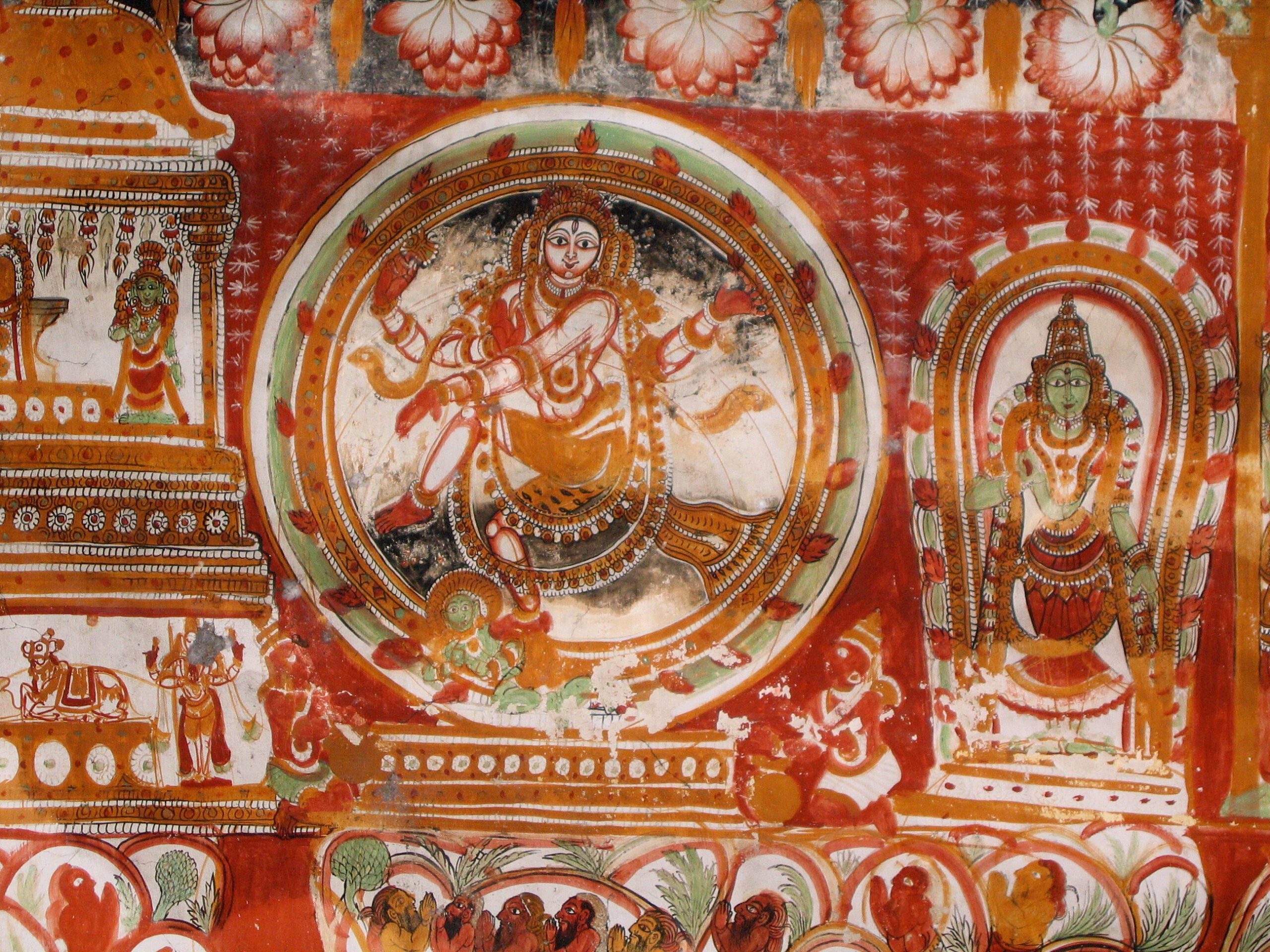
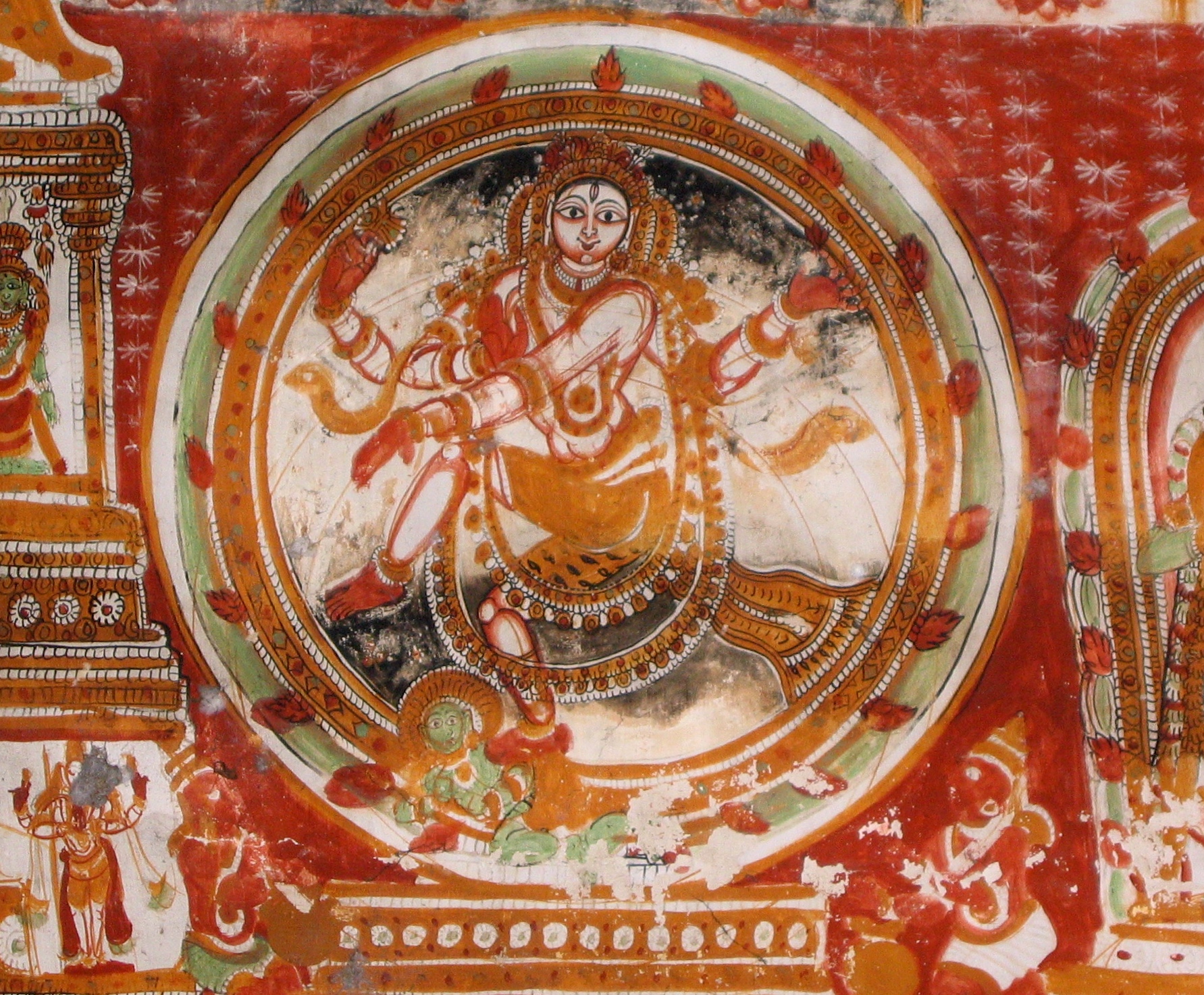
- The ring of fire (thiruvāsi) symbolises the vibrant, cyclical nature of life.
- The right foot crushes the demon Mūlayaka — the destruction of ignorance (avidyā).
- The raised left leg figures the path to liberation.
- The right hand in patāka (open palm): protection, keeping fear at bay.
- The other right hand holds the ḍamaru, the drum — creation through rhythm and time.
- The left hand in kari-hasta points to the raised foot (“Here I am”): the rise out of ignorance.
- The other left hand holds the fire of transformation, the vital energy (prāṇa).
- The crescent moon (Chandra): the highest knowledge; the Ganges in the hair: the life-giving water.
- The cobra coiled at the waist: the seed of all future creation, immortality; the serene face: balance at the heart of difficulty.
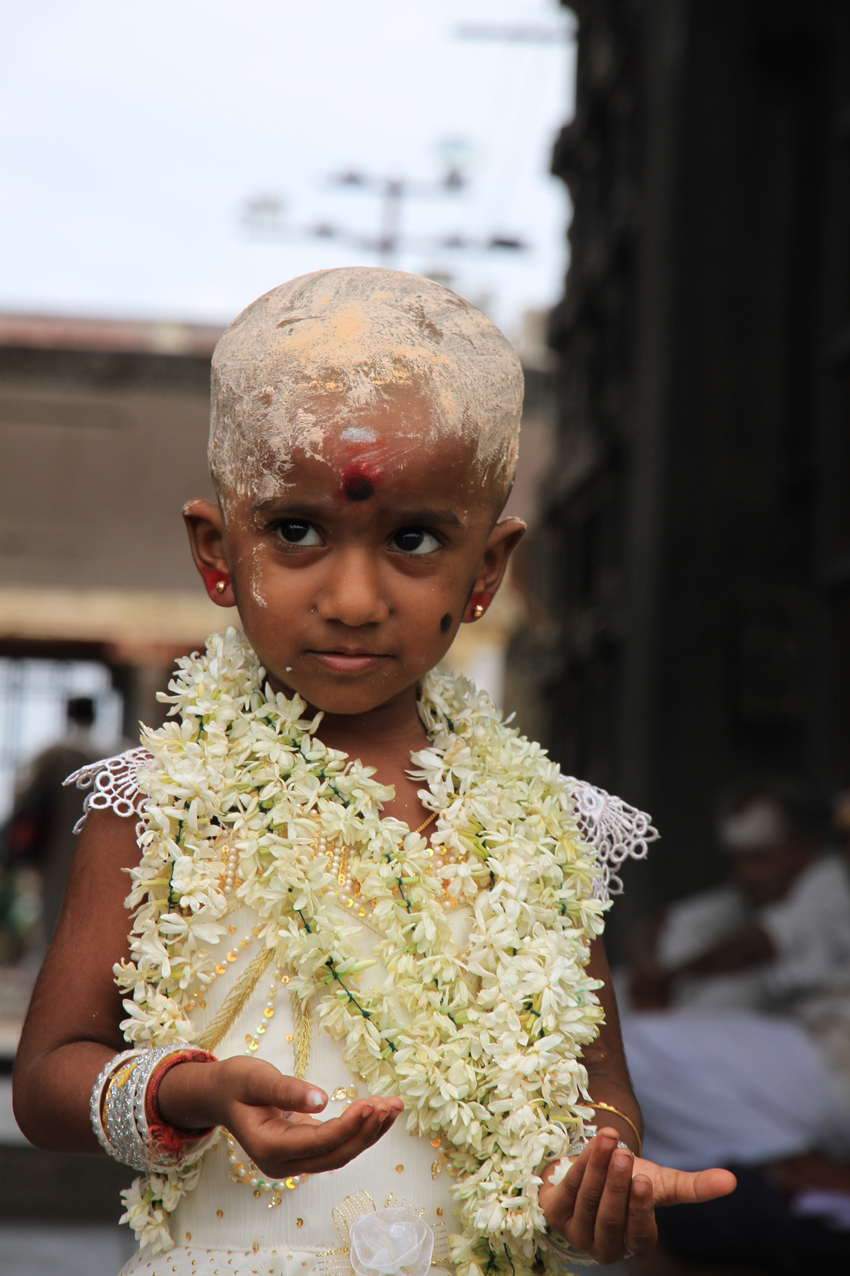
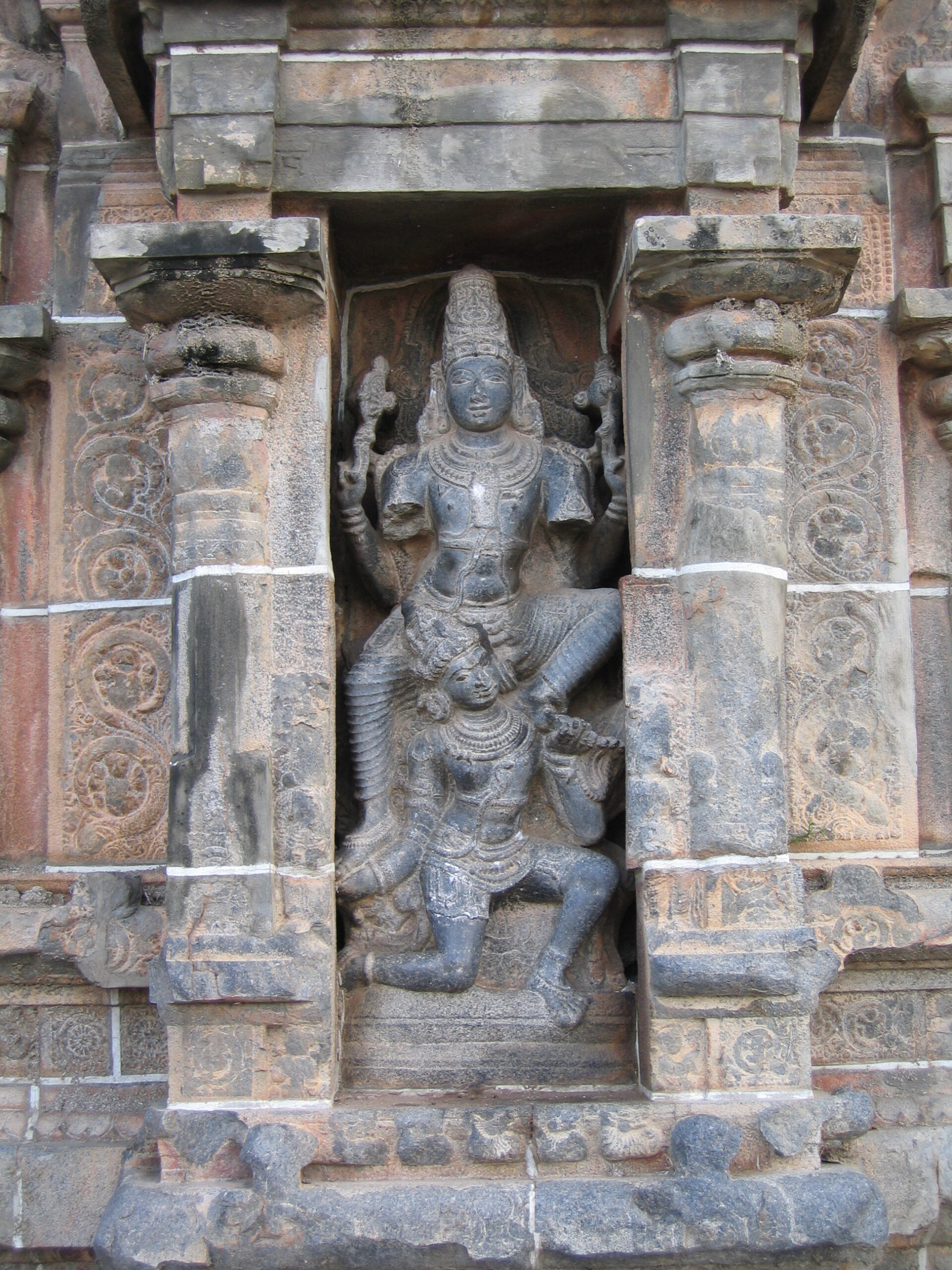
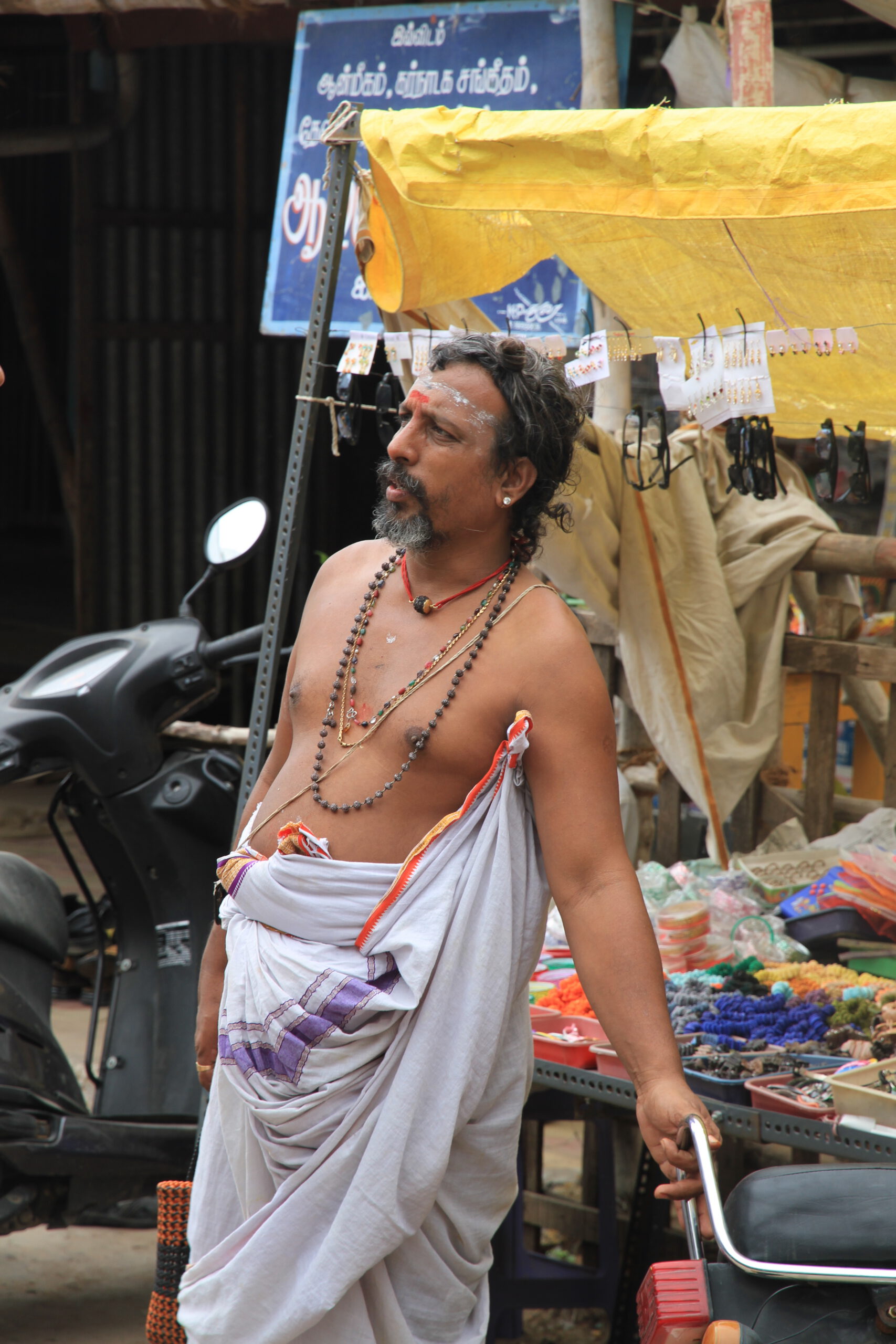
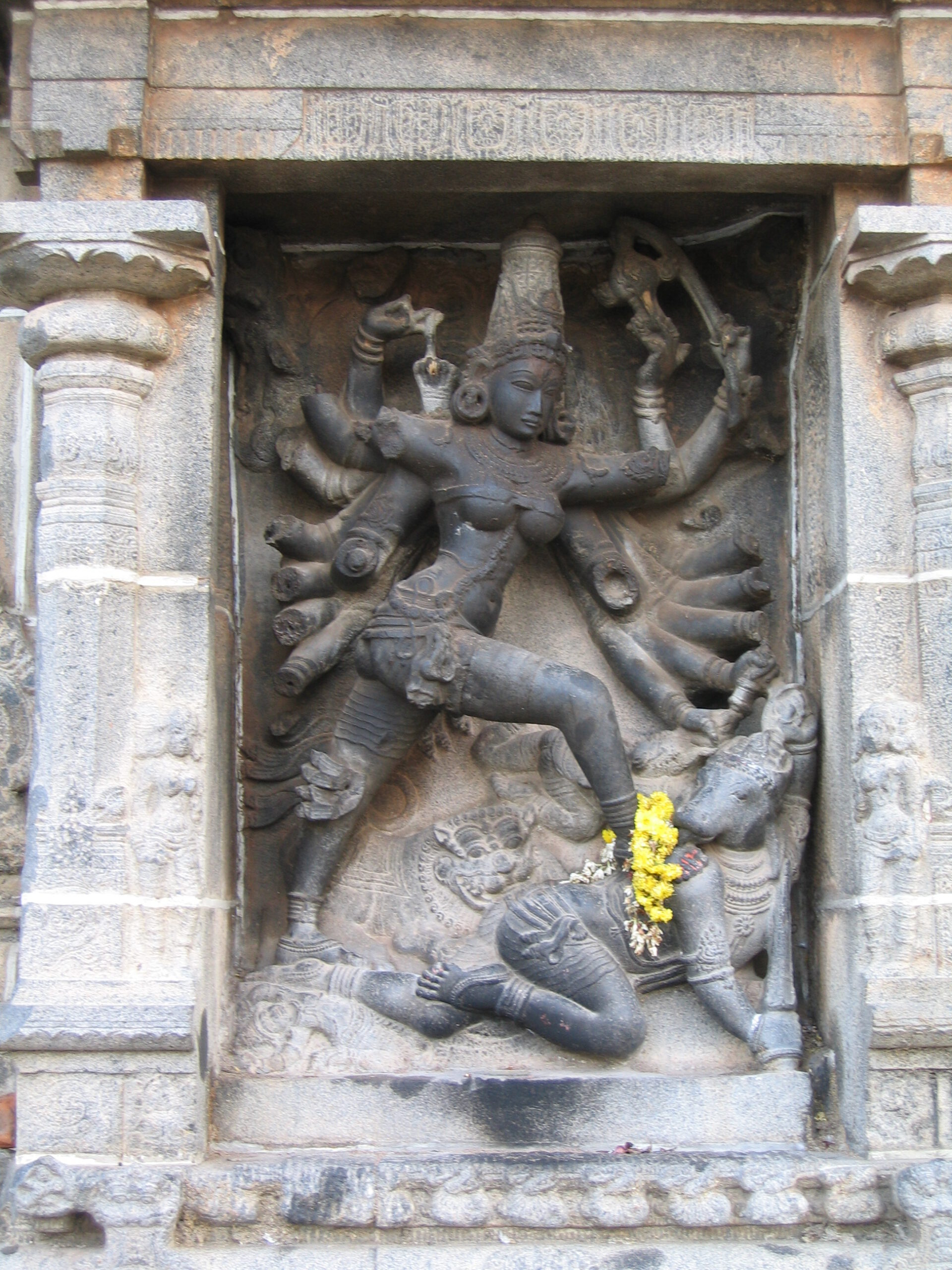
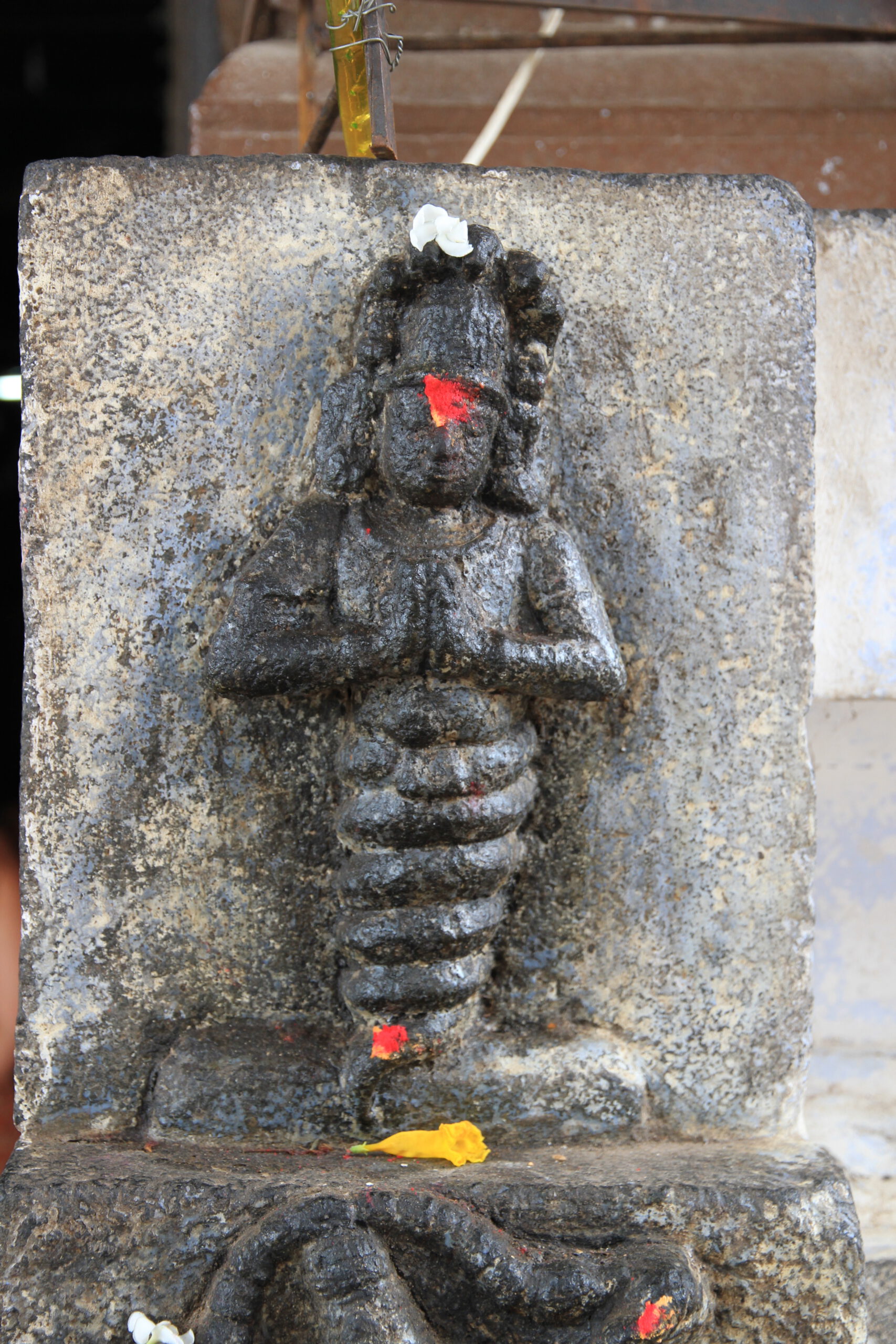
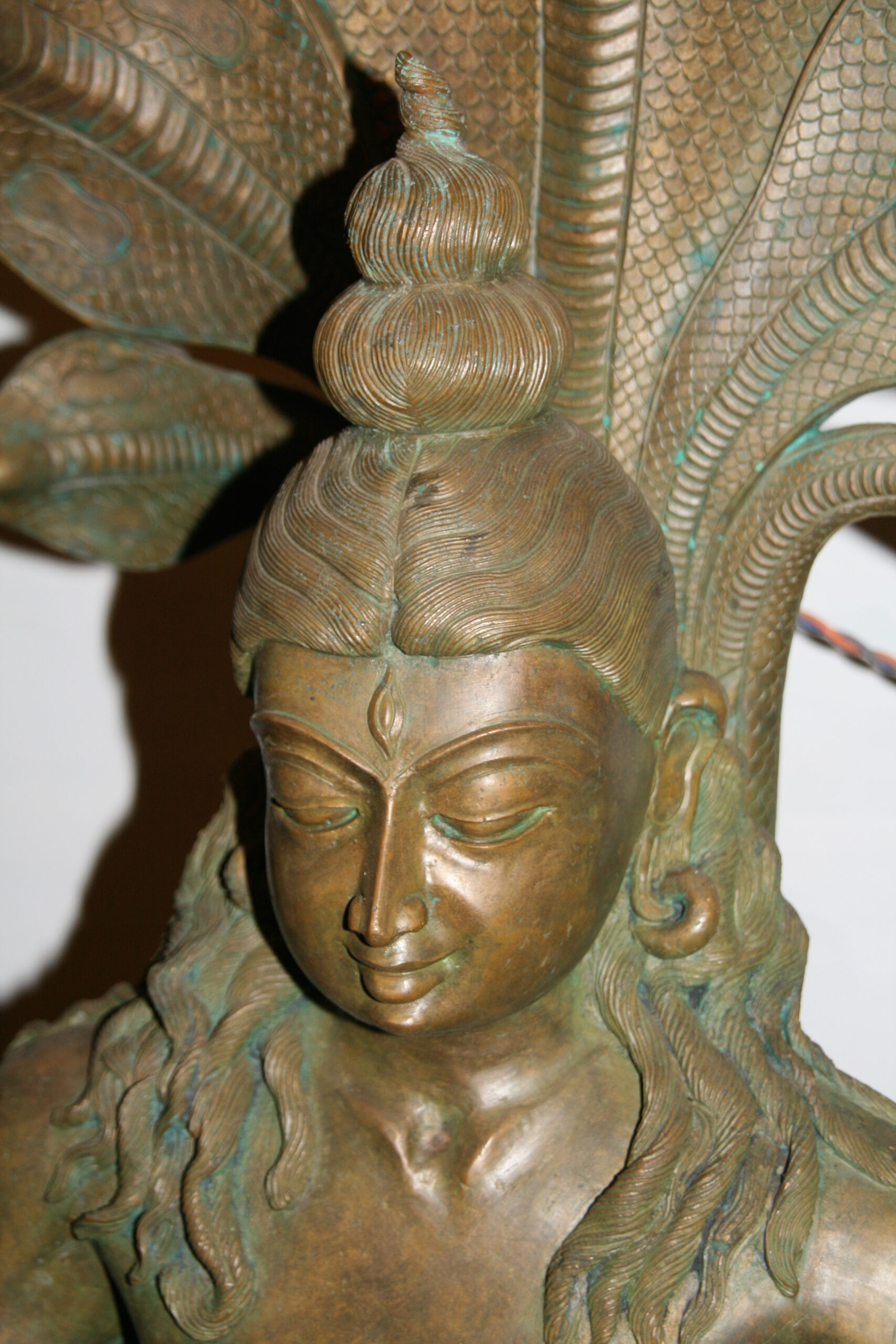
Within the sanctuary, a temple is dedicated to Pārvatī as Śivakāmi; it is here that the dance figures of Bharata Nāṭyam are depicted.
Practical information
60 km south of Pondicherry (1 h 30 by road; 3 h 30 from Mahābalipuram). Temple closed 12–4 pm.