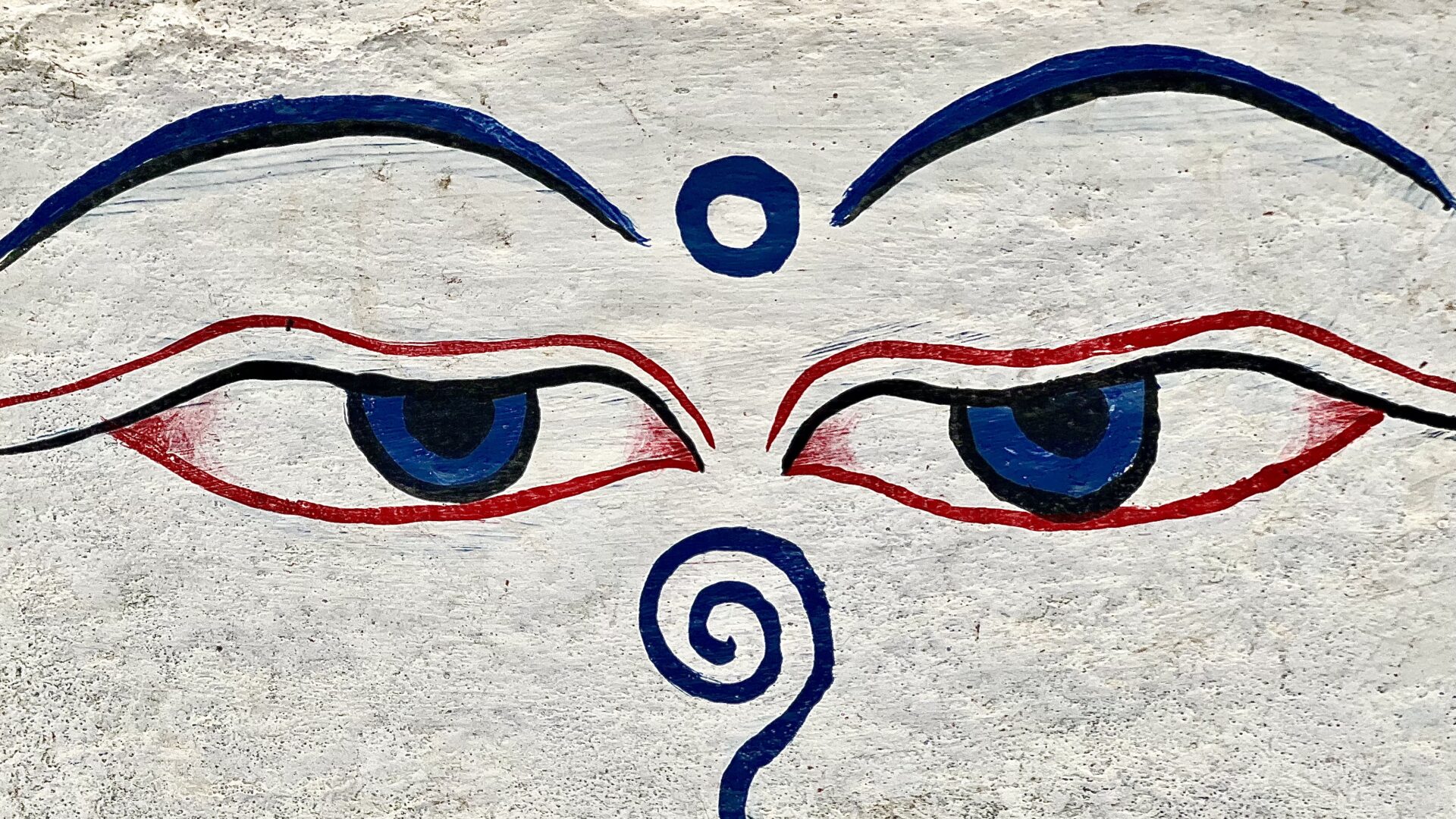
In Ashtanga Yoga, the gaze is never a detail: it orients the posture, gathers the attention and calms the mind. In practice the eyes stay open — but they learn to see differently. The gaze then becomes a path to fullness, just like the breath and the bandhas.
The gaze, a path to fullness
“Nava dṛṣṭi prāpti tataḥ” — “O yogin, do not practise Yoga without dṛṣṭi…”
Vāmana Ṛṣi, Yoga Korunta
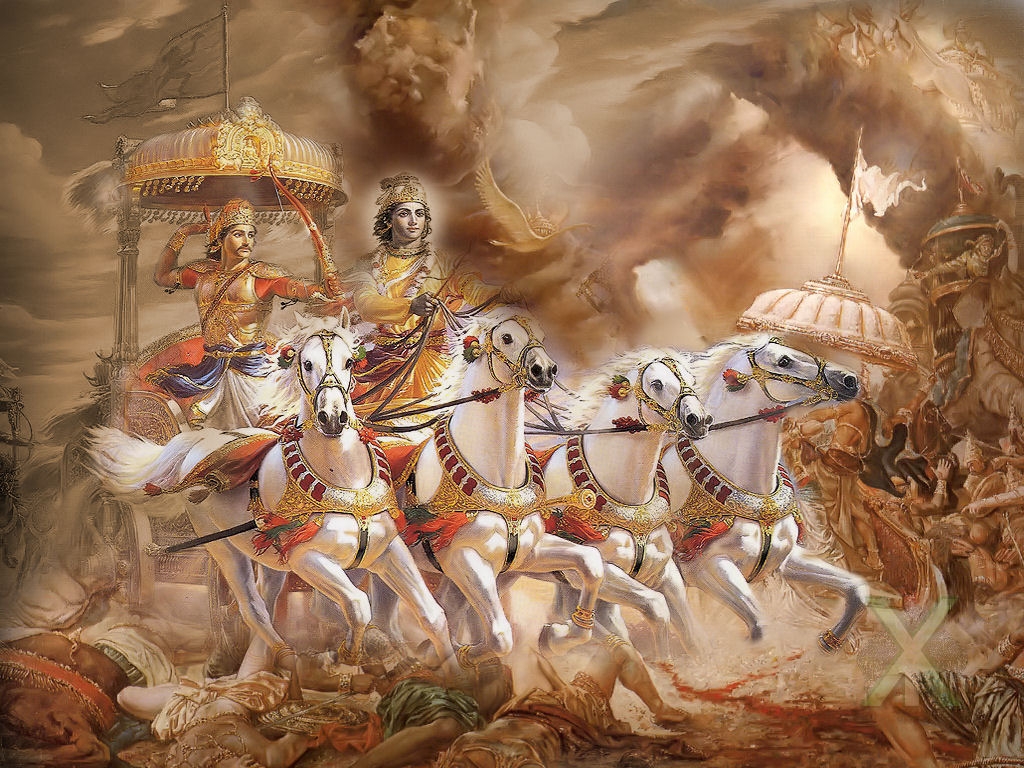
In the practice of Ashtanga Yoga the eyes are open. It is like driving: whether on a bike, a motorbike or in a car, we look at the road in the direction we are going — otherwise, an accident.
The yogin: vehicle, driver and goal at once
The yogin is all of these at the same time. This image, classic in Indian thought, is also found in Plato; it names the different planes of human consciousness:
“The body is like a chariot; the soul (ātman) is its master; the intellect (buddhi) the charioteer; the mind (manas) the reins; the horses are the senses (indriya): the world is their course.”
Katha Upaniṣad 3.3
The yogin is therefore the means (sādhana), the discipline (the gaze, concentration) and the goal: union with the Self, the individual soul (jīvātman). This divine spark is present in us, like a jewel hidden in the “cave of the heart”. On the winding road of Iḍā and Piṅgalā, on this odyssey towards our inner soul, we must keep our eyes open, so as not to fall into the precipice of māyā, illusion.
Drishti, a movement given to the fascia
Drishti is not only a point of gaze: it is also a means of concentration, a direction, a movement given to the fascia — the connective tissue that wraps the muscles. Our body is a system of interacting elements: the muscles form chains, and any action at one point has an immediate effect at a distance. As Ph. Souchard (a colleague of Mme Mézières) puts it: pull on the spinal muscles at one end, and the tension shifts and expresses itself at the other.

Looking at your feet to lengthen the back
This is essential for all forward bends. The spinal muscle chain runs from the base of the skull to the feet. To lengthen the back muscles you must look at your feet (Pādayor Drishti): otherwise the muscles resist, and without abdominal control you hurt the lower back. I wish you to rediscover the direction of the gaze, the right muscular sense, the right rhythm — to find harmony with yourself, present in the heart, the breath and the body.
Om Shanti,
Jean-Claude Garnier
In short
Drishti helps the practitioner not to get lost in outer agitation. By placing the gaze, the posture becomes steadier, the breath more legible and the practice more meditative.