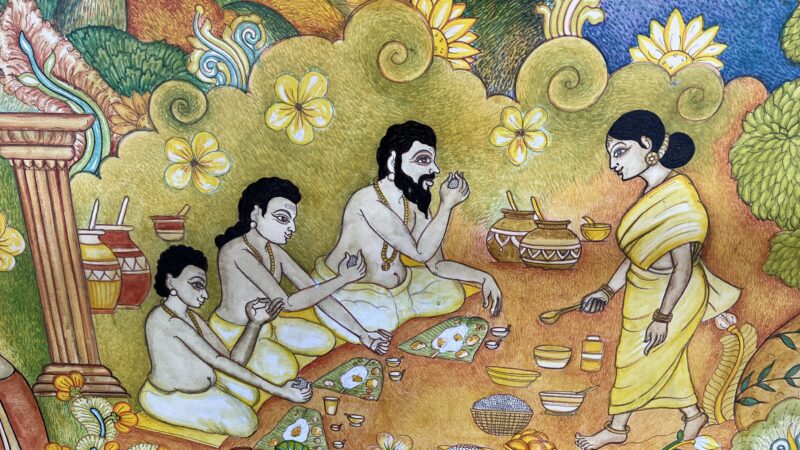
Tamas
It is the third grade in the guṇa in the mode of the Samkhya thought.
In Indian philosophy — in Sāṃkhya and in yoga — tamas (तमस्) is the third of the three fundamental qualities of nature, the guṇas. In Sanskrit the word tamas means literally « darkness », « gloom », « heaviness », « inertia ». The other two are sattva (purity, light) and rajas (action, passion).
These three guṇas, bound up in one another, are ceaselessly intertwined within differentiated nature, and their mutual play governs the whole unfolding of matter.
Tamas has to be transcended through action (rajas) in order to cultivate clarity (sattva), the ultimate aim being to settle in that luminous balance.
In yoga, tamas stands for the force of inertia, heaviness and rooting that one must learn to balance in order for the practice, physical and mental, to move forward.
How Tamas affects a yoga practice
• On the mat (Āsana): an excess of tamas shows itself as laziness, a feeling of heaviness in the body, a lack of alignment and a constant physical tiredness during the postures.
• In meditation: tamas brings drowsiness, an inability to concentrate, mental lethargy and distraction through sleepiness or confusion.
• Its positive side: in measured amounts, tamas gives the physical steadiness needed to hold grounding postures, offers the capacity to let go, and allows restorative sleep and a deep final relaxation (śavāsana).
How yoga works through an excess of Tamas
To break the inertia of tamas, the yogi uses the dynamic energy of rajas — movement — in order to reach the balanced state of sattva, clarity.
1. Prāṇāyāma: dynamic breathing such as kapālabhāti (the cleansing of the lungs, the shining skull) or bhastrikā (the bellows) stimulates the nervous system and drives out torpor.
2. Vinyāsa and Aṣṭāṅga Yoga: flowing, vigorous sequences — the sun salutations among them — warm the body and set the energy circulating.
3. Opening postures: backbends (bhujaṅgāsana, uṣṭrāsana) open the chest and work directly against the collapsed posture typical of a tamasic state.