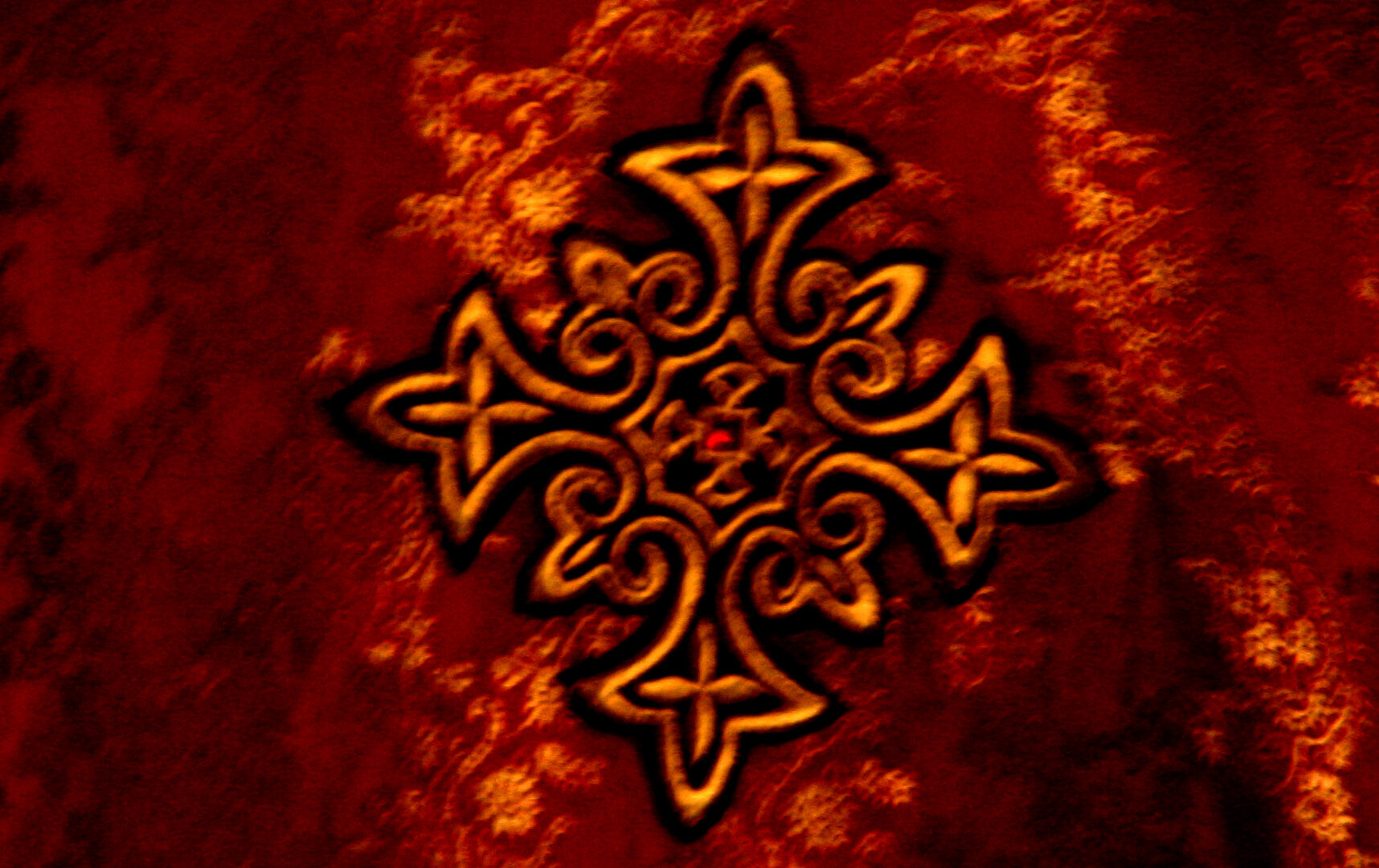
In spring, Orthodox Easter is the greatest feast of the Greek people. Christ rises at the very moment nature is reborn. Among the Orthodox, one speaks of “the feast of Easter” (in the singular), and it is awaited even more than Christmas.
Holy Week
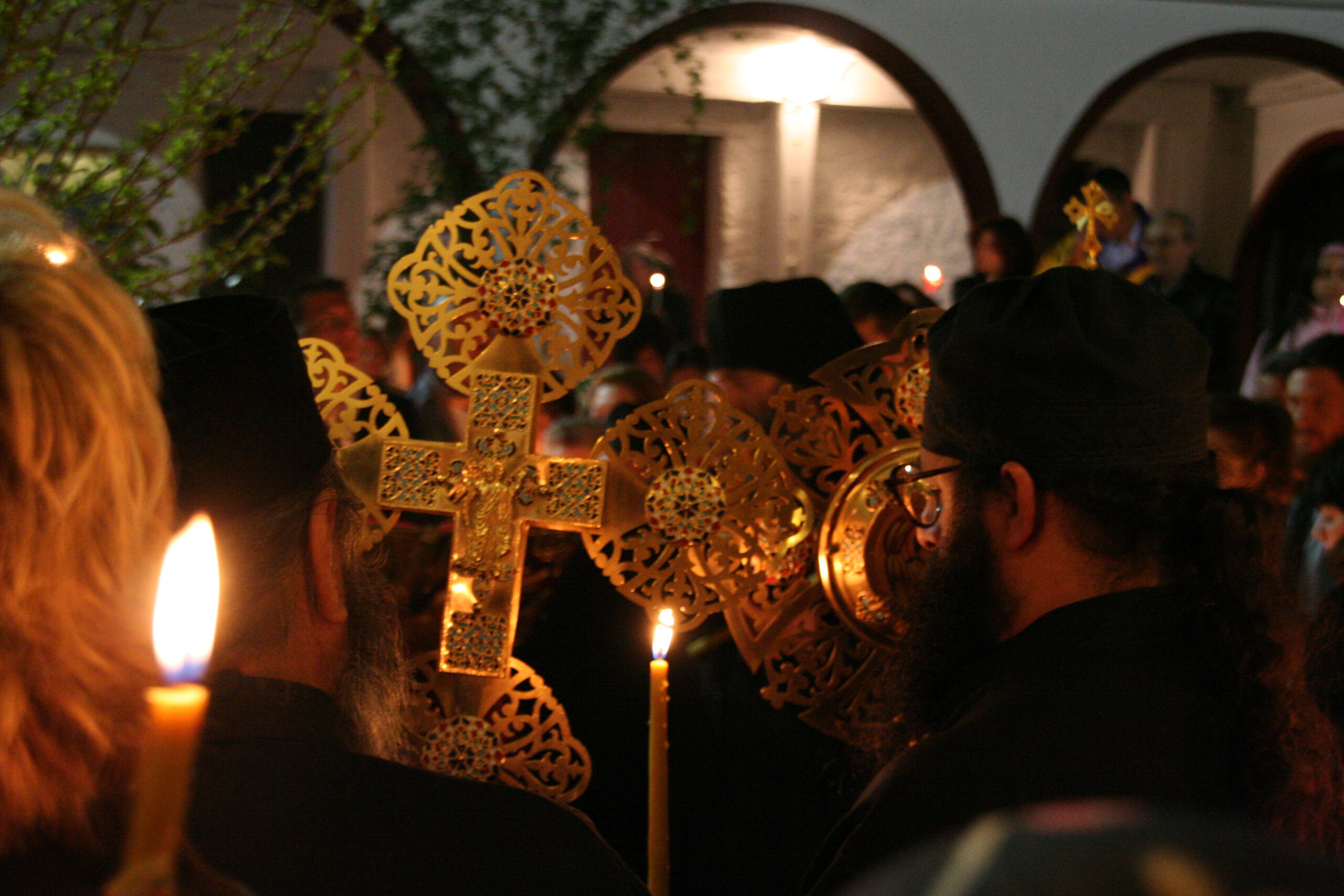
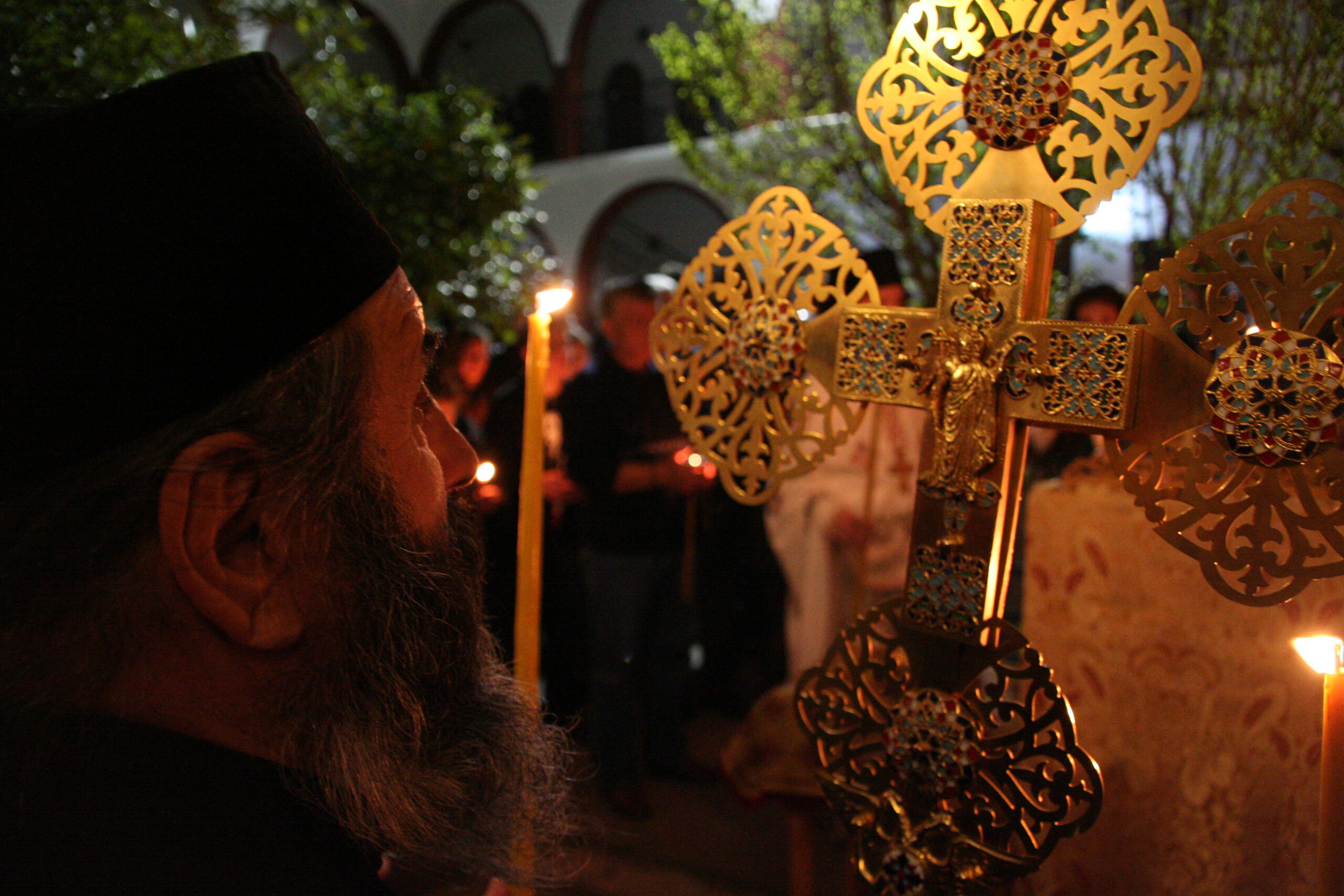
Very important, it draws crowds. On Good Friday, the procession of the Epitaphios symbolises Christ’s shroud; the faithful follow it, candles lit, while rose petals are scattered along its path. Lent lasts 40 days (no meat, eggs or dairy for those who fast) — and the fast begins on the Monday, not the Thursday as for Catholics.
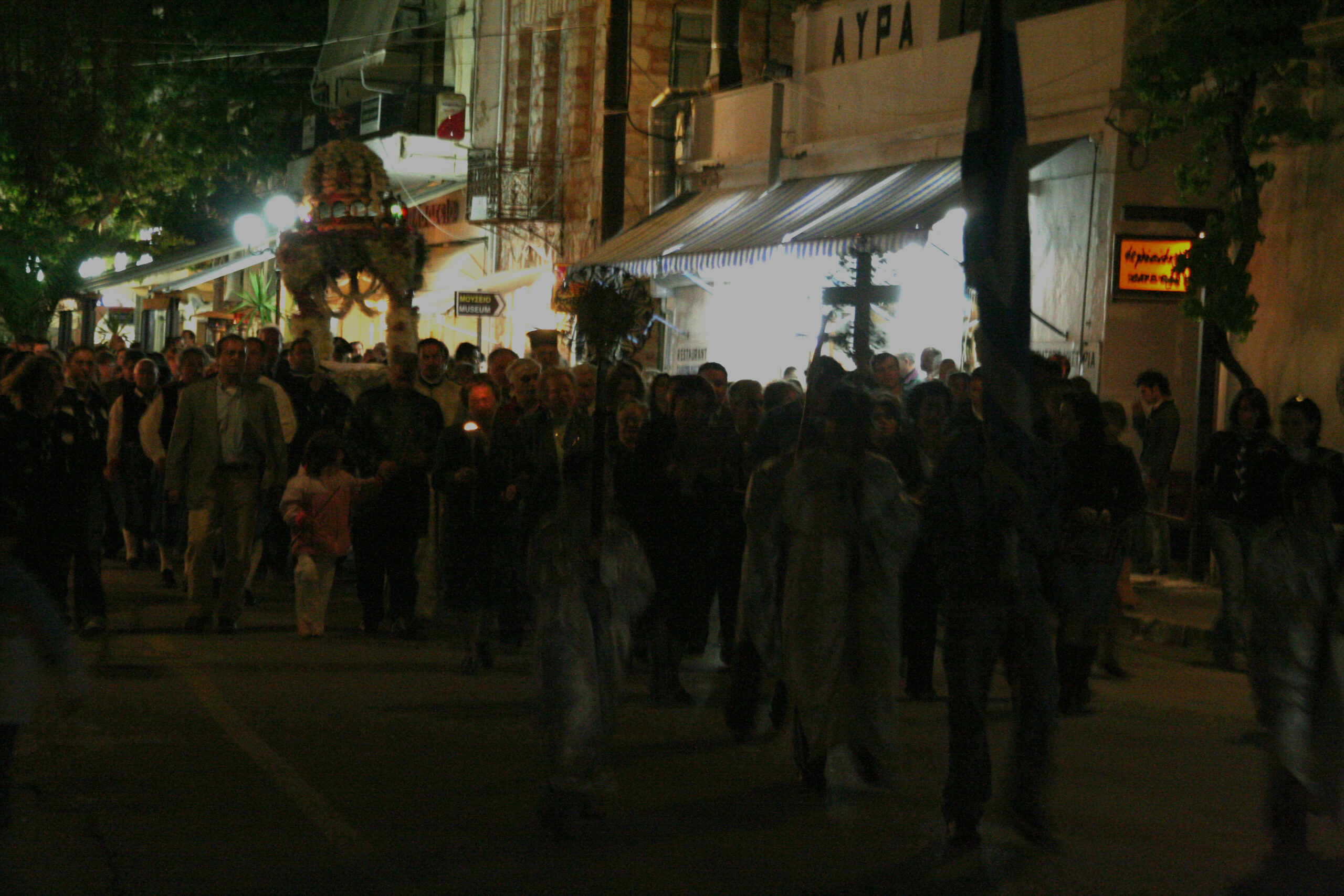
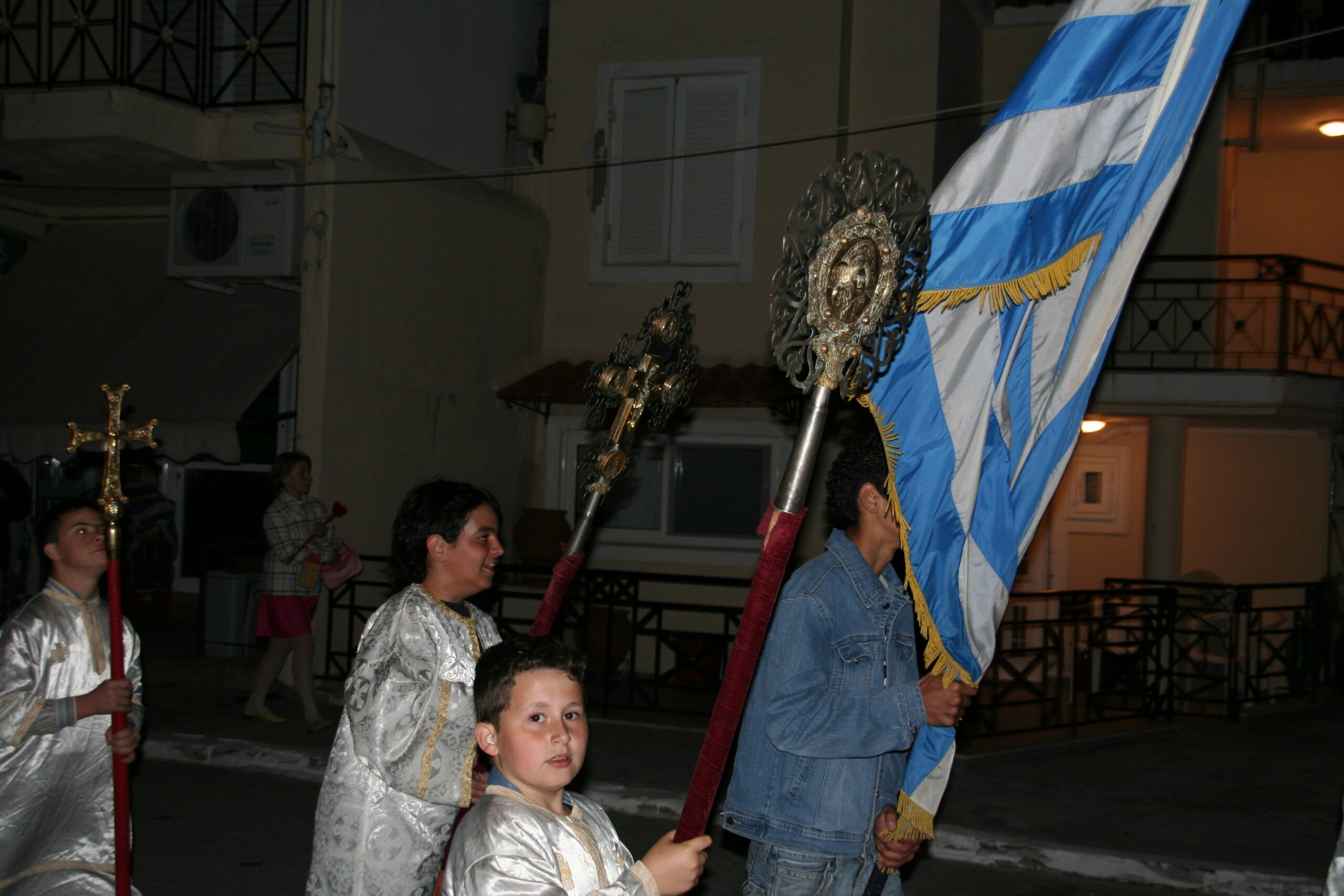
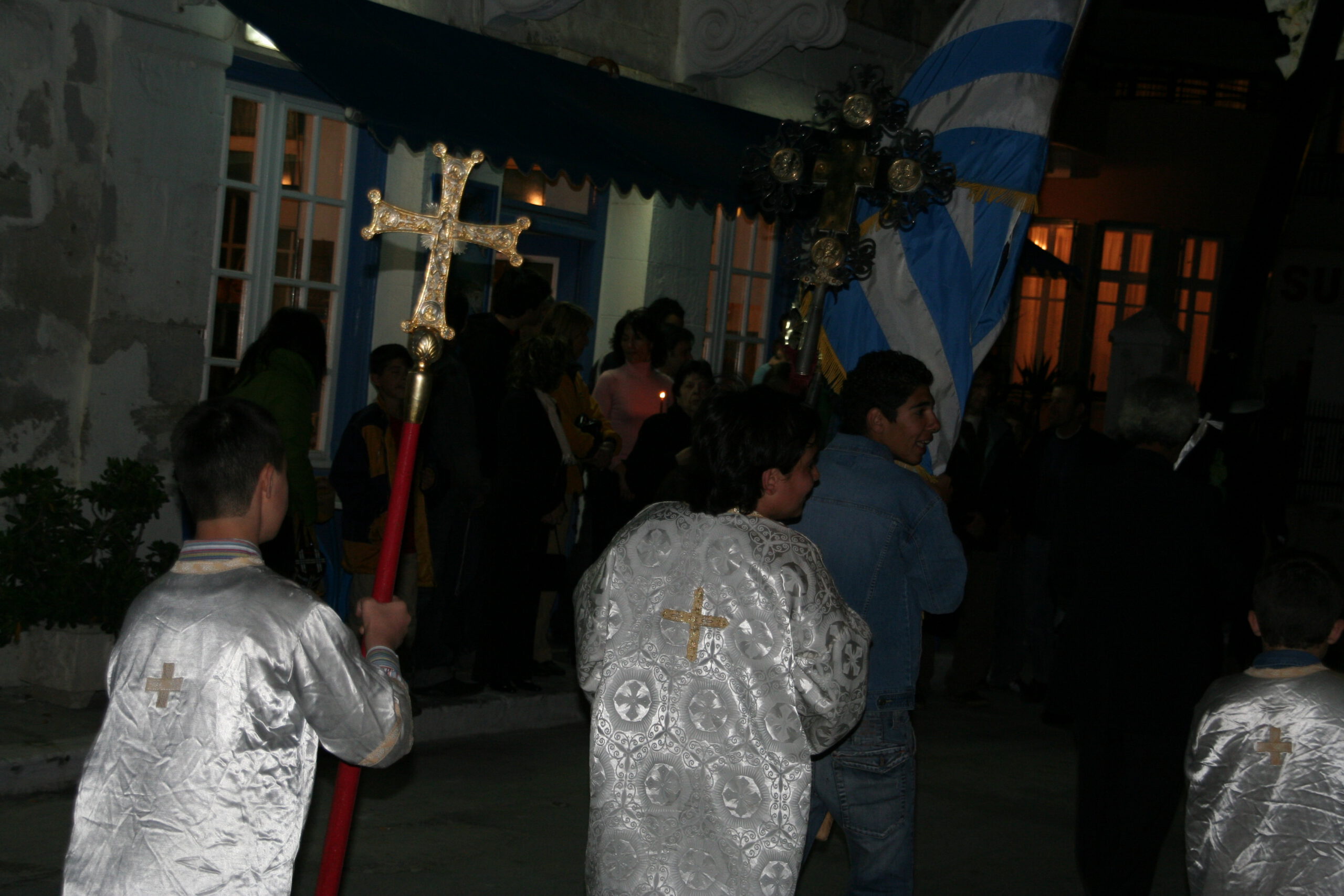
“Christos Anesti”
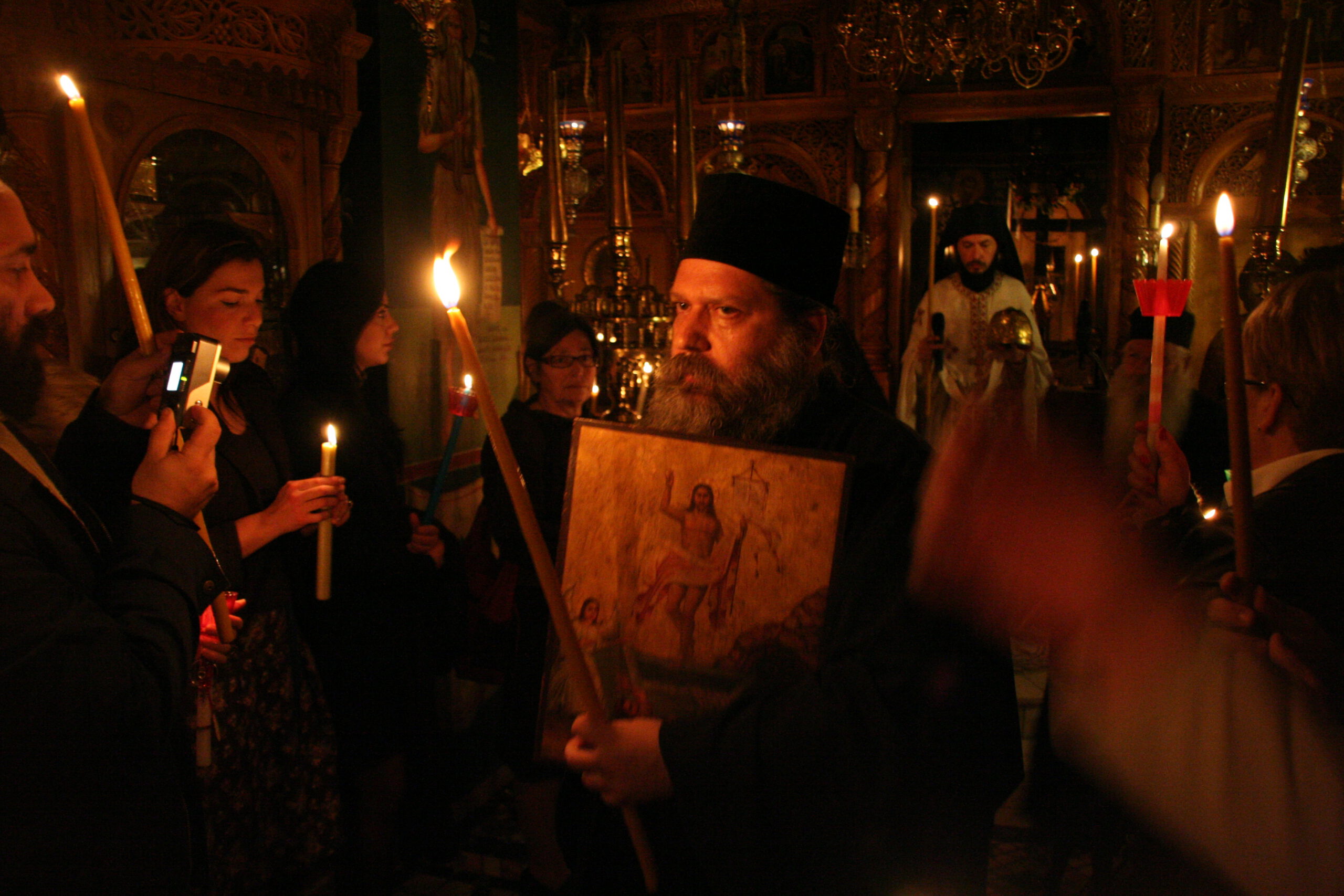
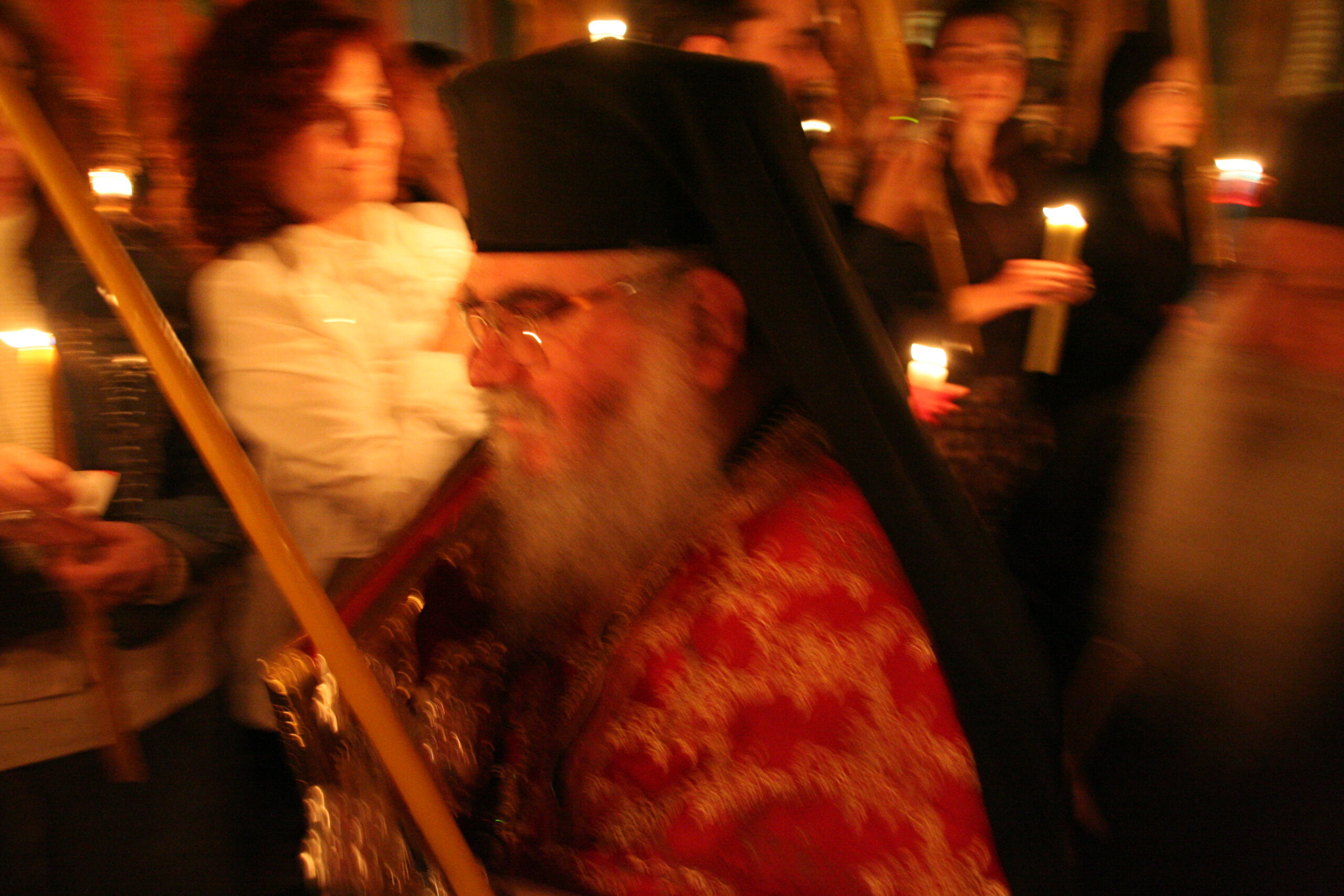
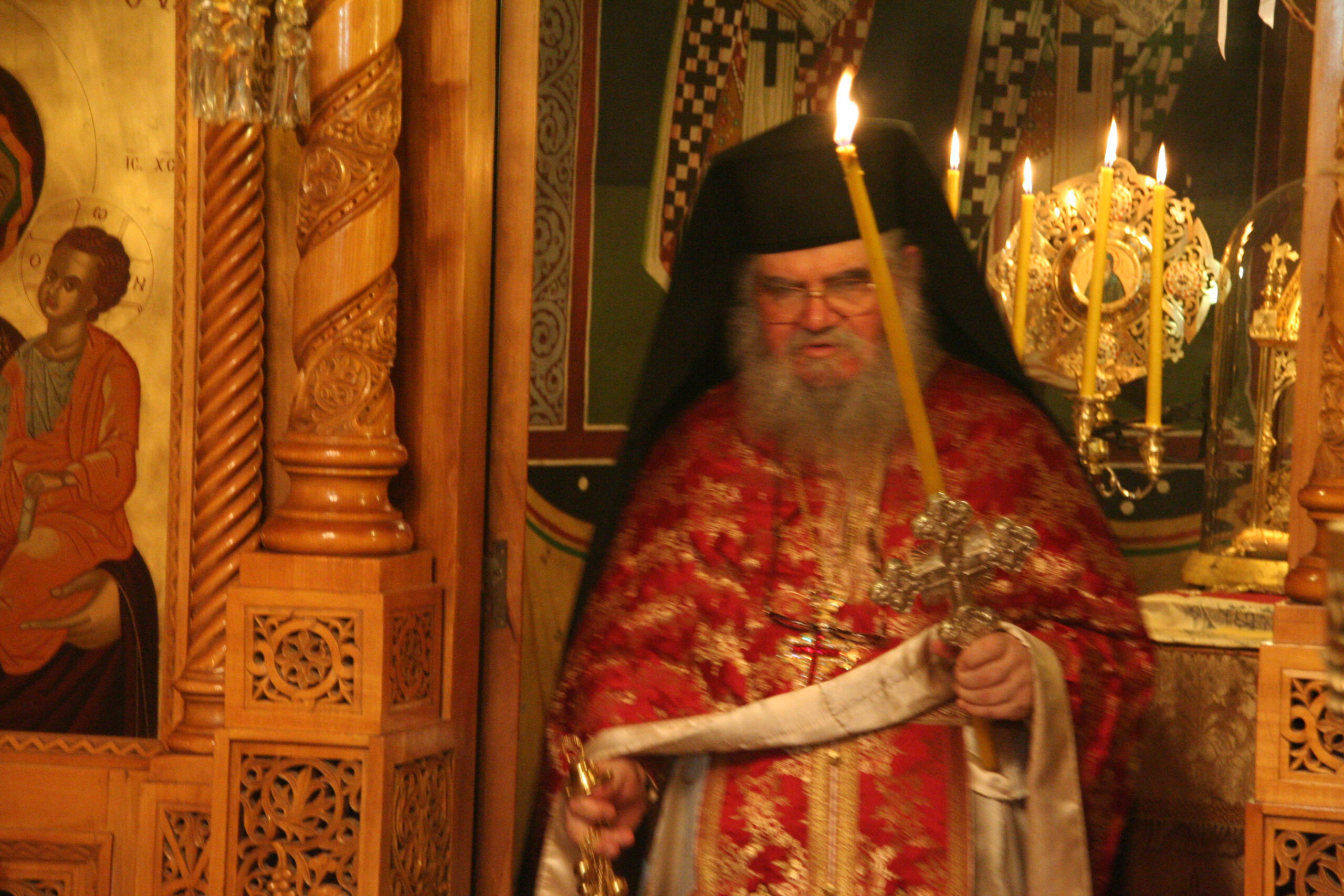
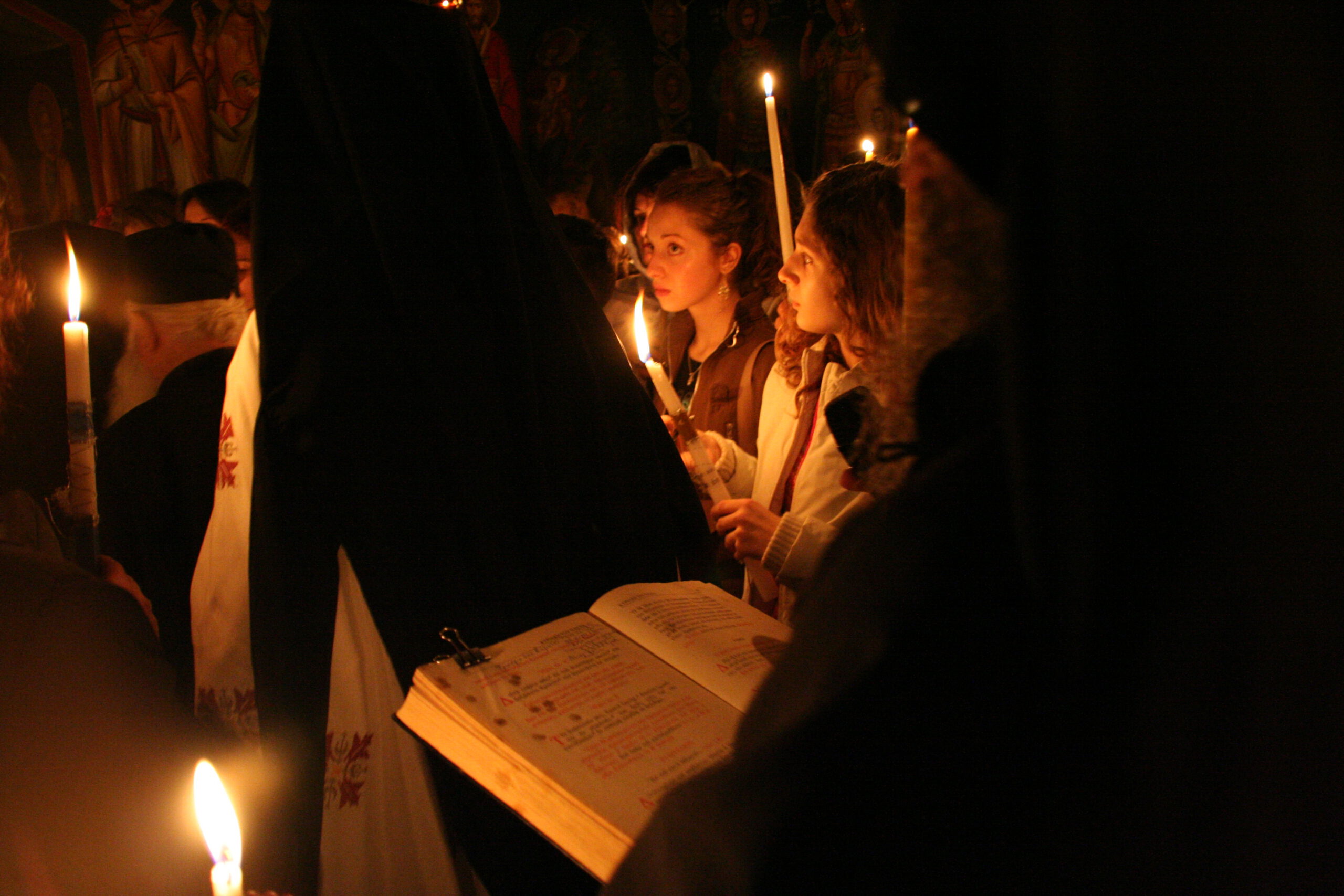
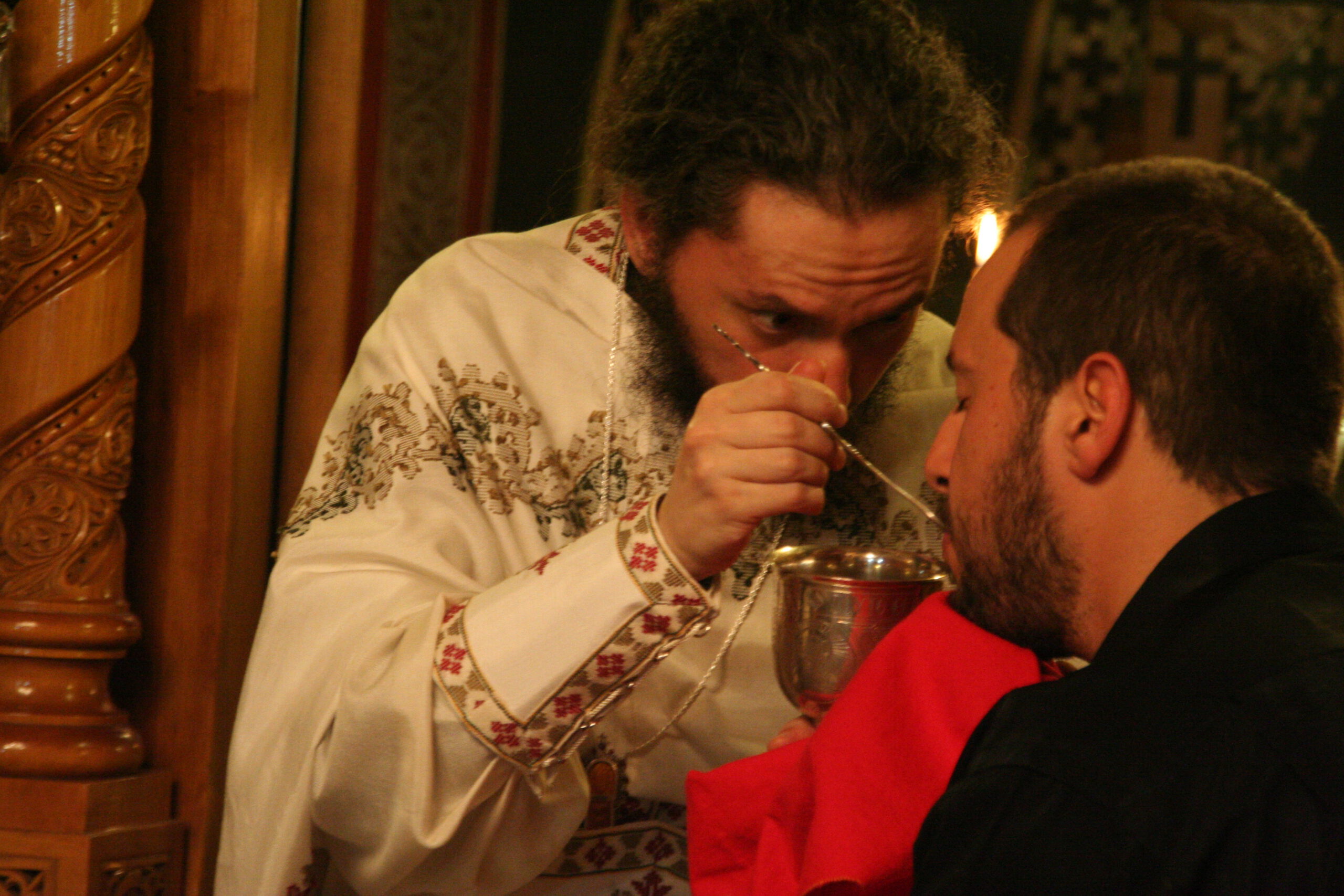
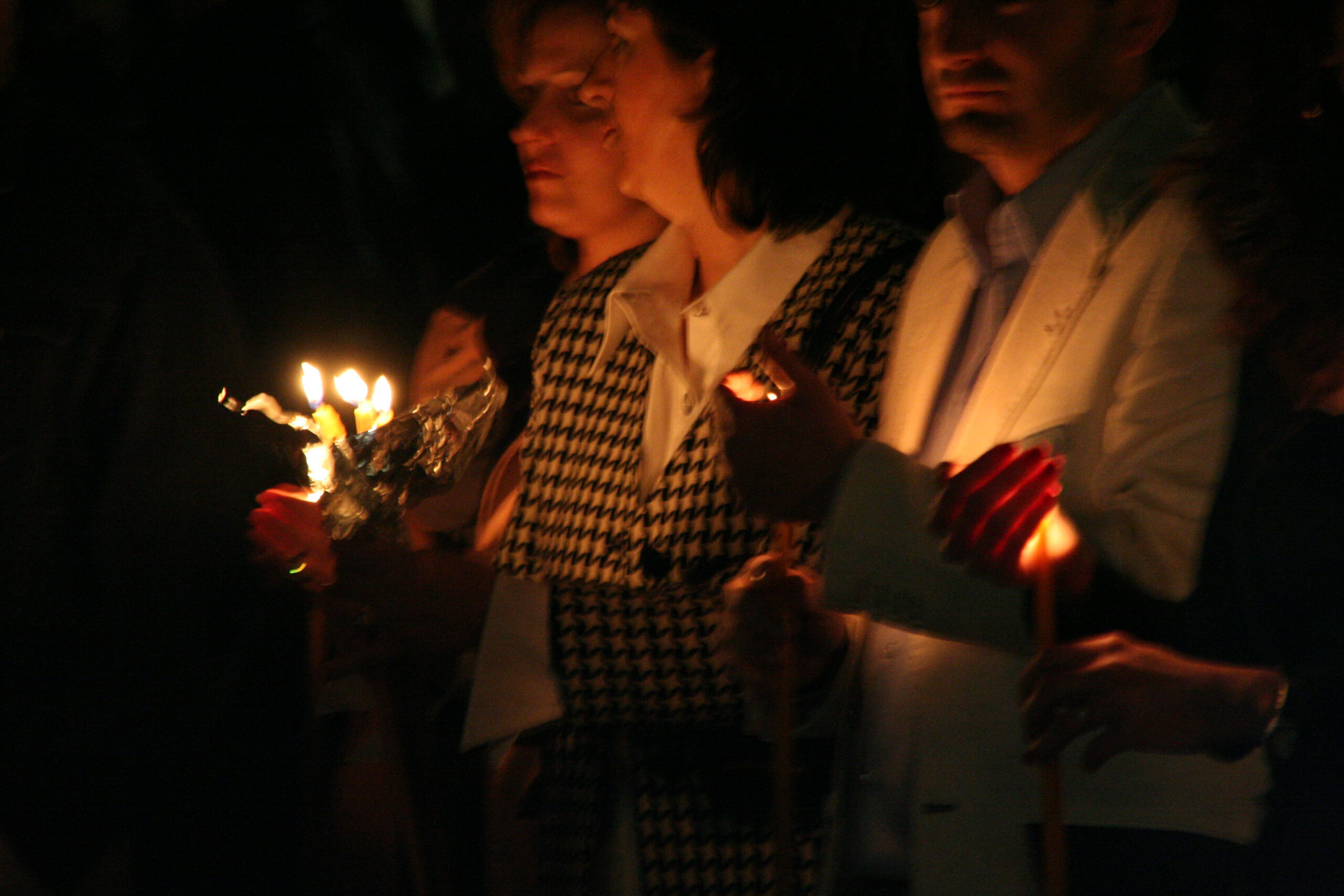
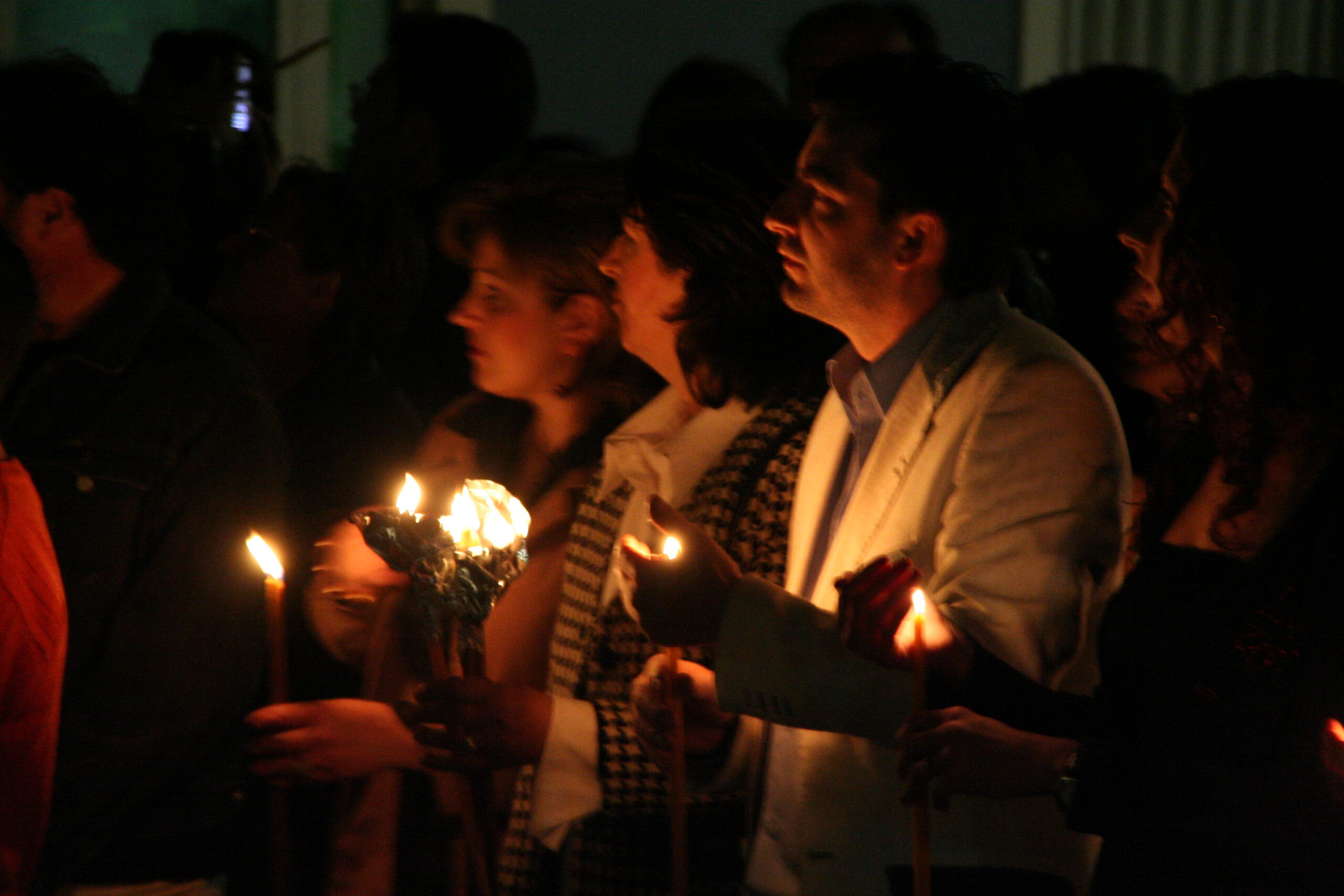
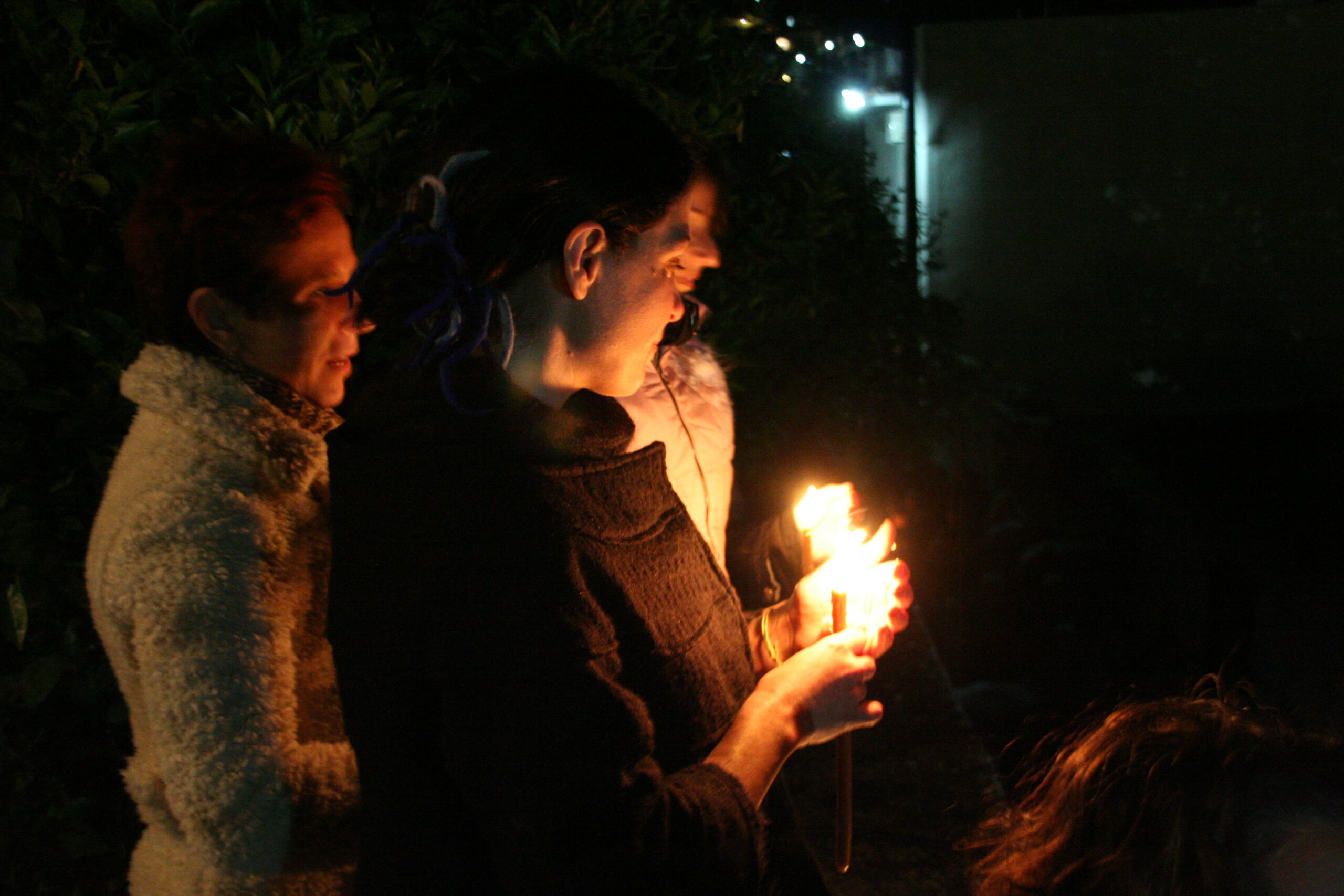
On Saturday evening, people attend Mass. At midnight, the priest announces the resurrection in the forecourt: “Christos Anesti”. He lights a worshipper’s candle from his own (the light of Christ), and the flame is passed from one to the next. The bells ring out, people embrace and return home, candle in hand. Before entering, the head of the family traces the sign of the cross at the top of the door with the candle’s smoke; the candle is then kept all year near the holy icons.
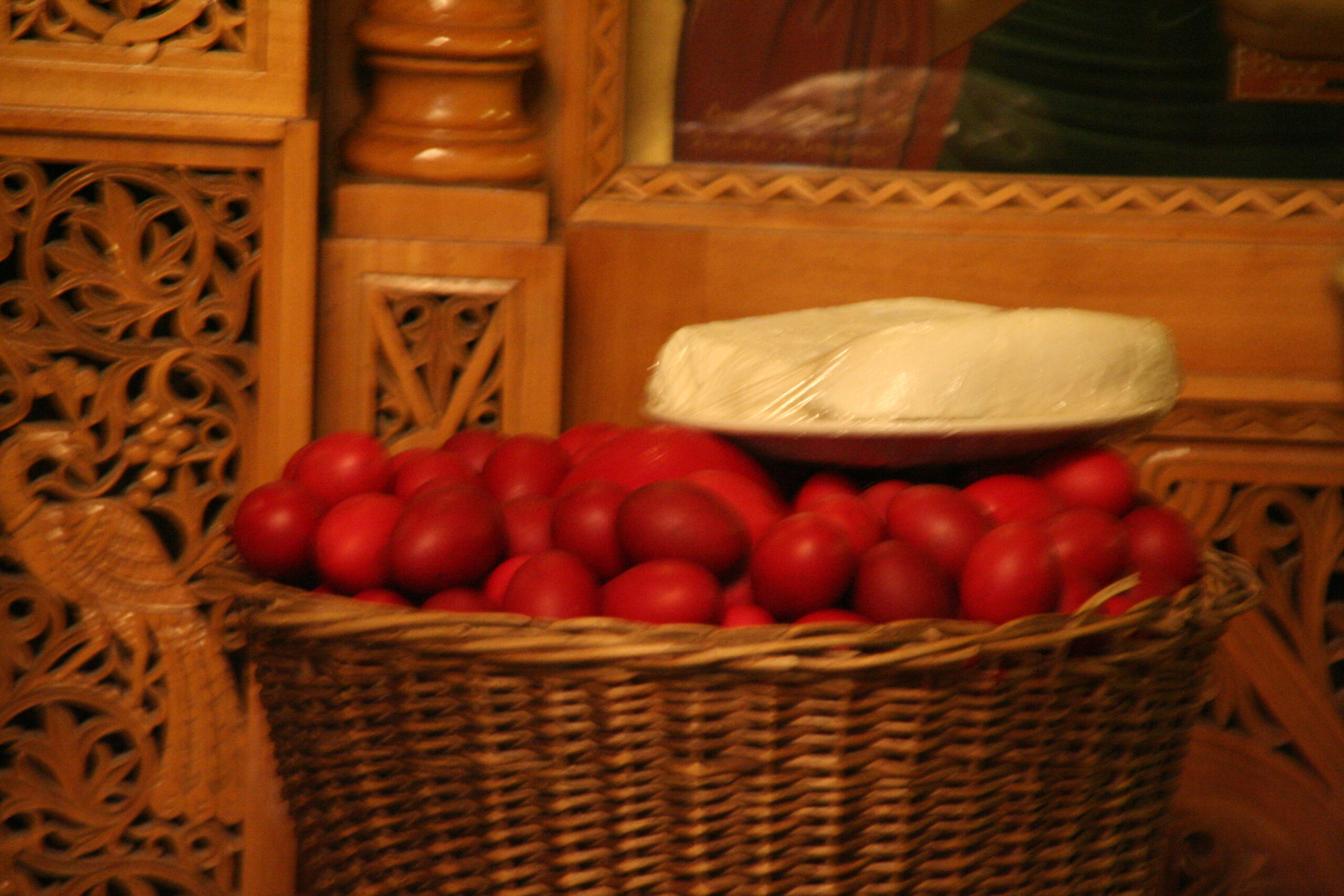
At the table: red eggs and the paschal lamb
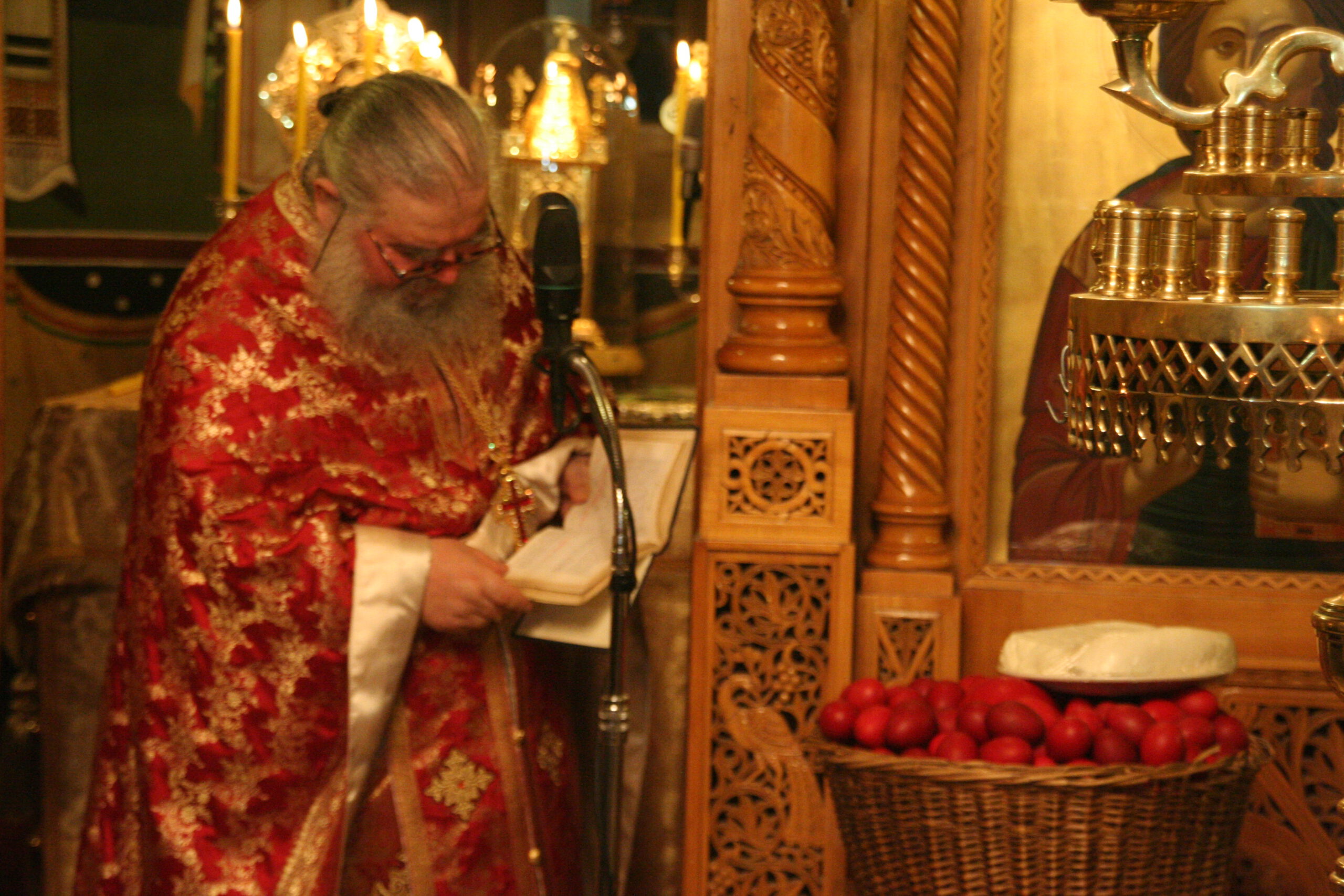
Before the traditional soup (maghiritsa), people crack red eggs against each other, two by two, saying “Christos Anesti”; the winner keeps their egg intact — a sign of luck. Everywhere, on the Sunday, the paschal lamb is roasted on the spit, brushed with oil, oregano and lemon.
Religion is the cement of the Greek nation: during the four to five centuries of Ottoman occupation, it was the only way to preserve identity — Greeks learned in secret to read, write and cook the traditional dishes.
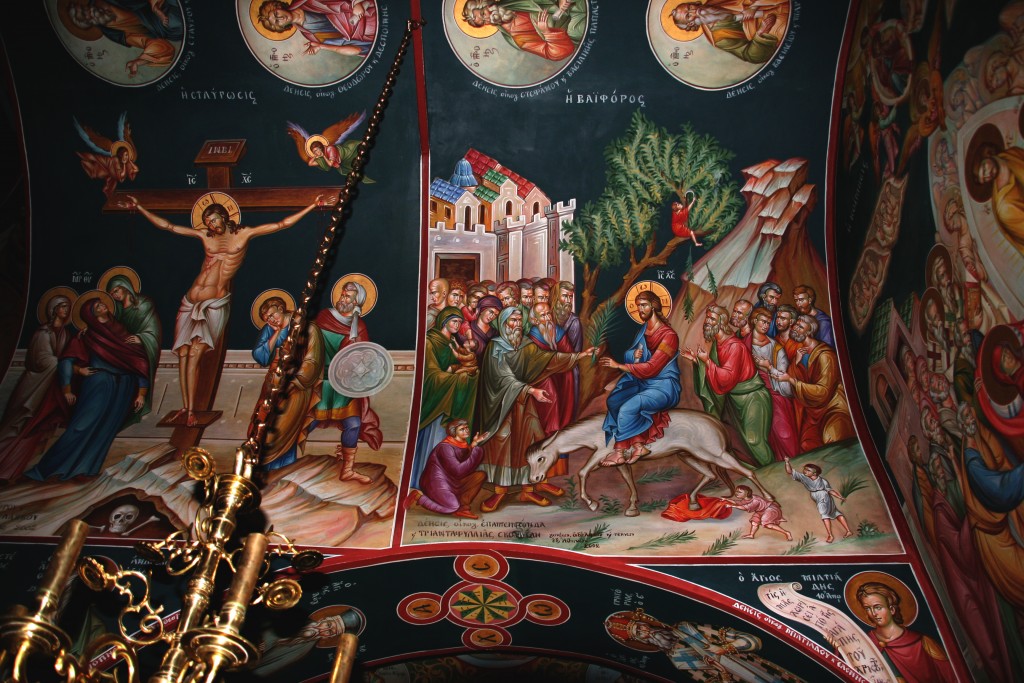
In the Orthodox tradition, icons hold an essential place; Easter is an occasion to paint magnificent ones on the Passion of Christ. Red eggs, lucky charms linked to rebirth, are offered to family and friends.
Καλό Πάσχα! (Kaló Páscha — Happy Easter) · Χριστός Ανέστη! (Christos Anesti — Christ is risen). Om Shanti.