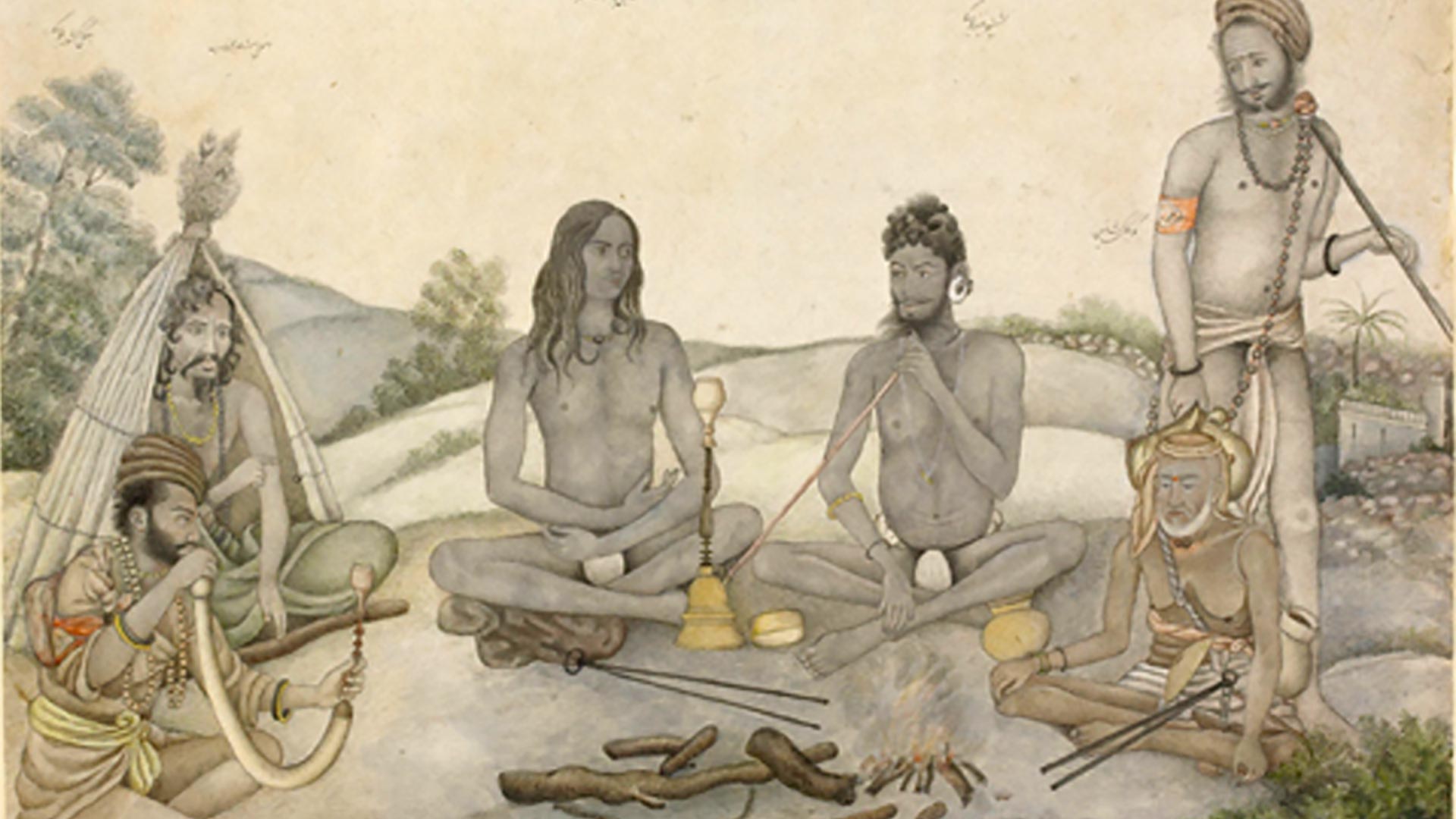
In the beginning, yoga was neither a gymnastics for the back nor a remedy for anxiety: the postures had meaning. Shaped by the rishi of ancient times, they open a path for the body, the heart and the soul — towards peace of mind.
The path of the body (Kāya Sādhanā)
“Whether young, middle-aged or old, sick or weak, one attains realisation through practice, through sustained effort, through tireless attention to every aspect of Yoga.”
Haṭhayogapradīpikā, I, 64
The aim of yoga is not postural flexibility but peace of mind. The word āsana means “position, posture, attitude, seat”. In Indian statuary, posture is a codified symbolic language: the yoga postures are archetypal figures which, practised within a method, restore the links with one’s deepest roots.
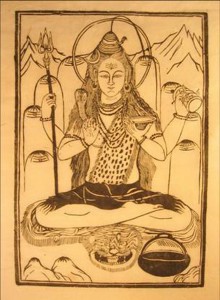
With the body, we write our dreams: by going beyond ourselves, we create a new suppleness and new sensations — which asks us to transcend stiffness and discomfort over many years of effort. As Satprem writes in The Mind of the Cells, it is through the dense body (sthūla-śarīra) that practice awakens the body of light.
Transmigration, suffering, deliverance
This idea governs all Indian thought: the present life is only one stage among a multitude of successive, painful lives, from which one must free oneself. For this thought, the soul is a fact: the ātman is the vital “breath” (prāṇa) par excellence, which dwells in the body and pervades it entirely.
The eight limbs according to Patañjali
In the Sādhana-pāda chapter of the Yoga Sūtra, Patañjali describes Aṣṭāṅga Yoga, the eight limbs of the royal Yoga:
- the restraints, yama;
- the observances, niyama;
- the postures, āsana;
- the breath, prāṇāyāma;
- the withdrawal of the senses, pratyāhāra;
- concentration, dhāraṇā;
- meditation, dhyāna;
- contemplation, samādhi.
“The body is like a chariot; the soul (ātman) is its master; the intellect (buddhi) is the charioteer; the mind (manas) is the reins; the horses are the senses (indriya), and the world is their course.”
Kaṭha Upaniṣad 3.3
Yoga thus disciplines the human “vehicle”. And a discipline is a space of freedom: it alone develops the endurance that allows us, on the day difficulty arises, to continue our path with peace, strength and joy.
In short
At its origins, yoga links the body, the breath and the soul in one discipline of liberation. The postures are only its doorway: the path leads to peace of mind.