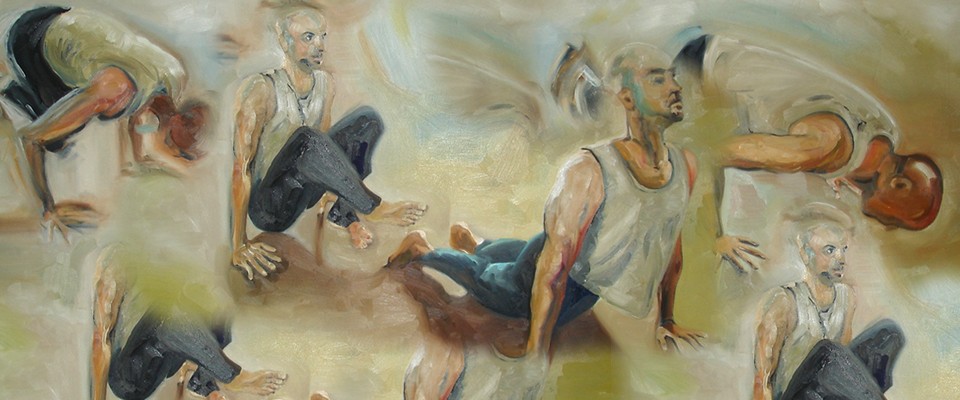
Vinyāsa Krama is the intelligence of progression: knowing how to enter a posture, how to leave it, and how to link each movement to the breath. In Ashtanga Yoga this precision gives the series its coherence. The postures are not isolated; they belong to an order, a rhythm and a direction.
In the practice of Ashtanga Yoga (Yoga Korunta) there is a precise progression, established with great wisdom, for entering a posture as well as for leaving it. This is called Vinyāsa Krama. The postures are linked to one another by mini-sequences or complete sequences drawn from the sun salutation (Sūryanamaskāra).
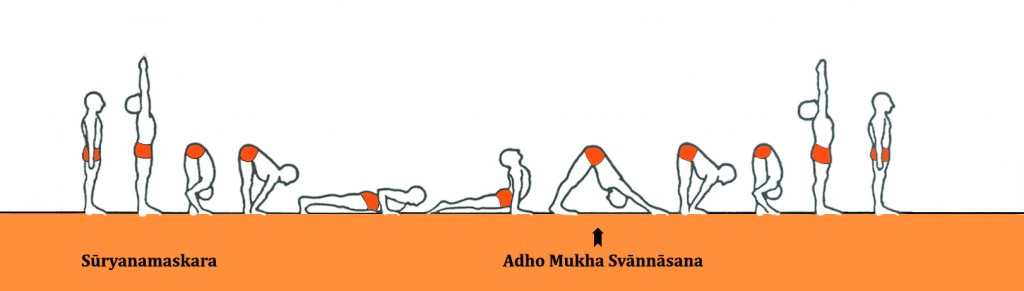
Posture and Vinyāsa: equal importance
In Ashtanga Yoga, the postural work and the Vinyāsa have equal importance. At first we learn the postures with a simple sequence; once the postures are known comes the teaching of the linking movements (the complete Vinyāsa).
“Integrating the functions of mind, body and breath… a practitioner will know the true joy of yoga practice… Vinyāsa Krama yoga strictly follows the most complete definition of classical yoga.”
Srivatsa Ramaswami
Two important factors
- All the postures (āsana) are in an unchangeable order.
- As Sri K. Pattabhi Jois so beautifully taught, a precise number of synchronised breath-and-movement transitions connect each position (āsana).
The process of Vinyāsa Krama produces an intense inner heat (tapas) that allows purification and the elimination of toxins from the muscles, the organs and the mind. The result is a light body that breathes deep peace, strength and joy. The practice of Yoga Mālā is a work of precision — from the Latin prae-cisus, “without scission”: without dividing breath, movement, concentration or rhythm. It is a work of reunification.
A method for learning without scattering
Vinyāsa Krama gives a clear frame. The practitioner does not enter a posture by chance, nor leave it abruptly: each step prepares the next. This progression protects the body and educates the attention. In a regular practice it becomes a precious aid — it keeps us from chasing only the final posture, and reminds us that the path, the transition and the breath matter as much as the visible shape.
Conclusion
Vinyāsa Krama links the order of the postures, the breath and the movement. It is a path of precision that turns the series into a living, coherent and unified practice.